


🇬🇧 GB · England · Chapter 4 of 8
Glam and Prog: The Rock That Dressed Up as Theater (1970–1979)
The sixties had ended on a sour note: Altamont, the deaths of Jimi Hendrix and Janis Joplin, the breakup of the Beatles, the end of hippie optimism. The rock of 1970 was searching for a direction and found it in two opposite extremes that turned out to be complementary: glam rock — extravagant, theatrical, sexually ambiguous, with glitter and platform shoes — and progressive rock — intellectual, lengthy, complex, with synthesizers and references to mythology.

Both genres shared something fundamental: the conviction that rock had to be more than it had been until then. Glam wanted more spectacle, more image, more sexual provocation. Prog wanted more complexity, more length, more artistic ambition. Both were wrong in their excesses and right in their central impulse.
Marc Bolan and T. Rex: The First God of Glam
Mark FeldMarc Bolan — had spent the sixties as a psychedelic folk musician in the duo Tyrannosaurus Rex, wearing a bowler hat and writing lyrics full of Tolkien references. In the early seventies he made the decision that changed everything: he abandoned hippiedom and reclaimed his first love, the rock of Little Richard and Chuck Berry, updated with strings, stage dancing, effeminate clothing and sex.
He shortened the band's name to T. Rex, electrified his guitar, painted a teardrop under his eye and put little stars on his cheekbones. The result was Electric Warrior (1971) — the first great glam rock album and T. Rex's first number one — followed by The Slider (1972), which produced the consecutive singles "Telegram Sam" and "Metal Guru", both number ones in the UK.
Between 1970 and 1973, T. Rex produced eleven singles in the Top Ten of the British charts. Bolan was during that period the most popular musician in England — the first to provoke scenes of hysteria on television programmes that would be compared to Beatlemania.
He died on 16 September 1977 in a car accident in Barnes, London. He was twenty-nine years old. Two weeks before turning thirty — which he had always said terrified him.
David Bowie: The Greatest Chameleon in Rock History
David Robert JonesDavid Bowie — was born on January 8, 1947 in Brixton, London. He had been a friend and rival of Marc Bolan since the sixties — they shared a producer, shared a scene, and watched each other with a mixture of admiration and competition that both acknowledged in their final years.
It was in June 1972 that he released The Rise and Fall of Ziggy Stardust and the Spiders from Mars. Bowie became an icon of the new sexual morality, and from his declarations onward everyone in England talked about him.
Ziggy Stardust was the first of the characters Bowie inhabited throughout his career: an alien rockstar who descends to earth, becomes the messenger of humanity's last five years, and is destroyed by his own fame. The narrative was conceptual but the music was direct: guitar rock with the urgency of Merseybeat and the extravagance of glam.
What turned Bowie into something more than a glam artist was the speed with which he reinvented himself: in four years he moved from Ziggy Stardust (1972) to Aladdin Sane (1973) to Diamond Dogs (1974) to Young Americans (1975) — his American soul album, recorded in Philadelphia with Black musicians — to Station to Station (1976) to the Berlin Trilogy (Low, Heroes, Lodger — 1977-1979, produced with Brian Eno in divided Berlin) where he invented the electronic art rock that all alternative music of the eighties would adopt as its language.
"Heroes" — recorded at Hansa Studios in Berlin, with the Wall visible from the window — is his most perfect work: the story of two lovers who kiss beside the Wall, who can be heroes just for one day, sung by Bowie with the ironic distance of the artist who knows that everyday heroism is the only kind that matters and at the same time the kind no one celebrates.
Bowie died on January 10, 2016, two days after his sixty-ninth birthday and the release of his final album Blackstar — which turned out to be his farewell as well: a record about death made by a man who knew he was dying, with the elegance of someone who had decided that the last work must be the best.
Led Zeppelin: The Apocalypse of the Blues
Jimmy Page, Robert Plant, John Paul Jones and John Bonham formed Led Zeppelin in 1968 after the dissolution of the Yardbirds. Technically they were the heaviest band in rock of their era: the volume, the distortion, the physical weight of the sound they produced had no precedent.
But Led Zeppelin was not simply heavy noise: it was the blues of Robert Johnson and Muddy Waters amplified until it sounded like the end of the world, mixed with the Celtic folk of Jimmy Page, with the epic of progressive rock and with the theatricality of Plant on stage. Led Zeppelin IV (1971) — the untitled album containing "Stairway to Heaven", "Black Dog" and "When the Levee Breaks" — is the peak of stadium rock: the greatest ambition the genre had attempted, executed with the precision of four musicians who were each the best at what they did.
"Stairway to Heaven" — eight minutes that move from acoustic arpeggio to electric apocalypse — became the most requested song on rock radio stations around the world for decades. Jimmy Page said he could never have written it without Robert Johnson. The circle of the blues closed once more.
Bonham died in September 1980, drowned in his own vomit after consuming forty measures of vodka. Led Zeppelin dissolved immediately: they declared they could not continue without him, and they were right.
Pink Floyd: Rock as a Total Experience
Syd Barrett, Roger Waters, David Gilmour, Nick Mason and Richard Wright created in Pink Floyd the most ambitious rock project of the seventies: complete concept albums, light and sound shows that transformed concerts into almost cinematic experiences, songs that lasted twenty minutes and demanded total attention.
The Dark Side of the Moon (1973) — which remained on the American Billboard charts for 741 weeks, the record in history — is the most complete document of progressive rock: a concept album about fear, madness, time and death, built with a studio production that no other band of its era had achieved.
The Wall (1979) — Roger Waters's most ambitious work: the story of a rock star who builds a wall around himself to protect himself from the world — was the highest point and the beginning of the band's dissolution. The tension between Waters and Gilmour had become unbearable. Pink Floyd survived in various incarnations until time finished separating what music had united.
Syd Barrett — the brilliant and troubled founder who was replaced by Gilmour when his psychotic episodes made him unable to perform — spent his last decades secluded in Cambridge, refusing to speak about music. He died in 2006. The Floyd dedicated the 2005 reunion tour to him.
Queen: Rock as Opera
Freddie Mercury, Brian May, Roger Taylor and John Deacon built in Queen the most theatrical and most explicitly operatic rock project of the seventies: four-track vocal harmonies, Brian May guitar solos that sounded like orchestras, lyrics that mixed the camp of English music hall with the grandeur of Italian opera.
"Bohemian Rhapsody" (1975) — six minutes moving from ballad to opera buffa to hard rock and back — was the first song to demonstrate that the commercial single format could contain something of that ambition without breaking apart. The BBC initially banned it for being too long for radio. It reached number one for nine weeks.
Freddie Mercury — Farrokh Bulsara, born in Zanzibar to Parsi parents of Indian origin — was the most extraordinary performer in English rock of his generation: a voice of exceptional range and a capacity for stage communication that turned every concert into collective communion. He died on 24 November 1991 of pneumonia caused by AIDS. The day before, he had publicly confirmed his diagnosis.
His performance at Live Aid in July 1985 — twenty-two minutes that almost every critic and musician consulted calls the greatest live performance in the history of rock — captures in a fragment of time everything that English rock of the seventies promised: grandeur, humor, beauty, communion between the artist and his audience, and the absolute conviction that what was happening on that stage mattered.
Editorial note: Freddie Mercury walked onto the Live Aid stage and within ninety seconds had taken control of seventy-two thousand people at Wembley and millions more in front of television sets around the world. He did it with apparent effortlessness — with the piano, with the microphone, with his body — as if the biggest stage in the world were simply the natural extension of the space he had always occupied. Brian May said afterwards that Mercury "didn't need to prepare anything — he simply walked out and did it." That apparent ease was the result of twenty years of work and a talent that cannot be taught. In the years that followed, when Mercury knew he was ill and that time was running short, he continued recording with the same discipline and the same exacting standards. The final videos — "I'm Going Slightly Mad", "These Are the Days of Our Lives", "The Show Must Go On" — were filmed when he was already visibly and clearly ill. "The Show Must Go On" he recorded in a single take, in a state that May described as miraculous. The song ended: "The show must go on." And it did, until he could no longer.
10 · 4 en DoReSol
Top 10 of British Glam and Prog
Heroes
David Bowie · 1977
Bowie's most perfect work. Recorded in Berlin with the Wall visible from the window. Everyday heroism turned into a song with the ironic distance of the greatest chameleon in British rock.
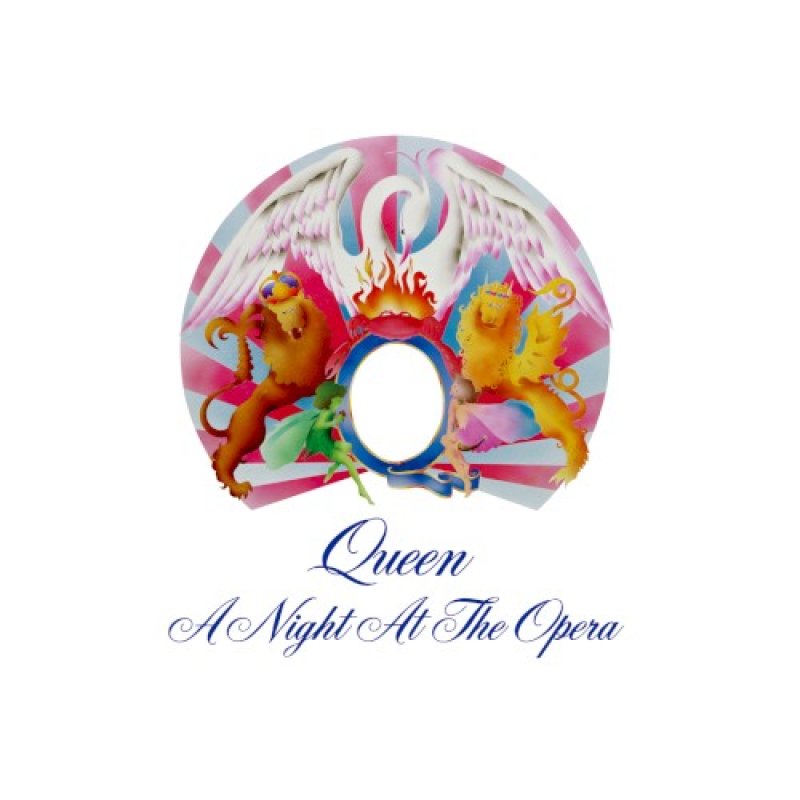
Bohemian Rhapsody
Queen · 1975
The song that proved a commercial single could contain opera, hard rock and a ballad in six minutes. Banned by the BBC for being too long. Nine weeks at number one.
The Dark Side of the Moon (album)
Pink Floyd · 1973
741 weeks on the Billboard charts. The best-selling concept album in progressive rock. The ambition to make a record a total experience — about fear, madness and death — achieved without compromise.

Stairway to Heaven
Led Zeppelin · 1971
The most requested song on rock radio stations for decades. Robert Johnson's blues amplified to the apocalypse. Jimmy Page building the most perfect arc in stadium rock.
The Rise and Fall of Ziggy Stardust (album)
David Bowie · 1972
The glam rock manifesto. The first concept album about an alien rockstar. Bowie launching his career of reinventions with the most theatrical and most perfect of them all.
Get It On (Bang a Gong)
T. Rex · 1971
Glam in its purest form: Little Richard filtered through Tolkien, electrified and sent to number one. Marc Bolan being the most beautiful figure in British pop for exactly as long as he was meant to be.
The Wall (album)
Pink Floyd · 1979
Roger Waters' most ambitious work. The rockstar who builds a wall around himself. The concept album taken to its most extreme conclusions — and the beginning of the end for the band.
Blackstar (album)
David Bowie · 2016
The most perfect farewell in the history of rock. An album about death recorded by a man who knew he was dying. Released two days before his death — the final act of an artist who controlled his narrative until the end.
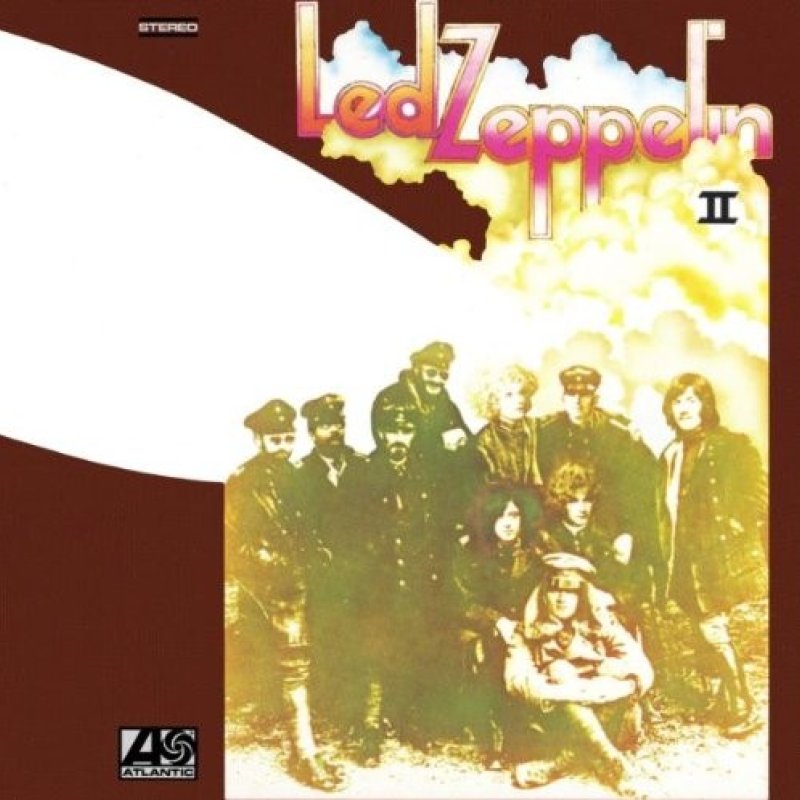
Whole Lotta Love
Led Zeppelin · 1969
Chicago blues turned into electric apocalypse. Page and Plant inventing hard rock with a precision their imitators never reached — because they could not.
Bohemian Rhapsody Live (Live Aid)
Queen · 1985
This is not a studio recording but an event: the twenty-two most important minutes in the history of the rock concert. Mercury taking control of seventy-two thousand people at Wembley with a piano and his body.
The full series
England
British invasion, glam, punk, britpop, electronica. An island that exports sound.
-
CAP 01
🇬🇧 Ch 01
The Roots: The Island that Sang before Knowing It Sang (13th century–1950)
Before the Beatles, before punk, before the world knew there was something
-
CAP 02
🇬🇧 Ch 02
Skiffle and Beat: The Fire That Ignited the Beatles (1954–1963)
In 1955, the electric guitar was an expensive instrument, difficult to obtain and associated with professional musicians. For a working-class English teenager in Birmingham, Liverp
-
CAP 03
🇬🇧 Ch 03
The British Invasion: When Liverpool and London Changed the World (1963–1970)
In early 1964, American rock and roll was in crisis. Elvis Presley had left for military service, Chuck Berry had gone to prison, Little Richard had become a preacher, Buddy Holly
-
CAP 04 you are here
🇬🇧 Ch 04
Glam and Prog: The Rock That Dressed Up as Theater (1970–1979)
The sixties had ended on a sour note: Altamont, the deaths of Jimi Hendrix and Janis Joplin, the breakup of the Beatles, the end of hippie optimism. The rock of 1970 was searching
-
CAP 05
🇬🇧 Ch 05
Punk and Post-Punk: Creative Destruction (1976–1985)
The summer of 1976 in England was the hottest of the 20th century up to that point: weeks without rain, yellow grass, the country in economic crisis with 25% inflation and mass une
-
CAP 06
🇬🇧 Ch 06
Britpop and Rave: Cool Britannia and the Night That Never Ended (1988–2000)
In the early nineties, Anglo-Saxon popular music was dominated by Seattle grunge: Nirvana, Pearl Jam, Soundgarden — dark, heavy, American music that looked inward with a desperatio
-
🇬🇧 Ch 07
Grime and the New Urban Scene: The East London Neighbourhoods that Changed Music (2000–Present)
In 2001, a sixteen-year-old teenager named **Dylan Mills** in Poplar, in east London, recorded his first single on a school computer. The result — "I Luv U" — circulated for months
-
🇬🇧 Ch 08
The 21st Century: The Island That Kept Producing (2000–present)
Being an English musician in the 21st century means carrying a legacy that no other country has: the Beatles, the Rolling Stones, David Bowie, Led Zeppelin, Pink Floyd, Queen, the
You might also like
3 articles picked by editorial similarity


