


🇬🇧 GB · England · Chapter 6 of 8
Britpop and Rave: Cool Britannia and the Night That Never Ended (1988–2000)
In the early nineties, Anglo-Saxon popular music was dominated by Seattle grunge: Nirvana, Pearl Jam, Soundgarden — dark, heavy, American music that looked inward with a desperation that global audiences found authentic. In England, a generation of young musicians listened to it and decided it was not for them.

"If punk was to get rid of the hippies, then I'm getting rid of grunge", Damon Albarn declared to NME as Blur presented their album Modern Life Is Rubbish. He and his contemporaries wanted something brighter and more pop, reflecting British culture.
What they produced was Britpop: a subgenre of alternative rock born in the early 90s, led by bands such as Oasis, Blur, Suede and Elastica, which drew inspiration from the bands of the British Invasion of the sixties — The Kinks, The Who — and from the glam and punk artists of the seventies.
Britpop was also the moment when popular English music became a political project: Cool Britannia — the cultural brand with which Tony Blair's government attempted to identify the nation's new optimism — adopted Oasis and Blur as its symbols, with results that the artists themselves found uncomfortable.
Oasis: The Brothers Who Conquered the World
Noel Gallagher and Liam Gallagher grew up in Burnage, a working-class neighbourhood in Manchester. Noel was the songwriter and guitarist, Liam the vocalist. The tension between the two brothers — constant, explosive, frequently violent — was at once the fuel that made Oasis great and the mechanism that would eventually destroy them.
Definitely Maybe (1994) — the debut album — was the fastest-selling debut record in UK history up to that point: a declaration that rock could be great again, direct and unashamed. "Live Forever", "Rock 'n' Roll Star", "Supersonic": songs that promised life could be exactly what you wanted it to be, delivered with the conviction of someone who fully believes it.
(What's the Story) Morning Glory? (1995) was the next step and the greater one: "Wonderwall", "Don't Look Back in Anger", "Champagne Supernova" — songs that reached the entire world simultaneously, sung in stadiums with the mass participation that only anthems produce, that thirty years later still play on the radio with the same naturalness they had back then.
The Oasis concerts at Knebworth in August 1996 — two nights, two hundred and fifty thousand people, the largest concert in British history up to that point — were the peak of Britpop as a cultural phenomenon: the moment when it seemed a band from Manchester had taken the place the Beatles had left empty twenty-six years earlier. The rivalry between Blur and Oasis, in terms of numbers, declared the Manchester band the clear winner when the London group had its first break-up in 2003.
Oasis dissolved in August 2009 when Noel left the group minutes before a concert in Paris — with no explanation other than that he could no longer work with his brother. Fifteen years later, in 2024, they announced a reunion for the 2025 tour — which sold out in minutes and drew millions of people around the world, proving that Britpop, as nostalgia, remains as powerful as it was when it was the present.
Blur: The Smartest Ones in the Room
Damon Albarn, Graham Coxon, Alex James and Dave Rowntree were Blur — the London band that represented the opposite pole of Oasis in Britpop: where the Gallaghers were straightforward and without irony, Blur was intellectual and pop art; where Oasis looked to the Beatles, Blur looked to the Kinks and Syd Barrett.
Parklife (1994) — four Brit Awards in a single night, the greatest success in the history of the award — was their statement: English pop as a social chronicle of everyday British life, with humour, with melancholy and with a production that blended indie guitar with string arrangements and cabaret.
The "Battle of Britpop" of August 1995 — when Blur and Oasis released their new singles on the same day, in what was considered the first great chart battle since the Beatles versus the Stones in the sixties — was the movement's most media-covered moment: Blur won the chart battle with "Country House", but Oasis won the war with Morning Glory.
Albarn reinvented himself after Britpop with Gorillaz — the virtual band he co-founded in 1998 with illustrator Jamie Hewlett — and built one of the most creative careers in twenty-first-century English music.
Pulp: The Poet of Britpop
Jarvis Cocker and Pulp were the third great force of Britpop — but the most specifically literary and the most uncomfortable one. Cocker came from Sheffield, had spent fifteen years recording without commercial success, and when Britpop arrived he was already in his thirties with a vision of the world too complex to fit entirely within the movement's optimism.
Different Class (1995) — with "Common People" as its central song — was the most intelligent album of Britpop: a description of English working-class life from the inside, with the anger of someone who knows exactly the difference between wanting to be poor for aesthetic reasons and being poor out of necessity.
"Common People" — the story of a wealthy Greek girl who wants to live like ordinary people, narrated by someone who actually is ordinary people and knows exactly what that means — is the most politically sharp song of Britpop and one of the best English pop songs of the nineties.
Cocker became internationally famous in February 1996 when he climbed onto the stage at the Brit Awards during Michael Jackson's performance — who had presented himself with a messianic set design — and began making mocking gestures behind the artist. He was detained by security, temporarily accused of assaulting children who were part of the performance (a charge that was quickly dropped), and turned into a national hero by exactly the same people who adored Jackson.
The Rave Scene: The Other England of the Nineties
While Britpop dominated the covers of NME, another England was living its own musical revolution in completely different spaces: the abandoned warehouses of the industrial cities of the north, the open fields on the outskirts of towns, the clubs of Ibiza.
The rave — the illegal or semi-legal party that brought thousands of people together to dance to electronic music — had been born in Manchester and London in the late eighties with the Second Summer of Love of 1988: the summer in which ecstasy arrived in England at the same time as Chicago house and Detroit techno, and in which thousands of young people discovered they could dance together all night without the class and race divisions that split the rest of their lives.
The Stone Roses — with their mix of indie guitar and dance rhythms — and The Happy Mondays — with the unhinged charisma of Shaun Ryder and their blend of rock and dance funk — were the artists the press called Madchester: the Manchester scene that preceded Britpop and made it possible by proving that rock could be danced to without shame.
The Factory Records label of Tony Wilson — the same that had launched Joy Division — produced that scene with the same vision with which it had produced post-punk: trusting in artists no one else would have signed, with contracts that gave total creative control to the artist, losing money with the same elegance with which it made it.
The The Haçienda club — funded by New Order with the royalties from "Blue Monday" — was the physical space where acid house and rave reached Manchester: a concert venue turned electronic dance club that for ten years was the most important place in dance music in Europe.
Radiohead: Beyond Britpop
Thom Yorke, Jonny Greenwood, Colin Greenwood, Ed O'Brien y Phil SelwayRadiohead — systematically refused to be classified within Britpop, even though chronologically they were part of that generation.
The Bends (1995) and OK Computer (1997) — the latter repeatedly voted the best album of the nineties in critical polls — were their alternative: a rock that looked toward the anxiety of technological modernity, toward the isolation of the individual in the information society, with a musical and lyrical complexity that Britpop neither had nor wanted to have.
"Paranoid Android" — six minutes of tempo and mood changes that went from a whisper to the apocalypse — was their declaration of independence from Britpop: proof that English rock could be contemporary without needing the Union Jack or nostalgia for the sixties.
Kid A (2000) — in which Radiohead completely abandoned the guitar in favor of experimental electronics — was the endpoint: the most important English rock band of the nineties declaring that rock was over and that what came next was something else entirely.
Editorial note: The "Battle of Britpop" of August 1995 — Oasis versus Blur, releasing their singles on the same day — was largely a construction of the English music press, one that the artists themselves fueled with increasingly hostile statements. What the press framed as an ideological war between the working-class north (Oasis) and the intellectual south (Blur) was also — and perhaps primarily — an extraordinarily effective marketing exercise that benefited both bands. Damon Albarn acknowledged this decades later: "I think we can officially say that Oasis won the battle, the war, the campaign, everything." What no one mentions is that Blur sold more records in the years that followed. And that Gorillaz — Albarn's post-Britpop band — has achieved greater global commercial success than any of the Gallaghers' solo projects. Pop wars rarely have clear winners. They have narratives that memory simplifies.
10 · 2 en DoReSol
Top 10 of Britpop and British Rave
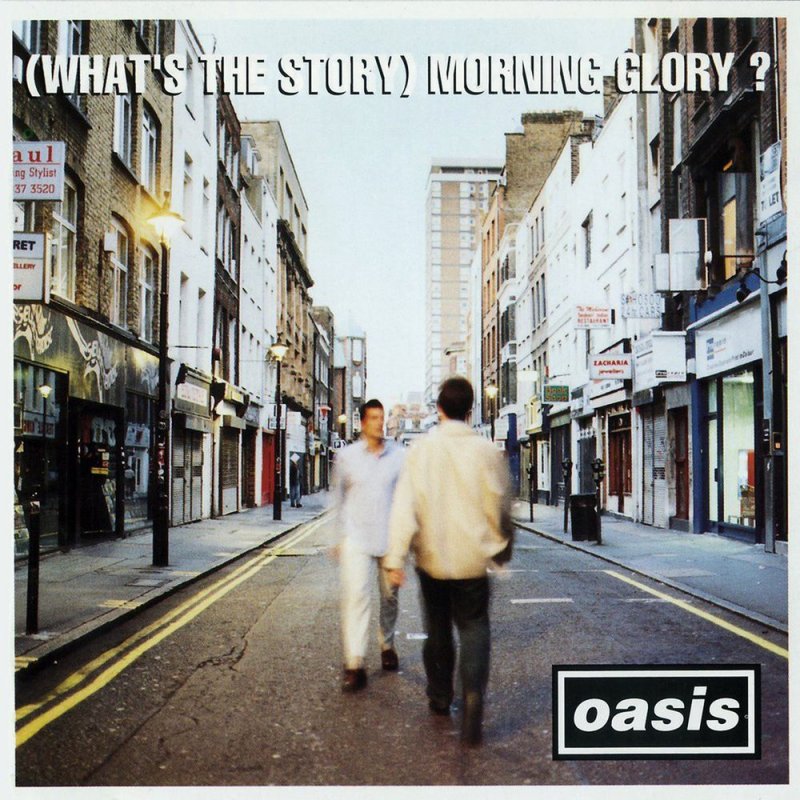
Wonderwall
Oasis · 1995
The most played acoustic guitar song in the history of British pop. Britpop in its most accessible and universal form. Thirty years on, it is still the song that anyone with three chords tries to play.
Common People
Pulp · 1995
The smartest song of Britpop. Social class as lived experience rather than aesthetic posture. Jarvis Cocker telling Cool Britannia's England exactly what it did not want to hear.
OK Computer (album)
Radiohead · 1997
The best album of the nineties according to most critical lists. The anxiety of technological modernity in rock. Radiohead serving as the intellectual counterweight to Britpop from within the same generation.
Don't Look Back in Anger
Oasis · 1995
The anthem. The song that two hundred and fifty thousand people sang at Knebworth in 1996. The promise that the past can be left behind with the same conviction with which the present is embraced.
Parklife (album)
Blur · 1994
Four Brit Awards in one night. The social chronicle of everyday British life in pop. Damon Albarn being the Kinks of the nineties without fully meaning to.
I Am the Resurrection
The Stone Roses · 1989
Madchester before Britpop. Indie guitar and dance groove in the same song. The seed of everything the Manchester scene would produce in the years that followed.
Blue Monday
New Order · 1983
The best-selling twelve-inch format single in history. Joy Division turned into New Order, finding in electronic dance music the language that outlived them. The bridge between post-punk and rave.
Definitely Maybe (album)
Oasis · 1994
The debut album that sold fastest in UK history. The promise that rock could be great again. The Gallagher brothers before grandioseness became a problem.
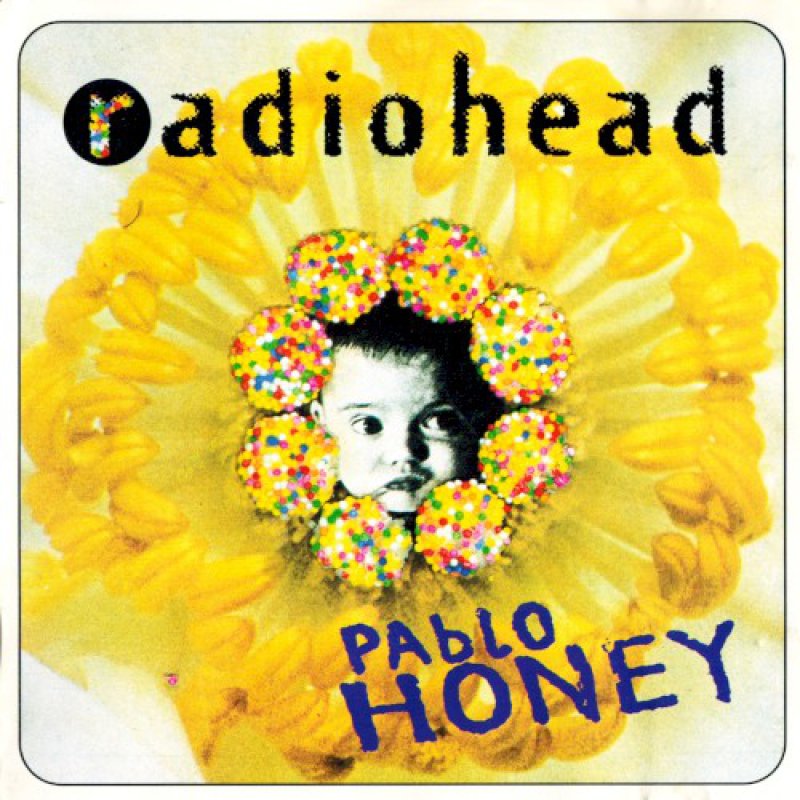
Creep
Radiohead · 1993
The song Radiohead spent years disowning because it became too popular. The outsider anthem that connected with a generation that did not fit into Britpop's optimism.
Different Class (album)
Pulp · 1995
The most literary album of Britpop. Jarvis Cocker building a world of working-class characters with the precision of a short novelist. Britpop seen from below rather than from above.
The full series
England
British invasion, glam, punk, britpop, electronica. An island that exports sound.
-
CAP 01
🇬🇧 Ch 01
The Roots: The Island that Sang before Knowing It Sang (13th century–1950)
Before the Beatles, before punk, before the world knew there was something
-
CAP 02
🇬🇧 Ch 02
Skiffle and Beat: The Fire That Ignited the Beatles (1954–1963)
In 1955, the electric guitar was an expensive instrument, difficult to obtain and associated with professional musicians. For a working-class English teenager in Birmingham, Liverp
-
CAP 03
🇬🇧 Ch 03
The British Invasion: When Liverpool and London Changed the World (1963–1970)
In early 1964, American rock and roll was in crisis. Elvis Presley had left for military service, Chuck Berry had gone to prison, Little Richard had become a preacher, Buddy Holly
-
CAP 04
🇬🇧 Ch 04
Glam and Prog: The Rock That Dressed Up as Theater (1970–1979)
The sixties had ended on a sour note: Altamont, the deaths of Jimi Hendrix and Janis Joplin, the breakup of the Beatles, the end of hippie optimism. The rock of 1970 was searching
-
CAP 05
🇬🇧 Ch 05
Punk and Post-Punk: Creative Destruction (1976–1985)
The summer of 1976 in England was the hottest of the 20th century up to that point: weeks without rain, yellow grass, the country in economic crisis with 25% inflation and mass une
-
CAP 06 you are here
🇬🇧 Ch 06
Britpop and Rave: Cool Britannia and the Night That Never Ended (1988–2000)
In the early nineties, Anglo-Saxon popular music was dominated by Seattle grunge: Nirvana, Pearl Jam, Soundgarden — dark, heavy, American music that looked inward with a desperatio
-
🇬🇧 Ch 07
Grime and the New Urban Scene: The East London Neighbourhoods that Changed Music (2000–Present)
In 2001, a sixteen-year-old teenager named **Dylan Mills** in Poplar, in east London, recorded his first single on a school computer. The result — "I Luv U" — circulated for months
-
🇬🇧 Ch 08
The 21st Century: The Island That Kept Producing (2000–present)
Being an English musician in the 21st century means carrying a legacy that no other country has: the Beatles, the Rolling Stones, David Bowie, Led Zeppelin, Pink Floyd, Queen, the
You might also like
3 articles picked by editorial similarity


