


🇬🇧 GB · England · Chapter 3 of 8
The British Invasion: When Liverpool and London Changed the World (1963–1970)
In early 1964, American rock and roll was in crisis. Elvis Presley had left for military service, Chuck Berry had gone to prison, Little Richard had become a preacher, Buddy Holly had died in a plane crash, and Jerry Lee Lewis had become embroiled in a scandal. The creators of the genre were out of the game, and American popular music was searching for its next direction without finding it.

Into that void came the British. And what they brought was not simply a version of American rock — it was that same rock returned transformed, with eight years of intense digestion, with the vocal harmonies of doo-wop, with the energy of Merseybeat, with the influence of the blues from Chess Records and folk ballads, and with a specifically British attitude that proved irresistible to the American public.
The most curious thing about the British Invasion is not that these bands diverted the course of popular music in the United States and the world, but that all of them had as their primary influence American music from earlier years — from jazz, and even more so from the blues.
It was the perfect paradox: America had exported the blues and rock and roll to England, and the English returned it amplified, reinvented, and wrapped in something America had not known it needed.
February 9, 1964: The Night of the Ed Sullivan Show
On February 7, 1964, The Beatles landed at John F. Kennedy Airport in New York. Three thousand fans were waiting for them in the terminal. The police had not seen anything comparable since Frank Sinatra was young.
Two days later, on February 9, they appeared on The Ed Sullivan Show — the most watched variety program on American television, with an estimated audience of 73 million people that night, approximately one third of the total population of the United States. They played five songs. The audience — mostly teenagers who had obtained tickets through a lottery — could barely let the music be heard over the screaming.
Crime figures in the United States that night reached historic lows. The joke circulated for years: every American teenager was at home watching television.
What happened in the following months was the British Invasion in its full dimension: following The Beatles' success in the American market, the true process of the so-called British Invasion began; bands such as The Rolling Stones, The Who, The Animals and The Kinks literally invaded the United States with their music.
The Beatles: The Most Important Band in History
There is no way to talk about the Beatles that doesn't sound like hyperbole — and the problem is that the hyperbole is justified. John Lennon, Paul McCartney, George Harrison and Ringo Starr produced in eight years of recording career — from Please Please Me (1963) to Let It Be (1970) — one of the most extraordinary bodies of work in the history of popular music: thirteen studio albums, each one different from the last, each one a step forward that no one had taken before.
The Beatles' trajectory is the story of a band that never settled for repeating what had worked. They started as a Merseybeat group and ended as the most experimental act in rock — and every phase along the way was also a massive commercial success, which makes them all the more extraordinary.
A Hard Day's Night (1964) — the first album composed entirely by Lennon and McCartney — proved that they could write their own songs with the same ease with which a plumber fixes pipes: fast, clean, functional and perfect.
Rubber Soul (1965) and Revolver (1966) marked the turn toward complexity: literary references in the lyrics, experiments with the recording studio as an instrument, influences from Bob Dylan's folk, Ravi Shankar's Indian raga, and American soul. George Harrison incorporated the sitar. Lennon began writing songs that could not be performed live.
Sgt. Pepper's Lonely Hearts Club Band (1967) was the synthesis: the first rock album the world received as a complete and coherent work of art, with cover art designed by Peter Blake, with songs that formed a conceptual narrative whole, with studio effects no one had attempted before on a pop album. Time magazine put it on its cover. Literary critics analyzed it. The cultural establishment that had ignored rock took it seriously for the first time.
Abbey Road (1969) and Let It Be (1970) were the farewell — though no one fully knew it until it was too late. The internal tensions were already irresolvable: Lennon wanted to explore the avant-garde, McCartney wanted accessible rock, Harrison had grown as a songwriter and demanded space, and Yoko Ono and Linda Eastman had changed the group's dynamic. On April 10, 1970, McCartney publicly announced that the band had dissolved.
The Rolling Stones: The Eternally Damned
If the Beatles represented the friendly face of the British Invasion — four boys with fringes and sharp suits who smiled for photographs — The Rolling Stones brought a rawer, more rebellious attitude. Influenced by American blues, songs like "(I Can't Get No) Satisfaction" became anthems for a generation.
Mick Jagger, Keith Richards, Brian Jones, Charlie Watts and Bill Wyman came from the suburbs of south London, not from Liverpool. They were fans of Chess Records blues — of Muddy Waters, of Howlin' Wolf, of Bo Diddley — before being fans of Elvis, and that difference in musical background could be heard in their sound: darker, rawer, more directly connected to Black American blues than the Beatles' pop.
"(I Can't Get No) Satisfaction" (1965) — the riff that Keith Richards played into a home recorder while he slept, believing he had dreamed it — was the song that turned them into the global phenomenon they remain today: a directionless discontent, a dissatisfaction that does not quite know what it is dissatisfied with, transformed into rock of an urgency that the Beatles' pop had never achieved.
The Rolling Stones survived everything: the death of Brian Jones, who drowned in his swimming pool in 1969, the tragedy of Altamont where a fan was killed by the Hells Angels during their concert that same year, decades of excess, the departure of members, the passage of time. In 2023, with Charlie Watts having died in 2021, they continued touring with Steve Jordan on drums. They are the only rock band of the nineteen sixties still performing with their founding members.
The Who: Rock as Theatre
Pete Townshend, Roger Daltrey, John Entwistle and Keith Moon were the most theatrical and most violent version of the British Invasion: the band that ended their concerts by smashing instruments on stage, with Moon ripping the drum kit from the floor and Townshend breaking his guitar against the amplifiers.
That destruction was not gratuitous: it was a philosophical statement that Townshend articulated in terms of action art — the happening, performance art — that he was exploring at art school. Rock as a total act, as an experience that cannot be reduced to the recorded album, that occurs in the moment and is consumed by it.
"My Generation" (1965) — with Daltrey's deliberate stutter in the lyrics ("Why don't you all f-f-f-fade away") that imitated the way amphetamine-fuelled mods spoke — was their generational manifesto: "I hope I die before I get old." The most direct song any group of the Invasion had written about the gulf between the young and the old.
Tommy (1969) — the first rock opera, the story of a "deaf, dumb and blind boy" who becomes a pinball champion and cult leader — was the most ambitious work of the British Invasion: proof that rock could sustain the narrative of a complete musical work.
The Kinks: The Most English of All
Ray Davies and The Kinks were perhaps the most specifically English of all the invasion groups: where the Beatles absorbed every influence in the world and returned them transformed, and where the Stones sought American blackness, the Kinks looked inward — toward the England of pubs, music hall, and the middle classes with their well-kept gardens and their money troubles.
"You Really Got Me" (1964) — with the distorted guitar riff that Jimmy Page played on the recording (though some attribute it to Dave Davies) — was one of the first heavy metal riffs before heavy metal existed. But the Kinks' most important work was their conceptual period of the late sixties: The Kinks Are the Village Green Preservation Society (1968) — an album about nostalgia for a rural England that no longer existed — is one of the most singular records in English music of its era.
Swinging London: The Culture of the Moment
The British Invasion was not just musical: it was cultural in the broadest sense. Bands like The Who and The Kinks brought "Swinging London" to screens and stages, popularizing trends such as mod suits and distinctive hairstyles.
The Swinging London — the London of 1964 to 1967, with its Carnaby Street and King's Road boutiques, its models like Twiggy and its photographers like David Bailey — was the moment when London became the most modern city in the world in terms of popular culture: music, fashion, photography, and film converged in the same scene, with the same protagonists, in the same West End clubs and restaurants.
The Animals with their version of "The House of the Rising Sun" (1964) — which they took from Bob Dylan, who took it from the American folk tradition — brought the New Orleans blues to the global number one in four minutes without an electric guitar. The Yardbirds — who successively had Eric Clapton, Jeff Beck, and Jimmy Page as guitarists — were the blues rock laboratory that Led Zeppelin would later develop.
Editorial note: The deepest paradox of the British Invasion is that the Black American musicians who had created the blues — Muddy Waters, Chuck Berry, Little Richard — watched as white English musicians got rich off their music while they continued performing on segregated circuits and receiving miserable royalties. Muddy Waters once said that the Rolling Stones had given him his name — they had taken "Rollin' Stone Blues" from one of his songs — but that they had kept the fame for themselves. When the Stones arrived in Chicago in 1964 and met Muddy Waters at Chess Studios, they revered him as the master he was. That reverence was genuine. But reverence did not pay Waters's rent. The British Invasion was the most beautiful and most unjust moment in the history of rock: the moment when Black American music conquered the world — in white English hands.
10 · 3 en DoReSol
Top 10 of the British Invasion
Sgt. Pepper's Lonely Hearts Club Band (album)
The Beatles · 1967
The first rock album received by the world as a complete work of art. The moment when the cultural establishment took rock seriously. The synthesis of everything the Beatles had learned in four years of experimentation.
(I Can't Get No) Satisfaction
The Rolling Stones · 1965
The riff Keith Richards played in his sleep. Objectless discontent turned into the most urgent anthem of the British Invasion. The Stones finding their own voice after years of covering American blues.
Abbey Road (album)
The Beatles · 1969
The most perfect farewell in rock history. The side B medley — sixteen minutes of song fragments sewn together to seem like a single work — as a statement of what the recording studio can do when musicians trust it completely.
My Generation
The Who · 1965
The most direct generational manifesto of the British Invasion. Daltrey's stutter, the destruction of instruments at the end, the promise to die before getting old: all in three minutes of rock that the adult establishment could not ignore.
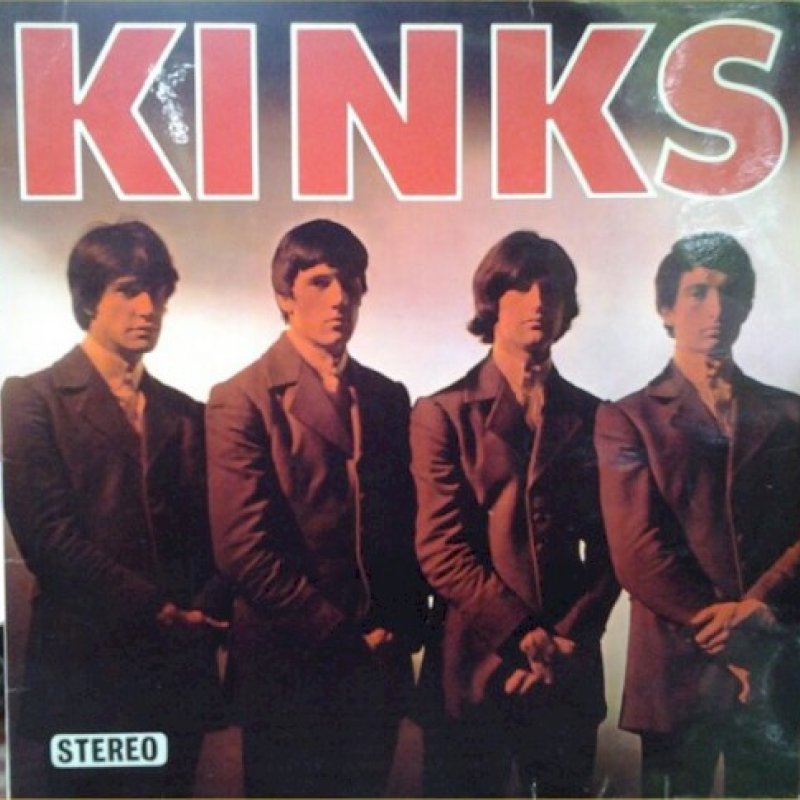
You Really Got Me
The Kinks · 1964
One of the first heavy metal riffs before heavy metal had a name. Ray Davies being more English than anyone while inventing something completely new.
Revolver (album)
The Beatles · 1966
The pivot: the moment when the Beatles stopped being a pop band and became something harder to define. "Tomorrow Never Knows" — with its tape loops and its lyrics from the Tibetan Book of the Dead — announcing that popular music would never be what it had been.
The House of the Rising Sun
The Animals · 1964
The American folk ballad transformed into English blues rock. Eric Burdon singing about New Orleans without ever having set foot in America — and sounding more authentic than most Americans.
Tommy (album)
The Who · 1969
The first rock opera in history. Pete Townshend proving that rock could sustain the narrative architecture of a complete musical work. The most ambitious step beyond anything any other band from the invasion had attempted.
Village Green Preservation Society (album)
The Kinks · 1968
The most distinctly English album of the entire British Invasion. Ray Davies looking inward — toward a vanishing rural England — when everyone else was looking outward.
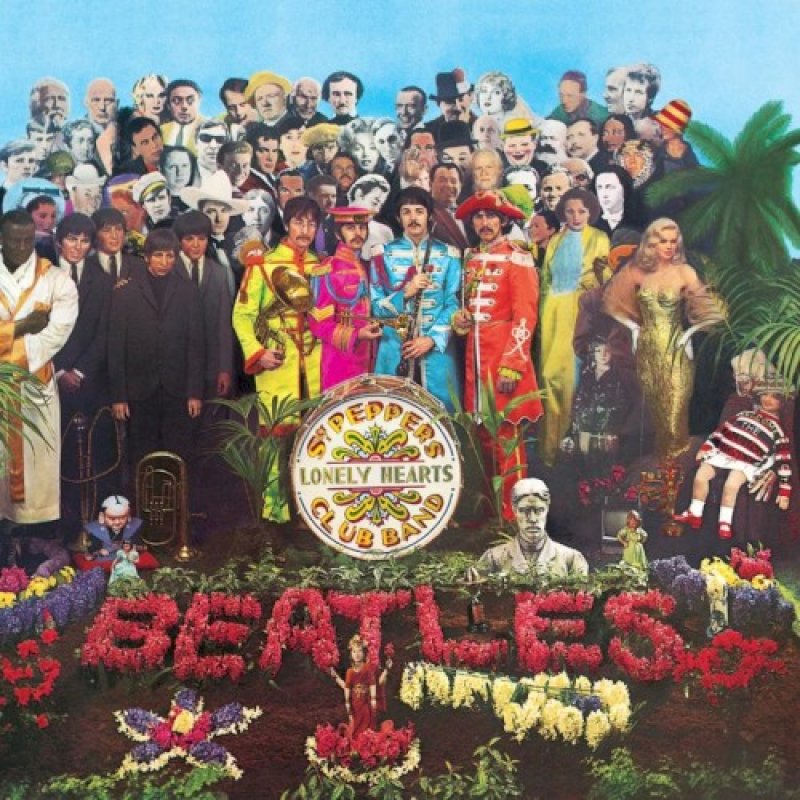
A Day in the Life
The Beatles · 1967
The most ambitious song on the most ambitious album of the invasion. The orchestral crescendo that the BBC banned for "drug references" and that critics described as the moment popular music reached the grandeur of the symphony.
The full series
England
British invasion, glam, punk, britpop, electronica. An island that exports sound.
-
CAP 01
🇬🇧 Ch 01
The Roots: The Island that Sang before Knowing It Sang (13th century–1950)
Before the Beatles, before punk, before the world knew there was something
-
CAP 02
🇬🇧 Ch 02
Skiffle and Beat: The Fire That Ignited the Beatles (1954–1963)
In 1955, the electric guitar was an expensive instrument, difficult to obtain and associated with professional musicians. For a working-class English teenager in Birmingham, Liverp
-
CAP 03 you are here
🇬🇧 Ch 03
The British Invasion: When Liverpool and London Changed the World (1963–1970)
In early 1964, American rock and roll was in crisis. Elvis Presley had left for military service, Chuck Berry had gone to prison, Little Richard had become a preacher, Buddy Holly
-
CAP 04
🇬🇧 Ch 04
Glam and Prog: The Rock That Dressed Up as Theater (1970–1979)
The sixties had ended on a sour note: Altamont, the deaths of Jimi Hendrix and Janis Joplin, the breakup of the Beatles, the end of hippie optimism. The rock of 1970 was searching
-
CAP 05
🇬🇧 Ch 05
Punk and Post-Punk: Creative Destruction (1976–1985)
The summer of 1976 in England was the hottest of the 20th century up to that point: weeks without rain, yellow grass, the country in economic crisis with 25% inflation and mass une
-
CAP 06
🇬🇧 Ch 06
Britpop and Rave: Cool Britannia and the Night That Never Ended (1988–2000)
In the early nineties, Anglo-Saxon popular music was dominated by Seattle grunge: Nirvana, Pearl Jam, Soundgarden — dark, heavy, American music that looked inward with a desperatio
-
🇬🇧 Ch 07
Grime and the New Urban Scene: The East London Neighbourhoods that Changed Music (2000–Present)
In 2001, a sixteen-year-old teenager named **Dylan Mills** in Poplar, in east London, recorded his first single on a school computer. The result — "I Luv U" — circulated for months
-
🇬🇧 Ch 08
The 21st Century: The Island That Kept Producing (2000–present)
Being an English musician in the 21st century means carrying a legacy that no other country has: the Beatles, the Rolling Stones, David Bowie, Led Zeppelin, Pink Floyd, Queen, the
You might also like
3 articles picked by editorial similarity


