


🇬🇧 GB · England · Chapter 5 of 8
Punk and Post-Punk: Creative Destruction (1976–1985)
The summer of 1976 in England was the hottest of the 20th century up to that point: weeks without rain, yellow grass, the country in economic crisis with 25% inflation and mass unemployment among young people. It was the year of Queen Elizabeth II's silver jubilee, and the Labour government was in its death throes.

In that context, four kids from London took the stage and said exactly what no one in the establishment wanted to hear. They didn't say it with sophistication, or four-track harmonies, or twenty-minute guitar solos. They said it screaming, out of tune, with three chords and the conviction of someone who has nothing to lose.
Punk didn't come to propose alternatives. It came to destroy what was already there.
The Concert That Changed History
On June 4, 1976, around forty young people from Manchester attended the Lesser Free Trade Hall amphitheater in Manchester to listen to the Sex Pistols, a relatively unknown London punk band whose motto was "we're not here for the music, we're here for the chaos".
Among those forty young people were Bernard Sumner and Peter Hook — who the next day would buy their first instruments and form the band that would become Joy Division. Also there was Ian Curtis — wearing a t-shirt that said "HATE" on the back. Also there were the future members of The Buzzcocks, of The Fall, of The Smiths.
The historic Sex Pistols concert would forge what would later be known in England as the indie music movement, with iconic bands such as Joy Division, New Order and The Smiths, as well as labels like Factory Records and musical movements such as post-punk, new wave, acid house and rave.
Forty people in a small room in Manchester. Everything that English music did in the following twenty years started that night.
The Sex Pistols: Four Minutes of Chaos
John Lydon — Johnny Rotten, Steve Jones, Paul Cook and Glen Matlock (later replaced by Sid Vicious) were the Sex Pistols: a band created in part by manager Malcolm McLaren as a situationist project, as an act of deliberate cultural provocation, and in part by young working-class musicians from west London who had real rage and did not know how to express it except by playing as loud and as fast as they could.
"Anarchy in the U.K." (1976) was their first statement: anarchy not as a political programme but as an emotional state — the negation of everything official England represented. "God Save the Queen" (1977) — released during the Silver Jubilee, with a cover of the Queen with a safety pin through her nose — was banned by the BBC and reached number one anyway, although the official charts excluded it so that it would not appear in first position during the monarchical celebrations.
The Sex Pistols lasted two years and one album — Never Mind the Bollocks, Here's the Sex Pistols (1977). They disbanded in January 1978 during an American tour in San Francisco, when Lydon announced from the stage: "Ever get the feeling you've been cheated?"
That was enough. Two years, one album and one concert in San Francisco were sufficient to change the direction of English popular music for the following decade.
The Clash: Punk with a Political Conscience
If the Sex Pistols were pure nihilism, The Clash — Joe Strummer, Mick Jones, Paul Simonon and Topper Headon — were their political counterpart: the punk band that wanted to destroy the system but also had something to put in its place.
Strummer — son of a British diplomat, raised among embassies around the world — brought to The Clash a political awareness and a musical curiosity that pure punk lacked. Their albums blended punk with Jamaican reggae, American rockabilly, ska, and soul — each record more ambitious than the last.
London Calling (1979) — released as a double album at the price of a single — is the most important record of English post-punk: nineteen songs ranging from punk to reggae to rockabilly to jazz, with lyrics describing a city in crisis and a world on the brink of nuclear disaster, with production by Guy Stevens that captures the energy of a band at its absolute peak.
Rolling Stone named it the best album of the eighties on its list of the 500 greatest records of all time — even though it was released in 1979 — because it perfectly captures the mood of an era that had not yet begun but could already be felt approaching.
Joy Division: Darkness as Art
Bernard Sumner and Peter Hook formed the band after attending the Sex Pistols concert in June 1976. While Joy Division's early recordings were heavily influenced by raw punk, they soon developed a sparse sound and style that made them one of the pioneering groups of post-punk.
Ian Curtis — the vocalist who responded to an ad in a record shop — was twenty years old when he joined the group and brought with him influences that were not those of punk: Bowie, Lou Reed, Kafka, William Burroughs, the poetry of Rimbaud. His voice — deep, distant, physically intense — and his lyrics — about alienation, loss of control, the body that does not obey — gave Joy Division a dimension that punk had never reached.
Curtis had epilepsy. As the band's popularity grew, his health condition made it increasingly difficult for him to perform; he occasionally experienced seizures on stage. The strain of touring, problems in his marriage and the depression that accompanied him accumulated until they became unbearable.
On 18 May 1980, one day before Joy Division was to leave for its first tour of the United States, Ian Curtis took his own life at his home. He was 23 years old.
Closer — the second and final album, released two months after his death — and the single "Love Will Tear Us Apart" were his most widely heard posthumous works. The three remaining members regrouped under the name New Order and built the most important career in English dance music of the eighties.
The Smiths and Manchester Post-Punk
The Sex Pistols' 1976 concert in Manchester also produced, indirectly, The Smiths — the band that Morrissey and Johnny Marr formed in 1982 and that was the most literary and most melancholic expression of English post-punk.
Morrissey sang about loneliness, failure, ambiguous sexuality and the condition of being an outsider with an intensity that made millions of English teenagers feel that someone finally understood them. Marr played guitar with a melodiousness that had no precedent in post-punk: twelve-string chords that sounded like afternoon light in Manchester.
The Queen Is Dead (1986) — with "There Is a Light That Never Goes Out", "Bigmouth Strikes Again" and the title track — is The Smiths' most complete album and one of the most beloved in the history of English rock.
The Smiths dissolved in 1987 when Marr left the group. Morrissey continued with a solo career that was brilliant in its early years and that grew more complicated over time due to the artist's increasingly controversial political positions.
The Cure and Siouxsie: The Gothic
Post-punk also produced its darkest and most aesthetic version: gothic rock, with The Cure by Robert SmithDisintegration (1989) as its crowning achievement — and Siouxsie and the Banshees as its most influential representatives. Both bands took the coldness of post-punk and steered it toward the beauty of pain, toward the aesthetic of darkness as a conscious choice rather than a fatality.
Editorial note: The Sex Pistols concert in Manchester in June 1976 had forty people in the audience. From those forty people came Joy Division, The Buzzcocks, The Fall, and the seeds of almost everything that English independent music produced over the following twenty years. It is the most perfect example of a founding moment that no one recognized as such while it was happening: forty people in a small room who dispersed that night without knowing they had witnessed something that would change history. The great moments of culture rarely announce what they are. They are recognized later, when their consequences are already so great that it becomes impossible to imagine the world without them.
10 · 1 en DoReSol
Top 10 of British Punk and Post-Punk
London Calling (album)
The Clash · 1979
The best album of the eighties according to Rolling Stone — released in 1979. Nineteen songs ranging from punk to reggae to rockabilly. Post-punk in its most ambitious and most political form.
Love Will Tear Us Apart
Joy Division · 1980
The most listened-to song in English post-punk. Released posthumously. Ian Curtis singing the breakdown of love from within his own internal breakdown. The unbearable beauty of something we know has an ending we already know.
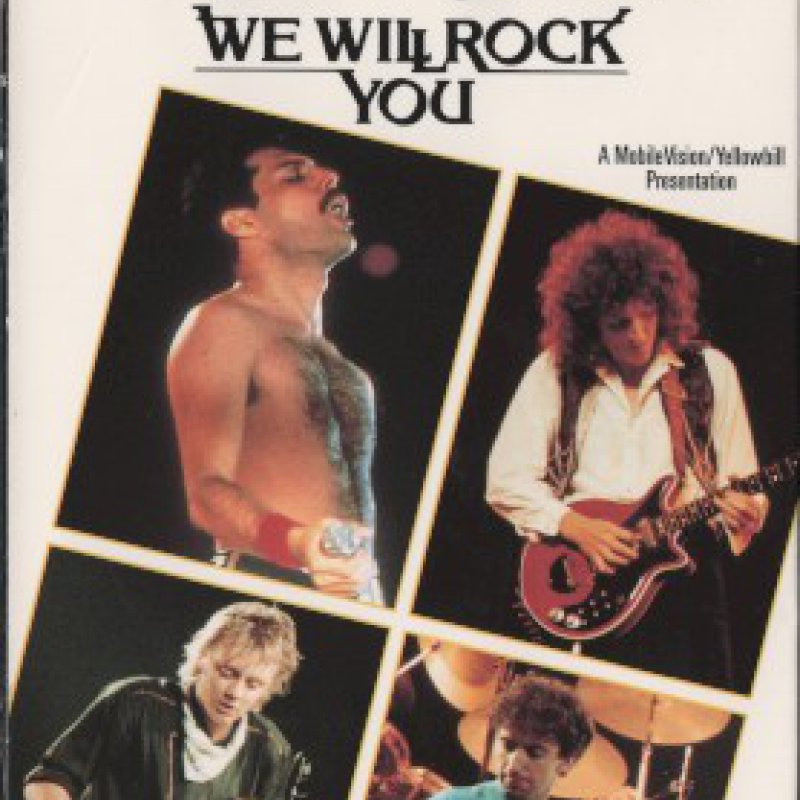
God Save the Queen
Queen · 1992
The most perfectly executed provocation in the history of British rock. Banned by the BBC during the Silver Jubilee. Number one on the charts even though the official charts refused to acknowledge it.
Unknown Pleasures (album)
Joy Division · 1979
The most influential post-punk debut. The cover featuring pulsar waves became the most reproduced design in the history of independent rock. Ian Curtis and Manchester building something no one had built before.
The Queen Is Dead (album)
The Smiths · 1986
The most complete album by The Smiths. Morrissey and Marr at their peak: melancholy and melodic guitar united in the most literary document of English post-punk.
Never Mind the Bollocks (album)
Sex Pistols · 1977
A single album. Two years of career. And yet enough to change the direction of English popular music. Economy of means taken to the extreme: the bare minimum needed to destroy what existed, and not one chord more.
There Is a Light That Never Goes Out
The Smiths · 1986
The most melancholic love song in English post-punk. Morrissey asking to die beside his loved one in a traffic accident — and making it sound romantic rather than disturbing. The paradox only Morrissey could pull off.
Anarchy in the U.K.
Sex Pistols · 1976
The founding statement of British punk. Anarchy as an emotional state rather than a political program. Lydon announcing there is no future with the conviction of someone who has too much energy to fully believe it.
Disintegration (album)
The Cure · 1989
Gothic rock at its peak. Robert Smith carrying the darkness of post-punk toward pure beauty. The album that defined the aesthetic of a generation that consciously chose to live in the shadows.
White Riot
The Clash · 1977
The most direct punk from The Clash before they discovered reggae. Strummer shouting that white people also have a right to anger — with all the ambiguity that phrase contains and that The Clash resolved better than anyone.
The full series
England
British invasion, glam, punk, britpop, electronica. An island that exports sound.
-
CAP 01
🇬🇧 Ch 01
The Roots: The Island that Sang before Knowing It Sang (13th century–1950)
Before the Beatles, before punk, before the world knew there was something
-
CAP 02
🇬🇧 Ch 02
Skiffle and Beat: The Fire That Ignited the Beatles (1954–1963)
In 1955, the electric guitar was an expensive instrument, difficult to obtain and associated with professional musicians. For a working-class English teenager in Birmingham, Liverp
-
CAP 03
🇬🇧 Ch 03
The British Invasion: When Liverpool and London Changed the World (1963–1970)
In early 1964, American rock and roll was in crisis. Elvis Presley had left for military service, Chuck Berry had gone to prison, Little Richard had become a preacher, Buddy Holly
-
CAP 04
🇬🇧 Ch 04
Glam and Prog: The Rock That Dressed Up as Theater (1970–1979)
The sixties had ended on a sour note: Altamont, the deaths of Jimi Hendrix and Janis Joplin, the breakup of the Beatles, the end of hippie optimism. The rock of 1970 was searching
-
CAP 05 you are here
🇬🇧 Ch 05
Punk and Post-Punk: Creative Destruction (1976–1985)
The summer of 1976 in England was the hottest of the 20th century up to that point: weeks without rain, yellow grass, the country in economic crisis with 25% inflation and mass une
-
CAP 06
🇬🇧 Ch 06
Britpop and Rave: Cool Britannia and the Night That Never Ended (1988–2000)
In the early nineties, Anglo-Saxon popular music was dominated by Seattle grunge: Nirvana, Pearl Jam, Soundgarden — dark, heavy, American music that looked inward with a desperatio
-
🇬🇧 Ch 07
Grime and the New Urban Scene: The East London Neighbourhoods that Changed Music (2000–Present)
In 2001, a sixteen-year-old teenager named **Dylan Mills** in Poplar, in east London, recorded his first single on a school computer. The result — "I Luv U" — circulated for months
-
🇬🇧 Ch 08
The 21st Century: The Island That Kept Producing (2000–present)
Being an English musician in the 21st century means carrying a legacy that no other country has: the Beatles, the Rolling Stones, David Bowie, Led Zeppelin, Pink Floyd, Queen, the
You might also like
3 articles picked by editorial similarity


