


🇬🇧 GB · England · Chapter 2 of 8
Skiffle and Beat: The Fire That Ignited the Beatles (1954–1963)
In 1955, the electric guitar was an expensive instrument, difficult to obtain and associated with professional musicians. For a working-class English teenager in Birmingham, Liverpool or London, the possibility of owning one was practically non-existent. What they could have was a cheap acoustic guitar, a kitchen washboard played with sewing thimbles, and a bass built from a tea chest, a broomstick and a length of string. With those three objects you could play skiffle.

That radical accessibility was the revolution. At its peak in 1957, around 50,000 skiffle bands were formed across Britain. The guitar stopped being a secondary instrument and became the rebellious weapon that teenagers craved. Guitar sales skyrocketed during those years.
Skiffle was the punk of the nineteen fifties — not in sound but in philosophy: the idea that you don't need to know music to make music, that energy and attitude are enough, that anyone with an instrument and three friends can form a band. That idea — which seemed new in 1976 with the Sex Pistols and had actually been proven twenty years earlier by Lonnie Donegan — is the most democratic idea in the history of English popular music.
Lonnie Donegan: The King of Skiffle
Anthony James DoneganLonnie Donegan — born on April 29, 1931 in Glasgow, though he grew up in East London. He played banjo and guitar in the traditional jazz band of trombonist Chris Barber, and during the breaks between sets he performed American folk and blues songs with a couple of bandmates.
What they played during those breaks — songs from the repertoire of American Jug Bands, folk and blues, with a particular fondness for songs they had copied from Leadbelly recordings — was advertised on posters as "Skiffle Breaks". The word "skiffle" was American, brought from New Orleans by trumpeter Ken Colyer after a visit that changed his musical life.
Donegan's version of "Rock Island Line" — a folk song by John Lomax popularised by Leadbelly — was released as a single in late 1955 under the name "The Lonnie Donegan Skiffle Group". It was the first debut record to go gold in Britain, selling over one million copies worldwide.
Donegan had 31 singles in the UK Top 30, 24 of them consecutive, and three number ones. He was the first British male artist to have two songs in the American Top 10.
What Donegan did with "Rock Island Line" was technically simple — a song about a train driver who tricks the toll inspector, sung with urgency and humour — but its impact was all-encompassing. The success of skiffle in 1955, led by Lonnie Donegan, whose version of "Rock Island Line" reached the Top 10 on the UK singles chart, produced a British take on American popular music that inspired many young people to play music.
Folklorist Alan Lomax — who was living in Britain at the time — described it precisely: if American rock and roll derived from the fusion of Black rhythms with white folk music, English skiffle was the fruit of the encounter between Black rhythms and British folklore. It was the same alchemy, made with English ingredients.
The Quarrymen: Before They Were Called the Beatles
On July 6, 1957, at a church in Woolton, Liverpool, a group of young men called The Quarrymen played at an outdoor party. It was a skiffle group. Their leader — a sixteen-year-old teenager named John Lennon — sang and played guitar with the energy of someone who has found exactly what he needs to do.
After the performance, a friend introduced him to another fourteen-year-old boy named Paul McCartney. McCartney showed him that he knew how to tune a guitar properly and that he knew more song lyrics than Lennon. Lennon invited him to join the group.
That afternoon in Woolton is one of the most documented moments in the history of popular music: the instant when the two most important composers in rock met each other. John Lennon and Paul McCartney performed together for the first time in the skiffle group the Quarrymen in 1957.
What the Quarrymen were playing at the time was skiffle — covers of Lonnie Donegan, songs by Leadbelly, some American rock and roll. But the seed had been planted. In the years that followed they would add George Harrison on guitar, try out several drummers, and finally find Ringo Starr.
They would change their name several times — The Silver Beetles, The Beatles — until settling on the definitive one, a wordplay between "beat" (the musical rhythm the British used to describe the new sound) and "beetles" (the insects, as a tribute to Buddy Holly's Crickets).
The Merseybeat: Liverpool and Its Sound
Liverpool in the nineteen fifties and early sixties was a port city in economic decline — shipping routes were changing, factories were closing, unemployment was growing — but with one specific advantage that no other English city had: its sailors regularly travelled to New York and came back with records.
Records by Chuck Berry, Little Richard, Eddie Cochran, Buddy Holly — artists that American teenagers knew perfectly well and who reached England months late and in limited quantities. Liverpool's teenagers got hold of them before anyone else because their fathers or older brothers worked on the ships.
That informational advantage created an extraordinarily competitive music scene: dozens of bands playing in the clubs of the city centre — the Cavern Club on Matthew Street was the most important of all — competing for audiences and learning from one another with the speed of those who know that time is valuable.
The sound that emerged from that competition was the Merseybeat — the beat of the River Mersey — which blended American rock and roll with the vocal harmonies of doo-wop groups, with the urgent rhythm of skiffle and with a specifically Liverpudlian attitude: direct, unpretentious, with humour.
Gerry and the Pacemakers, The Searchers, Billy J. Kramer and the Dakotas: all were Merseybeat groups that manager Brian Epstein — the same one who managed the Beatles — took to London. In 1963, the Parlophone label and its producer George Martin began recording everything that came from Liverpool.
The Cavern Club: The Laboratory
The Cavern Club — a basement on Matthew Street that was originally a fruit warehouse — opened in 1957 as a traditional jazz club and gradually evolved toward skiffle and then beat music, just as naturally as the tastes of its audience evolved.
The Beatles played at the Cavern 292 times between 1961 and 1963. Those performances — several per week, in a space with no adequate ventilation that in summer reached temperatures hot enough to make sweat literally run down the walls — were their school. They played one-hour sets covering the full repertoire of American rock plus their own compositions, and they did so with the discipline that only repetition and the urgency of not losing the attention of an audience that could leave at any moment can provide.
The 292 concerts at the Cavern were the equivalent of the 10,000 hours that Malcolm Gladwell says are needed to master any skill. When the Beatles arrived at Abbey Road studios in June 1962, they were already the best at what they did — because they had needed to be in order to survive at the Cavern.
Hamburg: The German School
Before the Cavern — or simultaneously with it — there was Hamburg. The Beatles travelled to Germany five times between 1960 and 1962 to play in the clubs of the Reeperbahn district, the city's nightlife entertainment area. The conditions were harsh: eight-hour performances in a row, exploitative contracts, miserable accommodation.
But Hamburg taught them what the Cavern could not: how to hold an audience that had no obligation to listen to them, that had come to drink and socialise and could ignore them completely if they were not interesting enough. They played to Germans who did not understand English, to sailors who did not know who they were, to audiences that owed them nothing.
It was in Hamburg that they met Stu Sutcliffe — Lennon's friend who played bass with them and died of a brain haemorrhage in 1962 — and where their drummer at the time, Pete Best, was replaced by Ringo Starr before the definitive return to Liverpool.
Editorial note: Lonnie Donegan was Scottish, raised in East London. The Beatles were from Liverpool. The Rolling Stones were from the suburbs of south London. None of them came from the centre of the English music industry — which was then, as always, the West End of London, with its suited managers and its producers who decided from above what deserved to be recorded. Skiffle and beat broke that model because they were too decentralised to be controlled: they were born in Liverpool basements, in Hamburg clubs, in Kent garages. The English music industry did not discover them — it absorbed them when it was already too late to ignore them. The lesson that skiffle taught — that music can be born anywhere if the attitude is right — is the lesson that punk would teach again twenty years later, and that every generation seems to need to learn anew.
10 · 2 en DoReSol
Top 10 of Skiffle and British Beat
Rock Island Line
Lonnie Donegan · 1955
The Big Bang of British skiffle. The first debut record to go gold in Great Britain. The song that caused 50,000 bands to form in England in two years — including John Lennon's Quarrymen.
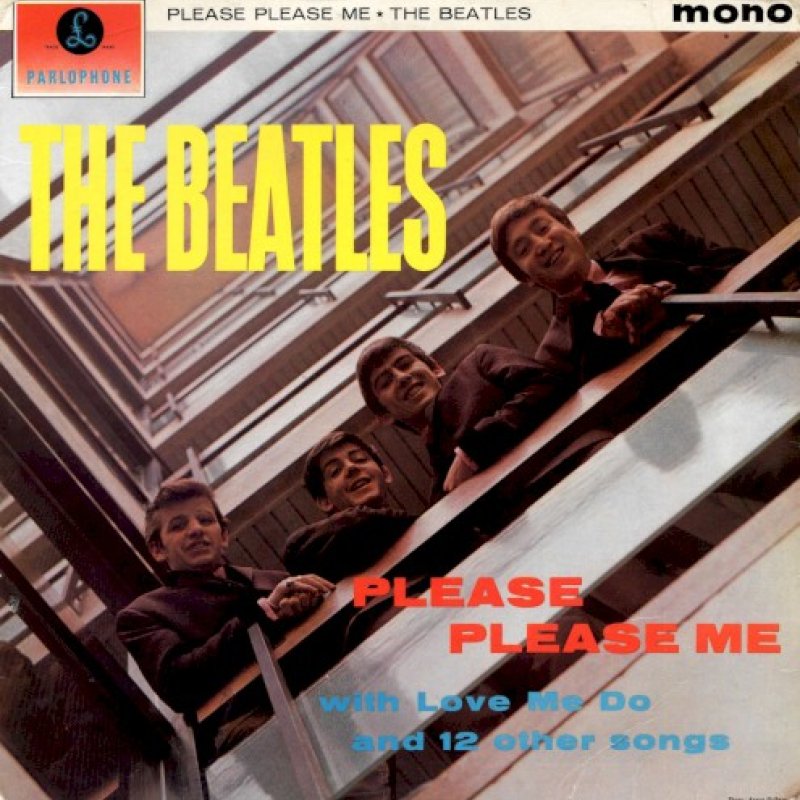
Please Please Me
The Beatles · 1963
The Beatles' first number one. Merseybeat reaching the national charts. The sound of Liverpool taking London for the first time.
How Do You Do It
Gerry and the Pacemakers · 1963
Gerry and the Pacemakers' first number one — the song the Beatles turned down and that Gerry turned into a hit. Merseybeat in its most accessible and most commercial form.
Puttin' On the Style
Lonnie Donegan · 1957
Skiffle at its most mainstream: number one in the United Kingdom. Donegan proving that the genre could produce conventional hits without losing its rootsy energy.
She Loves You
The Beatles · 1963
The best-selling single in Britain up to that point. The "yeah yeah yeah" harmonies that gave the French yé-yé generation its name. Merseybeat conquering the world.
Needles and Pins
The Searchers · 1964
The other great Merseybeat group at their most sophisticated. The twelve-string guitars that directly influenced Roger McGuinn of the Byrds and the entire American folk-rock scene.
Cumberland Gap
Lonnie Donegan · 1957
Skiffle in its most energetic form. Donegan taking a song from the American Appalachians and making it completely English in spirit.
From Me to You
The Beatles · 1963
The Beatles' third number one of the year. The speed of the Lennon-McCartney machine at its most prolific stage. The industrial hit-making of Merseybeat at its most impressive moment.
Do You Want to Know a Secret
The Beatles · 1963
The Lennon-McCartney song performed by another Merseybeat artist. Brian Epstein building the Liverpool beat ecosystem with the same efficiency that Berry Gordy used to build Motown.
Sweets for My Sweet
The Searchers · 1963
Merseybeat with an American doo-wop flavour. Liverpool vocal harmonies blended with Detroit soul. The British beat absorbing all American influences and returning them transformed.
The full series
England
British invasion, glam, punk, britpop, electronica. An island that exports sound.
-
CAP 01
🇬🇧 Ch 01
The Roots: The Island that Sang before Knowing It Sang (13th century–1950)
Before the Beatles, before punk, before the world knew there was something
-
CAP 02 you are here
🇬🇧 Ch 02
Skiffle and Beat: The Fire That Ignited the Beatles (1954–1963)
In 1955, the electric guitar was an expensive instrument, difficult to obtain and associated with professional musicians. For a working-class English teenager in Birmingham, Liverp
-
CAP 03
🇬🇧 Ch 03
The British Invasion: When Liverpool and London Changed the World (1963–1970)
In early 1964, American rock and roll was in crisis. Elvis Presley had left for military service, Chuck Berry had gone to prison, Little Richard had become a preacher, Buddy Holly
-
CAP 04
🇬🇧 Ch 04
Glam and Prog: The Rock That Dressed Up as Theater (1970–1979)
The sixties had ended on a sour note: Altamont, the deaths of Jimi Hendrix and Janis Joplin, the breakup of the Beatles, the end of hippie optimism. The rock of 1970 was searching
-
CAP 05
🇬🇧 Ch 05
Punk and Post-Punk: Creative Destruction (1976–1985)
The summer of 1976 in England was the hottest of the 20th century up to that point: weeks without rain, yellow grass, the country in economic crisis with 25% inflation and mass une
-
CAP 06
🇬🇧 Ch 06
Britpop and Rave: Cool Britannia and the Night That Never Ended (1988–2000)
In the early nineties, Anglo-Saxon popular music was dominated by Seattle grunge: Nirvana, Pearl Jam, Soundgarden — dark, heavy, American music that looked inward with a desperatio
-
🇬🇧 Ch 07
Grime and the New Urban Scene: The East London Neighbourhoods that Changed Music (2000–Present)
In 2001, a sixteen-year-old teenager named **Dylan Mills** in Poplar, in east London, recorded his first single on a school computer. The result — "I Luv U" — circulated for months
-
🇬🇧 Ch 08
The 21st Century: The Island That Kept Producing (2000–present)
Being an English musician in the 21st century means carrying a legacy that no other country has: the Beatles, the Rolling Stones, David Bowie, Led Zeppelin, Pink Floyd, Queen, the
You might also like
3 articles picked by editorial similarity


