


🇬🇧 GB · England · Chapter 7 of 8
Grime and the New Urban Scene: The East London Neighbourhoods that Changed Music (2000–Present)
In 2001, a sixteen-year-old teenager named **Dylan Mills** in Poplar, in east London, recorded his first single on a school computer. The result — "I Luv U" — circulated for months on east London's pirate radio stations before any label heard it. When XL Recordings signed him, Dylan Mills had become **Dizzee Rascal**, and the music he had created on that computer had a name: **grime**.

Grime was not born in a professional recording studio or with the backing of a record label. It was born in the public housing projects of east London — Bow, Hackney, Tower Hamlets, Newham — with cheap equipment, with pirated copies of FruityLoops as production software, and with an urgency that could not wait to have the right resources.
Its origins are intimately linked to pirate radio stations, such as Rinse FM and Major FM, which were the first to give support and space to a genre that was strictly underground in its beginnings.
Before streaming existed, before mass YouTube, the voices of grime went out over illegal frequencies broadcasting from rooftops and basements in east London for the communities that needed to hear them.
The Sound of Grime: Cold, Fast, English
Grime is to American hip-hop what skiffle was to rock and roll: the same general idea, processed through a completely different context, producing something that can only come from that specific place.
Technically, grime took UK garage — the electronic dance music that had evolved from nineties jungle and drum and bass — and added rap to it. The beats are 140 BPM — faster than American hip-hop — and the synth melodies are cold, angular, sometimes deliberately dissonant. The result is music that sounds exactly like the grey, tense atmosphere of east London in winter: urgent, raw, with beauty hidden beneath the roughness.
The lyrics are in the specific accent and slang of the neighbourhoods — the multicultural London English that mixes Caribbean, African and street slang influences — and speak of the concrete lives of their authors: poverty, violence, aspirations, the dark humour of those who have learned to laugh at the situation because the alternative is darker.
Wiley: The Godfather
Richard CowieWiley — is the artist grime calls its godfather. He is not the most internationally famous nor the one with the most awards, but he is the one who most clearly invented the sound: his eskibeat instrumentals — named after their coldness — were the template on which the entire first generation of grime was built.
Wiley mentored Dizzee Rascal and Skepta, was part of the Pay As U Go Cartel collective that preceded grime as such, and for twenty years maintained a productivity and presence in the scene that few artists of any genre have matched. He has not always handled fame or controversy well, but his technical contribution to the sound of grime is undeniable.
Dizzee Rascal: The One Who Opened the Door
Dizzee Rascal was sixteen years old when he recorded "I Luv U" on a school computer in Poplar, in east London. In 2003, Boy in da Corner became the first grime album to win the Mercury Prize.
At eighteen, with nothing more than a pirated copy of FruityLoops and a microphone, Dizzee Rascal popularised grime and won the Mercury Prize. His distorted synths, fast tempos and raw poetry described life in east London like no one had before.
Boy in da Corner is the cornerstone of grime: an album that Dizzee conceived, wrote and produced entirely at seventeen and eighteen, which describes life in Bow with the specificity of someone who has lived it and the artistic vision of someone who knows exactly how to turn it into art. The cover — Dizzee alone in a park, huddled in the corner the title describes — is the most honest image of urban isolation that twenty-first-century English music has produced.
The Mercury Prize he received was a shock to the English music establishment: the award that normally goes to rock or alternative jazz artists went to a Black teenager from east London making music that most of the judges had probably never heard before that year. It was the moment when the English music industry had to acknowledge that something important was happening in the neighbourhoods it preferred to ignore.
Skepta: The One Who Crossed the Ocean
Joseph Junior AdenugaSkepta — was the artist who brought grime to the international market in ways none of his predecessors had managed. His album Konnichiwa (2016) won the Mercury Prize — fourteen years after Boy in da Corner — and was the moment grime definitively reached the global mainstream.
What distinguished Skepta was his ability to maintain the authenticity of grime — the rhythms, the accent, the attitude — while building connections with American hip-hop. Skepta reached out to Drake, Playboi Carti and A$AP Rocky to collaborate, becoming the greatest ambassador of grime in the American market.
Drake — the most popular artist in American hip-hop of the 2010s — publicly adopted grime as an influence and declared himself a fan of Skepta in multiple interviews. That endorsement from American hip-hop was the bridge that transformed grime from a local English phenomenon into a genre with a global audience.
Stormzy: From Glastonbury to the University of Cambridge
Michael Ebenazer Kwadjo Omari Owuo Jr.Stormzy — born in 1993 in Croydon, south London, the son of Ghanaian immigrants. His debut album Gang Signs & Prayer (2017) reached number one in the UK, becoming the first grime album to achieve that position.
His performance on the main stage at Glastonbury in 2019 was the most symbolic moment in the history of grime: the most important and most "white" festival in English popular music, with its mud and its wellies and its university-educated middle-class audience, welcoming a Black grime artist from south London who filled the stage with dancers of colour, with a performance that included direct criticism of Prime Minister Boris Johnson and a demonstration that grime could be grand on the largest scale available.
Stormzy also created the Stormzy Scholarship — a study scholarship for Black students at the University of Cambridge — as a concrete response to the representation gap in English higher education. He was the grime artist using his platform exactly as Stormzy had promised: to change the material conditions of the community that had produced him.
Little Simz: The Poet of Grime
Simbiatu AjikawoLittle Simz — is the artist who has taken grime furthest in terms of lyrical complexity and artistic ambition. Born in 1994 in Islington, north London, she started rapping at nine years old and by sixteen was already performing in clubs in east London.
Her album Sometimes I Might Be Introvert (2021) was unanimously chosen by critics as one of the best albums of the year: a work of a maturity and ambition that no one in the English rap scene had achieved before, with full orchestration, songs about identity, family, fame and the experience of being a Black woman in the music industry, with a lyrical sophistication that critics compared to the best albums in American hip-hop.
She won the Mercury Prize 2022 and the BRIT Award — two of the highest honours in the English music industry — and was named by Kendrick Lamar as one of his favourite contemporary artists. The full circle: the music that was born in the housing estates of east London being recognised by the artist who had won the Pulitzer for his rap from Compton.
Dave and 21st Century UK Rap
Santan DaveDave — born in 2000 in Streatham, south London, to Nigerian parents. His album Psychodrama (2019) won the Mercury Prize when he was nineteen: the story of a psychotherapy session used as a narrative structure to examine the experience of growing up Black in contemporary England, with the criminal justice system, masculinity and the loss of his incarcerated brother as central themes.
At the 2020 Brit Awards, Dave performed a live version of his song "Black" in which he added a new verse denouncing Prime Minister Boris Johnson as a racist. The camera cut away before he finished. The BBC received complaints. The song was number one in streaming the following day.
It was exactly what the long tradition of English protest music had always promised: the artist using the biggest stage available to say what those in power would have preferred went unsaid.
Editorial note: Dizzee Rascal recorded "I Luv U" on a school computer in Poplar. Twenty-two years later, Little Simz won the Mercury Prize with an orchestrated album produced to the highest industry standards. Grime covered in two decades the ground that the blues took forty years to travel: from absolute marginality to institutional recognition. What did not change is the geographical origin: east and south London, the public housing estates, the neighbourhoods that official England would rather not see. The music changed shape, gained resources, made it to Glastonbury. The neighbourhoods that produced it are still the same neighbourhoods. That tension — between the recognition of the art and the persistence of the conditions that produce it — is the story of grime. And it will probably remain its story for a long time to come.
10 · 1 en DoReSol
Top 10 of Grime and the New English Urban Scene
Boy in da Corner (album)
Dizzee Rascal · 2003
The founding stone of grime. Recorded by a sixteen-year-old teenager on a school computer. Mercury Prize. The moment when East London entered the history of English music.
Sometimes I Might Be Introvert (album)
Little Simz · 2021
The most ambitious album in the English rap scene of the 21st century. Full orchestration, novelist-level lyricism, the experience of being a Black woman in the music industry. Mercury Prize and recognition from Kendrick Lamar.
Konnichiwa (album)
Skepta · 2016
Grime reaching the global mainstream. Mercury Prize. The bridge between East London and American hip-hop that Skepta built with Drake and A$AP Rocky.
Psychodrama (album)
Dave · 2019
Mercury Prize at nineteen. Psychological therapy as a narrative structure to examine the Black experience in contemporary England. The most literarily ambitious rap of his generation.
Gang Signs & Prayer (album)
Stormzy · 2017
The first grime album to reach number one in the UK. Stormzy combining grime with gospel and political self-awareness. The artist who brought the genre to Glastonbury.
Shutdown
Skepta · 2015
The song that consolidated grime's return to the mainstream after years of dormancy. Skepta building the bridge between the old school of grime and the new generation.
Pow! (Forward)
Lethal Bizzle · 2004
The second major grime hit after Boy in da Corner. The genre's rawest energy at its most urgent moment. The song that clubs across England banned for inciting fights — and that played in every club regardless.
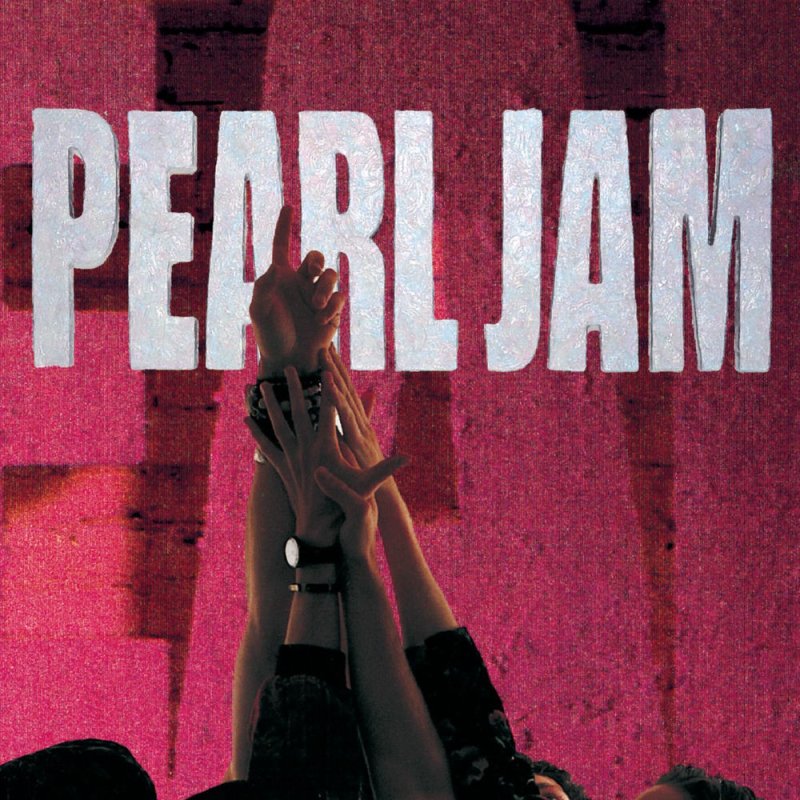
Black
Pearl Jam · 1991
It is not a record but an event: Dave adding a verse live denouncing the prime minister. The English tradition of the artist using the stage to say what power would prefer left unsaid — updated to the 21st century.
Eskimo
Wiley · 2002
The founding instrumental of eskibeat. Wiley inventing the cold, angular sound that would define grime before grime had a name. The godfather's point of origin.
Vossi Bop
Stormzy · 2019
Stormzy's number one in the year of Glastonbury. The song with which grime proved it could coexist in the same space as mainstream pop without losing its identity.
Next and final chapter — England Series: The 21st Century — Adele, Amy Winehouse, Ed Sheeran and the contemporary English scene that dominates global pop.
The full series
England
British invasion, glam, punk, britpop, electronica. An island that exports sound.
-
CAP 01
🇬🇧 Ch 01
The Roots: The Island that Sang before Knowing It Sang (13th century–1950)
Before the Beatles, before punk, before the world knew there was something
-
CAP 02
🇬🇧 Ch 02
Skiffle and Beat: The Fire That Ignited the Beatles (1954–1963)
In 1955, the electric guitar was an expensive instrument, difficult to obtain and associated with professional musicians. For a working-class English teenager in Birmingham, Liverp
-
CAP 03
🇬🇧 Ch 03
The British Invasion: When Liverpool and London Changed the World (1963–1970)
In early 1964, American rock and roll was in crisis. Elvis Presley had left for military service, Chuck Berry had gone to prison, Little Richard had become a preacher, Buddy Holly
-
CAP 04
🇬🇧 Ch 04
Glam and Prog: The Rock That Dressed Up as Theater (1970–1979)
The sixties had ended on a sour note: Altamont, the deaths of Jimi Hendrix and Janis Joplin, the breakup of the Beatles, the end of hippie optimism. The rock of 1970 was searching
-
CAP 05
🇬🇧 Ch 05
Punk and Post-Punk: Creative Destruction (1976–1985)
The summer of 1976 in England was the hottest of the 20th century up to that point: weeks without rain, yellow grass, the country in economic crisis with 25% inflation and mass une
-
CAP 06
🇬🇧 Ch 06
Britpop and Rave: Cool Britannia and the Night That Never Ended (1988–2000)
In the early nineties, Anglo-Saxon popular music was dominated by Seattle grunge: Nirvana, Pearl Jam, Soundgarden — dark, heavy, American music that looked inward with a desperatio
-
🇬🇧 Ch 07
Grime and the New Urban Scene: The East London Neighbourhoods that Changed Music (2000–Present)
In 2001, a sixteen-year-old teenager named **Dylan Mills** in Poplar, in east London, recorded his first single on a school computer. The result — "I Luv U" — circulated for months
-
🇬🇧 Ch 08
The 21st Century: The Island That Kept Producing (2000–present)
Being an English musician in the 21st century means carrying a legacy that no other country has: the Beatles, the Rolling Stones, David Bowie, Led Zeppelin, Pink Floyd, Queen, the
You might also like
3 articles picked by editorial similarity


