


🇲🇽 MX · Mexico · Chapter 6 of 7
<b>Juan Gabriel and Vicente Fernández:</b> The Two Giants
There is a story that summarizes the relationship between the two most important artists of the second half of the 20th century in Mexico. In 1971, Juan Gabriel and Vicente Fernández were invited to a radio event. Vicente did not show up. From then on, a feud began that lasted for decades: Juan Gabriel prohibited the Charro of Huentitán from singing his songs; Vicente confirmed that the Divo of Juárez was not fond of him, and vice versa.

And yet, Vicente Fernández came to interpret five songs written by Juan Gabriel, because the material was too good to be ignored. And Juan Gabriel, decades later, would say that the admiration for the singer was mutual.
The tension — the competition between two giants who never publicly recognized themselves as equals but which the audience always knew they were — is the dramatic axis of all popular music in Mexico from the second half of the 20th century. Two men, two styles, two ways of being Mexican. And together, the explanation for why Mexico is the nation with the highest export of Spanish-language music on the planet.
Juan Gabriel: the Divo who composed for the world
Alberto Aguilera ValadezJuan Gabriel, the Divo of Juárez — was born in Parácuaro, Michoacán, in 1950. After his father's death, he moved with his mother to Ciudad Juárez, Chihuahua, where he grew up. At 21 years old, he signed his first contract with the record label RCA, which was the first step of a successful discography that has sold more than 100 million records around the world.
Juan Gabriel was the most prolific composer of Mexican popular music — more than 1,800 songs registered, although those who knew him said the real number was higher — and the most irresistible performer: a stage presence of energy and freedom that no other artist in his genre had ever dared to show. His movements on stage, his wardrobe, his way of addressing the audience with an intimacy that turned every concert of tens of thousands of people into something that felt personal — all of that was Juan Gabriel, a show that didn't resemble anything that existed in Mexican music.
His music, full of emotion, made him an icon of Latin music, with the most memorable lyrics for all Mexicans.
Songs like "Querida", "Hasta que Te Conocí", "Amor Eterno" and "Se Me Olvidó Otra Vez" are the most listened-to catalog of Mexican popular music of the 20th century. The Mexican singer-songwriter Juan Gabriel holds the record for the best-selling album of all time in Mexico, with Recuerdos II released in 1984, with 20 million copies sold.
The genius of the composer
What distinguished Juan Gabriel from all his contemporaries was not only the quantity — although 1,800 songs is a figure that puts any other catalog into perspective — but the sustained quality and versatility. He could write for Rocío Dúrcal a ranchera that would become the biggest hit of the Spanish language in Mexico; he could write a perfect song for Luis Miguel, a twelve-year-old teenager, for his voice and his moment; he could write material for himself that blended the romantic ballad with the mariachi with the pop with the gospel with the bolero, all in the same album, all coherent.
Rolling Stone highlights his charisma and innate ability on stage but above all his capacity as a composer to create some of the most famous songs internationally in the Latin market with a strong, romantic, and emotional character, capable of conveying pain and passion.
He died on August 28, 2016 in Santa Monica, California, from a heart attack, at the age of sixty-six. The mourning in Mexico and throughout all of Latin America was immediate and massive. His followers — who called him "Juanga" with the intimacy of someone who feels that an artist belongs to them — filled the squares of the entire country for days.
Vicente Fernández: el last charro
Vicente Fernández Gómez — el Charro de Huentitán, El Ídolo de México — was born on February 17, 1940 in Guadalajara, Jalisco. He began his career as a street musician and became the most important artist of ranchera music in the second half of the 20th century.
Fernández started his career as a street musician, and became an cultural icon, having recorded more than 100 albums and contributed to more than 150 films. His repertoire consisted of rancheras and other classic Mexican songs like waltzes.
Rolling Stone highlights his unique tenor voice and his intense vibratos in every song, as well as his charro identity and his legacy built up to be called the "Ídolo de México", and being compared not only with other predecessors of ranchera music like Jorge Negrete, Pedro Infante or Javier Solís, since his style also earned him praise being considered even as the Frank Sinatra of Mexico.
His version of "El Rey" — the song by José Alfredo Jiménez — was definitive: after Vicente Fernández, "El Rey" ceased to belong to all ranchera singers and belonged specifically to him, although someone else wrote it. That ability to appropriate a song without violating its essence is the mark of great interpreters.
"Volver, Volver" — — was his biggest hit: a song by Fernando Z. Maldonado that Vicente Fernández turned into the anthem of Mexican men who cannot forget the woman who left them. The song captures a specifically Mexican sensitivity — the love that does not give up even though it should, the dignity of someone who knows they are lost but says it anyway — with a perfection that few popular songs have achieved in any language.
He died on December 12, 2021, at the age of eighty-one. His son Alejandro Fernández — "El Potrillo" — had already built his own successful career, but the death of Vicente left a void in ranchera music that no one has been able to fill.
Rocío Dúrcal: the Spanish woman who became Mexican
No chapter about Juan Gabriel would be complete without Rocío Dúrcal — the Spanish singer who became the most important interpreter of his catalog.
The musical relationship between Juan Gabriel and Rocío Dúrcal was one of the most productive in Latin American popular music: he wrote for her voice, she interpreted with an emotional depth that Juan Gabriel recognized as surpassing his own in some of the songs. The Spanish singer Rocío Dúrcal, with the album "Rocío Dúrcal le canta a Juan Gabriel", from the year 1984, sold 5.5 million copies.
"Eternal Love"Listen — is the most important song of that collaboration and possibly the most sung song at Mexican funerals: a description of love that survives death, of the presence of the dead in the memory of the living, with a melody that enters without asking permission and stays forever.
Luis Miguel: el Sun that united them all
The third major name of that generation — although younger — was Luis Miguel, whose career began when Juan Gabriel wrote "Mentira" for him at twelve years old, and who later recorded the classic bolero albums Romance (1991), Segundo Romance (1994) — which brought the catalog of Agustín Lara and the composers of the Golden Age to a new generation.
Luis Miguel — the Sun of Mexico — was also the artist who showed that Mexican music could be simultaneously faithful to its tradition and completely contemporary in its production: his bolero albums sound just as good today as when they were released, because the quality of the songs and the perfection of the voice do not depend on the historical moment to be recognized.
Editor's note: Juan Gabriel died without ever giving an interview in which he spoke about his private life. He knew that his story — the poor child from Michoacán who grew up in Ciudad Juárez, who spent years in the Juvenile Court, who built from scratch one of the biggest careers in Latin American music — was more powerful as a myth than as facts. That narrative wisdom, that awareness that art is also the construction of an image that the public can inhabit, is as much part of his legacy as the 1,800 songs. Juan Gabriel understood something that few artists understand: that you are not just what you sing, but also what you allow people to imagine about you.
10 · 1 en DoReSol
Top 10 of Juan Gabriel and Vicente Fernández
Amor Eterno
Rocío Dúrcal (comp. Juan Gabriel) · 1984
The most sung song at Mexican funerals. The love that survives death described with a precision that hurts and comforts at the same time.
Volver, Volver
Vicente Fernández · 1972
The anthem of those who cannot forget. Vicente Fernández claiming a song until making it completely his own.
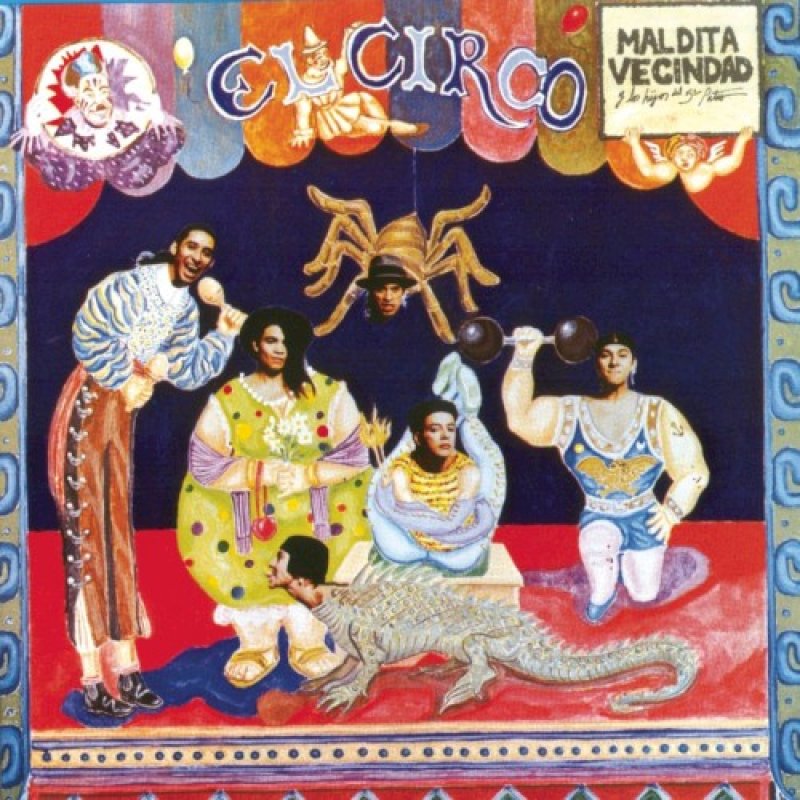
Querida
Maldita Vecindad y Los Hijos del Quinto Patio · 1991
The most universal hit of Juan Gabriel. The song that sold 20 million copies in the album Recuerdos II.
Hasta que Te Conocí
Juan Gabriel · 1987
The most well-known autobiographical ballad of Juan Gabriel. The before and after of love in one song.
Acá Entre Nos
Vicente Fernández · 1976
Vicente Fernández in his most intimate and honest version. The confession of the man who loves with all his heart knowing he shouldn't.
Se Me Olvidó Otra Vez
Juan Gabriel · 1979
The paradox of love that one tries to forget but cannot. Juan Gabriel describing the emotional loop with a precision that his listeners recognize as their own.
El Rey
Vicente Fernández · 1971
The definitive version of the song by José Alfredo Jiménez. Vicente Fernández claiming it forever.
No Tengo Dinero
Juan Gabriel · 1971
The debut. The first big hit of the Divo de Juárez that showed he was here to stay.
Lástima que Seas Ajena
Vicente Fernández · 1982
The impossibility of forbidden love in a song that Vicente Fernández turned into an anthem.
Noa Noa
Juan Gabriel · 1981
The song of the mythical bar in Ciudad Juárez where Juan Gabriel began. The origin turned into a massive hit.
Practice these songs in Doresol
Aún no tenemos estas canciones en el catálogo. Pronto las cargamos.
The full series
Mexico
Mariachi, ranchera, bolero, corrido and chilango rock. A country that sings.
-
CAP 01
🇲🇽 Ch 01
The Roots: The Music of the Three Worlds (Pre-Hispanic–1800)
When the Spanish conquistadors arrived in the territory we today call Mexico in 1519, they found civilizations that had developed musical traditions of a complexity and richness th
-
CAP 02
🇲🇽 Ch 02
The Mariachi and the Ranchera Song: The Golden Age (1930–1970)
There was a moment in the 20th century when Mexico decided on its national sound. It wasn't a decision made by a government or an academy: it was the convergence of radio, cinema,
-
CAP 03
🇲🇽 Ch 03
The Bolero: The Musician Poet and the Heart of Latin America (1920–1980)
There is a moment in any Mexican neighborhood bar — not the trendy bar in the historic center but the humble bar with Formica tables and barrel beer — when someone asks for an Agus
-
CAP 04
🇲🇽 Ch 04
The Mexican Rock: The City as a Laboratory (1960–2000)
During almost two decades, rock music was technically illegal in Mexico. Not in the strict legal sense, but in the practical sense: after the Avándaro Concert of 1971 — the Mexican
-
CAP 05
🇲🇽 Ch 05
The Country and Western Music and the Ballad: The Border as Universe (1930–present)
There is a music in Mexico that the middle-class urban population often ignores or despises, which radio stations in Mexico City program with reluctance, and yet it is the one that
-
CAP 06 you are here
🇲🇽 Ch 06
<b>Juan Gabriel and Vicente Fernández:</b> The Two Giants
There is a story that summarizes the relationship between the two most important artists of the second half of the 20th century in Mexico. In 1971, Juan Gabriel and Vicente Fernánd
-
🇲🇽 Ch 07
The Mexican Pop of the 21st Century: Roots and the World (1990–present)
There is a paradox in Mexican music of the 21st century: the artists who have reached the furthest globally are those who have dug the deepest into their own tradition.
You might also like
3 articles picked by editorial similarity


