


🇲🇽 MX · Mexico · Chapter 2 of 7
The Mariachi and the Ranchera Song: The Golden Age (1930–1970)
There was a moment in the 20th century when Mexico decided on its national sound. It wasn't a decision made by a government or an academy: it was the convergence of radio, cinema, the record industry, and a handful of extraordinary voices who found in mariachi and ranchera music the perfect vehicle to build a cultural identity that a newly emerged country needed urgently.

The Mexican Revolution (1910–1920) had left the country exhausted, fragmented and in need of shared symbols. The cultural nationalism of the twenties and thirties — Rivera's muralism, Orozco's and Siqueiros' murals, Vasconcelos' literature, Revueltas' and Chávez' music — was the intellectual framework. But it was popular entertainment industry that brought this project to neighborhoods, ranches, and popular colonies in Mexico City: first radio in the thirties; then cinema in the forties and fifties; then long-playing records.
And at the center of this process was the mariachi — which traveled from Jalisco to the capital, electrified with trumpets, adopted the charro uniform as its dress code and became the sound of the nation.
La Plaza Garibaldi: the geography of the myth
Every great music has its sacred place. The tango has the conventillo of La Boca. The blues has the crossroads of Clarksdale. The mariachi has the Plaza Garibaldi in the center of Mexico City.
In 1830 began the folklore of the traditional culture of the mariachi, when in the area of Garibaldi the consumption in pulque and tequila places became popular. The most relevant was "El Tenampa", owned by Juan Indalencio Hernández, who wanted his customers to be able to enjoy the traditional jalisciense music. Thus began the rise of the mariachi in the capital.
In the 1930s, with the consolidation of radio and recording studios, the Garibaldi became the labor market for the urban mariachi: musicians from all over the western part of the country came to the plaza to look for work, to train in the most established groups, to be hired for serenatas, weddings, quince years, birthdays. The mariachi became professionalized and urbanized. Trumpets replaced the harp. The charro outfit — elegant, embroidered, with a wide-brimmed hat — became mandatory attire.
Jorge Negrete: the first singing hero
The first true idol was Jorge Negrete, the singing hero, who embodied a mythical field man — a sort of chinaco from San Ángel who becomes a generous bandit when his loves are thwarted.
Jorge Negrete — born in Guanajuato in 1911, died in Los Angeles in 1953 — was the first great exporter of mariachi to the world. His conservatory-trained baritone voice, his classic hero physique, and his presence in dozens of ranchera comedy films created an image of Mexican masculinity that the world adopted as the image of Mexico: the brave, passionate charro, loyal to his land and his love. His most famous songs — "México Lindo y Querido", "Jalisco", "Ay Jalisco no te rajes" — are today the nation's sonic heritage.
Jorge Negrete, the most elegant charro, was the first ambassador of that sonic empire.
Pedro Infante: el who lived the song
If Negrete was the aristocratic leading man, Pedro Infante — born in Mazatlán in 1917, died in a plane accident in 1957 — was the people's idol. A carpenter by origin, he arrived in Mexico City without contacts or formal training, and built the most loved career in the history of Mexican entertainment: more than 300 songs recorded, more than 60 films filmed, a stage presence of a warmth and authenticity that the screen amplified rather than flattened.
Pedro Infante didn't just sing: he lived the song with every gesture, as if crying were a form of singing.
His death at forty caused the biggest popular mourning in Mexican history up to that point: hundreds of thousands of people on the streets of the capital, tears that the journalists of the time described as the mourning of an entire nation. Decades later, his image still remains on the walls of economical kitchens, in taxis, in the altars of Día de Muertos. No Mexican artist has been loved and mourned more than him.
José Alfredo Jiménez: the poet of tequila and pain
The third pillar of that golden era was not a singer but a composer. José Alfredo Jiménez — born in Dolores Hidalgo, Guanajuato, in 1926 — did not know how to read music, never took a lesson in solfège, and yet wrote more than a thousand songs that are the heart of the Mexican ranchero repertoire.
His method was direct and definitive: living what he was going to write, with the excess and consequence that that implied. Tequila, unrequited love, nostalgia for the lost ranch, the bravado that hides vulnerability — all of that is in his songs because it was first in his life. "Caminos de Guanajuato", "El Rey", "Cuando el Destino", "La Media Vuelta", "Paloma Querida": songs that any Mexican knows by heart and that are still sung with tequila in hand in every cantina in the country.
He died in 1973, at the age of forty-seven, from hepatic cirrhosis. His funeral was at the Palacio de Bellas Artes — the most important venue of official Mexican culture, the same place where Rivera's murals were. The composer with no formal education who drank his life to turn it into song received the burial of a national hero.
Javier Solís: the king of ranchero bolero
The fourth major name of that generation was Javier Solís — whose real name was Gabriel Siria Levario — who was the first to sing with a style now known as Ranchero Bolero, hence why he was known as the "King of Ranchero Bolero". It was the song "Llorarás, Llorarás" in 1958 that gave him international recognition.
Solís was the most vocal and the most baroque of the four: his dramatic tenor voice built each song like a little opera, with dynamics ranging from a whisper to a scream within the space of a verse. He died in 1966 during a gallbladder operation, at the age of thirty-four. The triangle Negrete-Infante-Solís — three voices, three early deaths, three legacies that time has not been able to erase — defines the ideal masculinity of mid-century Mexico.
Female voices: Lola Beltrán and Chavela Vargas
The history of the mariachi and the ranchera frequently obscures the women who inhabited them with equal greatness.
Lola Beltrán — "Lola la Grande" — was the most powerful ranchera singer of her generation: a contralto voice of such breadth and depth that the songs of José Alfredo sounded different when she performed them, darker, more absolute, more definitive.
Chavela Vargas — born in Costa Rica in 1919, Mexican by adoption and by conviction — was something more radical: the singer who reinterpreted the ranchero repertoire from a position of total honesty, without the artifices of the genre, dressed in red, with a poncho over her shoulders, singing the pain of love as if it were her own because it generally was. Her resurgence in the nineties — when Pedro Almodóvar rescued her for European cinema — made her a global icon at the age of seventy.
Garibaldi Today: Living Tradition or Museum?
The Garibaldi Plaza still exists in the center of Mexico City, with its mariachis in charro outfits waiting for bookings. But the market has changed: serenatas are requested less, weddings use DJs, young people listen to reggaetón. The mariachis of Garibaldi now mainly play for tourists and for the nostalgic middle class who feel that a night in Mexico City without mariachi is an incomplete night.
And yet the genre survives and thrives in other ways: in the stadiums where "Cielito Lindo" is sung before matches, in the patron saint festivals of thousands of towns in the west, in the mariachi quartets that play at airports as a welcome, in the albums of contemporary artists who return to the classic repertoire. Mariachi is the sound of Mexico, and no trend can change that.
Editor's note: José Alfredo Jiménez wrote more than a thousand songs without knowing how to read music. That is not an anecdotal fact: it is the most important fact of his entire history. The music that Mexico recognizes as its own — the music sung in taverns, at funerals, at quinceañeras, in stadiums — was written by a man who learned his craft in life, not in a conservatory. That democracy of talent — the idea that great music can come from anywhere, from any level of formal education, from any corner of the country — is perhaps the most important legacy of the Golden Age of the mariachi. And it is also the reason why that music remains alive: because it never belonged to academia, it always belonged to the people.
10 · 2 en DoReSol
Top 10 of Mariachi and Ranchera Song
El Rey
José Alfredo Jiménez · 1971
The hymn of Mexican masculinity. The most sung declaration of emotional sovereignty in Latin America.
México Lindo y Querido
Jorge Negrete · 1942
The love song for the homeland that Jorge Negrete turned into a national emblem from the big screen.
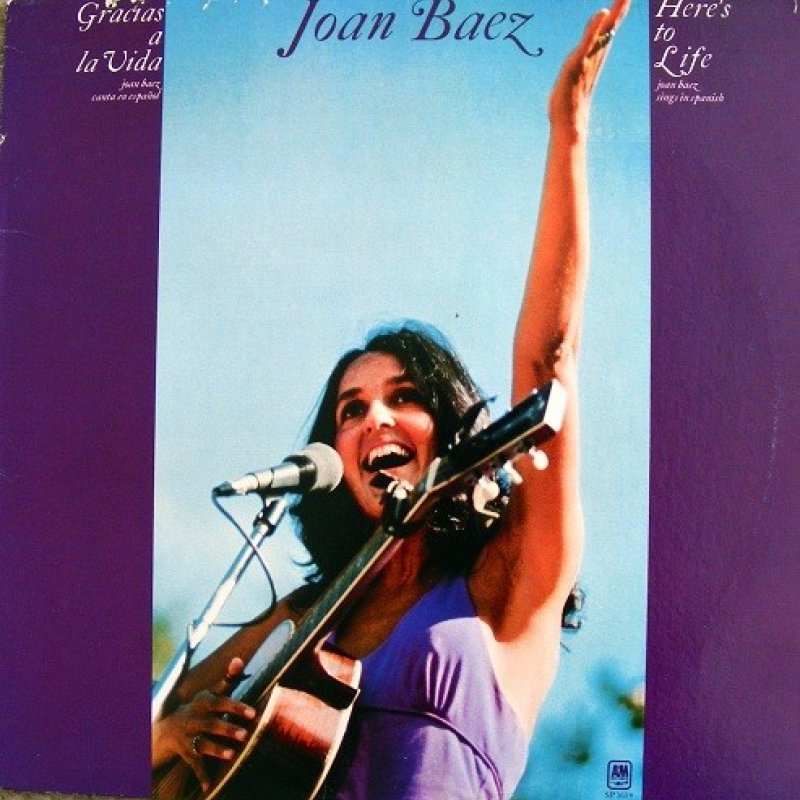
Cucurrucucú paloma
Joan Baez · 1974
The darkest and most beautiful song in the ranchero repertoire. Chavela Vargas turned it into a global anthem.
Amorcito Corazón
Pedro Infante · 1952
The most popular hit of the Golden Age of Mexican cinema. The tenderness of Pedro Infante distilled in three minutes.
Caminos de Guanajuato
José Alfredo Jiménez · 1954
The Bajío landscape turned into a life philosophy. José Alfredo in his most contemplative and grand version.
Sombras
Javier Solís · 1960
The perfect form of ranchero bolero. Solís' voice building a small opera of three minutes.
Ay Jalisco No Te Rajes
Jorge Negrete · 1941
The movie and song that established the mariachi as a national symbol. The mythical Jalisco that Negrete invented for Mexico.
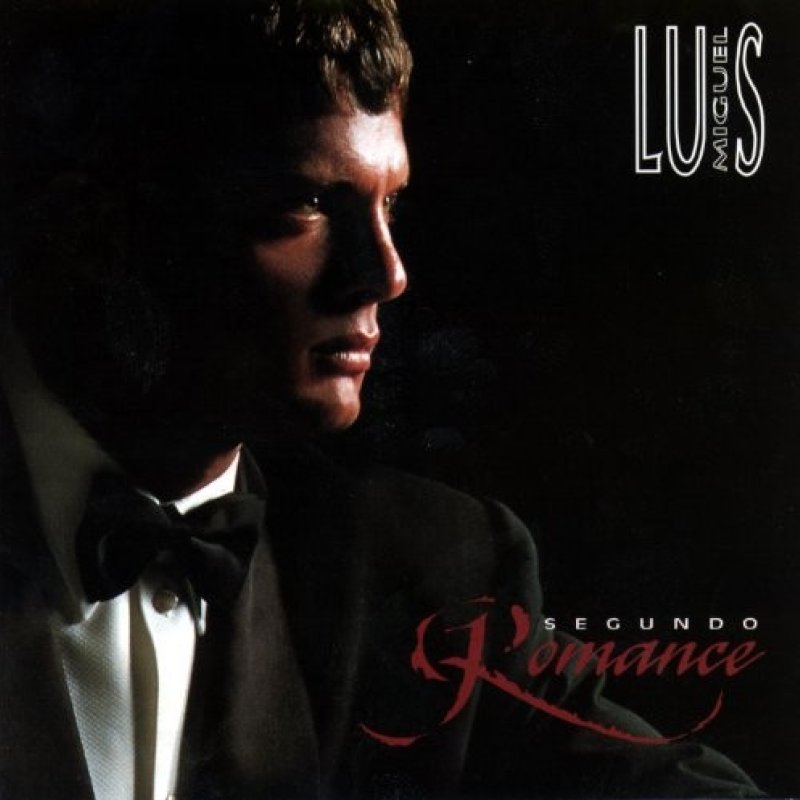
La media vuelta
Luis Miguel · 1994
The wounded pride turned into song. José Alfredo describing the exact moment when love turns into dignity.
Paloma Negra
Tomás Méndez / Lola Beltrán · 1954
Lola la Grande at the peak. The most dramatic song in the ranchero repertoire, sung by the voice that could contain her.
Tu Recuerdo y Yo
Pedro Infante · 1946
Pedro Infante showing that he was the most versatile of all: bolero, ranchera, mambo — always with the same authenticity.
1 canción · en DoReSol
Practice these songs in Doresol
The full series
Mexico
Mariachi, ranchera, bolero, corrido and chilango rock. A country that sings.
-
CAP 01
🇲🇽 Ch 01
The Roots: The Music of the Three Worlds (Pre-Hispanic–1800)
When the Spanish conquistadors arrived in the territory we today call Mexico in 1519, they found civilizations that had developed musical traditions of a complexity and richness th
-
CAP 02 you are here
🇲🇽 Ch 02
The Mariachi and the Ranchera Song: The Golden Age (1930–1970)
There was a moment in the 20th century when Mexico decided on its national sound. It wasn't a decision made by a government or an academy: it was the convergence of radio, cinema,
-
CAP 03
🇲🇽 Ch 03
The Bolero: The Musician Poet and the Heart of Latin America (1920–1980)
There is a moment in any Mexican neighborhood bar — not the trendy bar in the historic center but the humble bar with Formica tables and barrel beer — when someone asks for an Agus
-
CAP 04
🇲🇽 Ch 04
The Mexican Rock: The City as a Laboratory (1960–2000)
During almost two decades, rock music was technically illegal in Mexico. Not in the strict legal sense, but in the practical sense: after the Avándaro Concert of 1971 — the Mexican
-
CAP 05
🇲🇽 Ch 05
The Country and Western Music and the Ballad: The Border as Universe (1930–present)
There is a music in Mexico that the middle-class urban population often ignores or despises, which radio stations in Mexico City program with reluctance, and yet it is the one that
-
CAP 06
🇲🇽 Ch 06
<b>Juan Gabriel and Vicente Fernández:</b> The Two Giants
There is a story that summarizes the relationship between the two most important artists of the second half of the 20th century in Mexico. In 1971, Juan Gabriel and Vicente Fernánd
-
🇲🇽 Ch 07
The Mexican Pop of the 21st Century: Roots and the World (1990–present)
There is a paradox in Mexican music of the 21st century: the artists who have reached the furthest globally are those who have dug the deepest into their own tradition.
You might also like
3 articles picked by editorial similarity


