


🇲🇽 MX · Mexico · Chapter 7 of 7
The Mexican Pop of the 21st Century: Roots and the World (1990–present)
There is a paradox in Mexican music of the 21st century: the artists who have reached the furthest globally are those who have dug the deepest into their own tradition.

In contemporary Mexican popular music, identity is not an obstacle but a resource. Being deeply Mexican is the condition of possibility for being genuinely global.
Maná: the Latin American rock band that lasted forty years
Maná — formed in Guadalajara, Jalisco, in 1986 — are the best-selling Latin American rock band in history: more than 40 million albums, four Latin Grammy Awards, a star on the Hollywood Walk of Fame.
Their approach from the beginning was straightforward: rock in Spanish with impeccable production, influenced by Anglo-Saxon pop and Caribbean rhythms, with lyrics about love and social commitment that did not intend to be more complex than necessary to communicate what they wanted to communicate.
"Rayando el Sol"Escuchar — their first big hit, and "Vivir Sin Aire"Escuchar — are two of the most-played songs in the history of Spanish pop. The specialized critics often underestimated them; the public never.
His commitment to environmental causes — through the Selva Negra foundation — and to the rights of Mexican migrants in the United States also made him an artist with a public dimension that went beyond music. Maná as a band and as a cultural institution of contemporary Mexico.
Julieta Venegas: the border as identity
Julieta Venegas — born in Long Beach, California, in 1970, raised in Tijuana, Baja California — built one of the most original careers in Latin American pop of the 21st century from a geographical and cultural position that determined her music: the border between Mexico and the United States, between Anglo pop and Mexican music, between the urban and the traditional.
Julieta Venegas is a key figure in the history of Mexican pop. Since her beginnings with the band Tijuana No!, Venegas has challenged conventions and explored new paths in music. Her solo career, marked by hits such as "Limón y Sal" and "Me Voy", has established her as one of the most influential artists in Latin America.
Her album Sí (2003) — which established her internationally — was notable for its use of the accordion and northern rhythms in an alternative pop context: the music of the borderlands stripped of its folk connotations and reinserted into contemporary vocabulary. The accordion sounded fresh in Venegas' hands because she used it without ironic distance, with the naturalness of someone who grew up listening to it.
"Me Voy" — — was her biggest international hit: the most direct emotional declaration of independence from Mexican pop of her generation, with a production that blended European pop with the specific sensitivity of someone who had grown up on the dividing line between two countries and two worlds.
With her album Sí she is ranked at position 215 of the best albums of the 21st century according to Pitchfork — the only Mexican artist on that list.
Natalia Lafourcade: the most awarded
Natalia Lafourcade — born on February 26, 1984 in Mexico City — is the most awarded Mexican artist in Grammy Latino history and the one who has brought traditional Mexican music to the center of contemporary pop with a depth that no other artist of her generation has matched.
She debuted in 2003 with an alternative pop rooted in rock and was progressively building a body of work that was getting closer and closer to the roots of Latin American music: the bolero of Agustín Lara (Mujer Divina, 2012), Latin American folk music (Musas, 2017), the son jarocho and the huapango.
The turning point was Hasta la Raíz (2015). Natalia Lafourcade wrote all the songs on the album, in collaboration with Leonel García on some tracks. Hasta la Raíz was a critical and commercial success, winning multiple awards, including the Grammy Latino for Album of the Year. The album was also praised for its production, lyrics and Natalia's voice.
The title song — whose genre is huapango and neofolk — was placed at number 78 of the 200 greatest female songs of the 21st century by the American NPR. The huapango — the music of the Huasteca that conservatories classified as folklore — reached the NPR's global charts through the voice of a singer from Mexico City.
Musas (2017) — an homage to Latin American folklore recorded live with Los Macorinos — was the confirmation that Lafourcade was not a pop artist making occasional forays into tradition but an artist who had found in tradition her most authentic voice.
She has been awarded the Grammy and Grammy Latino, being the most awarded and the singer who has collaborated with the most major musical icons such as Juan Gabriel, Eugenia León, Café Tacuba, Julieta Venegas, Carlos Rivera, Leonel García, Pepe Aguilar, Miguel Bosé, Gilberto Gil, and Jorge Drexler, among others.
Mon Laferte: the new irreverent voice
Monserrat Bustamante LaferteMon Laferte — was born in Viña del Mar, Chile, in 1983, but built her career in Ciudad de México, where she arrived unknown and where she became one of the most important figures of contemporary Latin American pop.
Her proposal is the most eclectic and irreverent of her generation: bolero, rock, cumbia, Andean music, electronic pop — all coexisting in the same album with the coherence of an artist who knows exactly who she is even though she doesn't fit into any category.
Her performance at the Latin Grammy 2017 — with her torso exposed and the phrase "In Chile they torture, rape and kill" written on her chest — was the moment when 21st-century Latin American pop showed that it could also be a political act with real consequences.
Mexican pop in the streaming era
21st century Mexican popular music coexists in multiple simultaneous dimensions that streaming technology has made more visible than ever. The laid-back corridos of Peso Pluma break global records at the same time that Natalia Lafourcade wins a Grammy for her folklore album. Regional Mexican music dominates Spotify playlists at the same time that artists like Carla Morrison or Los Ángeles Azules take their niche music to international festivals.
Los Ángeles Azules — the Mejía family from Iztapalapa, Mexico City — built over decades a career in cumbia-chilanera completely outside the mainstream and became a global phenomenon in the 2010s when young artists like Natalia Lafourcade, Caloncho and Lila Downs started collaborating with them, introducing them to audiences who didn't know them.
Carla Morrison — sonorense singer-songwriter with an unmistakable voice — built her career completely independently, without a record label, and won the Latin Grammy for Best Alternative Music Album in 2012. Her album Déjà Vu (2012) is one of the most honest documents of contemporary Mexican pop.
Editor's note: Natalia Lafourcade recorded Musas live, on analog tape, with Los Macorinos — two bolero guitarists who had accompanied the greats of Mexican music for decades. The technical decision — no digital editing, no perfect tracks, with breathing and mistakes from the live performance — was an aesthetic and philosophical statement: the most true music is that which happens in the moment, with bodies present, without the possibility of correcting what has already passed. In an era where digital music production can make anyone sound perfectly in tune on any note, Lafourcade chose live imperfection. The result was her most recognized album. There is something in that paradox — the search for perfection through the renouncement of correction — that encapsulates all the best Mexican music of the 21st century.
10 · 4 en DoReSol
Top 10 of Mexican Pop of the 21st Century
Hasta la Raíz (album)
Natalia Lafourcade · 2015
The most awarded Mexican album of the 21st century. Grammy Latino for Album of the Year. Huapango in the global NPR charts.
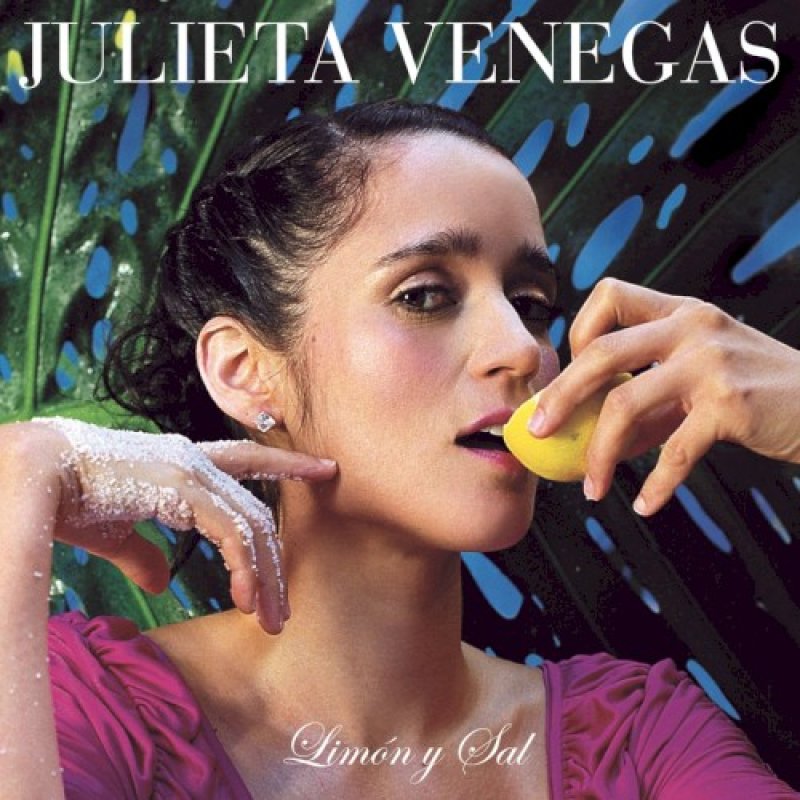
Me voy
Julieta Venegas · 2006
The most direct emotional declaration of contemporary Mexican pop. Norteño accordion in Latin American alternative pop.
Nunca Es Suficiente
Natalia Lafourcade · 2015
The most elegant song of unrequited love in recent Mexican pop. Natalia Lafourcade in her moment of greatest compositional maturity.
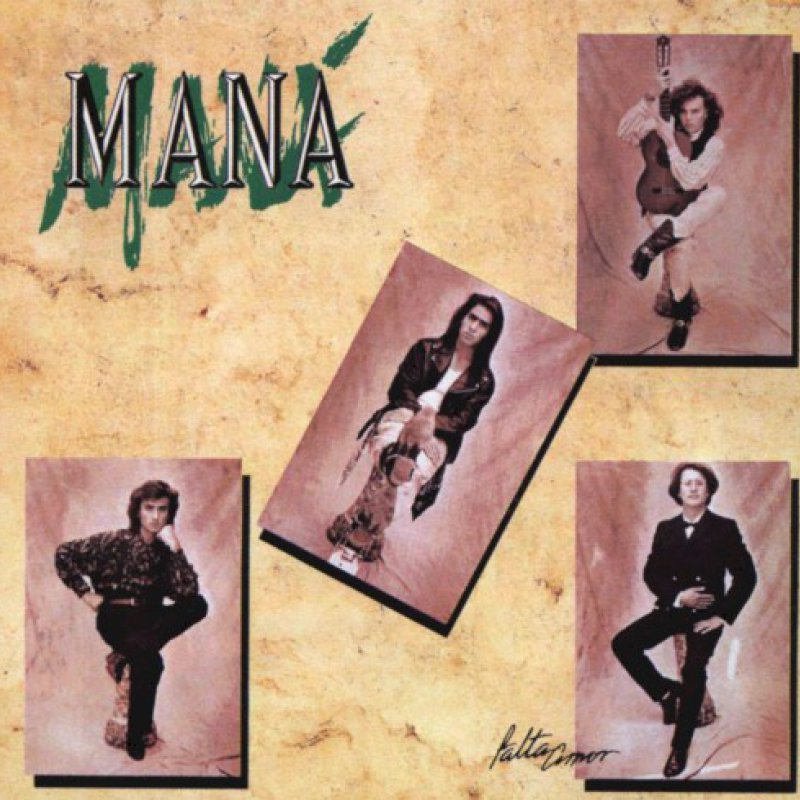
Rayando el sol
Maná · 1990
The first major hit of the most sold Latin American rock band in history. Guadalajara to the world with a flawless production.
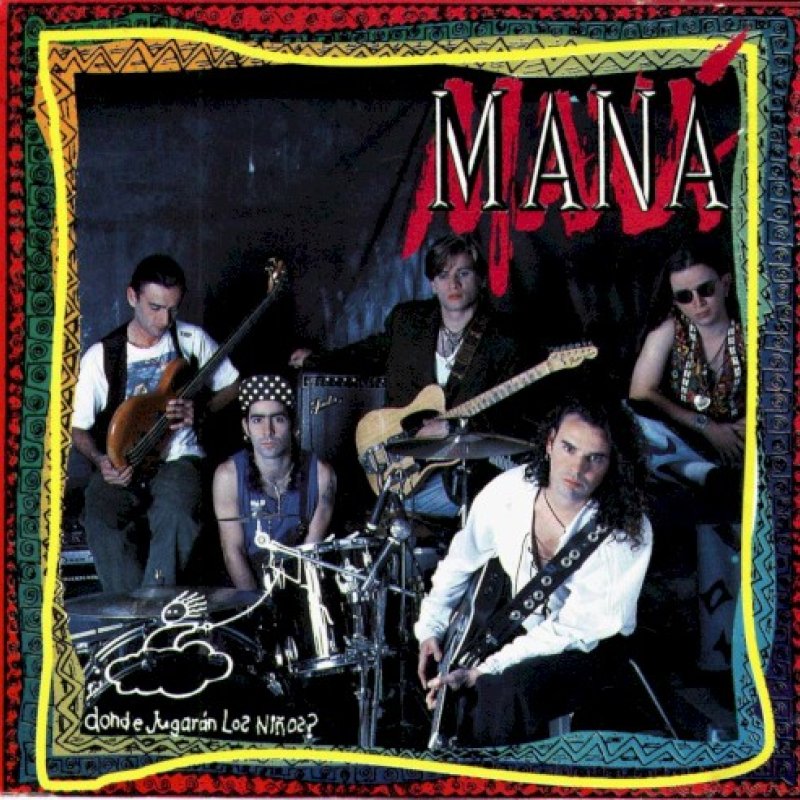
Vivir sin aire
Maná · 1992
One of the most played songs in the history of Spanish pop. Maná at its most pop and universal.
Limón y sal
Julieta Venegas · 2006
The most radio-friendly hit by Venegas. Everyday love described with the economy of words of someone who knows that less is more.
Musas (album)
Natalia Lafourcade · 2017
The tribute to Latin American folklore recorded live on analog tape. The living tradition without nostalgia.
Amor Enamorado
Los Ángeles Azules · 2019
The cumbia-chilena of Iztapalapa reaching the world thanks to collaborations with the new generation.
Déjà Vu
Carla Morrison · 2012
The Grammy for Best Alternative Album by a completely independent artist. The most honest voice of Mexican pop of her generation.
Tu Fotografía
Mon Laferte · 2015
The Chilean who became Mexican by reaching Latin American pop from bolero and rock. Mon Laferte as the most unclassifiable artist of her generation.
2 canciones · en DoReSol
Practice these songs in Doresol
End of the Mexico Series
With this chapter, the Musical Series Mexico by Doresol comes to a close: seven articles, seven genres, five centuries of musical history compressed into a narrative that spans from pre-Hispanic teponaztlis to the tumbado corridos of the 21st century.
Mexico is the country with the greatest diversity of living musical genres in the American continent. The son jarocho of Veracruz, the huapango of the Huasteca, the mariachi of Jalisco, the urban bolero, the north music of the border, the rock of Mexico City and the contemporary pop are not separate chapters: they are the same river seen from different shores, the same search for expressing with music what no other language can express with the same precision.
Next series: Spain.
End of Series · Mexico
With this chapter we close the 7-part series on Mexico. Thanks for reading.
The full series
Mexico
Mariachi, ranchera, bolero, corrido and chilango rock. A country that sings.
-
CAP 01
🇲🇽 Ch 01
The Roots: The Music of the Three Worlds (Pre-Hispanic–1800)
When the Spanish conquistadors arrived in the territory we today call Mexico in 1519, they found civilizations that had developed musical traditions of a complexity and richness th
-
CAP 02
🇲🇽 Ch 02
The Mariachi and the Ranchera Song: The Golden Age (1930–1970)
There was a moment in the 20th century when Mexico decided on its national sound. It wasn't a decision made by a government or an academy: it was the convergence of radio, cinema,
-
CAP 03
🇲🇽 Ch 03
The Bolero: The Musician Poet and the Heart of Latin America (1920–1980)
There is a moment in any Mexican neighborhood bar — not the trendy bar in the historic center but the humble bar with Formica tables and barrel beer — when someone asks for an Agus
-
CAP 04
🇲🇽 Ch 04
The Mexican Rock: The City as a Laboratory (1960–2000)
During almost two decades, rock music was technically illegal in Mexico. Not in the strict legal sense, but in the practical sense: after the Avándaro Concert of 1971 — the Mexican
-
CAP 05
🇲🇽 Ch 05
The Country and Western Music and the Ballad: The Border as Universe (1930–present)
There is a music in Mexico that the middle-class urban population often ignores or despises, which radio stations in Mexico City program with reluctance, and yet it is the one that
-
CAP 06
🇲🇽 Ch 06
<b>Juan Gabriel and Vicente Fernández:</b> The Two Giants
There is a story that summarizes the relationship between the two most important artists of the second half of the 20th century in Mexico. In 1971, Juan Gabriel and Vicente Fernánd
-
🇲🇽 Ch 07
The Mexican Pop of the 21st Century: Roots and the World (1990–present)
There is a paradox in Mexican music of the 21st century: the artists who have reached the furthest globally are those who have dug the deepest into their own tradition.
You might also like
3 articles picked by editorial similarity


