


🇲🇽 MX · Mexico · Chapter 1 of 7
The Roots: The Music of the Three Worlds (Pre-Hispanic–1800)
When the Spanish conquistadors arrived in the territory we today call Mexico in 1519, they found civilizations that had developed musical traditions of a complexity and richness that the chroniclers of the time attempted to describe with amazement and frequently with misunderstanding. The Mexicas, the Mayas, the Zapotecs, the Purépechas — each people had their own instruments, their own forms, and their own functions for music within religious, political, and daily life.

Pre-Hispanic music was not entertainment in the modern sense: it was sacred technology. Instruments were objects of power that summoned the gods, marked the cycles of time, accompanied sacrifices, celebrated military victories, and guided the dead to the underworld. The teponaztli — the wooden drum with two tongues that produced two different pitches — and the huehuetl — the large vertical drum of stretched skin — were the rhythmic axes of Mesoamerican civilization. Clay flutes and sea conchs completed a sound universe that archaeologists continue to unearth and study.
Music was so central to Mesoamerican civilizations that it had its own god: Xochipilli, the Prince of Flowers, deity of music, dance, games, and beauty. His statue, found in Tlamanalco and now in the National Museum of Anthropology, shows the god in ecstasy, sitting on a pedestal covered with psychoactive flowers. He was the patron of musicians and of those who altered consciousness to draw closer to the divine.
The Clash of Worlds: 1519
The Spanish conquest was also a sonic conquest. The Franciscan, Dominican, and Augustinian friars who arrived after the military quickly understood that music was the most direct path to evangelization: if they could replace indigenous ritual chants with Catholic sacred music, they would be replacing one cosmological system with another.
What happened was more complex and more interesting than that plan. The indigenous people adopted European music with a speed that surprised the missionaries themselves — and at the same time transformed it from within. The friars taught Gregorian chant; the indigenous people sang it with their own accents, ornaments, and rhythmic sensibilities. European instruments — the guitar, harp, violin, vihuela — arrived and were immediately appropriated and modified: the jarana veracruzana, the requinto jarocho, the leona are string instruments that emerged from this colonial hybridization, recognizable as descendants of the Spanish guitar but irreducible to it.
To this mix of pre-Hispanic and Spanish elements, a third world was added: the African. Slavery brought thousands of Africans from different regions of the continent — mainly from present-day Angola, Congo, Nigeria, and Senegal — to the coasts of the Gulf of Mexico and the Pacific, whose rhythmic and vocal traditions mixed with the indigenous and Spanish ones to produce genres that did not exist in any of the three original worlds.
The Son: The Creole Synthesis
The most important result of this triple synthesis was the Mexican son — not a genre but a family of genres that developed differently in each region of the territory, following the geographical, demographic, and cultural particularities of each place.
The son jarocho from Veracruz — of which "La Bamba" is the most globally known example — is the most African expression of the family: it combines roots from the Baroque Andalusian fandango, West African music, and indigenous Mexican music, with instruments like the requinto, jarana, jarocha harp, leona, pandero, quijada, and marimbol. The fandango — the community gathering of dance and song around the platform — is the central social institution of the son jarocho: not a spectacle but a collective practice where there is no separation between musicians and audience.
The son huasteco or huapango — from the region that includes parts of Veracruz, San Luis Potosí, Tamaulipas, and Hidalgo — is more indigenous in its rhythmic base, with the violin as the dominant instrument and a falsetto vocal style that can reach extraordinary heights. Typical jarocho ensembles generally use a large diatonic harp with 32 strings and no pedals, a four-string requinto, and a jarana — a small guitar with five, eight, or 12 strings, allowing for octaving that gives a deeper harmonic sensation.
The son jalisciense — from Jalisco and the neighboring western states — would be the one to achieve the greatest national and international projection, as from it emerged the mariachi in the 19th century.
The Mariachi: From the Ranch Wedding to the National Symbol
The origin of the mariachi is one of the most persistent debates in Mexican ethnomusicology. The most popular — and most discredited — theory says that the name comes from the French word mariage (marriage), introduced during the French intervention of the 19th century. More recent research points to an origin in indigenous languages of western Mexico, possibly from coca or Nahuatl.
What is clear is that the mariachi in its original form was a rural group from western Mexico — Jalisco, Colima, Michoacán, Nayarit — that played at weddings, baptisms, patron saint festivals, and community gatherings with violins, guitarrones, vihuelas, and harps. The mariachi is characterized by the use of violins, trumpets, guitars, vihuelas, and guitarrones, creating a unique mix of rhythms and melodies that evoke both joy and melancholy.
The trumpets arrived later — already in the 20th century, when the urban mariachi of Mexico City replaced the harp with brass to compete with the noise of the capital's cabarets and tents. That transformation — from the rural and acoustic ensemble to the electric and urban band — is the story of how Mexico turned a regional genre into a national identity.
The Singers of the Sacred: Colonial Religious Music
Parallel to the popular sounds and dances, New Spain developed a high-level sacred music tradition that contemporary critics have begun to rescue from oblivion. The cathedrals of Mexico City, Puebla, and Oaxaca were centers of musical activity during the 16th, 17th, and 18th centuries, where Renaissance counterpoint, late Baroque, and hybrid genres such as the villancico—which in Mexico adopted local characteristics with lyrics in Nahuatl or Spanish with African rhythms, very different from the European villancico—were cultivated.
Manuel de Zumaya—born in Mexico City around 1678, the first opera composer in North America with his Parténope (1711)—was the most important figure of that period. His work, which mixes European counterpoint with sensibilities derived from New Spanish popular music, anticipates the synthesis that all subsequent Mexican music would carry out with different materials.
The Dance of Conquest: Memory in the Body
One of the most powerful and least studied legacies of that period is the tradition of indigenous ritual dances that survived the conquest by adapting their external form — adopting European clothing, incorporating the narrative of the Christian conquest over Islam — while preserving their internal function of connecting with the sacred and with collective memory.
The Dance of the Concheros — still practiced today in the Zócalo square of Mexico City — is the most visible example: dancers with feathered headdresses, armadillo shells as rhythmic instruments, movements that reproduce Mesoamerican cosmic patterns, all in the very center of colonial and modern power. The memory that could not be erased found in dance its way to persist.
Editorial Note: Mexico is the country in the Americas with the greatest diversity of living traditional musical genres — not as museum folklore but as everyday community practice. The fandango jarocho in Veracruz, the huapango in the Huasteca, the wind bands in Oaxaca, the marimba music in Chiapas, the ritual songs in indigenous languages in dozens of communities across the country: this universe exists in parallel with the airport mariachi and the reggaeton on the radios, without contradiction. Mexico does not have a musical tradition: it has dozens, each with its own history and vitality. What this chapter tells is just the starting point of a journey that would fill an entire library.
10 · 3 en DoReSol
Top 10 of Traditional Mexican Music
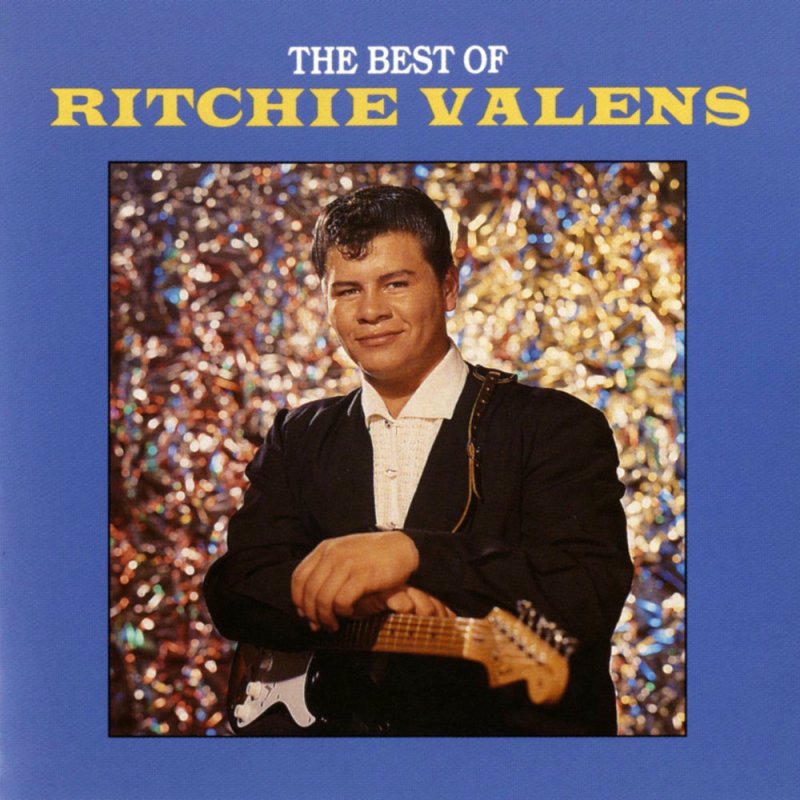
La bamba
Ritchie Valens · 1959
The most well-known Mexican song in the world. Veracruz origin, a mix of Spain, Africa, and Mexico. Brought to rock by Ritchie Valens in 1958.
El Son de la Negra
Traditional Mariachi · 19th Century
The unofficial anthem of Jalisco and mariachi. The piece that starts every mariachi concert for over a century.
El Jarabe Tapatío
Traditional Jalisco Dance · 19th Century
The national dance of Mexico. The skirt of the china poblana and the charro, the love story in motion.
Cielito Lindo
Quirino Mendoza y Cortés · 1882
The song that the world identifies with Mexico. "Ay, ay, ay, ay" as a shared national identity code.
El Huapango de Moncayo
José Pablo Moncayo · 1941
The academic synthesis of the son huasteco. The second Mexican national anthem, the one that plays at sporting events.
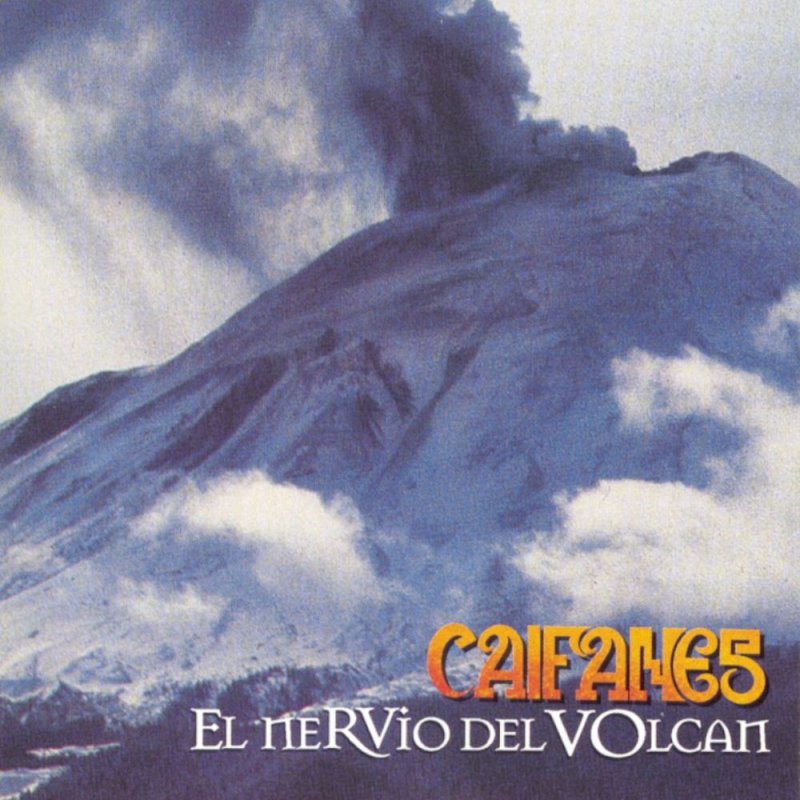
La llorona
Caifanes · 1994
The most persistent myth of Mexico turned into a song. The mother who cries for her children as a metaphor for the homeland mourning its dead.
El Palmero
Traditional Son Jarocho · 18th Century
An example of fandango in its purest form. The music made by everyone, without a stage or passive audience.
las mananitas
Vicente Fernández · 19th Century
The birthday song of Mexico. Sung more often than Happy Birthday in every corner of the country.
God Never Dies
Macedonio Alcalá · 1870
The anthem of Oaxaca, considered by many to be the most beautiful waltz in Mexico. The music of the most musically diverse state in the country.
La Zandunga
Traditional Isthmus · 19th Century
The son of the Isthmus of Tehuantepec, where Zapotec women dance it in velvet dresses. The cultural diversity of Mexico in a single melody.
2 canciones · en DoReSol
Practice these songs on Doresol
The full series
Mexico
Mariachi, ranchera, bolero, corrido and chilango rock. A country that sings.
-
CAP 01 you are here
🇲🇽 Ch 01
The Roots: The Music of the Three Worlds (Pre-Hispanic–1800)
When the Spanish conquistadors arrived in the territory we today call Mexico in 1519, they found civilizations that had developed musical traditions of a complexity and richness th
-
CAP 02
🇲🇽 Ch 02
The Mariachi and the Ranchera Song: The Golden Age (1930–1970)
There was a moment in the 20th century when Mexico decided on its national sound. It wasn't a decision made by a government or an academy: it was the convergence of radio, cinema,
-
CAP 03
🇲🇽 Ch 03
The Bolero: The Musician Poet and the Heart of Latin America (1920–1980)
There is a moment in any Mexican neighborhood bar — not the trendy bar in the historic center but the humble bar with Formica tables and barrel beer — when someone asks for an Agus
-
CAP 04
🇲🇽 Ch 04
The Mexican Rock: The City as a Laboratory (1960–2000)
During almost two decades, rock music was technically illegal in Mexico. Not in the strict legal sense, but in the practical sense: after the Avándaro Concert of 1971 — the Mexican
-
CAP 05
🇲🇽 Ch 05
The Country and Western Music and the Ballad: The Border as Universe (1930–present)
There is a music in Mexico that the middle-class urban population often ignores or despises, which radio stations in Mexico City program with reluctance, and yet it is the one that
-
CAP 06
🇲🇽 Ch 06
<b>Juan Gabriel and Vicente Fernández:</b> The Two Giants
There is a story that summarizes the relationship between the two most important artists of the second half of the 20th century in Mexico. In 1971, Juan Gabriel and Vicente Fernánd
-
🇲🇽 Ch 07
The Mexican Pop of the 21st Century: Roots and the World (1990–present)
There is a paradox in Mexican music of the 21st century: the artists who have reached the furthest globally are those who have dug the deepest into their own tradition.
You might also like
3 articles picked by editorial similarity


