


🇲🇽 MX · Mexico · Chapter 3 of 7
The Bolero: The Musician Poet and the Heart of Latin America (1920–1980)
There is a moment in any Mexican neighborhood bar — not the trendy bar in the historic center but the humble bar with Formica tables and barrel beer — when someone asks for an Agustín Lara song, and when that song plays, something happens in the atmosphere: conversations quiet down, glasses are set down more carefully on the table, men who are tough around here look away with a look that could be indifference or suppressed emotion.

That moment is the bolero. Not just as a song but as an attitude towards life: the willingness to take the pain of love seriously, to give it precise words, to turn it into something beautiful without thereby making it less painful.
The bolero has Cuban origins — it emerged in Santiago de Cuba in the 19th century as a derivation of the Spanish bolero processed through Caribbean criollo sensibility — but it was Mexico that brought it to the world. Through its composers, its interpreters, and above all through radio and cinema, Mexico exported the bolero to all of Latin America and to Spain with an effectiveness that no other Latin American music genre had achieved before.
Agustín Lara: el flaco de oro de los cabarets
Agustín Lara — known as "El Flaco de Oro" or "El Músico Poeta" — was born in Ciudad de México on October 30, 1897, although he preferred to say that he was born in Tlacotalpan, Veracruz, because the Veracruz birthdate gave him more romance. That small biographical falsehood is in itself a revealing fact: Lara understood that the image of an artist is also an artwork.
He began his musical career in cabarets and brothels, where he developed his distinctive style blending bolero with romantic song. The scar crossing his left cheek — caused, according to all his biographies, by a jealous woman in a cabaret — was part of the image: the composer who had lived long enough to know what he was talking about when he wrote about love and pain.
Agustín Lara is considered the supreme representative of bolero in Mexico. He composed more than 700 songs throughout his career, including "Granada", "Solamente una vez" and "Piensa en mí", which became standards of the genre.
The extraordinariness of Lara was not only the quantity but the quality: songs of a melodic architecture so precise and so generous that any great voice could inhabit them and find in them their own expression. Pedro Vargas, Toña la Negra, Plácido Domingo, Luis Miguel, Frank Sinatra, Luciano Pavarotti, Elvis Presley — artists from completely different worlds found in Lara's catalog material of the highest level.
Granada: the city that had never seen
The case of "Granada" is perhaps the most strange and beautiful story of all Mexican popular song.
Lara composed "Granada" without having ever visited that city in his life. It would take him another 32 years to do so for the first time. Granada is the official anthem of Granada since November 4, 1997. In the public clock of the town hall, a carillon plays each hour the opening verse of Agustín's work: "Granada, dreamed land by me".
Frank Sinatra and Luciano Pavarotti recorded their popular "Granada" and Elvis Presley, like Julie London, performed "Solamente una vez". Two statues of Lara were erected in Spain — one in the Lavapiés neighborhood in Madrid and one in the Plaza del Ángel in Granada. The Mexican composer who had never seen Granada became its eternal honorary citizen.
When he finally visited the city, journalists were waiting for him. Lara told them: "I have not come to step on the land of Granada but to kiss it with my lips and heart."
María Bonita: el love that had a name
The story of Lara would not be complete without María Félix — the most beautiful and powerful actress in Mexican cinema, whom Lara loved with a devotion that he himself turned into a song.
"María Bonita" — composed in 1947 during a honeymoon in Acapulco — is the most personal love song Lara wrote: a physical and emotional description of María that is at the same time a portrait of the ideal woman idealized by Mexican culture of the 20th century. María Félix was everything the bolero promised: devastating beauty, absolute independence, the woman who didn't need anyone and precisely because of that was irresistible to everyone.
The Lara-Félix marriage lasted only a short time — María was too big to belong to anyone — but the song lasted forever.
Los Panchos: the perfect trio
The bolero didn't just need a composer: it needed a way of interpretation that took it beyond the soloist accompanied by piano. That form was invented by Los Panchos — the trio formed in Ciudad de México in 1944 by the Mexican Chucho Navarro, the Mexican Alfredo Gil and the Puerto Rican Hernando Avilés.
The format of the romantic trio — three voices in harmony, acoustic guitars, an intimate and perfectly balanced texture — was the way that Mexican bolero conquered Latin America. Los Panchos sold millions of records throughout the region during the 1940s, 1950s and 1960s, bringing the catalog of Lara and other Mexican composers to places where the cinema did not reach.
Her version of "Bésame Mucho" — composed by Consuelo Velázquez in 1940, considered the most recorded Mexican song of all time — is the definition of bolero at its peak of perfection: three voices that balance without competing, a melody that anyone in any place in the world can whistle after hearing it just once.
Bésame Mucho: the most recorded song of Mexico
Consuelo Velázquez composed "Bésame Mucho" in 1940, at sixteen years old, without having ever been kissed — or so she said, with the mischief of someone who knows that the anecdote is better than the musical explanation.
The song was recorded by the Beatles during their first demo sessions for EMI in 1962 — the recording exists and can be heard — and by artists of every imaginable genre: jazz, pop, bossa nova, heavy metal, classical music. It is, along with "La Paloma" by Sebastián Yradier, the most recorded Latin American song in history.
That it was composed by a Mexican teenager in 1940 and still plays in every corner of the world in the 21st century is the best argument possible for the thesis that Mexican bolero was Mexico's most enduring contribution to global popular music.
The decline and the comeback
In the 1960s and 1970s, the bolero lost ground to the invasion of Anglo-Saxon rock, salsa, and pop ballads. Young people in Mexico City listened to the Beatles and the Rolling Stones; radio stations changed their programming; romantic trios were relegated to restaurants and hotels.
But the bolero never completely disappeared. In the 1980s and 1990s, a new generation of artists rediscovered it: Luis Miguel recorded his bolero albums Romance (1991), Segundo Romance (1994) — and sold millions of copies, presenting the catalog of Lara and the composers of the golden age to a generation that had not known it directly.
And in the 2000s, artists like Café Tacuba reinterpreted "Piensa en mí" in an alternative rock style, completing the circle: the song that Lara had written seventy years earlier reached the grandchildren of those who had first danced to it.
Editor's note: Agustín Lara composed "Granada" without having seen Granada, and the Spanish city adopted him as its official composer. That paradox — the composer who described with perfect accuracy something he had never seen — says something about the nature of the bolero: a genre based on the imagination of love more than on direct experience, on idealization rather than on a portrait. The bolero does not describe love as it is, but as it should be, as the one who sings desires it to be. And that distance between desire and reality — between the dreamed Granada and the stone Granada — is exactly where the emotion lives that has made the bolero immortal.
10 · 7 en DoReSol
Top 10 of Mexican Bolero

Bésame mucho
Luis Miguel · 1997
The most recorded Mexican song of all time. The Beatles played it during their audition.
Granada
Agustín Lara · 1932
Composed without having seen Granada. Today it is the official anthem of the city. Frank Sinatra and Luciano Pavarotti recorded it.
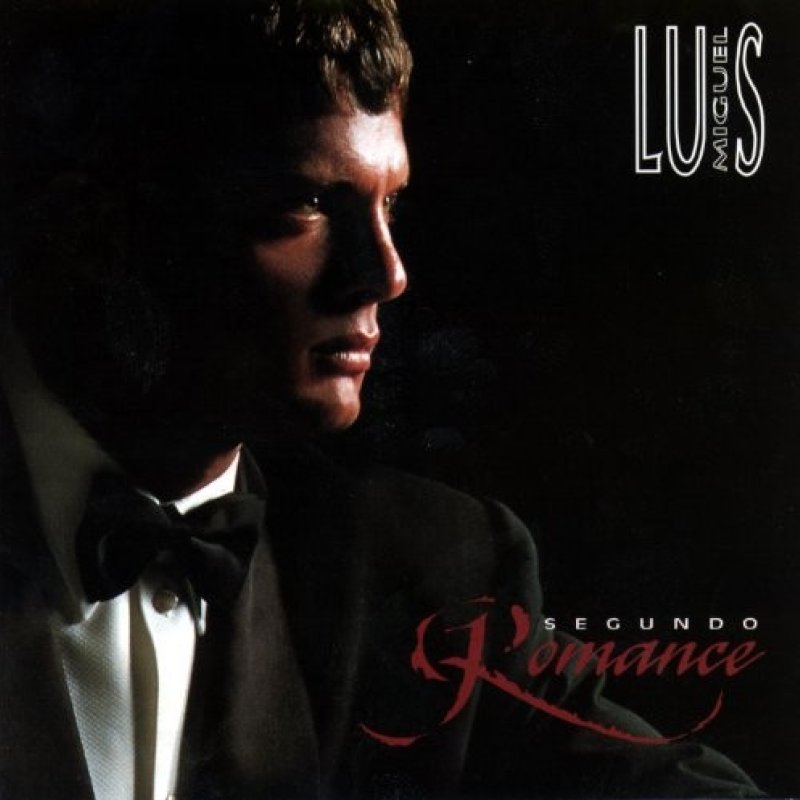
Solamente una vez
Luis Miguel · 1994
The most performed bolero by Lara. Frank Sinatra, Pedro Infante and Elvis Presley among its versions.
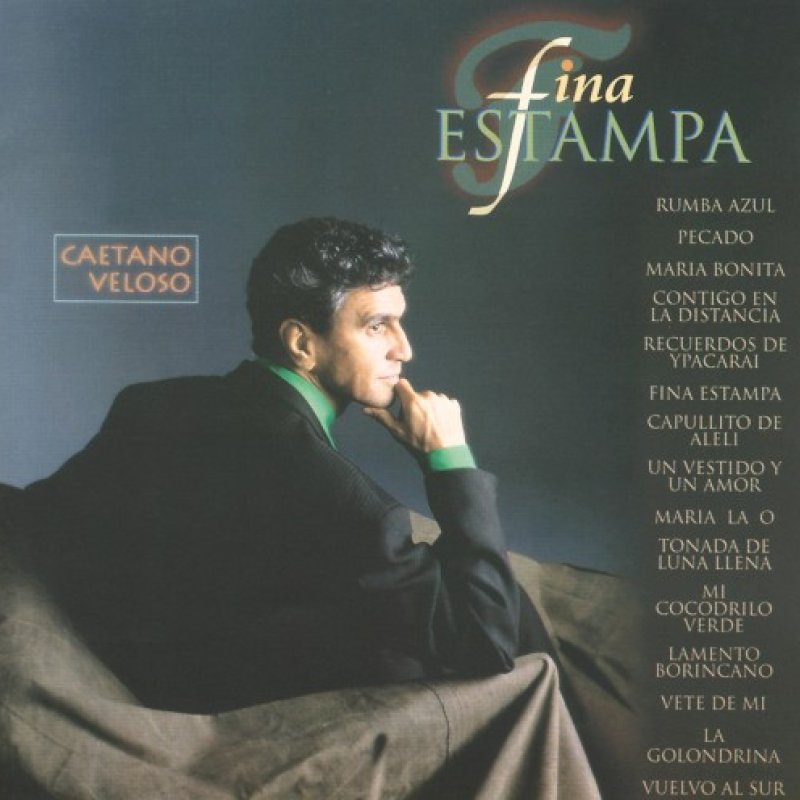
María Bonita
Caetano Veloso · 1994
The musical portrait of María Félix. The impossible love turned into Lara's most personal bolero.
Noche de ronda
Luis Miguel · 1997
The purest form of nocturnal melancholy. The bolero as philosophy of the night and of lost love.
Sabor a mí
Luis Miguel · 1997
The most sensory version of Mexican bolero. The memory of love described with images of extraordinary concreteness.

Piensa en mí
Chavela Vargas · 1994
The song Pedro Almodóvar chose for Tacones Lejanos. Café Tacuba covered it in rock. Lara in her most intimate version.
Perfidia
Alberto Domínguez · 1939
The Guatemalan bolero adopted by Mexico. Glenn Miller, Nat King Cole and the Beatles recorded it.
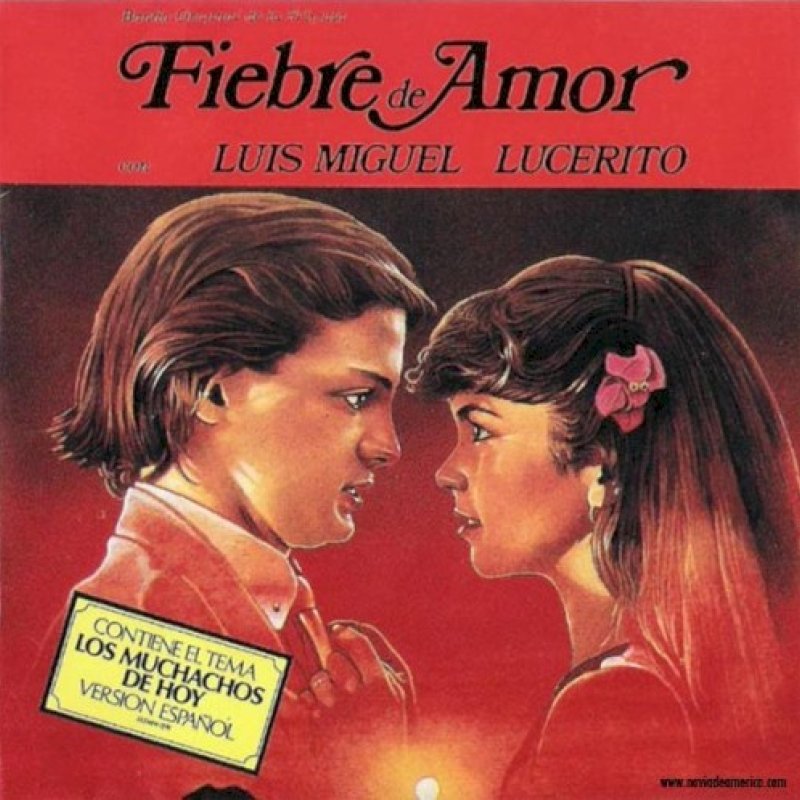
Sin ti
Luis Miguel · 1950
The romantic trio at its most perfect moment. The three-voice harmony that defined Latin American bolero.
Veracruz
Agustín Lara · 1936
Lara's tribute to his adopted homeland. The port of Veracruz transformed into a sonic poem.
4 canciones · en DoReSol
Practice these songs in Doresol
besame mucho
Consuelo Velázquez
Solamente una vez
Luis Miguel · 1994
Sabor a mí
Luis Miguel · 1997
Noche de ronda
Luis Miguel · 1997
The full series
Mexico
Mariachi, ranchera, bolero, corrido and chilango rock. A country that sings.
-
CAP 01
🇲🇽 Ch 01
The Roots: The Music of the Three Worlds (Pre-Hispanic–1800)
When the Spanish conquistadors arrived in the territory we today call Mexico in 1519, they found civilizations that had developed musical traditions of a complexity and richness th
-
CAP 02
🇲🇽 Ch 02
The Mariachi and the Ranchera Song: The Golden Age (1930–1970)
There was a moment in the 20th century when Mexico decided on its national sound. It wasn't a decision made by a government or an academy: it was the convergence of radio, cinema,
-
CAP 03 you are here
🇲🇽 Ch 03
The Bolero: The Musician Poet and the Heart of Latin America (1920–1980)
There is a moment in any Mexican neighborhood bar — not the trendy bar in the historic center but the humble bar with Formica tables and barrel beer — when someone asks for an Agus
-
CAP 04
🇲🇽 Ch 04
The Mexican Rock: The City as a Laboratory (1960–2000)
During almost two decades, rock music was technically illegal in Mexico. Not in the strict legal sense, but in the practical sense: after the Avándaro Concert of 1971 — the Mexican
-
CAP 05
🇲🇽 Ch 05
The Country and Western Music and the Ballad: The Border as Universe (1930–present)
There is a music in Mexico that the middle-class urban population often ignores or despises, which radio stations in Mexico City program with reluctance, and yet it is the one that
-
CAP 06
🇲🇽 Ch 06
<b>Juan Gabriel and Vicente Fernández:</b> The Two Giants
There is a story that summarizes the relationship between the two most important artists of the second half of the 20th century in Mexico. In 1971, Juan Gabriel and Vicente Fernánd
-
🇲🇽 Ch 07
The Mexican Pop of the 21st Century: Roots and the World (1990–present)
There is a paradox in Mexican music of the 21st century: the artists who have reached the furthest globally are those who have dug the deepest into their own tradition.
You might also like
3 articles picked by editorial similarity


