


🇧🇷 BR · Brazil · Chapter 4 of 6
MPB: Song as Resistance and Identity (1965–1985)
MPB — Brazilian Popular Music. The three initials seem simple, almost administrative. But behind them lies one of the most culturally rich, politically engaged, and artistically sophisticated movements in the history of Latin America in the 20th century. A movement that was born out of tension, grew under a dictatorship, and survived thanks to the determination of musicians, poets, and singers who understood that a well-crafted song can be, in certain circumstances, an act of resistance as effective as any other.

The term has a precise origin. The first song labeled as MPB —then called Modern Popular Music, MPM— was "Arrastão", by Edu Lobo and Vinícius de Moraes, performed by Elis Regina at the I Festival de Música Popular Brasileira of TV Excelsior in 1965. From that moment, the term began to circulate to designate something that was not exactly bossa nova —too refined, too middle class— nor traditional samba —too tied to carnival—, but a new synthesis that incorporated both traditions plus everything that came from abroad: North American folk, the new Latin American song, rock, jazz, northeastern music.
What unified this diverse space was not the sound but the attitude: an artistic seriousness and a commitment to Brazilian reality that distinguished its practitioners from pure entertainment music.
The context: singing under surveillance
Brazil was living under the military dictatorship established in 1964. The regime had an active censorship apparatus that reviewed lyrics, banned songs, monitored artists, and in the most severe cases, arrested, tortured, and exiled them. Television festivals — the stage where MPB had been consecrated — were gradually controlled and then suppressed. Radio stations received lists of banned songs. Recording studios were visited by censors.
In that context, MPB developed a technique that distinguishes it from any other musical trend on the continent: the systematic use of metaphor as a shield. The lyrics of Chico Buarque, Milton Nascimento, João Bosco, and Aldir Blanc are documents of double reading: on the surface, they speak of love, nature, everyday life; in the background, they speak of repression, fear, disappeared bodies, exile, encrypted hope. Reading those lyrics without knowing the historical context is like reading a code without the key.
The dictatorship knew it. The intelligence services profiled musicians with obsessive detail. The "number one enemy" of the regime in the musical field, according to declassified documents, was Chico Buarque de Hollanda.
Chico Buarque: the writer who used songs as a scalpel
Francisco Buarque de Hollanda was born in Rio de Janeiro in 1944, son of the historian Sérgio Buarque de Hollanda, author of Raízes do Brasil, one of the foundational texts of Brazilian social thought. This intellectual heritage is visible in every verse Chico wrote: his work is not that of a lyricist who adorns melodies but that of a writer who uses the song as a literary form.
His first major success, "A Banda" (1966), won the Festival of Brazilian Popular Music tied with "Disparada" by Geraldo Vandré. It was an apparently innocent, almost childish song about a marching band passing through the street. The country adopted it as an anthem of its own lost innocence.
What came next was much darker and larger. Construção (1971) is considered one of the most perfect songs in popular music in any language. The lyrics narrate the last day of a construction worker who dies in an accident, but the way it is constructed—with interchangeable adjectives that shift from stanza to stanza like pieces of a puzzle—makes the arbitrariness of death resonate as a critique of the system that produces that death. The eponymous album is a monument.
"Cálice" (written in 1973 with Gilberto Gil, only released in 1978 after five years of censorship) is perhaps his political masterpiece. The title sounds phonetically the same as "cale-se"—shut up—in Portuguese. The lyrics say "Pai, afasta de mim esse cálice / de vinho tinto de sangue"—Father, take this chalice away from me / of red wine of blood. The double reading was so obvious that the record company itself cut the microphones when Chico and Gil tried to perform it live in 1973, before the official censorship even acted.
To evade censorship, Chico even created a heteronym—Julinho da Adelaide—under whose name he published songs that he knew would be banned if they appeared under his real name. When the dictatorship discovered the trick, the outrage was double: not only for the lyrics but for the degree of intelligence that the deception revealed.
Chico survived the dictatorship, continued writing, won the Camões Prize—the highest in the Portuguese language—and in 2019 published Essa Gente, an album that resumed the tradition with the same precision as always. It is one of the longest and most coherent careers in all of contemporary popular music.
Elis Regina: the voice that was an instrument
Elis Regina Carvalho Costa was born in Porto Alegre in 1945 and died in São Paulo on January 19, 1982, at the age of thirty-six. At the stadium where her wake was held, one hundred thousand people gathered to bid her farewell. No other Brazilian musician has received such a tribute.
She was the best singer in Brazil of the 20th century. Not in the narrow technical sense — although her technique was impeccable — but in the broader sense: the ability to inhabit a song from within, to find in each word the exact emotional gesture, to turn the performance into something unlike any other interpretation. NPR included her in its list of the fifty greatest voices in history alongside Billie Holiday and Ella Fitzgerald. The first Brazilian on that list.
She emerged from the festivals — winning the first in 1965 with "Arrastão" — and since then she was the name that the entire generation of MPB composers wanted on their records. Chico Buarque, Milton Nascimento, João Bosco, Ivan Lins, Belchior: all passed through her voice and came out transformed. She was also a revealer: Falso Brilhante (1976) launched Belchior's career by including "Como Nossos Pais" and "Velha Roupa Colorida" at a time when no one knew him.
Her album Elis & Tom (1974) — recorded in Los Angeles with Tom Jobim over nine days in February and March — is one of the most perfect records in the history of Brazilian music. The duet in "Águas de Março" — with Jobim bursting into laughter at the end, unable to contain the emotion of what they were doing — is a moment of pure happiness that few recordings in any language have achieved.
"O Bêbado e a Equilibrista" (João Bosco and Aldir Blanc, 1979) was her last great political legacy: the unofficial anthem of the Amnesty Campaign, which called for the return of the exiles from the dictatorship. The image of the clown Carlitos — Charlie Chaplin — walking on the tightrope in the lyrics is a metaphor for the entire Brazil trying to maintain balance over the abyss.
She died of cardiac arrest caused by the combination of cocaine and alcohol. It was the same intensity that made her great on stage that destroyed her in private. Brazil has not fully recovered.
Milton Nascimento and the Clube da Esquina: Minas Gerais as a Universe
If Chico Buarque and Elis Regina represented the Rio–São Paulo axis of MPB, Milton Nascimento and the Clube da Esquina represented something different: the interiority of Minas Gerais, with its baroque tradition, its landscape of mountains and colonial cities, its religious music, its particular melancholy.
Milton Nascimento was born in Rio de Janeiro in 1942 but grew up in Três Pontas, Minas Gerais, and it was in Belo Horizonte where he began to build, with a group of friends gathered in the Santa Teresa neighborhood, the collective experience that would end up being called Clube da Esquina. The central names were Lô Borges, Beto Guedes, Flávio Venturini, Toninho Horta, and Wagner Tiso, among others. It was not exactly a band but a community of creators with a shared language: a mix of MPB, rock, jazz, Hispanic American music, and baroque classical music that sounded like nothing else in Brazil at that time.
The double album Clube da Esquina (1972) — co-authored with Lô Borges — is for many the greatest album in the history of Brazilian music. It has a harmonic depth that dialogues with the jazz of Bill Evans, an emotion that comes directly from the interior of Minas, and lyrics — by Fernando Brant, Ronaldo Bastos, Márcio Borges — that carry the density of an era that could not be named directly. "Nada Será Como Antes", "Cais", "O Trem Azul", "San Vicente": songs that have become part of Brazil's collective emotional heritage.
Milton's voice — with that unmistakable falsetto, that ability to go from whisper to scream without losing pitch — was as influential outside Brazil as it was inside. Wayne Shorter, Herbie Hancock, and Pat Metheny recorded with him. Paul Simon cited him as one of his references. "Coração de Estudante" became the anthem of the demonstrations for direct elections in 1984 — the Diretas Já — sung by crowds demanding the end of the dictatorship.
The Diverse Geography of MPB
One of the most notable features of MPB was its federal character: unlike bossa nova — which was almost exclusively from Rio — MPB absorbed talents from all over the national territory.
From Ceará came Belchior — a composer with overwhelming verbal intensity —, Fagner, and Ednardo. From Pernambuco, Alceu Valença. From Paraíba, Elba Ramalho and Zé Ramalho. From Bahia, in addition to the already mentioned tropicalists, Maria Bethânia — sister of Caetano Veloso — who built a career as a performer with unparalleled dramatic gravity. From Rio Grande do Sul came Elis, but also Vitor Ramil, decades later.
This geographical dispersion was also a political statement: MPB did not belong to any specific cultural center. It belonged to the whole of Brazil, in all its diversity.
The Return: Opening and Redemocratization
The process of opening —the gradual political opening that led to the end of the dictatorship in 1985— unleashed energies that had been repressed for two decades. The exiles returned: Caetano and Gil came back from London in 1972 and resumed their careers with a new maturity. Chico Buarque regained the full use of his name. Music festivals returned, although never with the same strength as in the sixties.
The MPB of the eighties was less politically urgent and more stylistically diverse. Without the pressure of censorship, artists could explore without the need to hide. The result was a more fragmented but equally rich scene, where the sophisticated samba of João Bosco, the pop of Ivan Lins, the rock of the Paralamas and the Titãs, and the continuation of the careers of Chico, Milton, and the other veterans coexisted.
The MPB had done what it needed to do: accompany Brazil from the darkness of the dictatorship to the uncertain light of democracy, without losing dignity along the way.
10 · 2 en DoReSol
Top 10 Essential MPB Albums
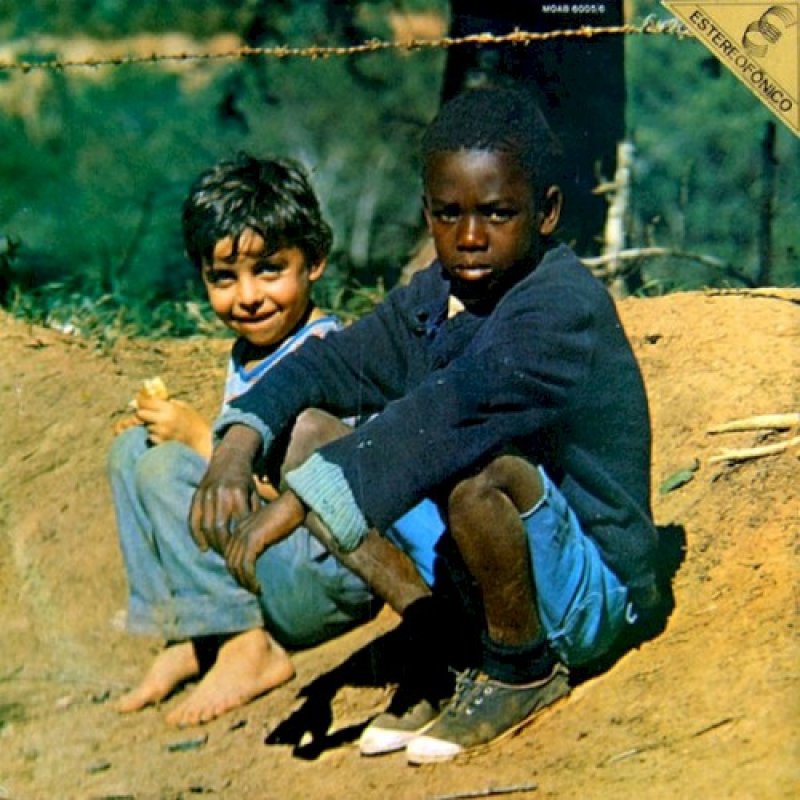
Clube da Esquina
Milton Nascimento · 1972
1972
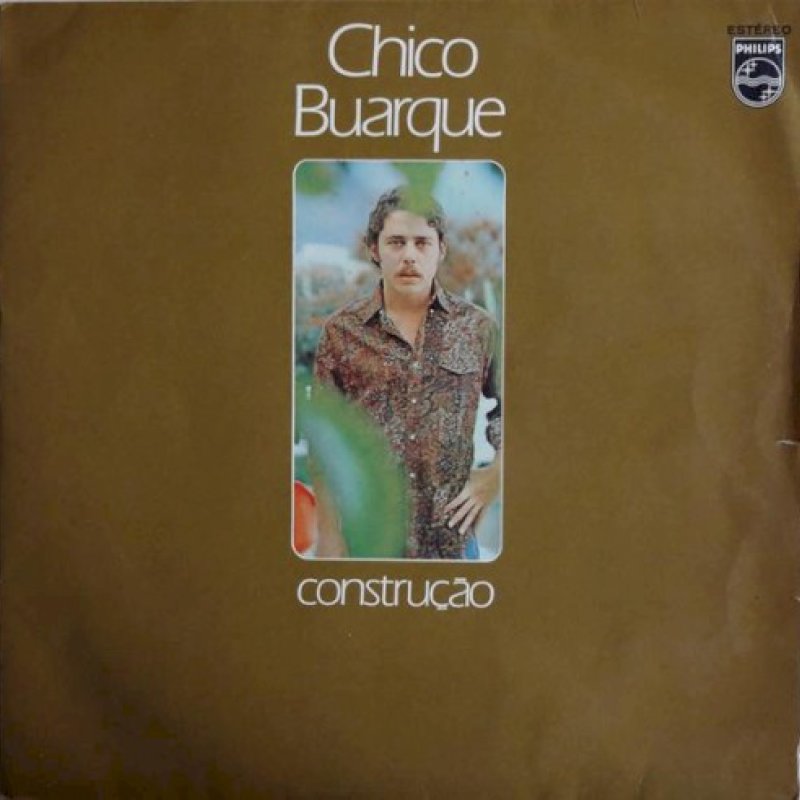
Construção
Chico Buarque · 1971
1971
Elis & Tom
Elis Regina & Tom Jobim
1974
Falso Brilhante
Elis Regina
1976
Clube da Esquina 2
Milton Nascimento
1978
Despite You
Chico Buarque
1978
This Woman
Elis Regina
1979
It Ended Crying
Novos Baianos
1972
Milton
Milton Nascimento
1976
Personality
Maria Bethânia
1986
The full series
Brazil
Samba, bossa nova, MPB, tropicalia. The densest musical culture in the continent.
-
CAP 01
🇧🇷 Ch 01
Samba: The Heartbeat of a Country (1917–present)
Samba was not born in a recording studio nor in a concert hall. It was born in
-
CAP 02
🇧🇷 Ch 02
The Bossa Nova: When Brazil Whispered and the World Stopped (1958–1967)
At the end of the 1950s, in the apartments of the southern zone of Rio de Janeiro —Copacabana, Ipanema, Leblon— a group of young musicians frequently gathered to play and listen. T
-
CAP 03
🇧🇷 Ch 03
Tropicália: The Electric Cry Against the Dictatorship (1967–1969)
To understand Tropicália, one must first understand Brazil in 1964. On April 1st of that year, the Armed Forces carried out a coup d'état that overthrew President João Goulart and
-
CAP 04 you are here
🇧🇷 Ch 04
MPB: Song as Resistance and Identity (1965–1985)
MPB — Brazilian Popular Music. The three initials seem simple, almost administrative. But behind them lies one of the most culturally rich, politically engaged, and artistically so
-
CAP 05
🇧🇷 Ch 05
The Brazilian Rock: The Electricity Brazil Always Needed (1982–present)
In 1982, Brazil did not have its own rock that could compete in energy and originality with what MPB and bossa nova had built in previous decades. Four years later, the scene was u
-
CAP 06
🇧🇷 Ch 06
Manguebeat and Hip-Hop: When the Periphery Took the Floor (1991–present)
There is an image that explains everything: the mangrove —the mangrove forest— as an ecosystem. The mangrove is one of the most fertile ecosystems on the planet. It lives on the bo
You might also like
3 articles picked by editorial similarity


