


🇧🇷 BR · Brazil · Chapter 1 of 6
Samba: The Heartbeat of a Country (1917–present)
Samba was not born in a recording studio nor in a concert hall. It was born in

Their roots are ancient and multiple. They come from the samba de roda of Bahia —declared an Intangible Cultural Heritage of Humanity by UNESCO— which in turn descends from the jongo, the lundu, and other Afro-Brazilian rhythms that enslaved people brought from the Congo, Angola, and other regions of sub-Saharan Africa. When the Bahian people migrated massively to Rio at the end of the 19th century after the abolition of slavery in 1888, they brought with them that musical heritage and transformed it in contact with the city, with the Rio carnival, and with the instruments they found available: the seven-string guitar, the cavaquinho, the tambourine, the tamborim.
The result was a new rhythm: syncopated, collective, danceable, deeply urban, and at the same time deeply African. A rhythm that Brazil could never completely ignore, although it tried for decades.
1917: the first recording
The first recording recognized as samba dates from January 21, 1917. It is called Pelo Telefone, is attributed to guitarist Donga —Ernesto dos Santos— and was registered at the National Library of Brazil. The history of that song is itself a mirror of how samba worked: it was a collective creation, born in the rodas of Tia Ciata, which Donga registered alone to the outrage of the other participants. The dispute over authorship was never fully resolved. Nor does it matter much: what matters is that Pelo Telefone became the greatest hit of the 1917 Rio carnival, and that with its popularity the term "samba" began to circulate in the media and among the urban middle class that had until then rejected it.
Samba schools: when the favela organized its own epic
In the nineteen twenties, an institution was born that would transform samba forever: the escolas de samba. The first was Deixa Falar, founded in 1928 in the Estácio neighborhood. In the following years, the schools that would define Rio's musical identity throughout the twentieth century emerged: Estação Primeira de Mangueira, founded in 1928 by Cartola among others; Portela, which grew out of the bloco Vai Como Pode around the same time; Salgueiro, Beija-Flor, Imperatriz Leopoldinense. Each school had its own neighborhood, its colors, its history, its community.
The samba-enredo —the narrative samba that accompanies the carnival parade— emerged in the thirties and turned Rio's carnival into something that existed nowhere else in the world: a mass spectacle in which music, choreography, visual allegories, and historical storytelling merged into a multi-day event that mobilized entire neighborhoods throughout the year. Composing the winning samba-enredo was —and still is— the greatest honor a sambista can aspire to.
President Getúlio Vargas understood the political power of samba and actively promoted it in the thirties and forties as a symbol of national identity, which had the paradoxical effect of granting institutional legitimacy to a music born out of resistance and marginality. Radio Nacional de Rio de Janeiro, founded in 1936, brought samba to the entire country. Names such as Noel Rosa, Ary Barroso, and Carmen Miranda —who would carry it all the way to Hollywood— built the canon of the genre's golden age during those decades.
Cartola: the poet of Mangueira
Angenor de Oliveira, known as Cartola, is probably the most important name in the entire history of samba. He was born in 1908 in Rio de Janeiro, grew up in Morro da Mangueira —then a favela in formation— and was one of the founders of Estação Primeira de Mangueira in 1928. For decades he composed with a poetic delicacy and harmonic sophistication that had no precedent in the genre. However, his recording career was late and troubled: he spent years in anonymity working as a car washer before the samba rediscovery movement of the 1960s brought him back to center stage.
He recorded his first self-titled album only in 1974, at the age of 65. It was followed by a second Cartola in 1976 —ranked 8th on Rolling Stone Brasil's historical list— and other records until his death in 1980. In those few years of formal recording career he left a body of work that critics equate with the greats of popular song worldwide: lyrics where love, melancholy, the beauty of everyday Rio and the dignity of the humble coexisted with music of extraordinary subtlety. "As Rosas Não Falam", "O Mundo é um Moinho", "Acontece" are songs that belong to Brazil's emotional heritage.
The rediscovery of the sixties and seventies
The arrival of bossa nova in 1958 had a paradoxical effect on traditional samba: at first it seemed to eclipse it, but its musicians —many from the middle class with jazz training— began to turn their gaze toward the favelas and discover the generations of sambistas who had been composing for decades without recognition or recordings.
Zicartola, the restaurant that Cartola and his wife Zica opened in the sixties in downtown Rio, became the meeting point where the bossa nova intelligentsia met the masters of roots samba: Cartola, Nelson Cavaquinho, Clementina de Jesus, Zé Keti, Paulinho da Viola. It was an encounter that changed the course of both traditions.
Clementina de Jesus deserves special mention. She began her professional career at 63, discovered singing in a tavern by composer Hermínio Bello de Carvalho. Her voice —deep, rough, laden with the full weight of the Afro-Brazilian tradition— was like hearing Africa directly. She recorded only four solo albums before her death in 1987, but her influence on generations of singers was immense.
Paulinho da Viola, born in 1942, was the bridge between the old guard and modernity. Raised in a musical environment —his father was a guitarist and Pixinguinha and Jacob do Bandolim would rehearse at his home— he built a body of work that deepened the harmonic sophistication of samba without ever abandoning its spirit. His album Foi Um Rio Que Passou Em Minha Vida (1970) is one of the great records in the history of the genre.
In the seventies, Beth Carvalho —the godmother of pagode— and Clara Nunes brought samba back to the radio with more accessible productions but without betraying its roots. Martinho da Vila contributed partido alto samba with a distinctive elegance and humor. The decade was one of reconquest: samba was once again the music of Brazil.
Pagode: samba is renewed from the suburbs
At the beginning of the 1980s, when Brazilian rock and disco music had reduced the presence of samba in the mass media, a new movement emerged from the suburbs of northern Rio de Janeiro: pagode. The group Fundo de Quintal was its creative core, incorporating new instruments—the seven-string banjo, the tantã—and a more informal and festive language that connected with the new generations. Beth Carvalho was the great promoter of the movement, bringing musicians like Zeca Pagodinho, Jorge Aragão, and Jovelina Pérola Negra to her festivals.
Pagode was the samba of the eighties and nineties: massive, cheerful, sometimes criticized for simplifying tradition, but vital for keeping the genre alive at a time when the industry was pointing in other directions.
Samba today: living tradition
Samba in the 21st century coexists in multiple simultaneous dimensions: samba schools remain the greatest popular show on the planet during Rio's carnival; samba de raiz has a cultured and loyal audience that fills small bars and theaters; pagode has branched into more commercial variants but with a massive following; and a new generation of composers and performers —Teresa Cristina, Diogo Nogueira, Roberta Sá, Seu Jorge— maintains the dialogue between tradition and contemporaneity with an honesty and quality that guarantee continuity.
Samba is, before being a musical genre, a way of being in the world. A philosophy of body and community that Brazil built over centuries from its margins and that ended up being the heart of its identity. No other Latin American country has anything comparable in terms of historical depth, cultural complexity, and simultaneous relevance.
10 · 1 en DoReSol
Top 10 Essential Samba Albums
Cartola
Cartola
1974
Cartola
Cartola
1976
Foi Um Rio Que Passou Em Minha Vida
Paulinho da Viola
1970
Gente da Antiga
Paulinho da Viola
1981
Rosa de Ouro
Conjunto Rosa de Ouro
1965
Clementina, Cadê Você?
Clementina de Jesus
1970
Nelson Cavaquinho
Nelson Cavaquinho
1973
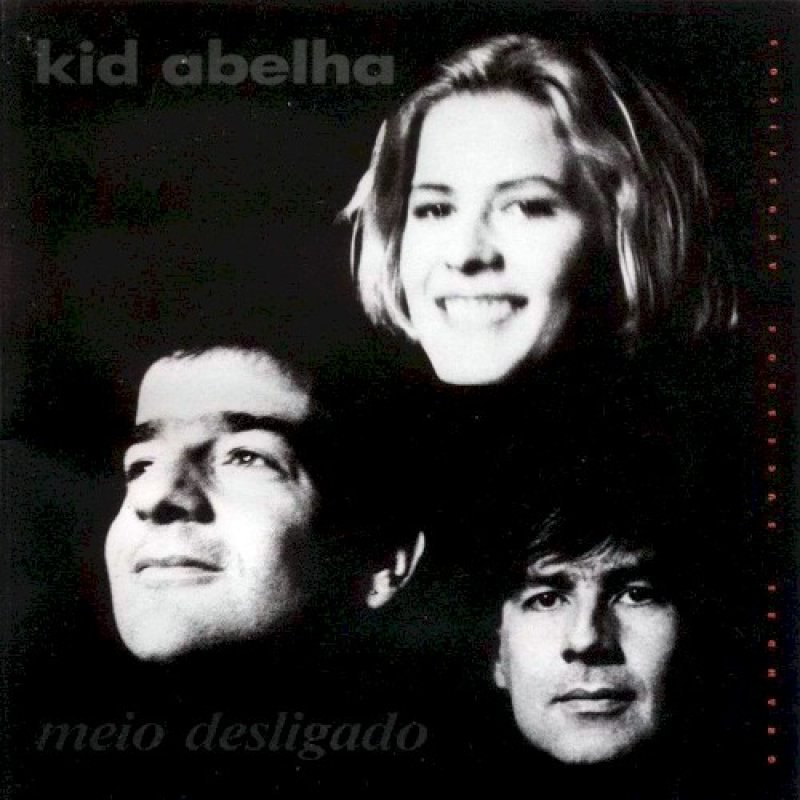
Como eu quero
Kid Abelha · 1994
1976
Festa de Música
Martinho da Vila
1972
A Voz do Samba
Velha Guarda da Portela
1970
The full series
Brazil
Samba, bossa nova, MPB, tropicalia. The densest musical culture in the continent.
-
CAP 01 you are here
🇧🇷 Ch 01
Samba: The Heartbeat of a Country (1917–present)
Samba was not born in a recording studio nor in a concert hall. It was born in
-
CAP 02
🇧🇷 Ch 02
The Bossa Nova: When Brazil Whispered and the World Stopped (1958–1967)
At the end of the 1950s, in the apartments of the southern zone of Rio de Janeiro —Copacabana, Ipanema, Leblon— a group of young musicians frequently gathered to play and listen. T
-
CAP 03
🇧🇷 Ch 03
Tropicália: The Electric Cry Against the Dictatorship (1967–1969)
To understand Tropicália, one must first understand Brazil in 1964. On April 1st of that year, the Armed Forces carried out a coup d'état that overthrew President João Goulart and
-
CAP 04
🇧🇷 Ch 04
MPB: Song as Resistance and Identity (1965–1985)
MPB — Brazilian Popular Music. The three initials seem simple, almost administrative. But behind them lies one of the most culturally rich, politically engaged, and artistically so
-
CAP 05
🇧🇷 Ch 05
The Brazilian Rock: The Electricity Brazil Always Needed (1982–present)
In 1982, Brazil did not have its own rock that could compete in energy and originality with what MPB and bossa nova had built in previous decades. Four years later, the scene was u
-
CAP 06
🇧🇷 Ch 06
Manguebeat and Hip-Hop: When the Periphery Took the Floor (1991–present)
There is an image that explains everything: the mangrove —the mangrove forest— as an ecosystem. The mangrove is one of the most fertile ecosystems on the planet. It lives on the bo
You might also like
3 articles picked by editorial similarity


