


🇧🇷 BR · Brazil · Chapter 3 of 6
Tropicália: The Electric Cry Against the Dictatorship (1967–1969)
To understand Tropicália, one must first understand Brazil in 1964. On April 1st of that year, the Armed Forces carried out a coup d'état that overthrew President João Goulart and installed a military dictatorship that would govern the country for twenty-one years. The regime progressively hardened: censorship grew, political parties were dissolved, and unions were intervened. Left-wing artists and intellectuals began to be watched, silenced, exiled, or imprisoned.

In that climate of growing repression, popular music festivals broadcast on television became one of the few venues where cultural dissent could appear in public. The festivals of TV Record, TV Globo, and TV Record were mass-audience events where composers presented new songs and the public voted. They were also, for that reason, ideological battlegrounds where different projects of Brazilian culture clashed each week with microphones and guitars.
It was in this context that, in October 1967, Tropicália exploded.
The Festival Scandal: October 1967
The III Festival of Brazilian Popular Music of TV Record was, at that time, the most followed cultural event in Brazil. On the night of October 21, 1967, two unexpected things happened.
First, Gilberto Gil took the stage accompanied by Os Mutantes —a psychedelic rock trio from São Paulo formed by Rita Lee, Arnaldo Baptista, and Sérgio Dias— to present "Domingo no Parque". The song mixed a Bahian capoeira rhythm with distorted guitars and orchestral arrangements by avant-garde composer Rogério Duprat. The leftist nationalist audience, who advocated for a pure samba without foreign contaminations, booed them. The song came in second.
Then, Caetano Veloso presented "Alegria, Alegria" accompanied by the Beat Boys, an Argentine rock band. The song was fragmented, festive, with references to pop culture, Brigitte Bardot, astronauts, guerrillas, all mixed with a disconcerting lightness. More boos. It came in fourth.
Both songs were scandals and both are now absolute classics of Brazilian music. That night, Tropicália was officially born as a movement.
The idea: devour the enemy
The name came from elsewhere. In April 1967, the visual artist Hélio Oiticica had presented an installation called Tropicália at the Museum of Modern Art in Rio de Janeiro, an indoor jungle with plants, parrots, sand, and a television turned on in the background. Caetano Veloso saw that work and recognized it: it was exactly what he wanted to do with music.
The central idea of the movement was cultural anthropophagy, a concept that Oswald de Andrade had proposed in his Anthropophagic Manifesto of 1928: Brazil should neither imitate European culture nor reject American culture, but devour them, digest them, and transform them into something of its own. The tropicalists applied this idea to music with unprecedented radicalism: they took the Beatles, psychedelic rock, television kitsch, northeastern baião, samba de morro, bossa nova, the caipira music from the interior of São Paulo, and mixed them without hierarchies, without asking for permission, without feeling shame.
It was a multiple provocation: to the cultural left that defended a folkloric purity and rejected rock as Yankee imperialism; to the military regime that sought to control national identity; and to the entertainment industry that wanted simple and sellable songs.
The Protagonists
Caetano Veloso was the theoretical brain and the most prolific composer of the group. Born in Santo Amaro da Purificação, Bahia, in 1942, he had a rare conceptual intelligence for a pop musician: he could talk about semiotics, cinema novo, concrete poetry, and the Stones in the same sentence, and turn all that into a song. His self-titled 1968 album —which opens with "Tropicália," the song that gave the movement its name— is the most complete document of his vision: a collage of genres, ironies, genuine beauty, and political criticism camouflaged in everyday images.
Gilberto Gil was the most complete musician of the group: a virtuoso guitarist, a singer of exceptional warmth, a composer capable of moving from baião to rock to reggae with astonishing naturalness. He met Caetano at the Federal University of Bahia in 1963, and since then their paths have been intertwined. His self-titled 1968 album, with Os Mutantes as the backing band and Duprat on arrangements, is one of the most brilliant and original in the entire history of rock in Brazil.
Os Mutantes —Rita Lee, Arnaldo Baptista, and Sérgio Dias— were the electric muscle of Tropicália. Formed in São Paulo in 1966, they had absorbed the Beatles, Jimi Hendrix, and the Beach Boys and mixed them with local psychedelia and absurdist humor from São Paulo. Their self-titled debut album (1968) is a document that exceeds the movement that generated it: Kurt Cobain would cite it decades later as one of his fundamental influences, as would Beck, Jack White, and David Byrne. It is the most technically and aesthetically advanced album of the entire Brazilian scene of the sixties, and one of the great psychedelic rock albums in the world, although at the time it was almost ignored outside Brazil.
Gal Costa provided the most penetrating and emotional voice of the movement. A Bahian like Caetano and Gil, she was self-taught —without professional training— but had an interpretative power that transformed any song into a physical event. Her debut alongside Caetano on the album Domingo (1967) was still anchored in bossa nova, but her participation in the manifesto album and her subsequent solo career would make her one of the great singers in all of Brazilian musical history. She died in 2022, at seventy-seven years old.
Tom Zé was the most eccentric and the most forgotten for decades. A composer from Irará, Bahia, he studied music at the Federal University of Bahia and brought to the movement its most conceptual and experimental side. "Parque Industrial," his contribution to the manifesto album, is a fierce satire of consumerism and capitalist modernity. He fell into oblivion during the seventies and eighties until musician and producer David Byrne rediscovered him in the nineties and published his work on the Luaka Bop label, restoring the recognition he deserved.
Rogério Duprat deserves a special mention even though he neither sang nor composed in the traditional sense. He was the arranger and orchestrator of the movement: a classically trained and avant-garde musician who took the songs of Caetano and Gil and wrapped them in orchestral textures that amplified their productive contradictions. Without Duprat, Tropicália would not have sounded the way it did.
The collective manifesto: Tropicália ou Panis et Circencis (1968)
In July 1968, all the protagonists of the movement gathered in a single collective album recorded at the RGE studios in São Paulo: Tropicália ou Panis et Circencis. The cover—designed by the visual artist Rubens Gerchman—shows the musicians posing as a bizarre family, a mix of tropical kitsch and Dadaist provocation. The title paraphrases Juvenal: panem et circenses, bread and circuses, the Roman formula for keeping the people distracted. The comparison with Brazilian television was explicit and insulting.
The album is a collage: there is samba, baião, psychedelic rock, avant-garde orchestral arrangements, kitsch boleros, protest songs disguised as love songs, absurd humor, and genuine melancholy, all mixed with the precision of a manifesto and the energy of a game. Rolling Stone Brazil would vote it decades later as the second-best album in the history of Brazilian music, behind only Acabou Chorare by the Novos Baianos.
The Violent End: AI-5 and Exile
On December 13, 1968, the dictatorship enacted Institutional Act No. 5, the most repressive decree of the entire military era. It suspended habeas corpus, established total prior censorship, and concentrated power in the military executive almost absolutely. Fourteen days later, on December 27, Caetano Veloso and Gilberto Gil were arrested by Federal Police agents under the pretext of having disrespected the National Anthem and Flag.
They remained incommunicado for months, first in military barracks, then under house arrest. In June 1969, they bid farewell to Brazil with a show in Salvador —where Gil played "Aquele Abraço", his farewell song to the homeland— and voluntarily went into exile in London, where they would live and work for two years.
With their leaders out of the country, the tropicalist movement as such ended. It formally lasted less than two years —from October 1967 to December 1968. But in that time, it produced a quantity of first-rate work that few cultural movements in any country have matched in such a short period.
The Legacy That Never Ends
Tropicália left Brazil—and the world—with three legacies that still operate:
The first is aesthetic: the freedom to mix genres without hierarchies, to take the popular and the cultured, the local and the global, the serious and the ridiculous, and make something out of all that which did not exist before. This attitude permeates all subsequent Brazilian music, from the MPB of the seventies to the manguebeat of the nineties and the alternative pop of the 21st century.
The second is political: the idea that culture is a battlefield, that a song can be an act of resistance, that the way one makes music is also a statement about how one wants to live. In a country under dictatorship, this was not metaphor but literalness.
The third is international: Os Mutantes influenced Cobain and Byrne. Caetano Veloso is considered one of the most important composers of the 20th century in any language. Tropicália was rediscovered by the Anglo-Saxon critics in the nineties, and its influence on global alternative music in recent decades is visible and documented.
A movement that lasted less than two years and changed the music of the 20th century. There are not many other examples.
10 · 1 en DoReSol
Top 10 Essential Tropicália Albums
Tropicália: ou Panis et Circencis
Various artists
1968
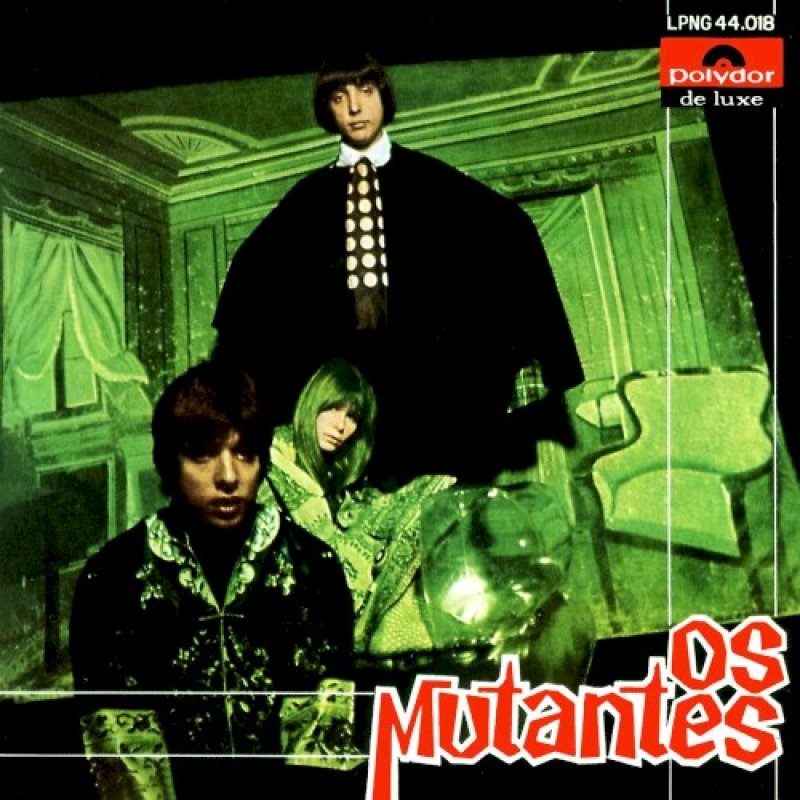
Os Mutantes
Os Mutantes · 1968
1968
Caetano Veloso
Caetano Veloso
1968
Gilberto Gil
Gilberto Gil
1968
Gal Costa
Gal Costa
1969
The Divine Comedy or I'm a Little Disconnected
Os Mutantes
1970
**Fa-Tal
Gal at Full Steam** · Gal Costa
1971
Studying Samba
Tom Zé
1976
Anything
Caetano Veloso
1975
Refazenda
Gilberto Gil
1975
The full series
Brazil
Samba, bossa nova, MPB, tropicalia. The densest musical culture in the continent.
-
CAP 01
🇧🇷 Ch 01
Samba: The Heartbeat of a Country (1917–present)
Samba was not born in a recording studio nor in a concert hall. It was born in
-
CAP 02
🇧🇷 Ch 02
The Bossa Nova: When Brazil Whispered and the World Stopped (1958–1967)
At the end of the 1950s, in the apartments of the southern zone of Rio de Janeiro —Copacabana, Ipanema, Leblon— a group of young musicians frequently gathered to play and listen. T
-
CAP 03 you are here
🇧🇷 Ch 03
Tropicália: The Electric Cry Against the Dictatorship (1967–1969)
To understand Tropicália, one must first understand Brazil in 1964. On April 1st of that year, the Armed Forces carried out a coup d'état that overthrew President João Goulart and
-
CAP 04
🇧🇷 Ch 04
MPB: Song as Resistance and Identity (1965–1985)
MPB — Brazilian Popular Music. The three initials seem simple, almost administrative. But behind them lies one of the most culturally rich, politically engaged, and artistically so
-
CAP 05
🇧🇷 Ch 05
The Brazilian Rock: The Electricity Brazil Always Needed (1982–present)
In 1982, Brazil did not have its own rock that could compete in energy and originality with what MPB and bossa nova had built in previous decades. Four years later, the scene was u
-
CAP 06
🇧🇷 Ch 06
Manguebeat and Hip-Hop: When the Periphery Took the Floor (1991–present)
There is an image that explains everything: the mangrove —the mangrove forest— as an ecosystem. The mangrove is one of the most fertile ecosystems on the planet. It lives on the bo
You might also like
3 articles picked by editorial similarity


