


🇦🇷 AR · Argentina · Chapter 2 of 10
Tango: The Music that Buenos Aires Gave to the World (1880–1955)
Tango was not born in the elegant salons of Buenos Aires nor in the downtown theaters. It was born in the outskirts — the peripheral neighborhoods where newly arrived European immigrants, criollos displaced from the countryside, Afro-Argentines descended from slaves, and the compadritos who lived on the margins of the established social order mingled.

The candombe, the Cuban habanera, the milonga, the mazurka, the quadrille, the waltz, the polka, and the Andalusian tango — music genres in vogue at the time — also made their contribution. Tango music is performed and danced in brothels, whorehouses, and bars.
It was the music of those who had no place in the official city: the soundtrack of the overcrowded tenement, the neighborhood store, the courtyard where languages and stories mixed, having nothing in common except displacement. This social promiscuity — which the bourgeois Buenos Aires of the late 19th century found threatening — was the condition of possibility for tango.
The Argentine upper class rejected it. Paris adopted it. And when Paris adopted it, the Argentine upper class accepted it. This paradox — the music of the slums legitimized by Europe to be recognized in its own land — defines the relationship of tango with Argentine identity to this day.
La Guardia Vieja: The Tango Without Words
The period that tango historians call the Guardia Vieja spans approximately from 1880 to 1917: tango in its primary, instrumental form, without lyrics yet, played by small ensembles — sometimes just a single organito, sometimes a trio of flute, guitar, and violin — at the dances of the outskirts.
The instruments that define the sound of the Guardia Vieja are the transverse flute, the violin, and the guitar. The bandoneon — the instrument that today is synonymous with tango — arrived relatively late, establishing itself as the central instrument of the genre in the early years of the 20th century.
Ángel Villoldo was the most important composer of the Guardia Vieja: his tango "El Choclo" (1903) — — is the most representative piece of that era, with its two-part structure and carefree character that still lacks the melancholy that tango would later acquire. Also by Villoldo is "La Morocha" (1905) — — one of the first tango recordings to reach Europe.
The Guardia Vieja finds immortality in an instrumental work composed by a 19-year-old from Montevideo: "La Cumparsita", by Gerardo Matos Rodríguez. In 1916 Roberto Firpo arranged and premiered it in Montevideo.
Years later, Enrique Pedro Maroni and Pascual Contursi wrote the most well-known lyrics — "if you knew / that even within my soul..." — and Carlos Gardel recorded it, making it a worldwide success.
Tango Conquers Paris
There had been an initial advance to Europe in 1907 by Los Gobbi and Ángel Villoldo, followed in 1911 by other musicians, and in 1913 a second incursion led by pianist Celestino Ferrer with bandoneonists and violinists, accompanied by a pair of dancers who moved the Old Continent with a sensual dance that completely revolutionized the ways of dancing and even relating to the body and between genders.
Paris was fascinated. The most elegant dance halls in the French capital adopted the tango with the enthusiasm of someone discovering something absolutely new. The same dance that Buenos Aires considered obscene and dangerous became the sensation of the Parisian belle époque. Pope Pius X banned it. Kaiser Wilhelm II banned it in Prussian military uniforms. Those bans were the best possible advertisement.
When the tango returned from Paris with the seal of European modernity, Buenos Aires had to reconsider its position. What had been music of the compadrito became an international fashion. The same halls that had rejected it opened their doors. And the tango began the process of refinement that would take it from the outskirts to the theaters.
Carlos Gardel: The Creole Thrush
Charles Romuald GardesCarlos Gardel — was probably born in Toulouse, France, in 1890, although the dispute over his origin between Argentina and Uruguay has never been completely resolved and probably never will be. He arrived in Buenos Aires as a child, grew up in the Abasto neighborhood, and became the most important artist that Argentine music has produced.
Carlos Gardel's first stage appearance was as a tango singer in 1917, when he sang "Mi Noche Triste". The legendary Gardel is known for inventing the tango song, and his famous voice played a very important role in popularizing tango.
"Mi Noche Triste" (1917) — — was the first tango song in history: the first tango with a narrative lyric that told a story of love and abandonment in the first person, with the verse and chorus structure that tango would adopt as its definitive form. That moment — Gardel singing "Mi Noche Triste" at the Buenos Aires theater in 1917 — is the instant when tango ceased to be just dance music and also became a song to listen to.
What Gardel had was impossible to analyze and even more impossible to imitate: a baritone voice with a warmth and naturalness that made each song sound as if he were inventing it at that moment. His phrasing — the specific way he breathed within the melody, lengthening some notes and shortening others with a freedom that no previous singer had allowed themselves — defined what it meant to sing tango for decades after his death.
He went solo in 1925 and became an international star until his tragic death in a plane crash in 1935. Some of his most famous songs were Volver, Por una cabeza, Mano a Mano, Adiós Muchachos, and Mi Buenos Aires Querido.
"Volver" — — with lyrics by Alfredo Le Pera, is the most important song in the tango repertoire after "La Cumparsita": the meditation on returning to Buenos Aires from the exile of fame, sung by a man who knew exactly what it was like to be far from home. "Volver / con la frente marchita / las nieves del tiempo / platearon mi sien": four verses that define tango as the music of nostalgia more than any other possible definition.
"Por una Cabeza"Listen — composed by Gardel and Le Pera in 1935, a few weeks before the singer's death, is the perfect metaphor for love-game: the horse race as an image of romantic obsession, with one of the most recognizable melodic themes in tango history.
Gardel died on June 24, 1935, in a plane crash in Medellín, Colombia, at the age of forty-four. Even today, ninety years later, Argentinians say that "he sings better every day" — the phrase that sums up the paradox of an artist who became greater after death than in life.
The Golden Age: The Great Orchestras
The forties were the golden age of tango: the period when the genre reached its greatest mass popularity, when the great typical orchestras filled the dance halls of Buenos Aires and their records played on all the radios of the continent.
Aníbal Troilo — "Pichuco" — was the bandoneonist and orchestra conductor who best embodied that period: his orchestra was the reference standard, his warm and melancholic sound was the definition of what a tango orchestra should sound like. His compositions"Sur" — with lyrics by Homero Manzi, are the most perfect document of tango as urban poetry.
Osvaldo Pugliese was the opposite pole: his orchestra had a more dramatic, more contrasting sound, with the "yumba" — the characteristic beat that defines his style — which made his music the most difficult to dance to and the most exciting to listen to. "La Yumba" (1943) — is his most recognized work and one of the most complex instrumental tangos in the classical repertoire.
Juan D'Arienzo — "The King of Rhythm" — was the one who made the people of Buenos Aires dance the most: his orchestra was faster and more marked than the others, with a rhythm that made feet move on their own. His version of "La Cumparsita" is probably the most listened to of all the versions that exist of that infinitely recorded song.
The lyric poets of that eraHomero Manzi, Enrique Santos Discépolo, Cátulo Castillo — took the lyrics of tango to a literary complexity that no other Argentine popular genre has reached. Discépolo in particular — author of "Cambalache" (1934) — wrote the most lucid and furious diagnosis of Argentine modernity in three minutes of tango: "That the world was and will be a mess, I already know! / In five hundred six and in two thousand too." The song that 20th-century Argentina wrote about itself before the century ended.
The Bandoneon: The Instrument of the Soul
The bandoneon deserves a specific mention because it is the most important instrument in the history of Argentine music and the most improbable: a bellows instrument invented in Germany in the mid-19th century to play religious music in rural churches that could not afford an organ, which arrived at the Río de la Plata in the hands of Central European immigrants and which tango adopted as if it had been made exactly for it.
It is no coincidence: the bandoneon has a specific timbral quality — that mix of rough and warm sound, of amplified human breath — that corresponds exactly to the character of tango. When the bandoneon opens its bellows, it sounds like a sigh. When it closes them, it sounds like resignation. It is the instrument of the emotional ambivalence that defines tango.
Editorial Note: Carlos Gardel recorded more than nine hundred songs in his career. Of all of them, "Volver" is the one that best summarizes what tango is as a cultural phenomenon: the nostalgia for something that perhaps was never as good as we remember, sung by someone who knows that returning is impossible but who sings anyway because singing is the only way to process the loss. Buenos Aires is a city of voluntary and involuntary exiles who carry tango as luggage: the music that says what distance does to memory. That is why tango has no borders — because exile and nostalgia have none either.
10 · 5 en DoReSol
Top 10 of Classic Argentine Tango
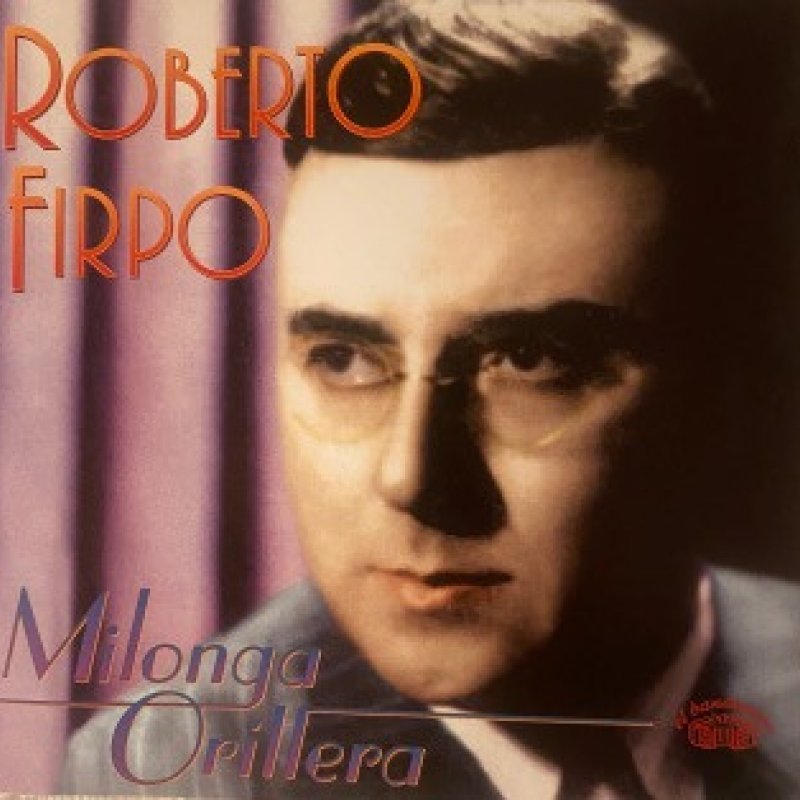
La Cumparsita
Roberto Firpo · 2017
The most famous tango in the world. Composed by a 19-year-old Uruguayan, arranged by Firpo, sung by Gardel. The anthem of a genre that belongs to both shores of the Río de la Plata.
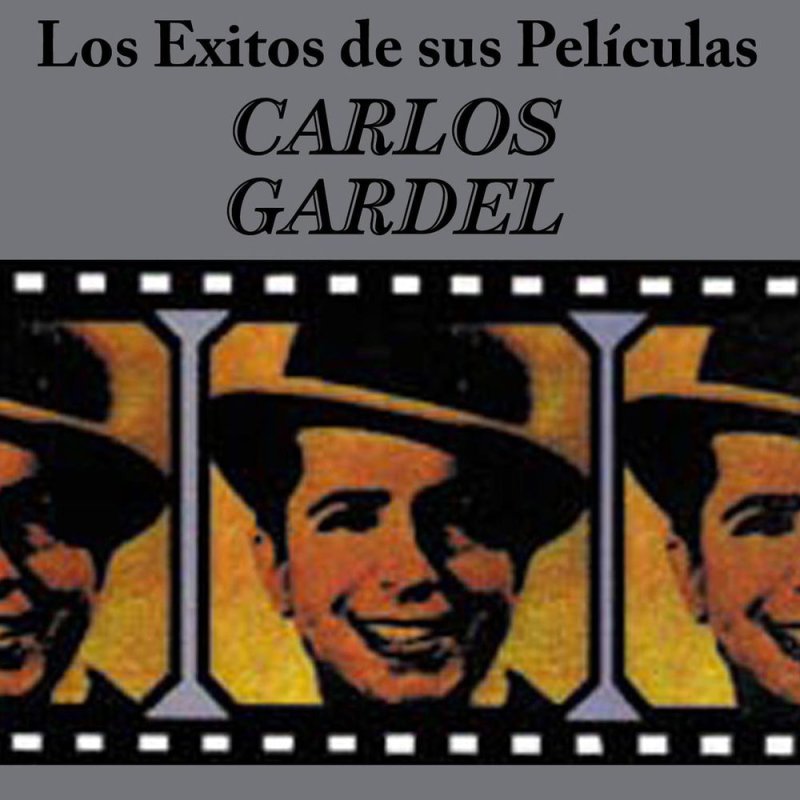
Volver
Carlos Gardel · 1935
The ultimate song of nostalgia. Tango as a philosophy of the impossible return. The snows of time silvering the temples of the man who is always far from where he wants to be.
Cambalache
Enrique Santos Discépolo · 1934
The most lucid diagnosis of Argentine modernity. The denunciation of an era where everything is worth the same — the good and the bad, the honest and the corrupt — in three minutes of tango.
Sur
Aníbal Troilo / Homero Manzi · 1948
The southern neighborhood of Buenos Aires as a topography of the soul. Manzi and Troilo constructing the most perfect tango-poem of the golden age.
Por una cabeza
Carlos Gardel · 1935
Gardel's last great song before his death. The horse race as a metaphor for love-obsession. The most recognizable melodic theme of tango in world cinema and television.
Mi Noche Triste
Carlos Gardel · 1917
The first tango song in history. The moment when tango stopped being just dance music and became a song to listen to.
La Yumba
Osvaldo Pugliese · 1943
The most dramatic instrumental tango of the golden age. Pugliese's "yumba" as the sound signature of the most difficult orchestra to dance to and the most exciting to listen to.
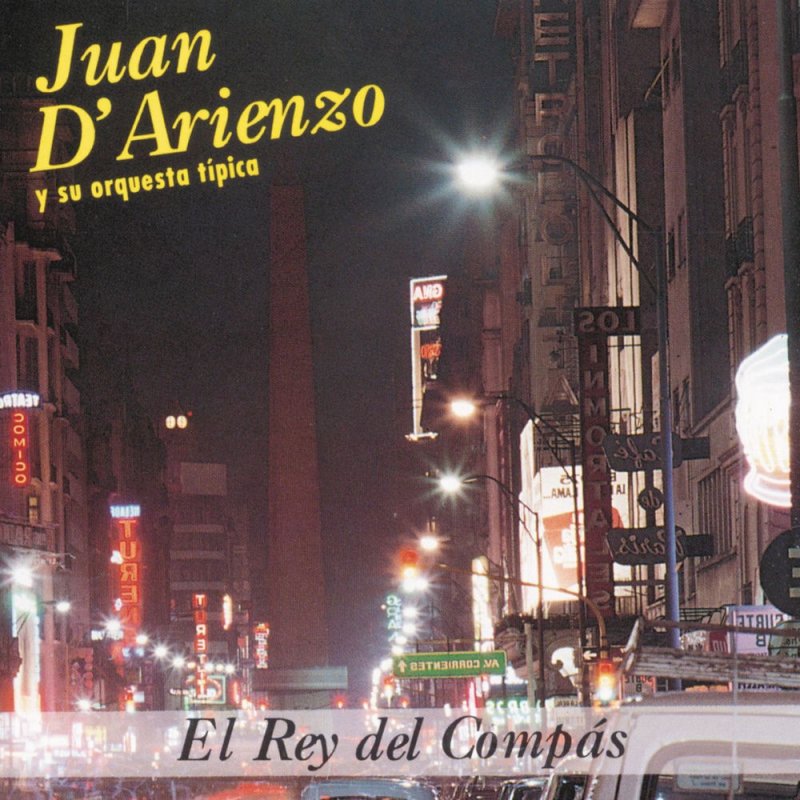
El Choclo
Orquesta Juan D'Arienzo · 1990
The Guardia Vieja in its purest form. Tango before Gardel, before the bandoneon as a central instrument, before melancholy. The tango that still wanted to be cheerful.
Mi Buenos Aires querido
Carlos Gardel · 1934
The sentimental anthem of the city. Buenos Aires seen from the exile of international fame with the tenderness of someone who knows they cannot return.
A Media Luz
Edgardo Donato · 1925
The tango of the apartment on Corrientes Street with its stylish furniture. The modest luxury of 1920s Buenos Aires seen with the affectionate irony that tango reserves for the middle class aspiring for more.
1 canción · en DoReSol
?? Practice these songs on Doresol
The full series
Argentina
Tango, rock nacional and folklore — the sound of a country telling its own story.
-
CAP 01
🇦🇷 Ch 01
The Roots: The Three Worlds That Made a Music (centuries XV–XIX)
Argentina is the eighth largest country in the world: 2.780.400 square kilometers that stretch from the subtropical rainforest in the north to the Patagonian channels in the south,
-
CAP 02 you are here
🇦🇷 Ch 02
Tango: The Music that Buenos Aires Gave to the World (1880–1955)
Tango was not born in the elegant salons of Buenos Aires nor in the downtown theaters. It was born in the outskirts — the peripheral neighborhoods where newly arrived European immi
-
CAP 03
🇦🇷 Ch 03
The Modern Tango: Piazzolla and the Revolution that No One Forgave (1955–1992)
There are artists who do well what already exists. And there are artists who destroy what exists to build something new on the ruins. **Astor Piazzolla** belongs to the second cate
-
CAP 04
🇦🇷 Ch 04
Folklore: The Voice of Deep Argentina (1930–1990)
The tango was Buenos Aires: the port, the tenement, the outskirts, the city that looked towards Europe with nostalgia. The folklore was everything else: the Andean northwest with i
-
CAP 05
🇦🇷 Ch 05
The Foundational National Rock: La Balsa, El Flaco, and the Blues of Bajo Belgrano (1966–1973)
In the mid-sixties, the rock that played in Argentina was rock in English: bands that copied the Beatles, the Rolling Stones, the Animals, with the same attitude with which Latin A
-
🇦🇷 Ch 06
The National Rock of the 80s: The Music that Survived the Dictatorship (1976–1989)
On March 24, 1976, a coup d'état installed the most brutal dictatorship in Argentina's history: the **National Reorganization Process**, which for seven years disappeared thirty th
-
🇦🇷 Ch 07
The National Rock of the 90s: The Decade that Multiplied Everything (1990–2001)
The nineties were for Argentine rock what the sixties were for English rock: the moment when everything multiplied at the same time. The artists who had built their careers in the
-
🇦🇷 Ch 08
Cumbia and Cuarteto: Tunga-Tunga and the Villas (1940–today)
For decades, cumbia and cuarteto were the music that Buenos Aires ignored. They played in neighborhood clubs, in shantytowns, in the warehouses on the outskirts where people danced
-
🇦🇷 Ch 09
Pop and Indie: The Screen and Heart Generation (2001–2020)
On December 20, 2001, Argentina fell. The banking system collapsed, the middle class lost their savings, five presidents resigned in two weeks, and people took to the streets to ba
-
🇦🇷 Ch 10
Trap and Reggaeton: The Global Generation (2015–today)
In January 2023, a song produced in a studio in Ramos Mejía — a district in Greater Buenos Aires where no one would have looked for the center of global music — became number one o
You might also like
3 articles picked by editorial similarity


