


🇦🇷 AR · Argentina · Chapter 4 of 10
Folklore: The Voice of Deep Argentina (1930–1990)
The tango was Buenos Aires: the port, the tenement, the outskirts, the city that looked towards Europe with nostalgia. The folklore was everything else: the Andean northwest with its ravines and its vidalas, the littoral with its chamamé and its rivers, the pampas with its zamba and its payadores, Santiago del Estero with its ancient chacarera.

During the first half of the 20th century, the interior of Argentina was invisible to the media in Buenos Aires. The radios in Buenos Aires played tango, the magazines talked about tango, and the theaters performed Río de la Plata sainetes. The interior existed as a reserve of labor and votes, not as a source of culture.
What Atahualpa Yupanqui and later Mercedes Sosa changed was exactly that: they put the deep Argentina at the center, gave it a voice with the artistic seriousness given to tango, and took it to the world with the conviction of those who know that what they have to say matters.
Atahualpa Yupanqui: The One Who Comes from Afar to Say Something
Héctor Roberto Chavero Aramburu chose the stage name Atahualpa Yupanqui, which in Quechua means "the one who comes from distant lands to say something".
He was born on January 31, 1908, in Pergamino, Buenos Aires province, the son of a railroad employee of indigenous and Spanish descent. He learned to play the guitar as a child with the concert guitarist Bautista Almirón in Junín. In 1917, while on vacation with his family in Tucumán, he discovered a new world: Andean instruments, the zamba, the music of the northwest. That experience changed the direction of his life.
A singer-songwriter, guitarist, poet, and writer, he is considered the most important Argentine folk musician. His compositions have been sung by Mercedes Sosa, Víctor Jara, Ángel Parra, Jorge Cafrune, Alfredo Zitarrosa, and Andrés Calamaro, among many others. He left more than three hundred songs registered in his name.
What distinguished Yupanqui from all the folk musicians of his generation was the depth of his relationship with the territory he described: he was not an intellectual from Buenos Aires who idealized the interior from a distance but a man who had walked the Argentine northwest for decades, who knew the life of muleteers, miners, and peasants from the inside.
Some of the most important songs in his catalog are the result of a little-known collaboration: his wife, the French pianist NenetteAntonieta Pepin Fitzpatrick — composed many of the melodies that Yupanqui signed with male pseudonyms, because in Argentina at that time a female folk composer was something the market was not prepared to accept.
The Muleteer: The Metaphor of a Life
"The Muleteer" — — is the song that best summarizes Yupanqui's philosophy: the figure of the muleteer who leads his herd of animals through the hills of the northwest, alone, with the poncho in the wind, serves as a metaphor for the human condition without needing to explain it.
"The sorrows and the little cows / go down the same path / the sorrows are ours / the little cows belong to others" — four verses that say everything that needs to be said about work without ownership, about economic injustice, about resignation that is not surrender but wisdom.
"The Axles of My Cart" — — has the same economy of means: the milonga of the man who prefers that the axles of his cart are not greased because the squeaking lets the women know he is arriving, with dry humor and an extraordinary observation of rural everyday life.
"Tucuman Moon" — — is his most beloved song by the public: "I do not sing to the moon / because it shines and nothing more / I sing to it because it knows / of my long journey." The moon as a travel companion, not as a literary symbol.
Exile and International Recognition
In 1945, he joined the Communist Party, which led to his censorship and his music being banned from radio broadcasts between 1947 and 1952. During that difficult time, he created "El Payador Perseguido", one of his most significant works.
Political persecution led him into exile in France, where he performed alongside Edith Piaf, who gave him a spot in one of her concerts in Nimes. France recognized him with the Order of Arts and Letters while Argentina still censored him.
In the early hours of May 23, 1992, Yupanqui passed away after a sold-out performance in France. The funeral was held at the National Congress. By his express wish, his remains rest in Cerro Colorado.
Mercedes Sosa: The Black Woman Who Sang for Everyone
Haydée Mercedes Sosa was born on July 9, 1935, in San Miguel de Tucumán — in the deep north that Yupanqui had described in his songs — to a humble family with Diaguita roots. She began singing in radio contests as a teenager and won the first one under a false name because she was too shy to present herself with her own.
In the 1960s, Mercedes Sosa became the central figure of the New Songbook Movement — the movement that in 1963 established a manifesto in Mendoza for a new way of understanding Argentine popular song: more socially committed, more open to experimentation, more connected with the struggles of the Latin American people.
Her voice was the most extraordinary instrument of Argentine folklore: a contralto with a range and depth that allowed her to move from the most intimate whisper to the most powerful fortissimo without ever losing the specific warmth that made any song she sang sound as if it were her own.
The Dictatorship and Exile
In 1979, during the military dictatorship, Mercedes Sosa was detained on stage at a concert in La Plata along with everyone present. She was released thanks to international pressure, but had to go into exile. She lived in Madrid and Paris. She continued recording from exile. She continued being Mercedes Sosa.
She returned to Argentina in 1982, with a series of concerts at the Teatro Opera in Buenos Aires that became the most important concerts in the history of Argentine folklore: the return of La Negra as an act of collective recovery of something the dictatorship had tried to destroy.
Mercedes Sosa in the 21st Century
In her final stage, Mercedes Sosa recorded with Shakira, with Caetano Veloso, with Charly García, with Fito Páez. She sang "Gracias a la Vida" by Violeta ParraListen — in stadiums around the world and turned it into the anthem of a generation that had survived the continent's dictatorships.
She died on October 4, 2009, in Buenos Aires. The government declared national mourning. It was the first time that the death of a folk artist produced that level of response in Argentina.
The Folklore Boom: The Festivals
The National Folklore Festival of Cosquín — founded in 1961 in the Sierras of Córdoba — was the space where folklore met the mass audience. The great vocal groups of the period Los Chalchaleros, Los Fronterizos, Los Huanca Hua — brought the zamba, the chacarera, and the vidala to new audiences.
Ariel Ramírez composed in 1964 the "Misa Criolla" — — together with Los Fronterizos: the Catholic mass in Argentine folklore rhythms that became the most internationally performed Argentine choral work.
Editorial note: Atahualpa Yupanqui once said that the song was "the shortest path between two hearts". He said it as a poet, but also as a strategist: in a country where class, regional, and educational differences made communication almost impossible between the Palermo city dweller and the Jujuy farmer, the song was the language they could both share without needing translation. Mercedes Sosa understood this better than anyone: that's why she sang the same for the Tucuman workers as for the intellectuals of Paris, with the same dedication and conviction. Not because she was calculating — but because she knew that the truth of a song does not depend on who listens to it but on who sings it. And she always sang with truth.
10 · 2 en DoReSol
Top 10 of Argentine Folklore
The Muleteer
Atahualpa Yupanqui · 1945
The social philosophy of folklore in four verses. The most political and poetic song in the Argentine songbook.
Thanks to Life
Mercedes Sosa · 1971
The version that turned Violeta Parra's song into a continental anthem. Mercedes making something foreign completely universal.
Criolla Mass
Ariel Ramírez / Los Fronterizos · 1964
The most performed Argentine choral work in the world. The Catholic mass in folklore rhythms.
Tucuman Moon
Atahualpa Yupanqui · 1944
The most beloved song in Yupanqui's songbook. The moon as a traveling companion.
Zamba para no morir
Mercedes Sosa · 1969
Resistance to the dictatorship sung before the dictatorship arrived.
Los Ejes de mi Carreta
Atahualpa Yupanqui · 1943
The milonga of the man who does not grease his cart's axles. The dry humor of folklore in its most perfect form.
Todo cambia
Mercedes Sosa · 1982
The anthem of the return from exile. Latin American resistance in a single song.
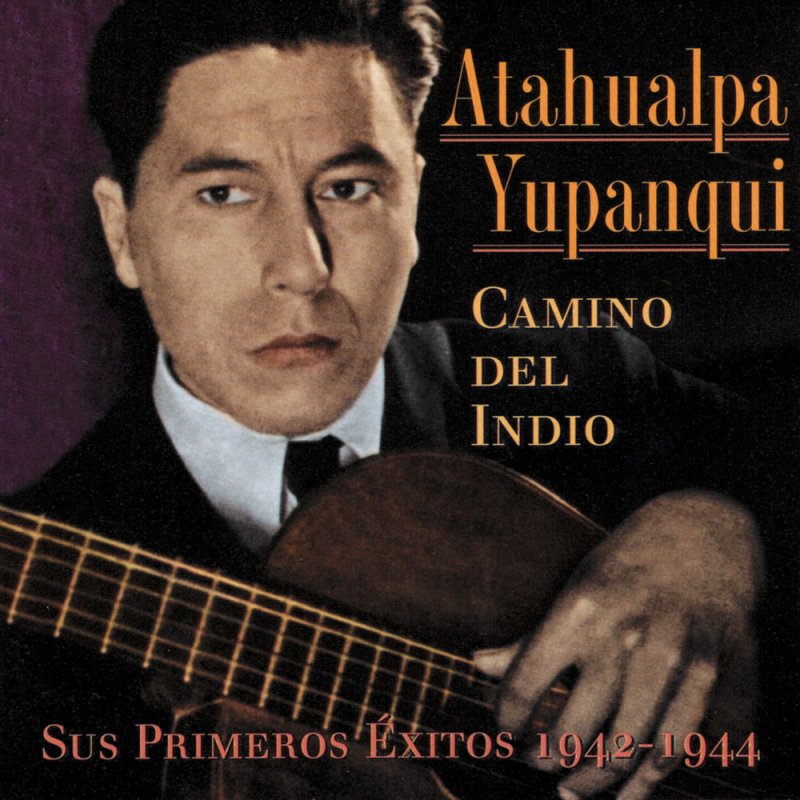
Camino del indio
Atahualpa Yupanqui · 2004
The poem to the ancestral path of the northwest. Yupanqui celebrating the pre-Columbian when the official culture ignored it.
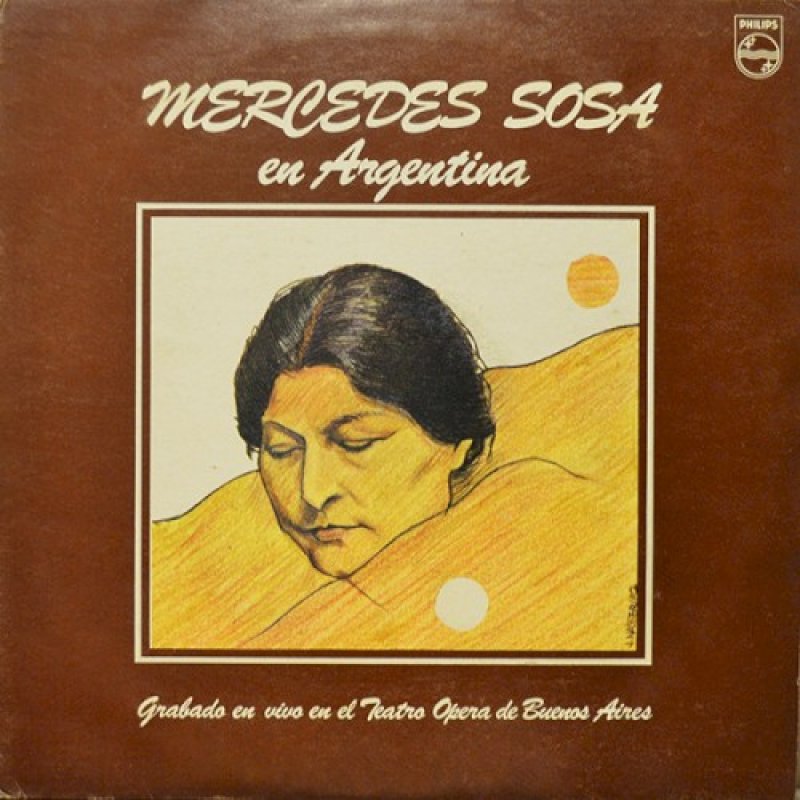
Alfonsina y el mar
Mercedes Sosa · 1982
The song about the death of the poet Alfonsina Storni. One of the most well-known Argentine songs in the world.
Zamba del Chaguar
Atahualpa Yupanqui · 1944
The chaguar as a symbol of indigenous cultural resistance. Yupanqui celebrating what Argentina wanted to forget.
Practice these songs on Doresol
Aún no tenemos estas canciones en el catálogo. Pronto las cargamos.
The full series
Argentina
Tango, rock nacional and folklore — the sound of a country telling its own story.
-
CAP 01
🇦🇷 Ch 01
The Roots: The Three Worlds That Made a Music (centuries XV–XIX)
Argentina is the eighth largest country in the world: 2.780.400 square kilometers that stretch from the subtropical rainforest in the north to the Patagonian channels in the south,
-
CAP 02
🇦🇷 Ch 02
Tango: The Music that Buenos Aires Gave to the World (1880–1955)
Tango was not born in the elegant salons of Buenos Aires nor in the downtown theaters. It was born in the outskirts — the peripheral neighborhoods where newly arrived European immi
-
CAP 03
🇦🇷 Ch 03
The Modern Tango: Piazzolla and the Revolution that No One Forgave (1955–1992)
There are artists who do well what already exists. And there are artists who destroy what exists to build something new on the ruins. **Astor Piazzolla** belongs to the second cate
-
CAP 04 you are here
🇦🇷 Ch 04
Folklore: The Voice of Deep Argentina (1930–1990)
The tango was Buenos Aires: the port, the tenement, the outskirts, the city that looked towards Europe with nostalgia. The folklore was everything else: the Andean northwest with i
-
CAP 05
🇦🇷 Ch 05
The Foundational National Rock: La Balsa, El Flaco, and the Blues of Bajo Belgrano (1966–1973)
In the mid-sixties, the rock that played in Argentina was rock in English: bands that copied the Beatles, the Rolling Stones, the Animals, with the same attitude with which Latin A
-
🇦🇷 Ch 06
The National Rock of the 80s: The Music that Survived the Dictatorship (1976–1989)
On March 24, 1976, a coup d'état installed the most brutal dictatorship in Argentina's history: the **National Reorganization Process**, which for seven years disappeared thirty th
-
🇦🇷 Ch 07
The National Rock of the 90s: The Decade that Multiplied Everything (1990–2001)
The nineties were for Argentine rock what the sixties were for English rock: the moment when everything multiplied at the same time. The artists who had built their careers in the
-
🇦🇷 Ch 08
Cumbia and Cuarteto: Tunga-Tunga and the Villas (1940–today)
For decades, cumbia and cuarteto were the music that Buenos Aires ignored. They played in neighborhood clubs, in shantytowns, in the warehouses on the outskirts where people danced
-
🇦🇷 Ch 09
Pop and Indie: The Screen and Heart Generation (2001–2020)
On December 20, 2001, Argentina fell. The banking system collapsed, the middle class lost their savings, five presidents resigned in two weeks, and people took to the streets to ba
-
🇦🇷 Ch 10
Trap and Reggaeton: The Global Generation (2015–today)
In January 2023, a song produced in a studio in Ramos Mejía — a district in Greater Buenos Aires where no one would have looked for the center of global music — became number one o
You might also like
3 articles picked by editorial similarity


