


🇮🇹 IT · Italy · Chapter 8 of 8
The 21st Century: Roman Rock, Neapolitan Trap and the Italian Music That Keeps Inventing
The 21st century found Italy in a position it had not occupied for decades: being simultaneously guardian of a five-hundred-year-old musical tradition and laboratory of genres that did not exist when the century began. The same Italy that had produced Verdi, Puccini, Neapolitan song, cantautors, and Morricone was now producing trap, urban pop, and glam rock in Italian with the same natural ease with which it had produced opera in the 19th century.

What did not change was the essential: the Italian language as a musical instrument, melody as the central architecture of the song, the ambition to do something that did not exist before. Italy in the 21st century remains, in that deep sense, completely Italian.
Tiziano Ferro: The Bridge Between Generations
The transition from the 1990s to the 21st century had in Tiziano Ferro its artist of transition: the singer-songwriter from Latina — the city on the coast of Lazio that had already given the world Francesco Guccini and Calcutta — who arrived in 2001 with a first single, "Xdono" (pronounced "perdono" — pardon), which blended American R&B, melodic Italian pop and a voice of emotional intensity that Italian pop had not had since the greats of the previous generation.
"Xdono" reached number one in Italy and was translated into multiple languages. The Spanish version — the decision to record in Spanish that Pausini and Ramazzotti had established as a standard — opened up the Latin American market. "Sere Nere" (2003), "Ti Scatterò una Foto" (2006): songs that explored emotional vulnerability with a honesty that Italian pop of the 1990s had not always allowed itself.
In October 2010, at the peak of his fame, Ferro publicly declared himself gay — the first to do so among the major Italian pop stars — in an act of personal courage that also had a specific cultural dimension in a country where LGBTQ+ visibility in mass culture was still limited. He did it in an interview, without drama, with the same directness with which he wrote his songs.
Ferro is also a producer and songwriter for other artists — he has written and produced albums for Alessandra Amoroso and collaborated with Elisa, the Triestine singer-songwriter who is one of the most complete talents in contemporary Italian music. That role of support for the scene — the artist who not only creates their own work but also helps build others' — makes him a central figure in Italian music of the 21st century beyond his own albums.
Mahmood: La Italia Mestiza
Alessandro Mahmoud — Mahmood — was born in 1992 in Milan, son of an Egyptian father and a Sardinian mother. That mix of cultures, of languages, of musical traditions had no visible precedent in mainstream Italian pop: the great Italian artists of the 20th century had, with few exceptions, been of pure Italian descent. Mahmood was another Italy — the Italy of migration, of the children of those who came from elsewhere and built their lives here.
In 2019 he won Sanremo with "Soldi" — a song about the relationship with an absent father, with Arabic fragments naturally integrated into the Italian text — and almost won Eurovision with it too. Italian critics took exactly one festival to understand that Mahmood was one of the most important artists of his generation.
In 2022, alongside the young composer Blanco (Riccardo Fabbriconi, born in 2003 near Lake Garda), he won Sanremo with "Brividi" — "escalofríos" — a song about love and emotional insecurity that, in his first performance at the festival, broke all Spotify Italy streaming records in a single day. Critics pointed out that it was the first time in the history of the festival that a performance placed homosexual and heterosexual love on the same level without any emphasis or advocacy — simply as a love song, nothing more.
Blanco — who was nineteen at that festival — represented something more: the emergence of the Italian Generation Z into mainstream music, with a way of writing songs that fused Italian melodic pop with the sound of his generation's urban music without perceiving any contradiction between the two.
Måneskin: When Rome Rock Conquered the World
The story of Måneskin begins with four teenagers who met in high school in Rome and formed a band in 2015. Damiano David on vocals, Victoria De Angelis on bass — she half-Danish, hence the name of the group which means "moonlight" in Danish —, Thomas Raggi on guitar and Ethan Torchio on drums.
They started playing on the Via del Corso in Rome, the pedestrian street in the center, for tips. Tourists would stop to listen. Something about that teenage band with a glam look — leather, makeup, a sexual and physical energy that Italian rock had not displayed with that confidence — made people unable to walk past.
In 2017 they participated in the eleventh edition of X Factor Italia and came in second. That was enough. The industry took notice. They signed with Sony. They released their first album, Il Ballo della Vita (2018). And then, in 2021, something changed everything.
At the Sanremo Festival 2021 — held without an audience due to the pandemic at the Teatro Ariston — Måneskin performed "Zitti e Buoni" ("callados y buenos") with an energy that the festival stage had not seen since the urlatori of the 1960s: hard glam rock, lyrics in Italian without concessions to commercial pop, Damiano David with his raspy voice and his stage presence of a power that recalled Freddie Mercury and Iggy Pop at the same time. They won the festival with 53.5% of the televote.
They went to Eurovision 2021 in Rotterdam and won with 524 points — the first Italian victory at the festival since Toto Cutugno in 1990, thirty-one years earlier. "Zitti e Buoni" was the first Italian song to enter the Top 20 of the UK Singles Chart in thirty years. It reached the Top 10 of Billboard Global. And the version of "Beggin'" — the cover of the Four Seasons they had included in their first EP in 2017 — resurfaced virally on TikTok and reached number 13 on the Billboard Hot 100, introducing Måneskin to a North American audience who discovered them through the algorithm.
Italian rock — a genre that never had the centrality it had in the UK or the US — reached number one in Europe and global charts in 2021. They did so with a band that sang in Italian, unwilling to translate into English to be more accessible, and who wore makeup with the same naturalness that Mick Jagger wore platform shoes in the 1970s.
The Urban Scene: Trap, Hip-Hop and the New Canzone
While Måneskin brought Italian rock to the world, within Italy another musical revolution was happening in silence — or rather, with a lot of volume but without the international coverage that Måneskin received.
The Italian trap — which emerged in Milan and Naples in the mid-2010s with producers like Charlie Charles and Dardust — produced a generation of artists who took the American genre and loaded it with specifically Italian cultural, linguistic and musical references. Ghali — son of Tunisian parents, born in Milan — blended Arabic, Italian and references to the tradition of the canzone into a sound that had the energy of trap and the melancholy of the cantautore. His "Casa Mia" at Sanremo 2024 — a song about love for his place of origin facing xenophobia — was one of the most politically direct moments in the festival's recent history.
Lazza, Sfera Ebbasta, Marracash: a scene that has built millions of streaming audiences without relying on the traditional Sanremo and RAI circuits, using digital platforms as the songwriters of the 1970s used university recitals — as spaces to build a direct relationship with the audience without institutional intermediaries.
The Tradition That Does Not Yield
In the midst of all these transformations, the tradition of Italian singer-songwriting in the 21st century continued producing artists who connected with the line that goes from De André to Guccini to Dalla. Calcutta — Edoardo D'Erme, also from Latina, like Tiziano Ferro — wrote songs of love with the apparent simplicity of the greats and an emotional complexity that the younger generation recognized as their own. Elisa — born in Trieste, the most Central European Italian city, with a voice that can inhabit pop, rock and singer-songwriting with equal conviction — won Sanremo 2001 with "Luce (Tramonti a Nord Est)" and built one of the most coherent and respected careers in contemporary Italian music.
Ultimo — Niccolò Moriconi, romano, born in 1997 — arrived at Sanremo 2019 with a song, "I Tuoi Particolari", which lost the vote but which in the following months surpassed the winning song in streaming. The public — especially the young — chose him as the singer-songwriter of his generation: an heir to Battisti and Dalla who spoke of love with the directness of someone who is twenty-two and doesn't need metaphors.
The Full Arc: Four Hundred Years of Melody
This series began with the nineteenth-century Neapolitan song — the genre that emigrants carried in their throats from Naples to the world — and ends with a Roman rock band that won Eurovision singing in Italian, with an Egyptian-born singer who puts verses in Arabic in his Italian songs, with a Milanese trap artist, son of Tunisians, who sings to Italy from the perspective of someone who came from abroad and stayed because this is also his own.
That musical Italy of the twenty-first century is the same as always and completely new. It has the melody of Puccini and the rhythm of Atlanta trap. It has the honesty of De André and the energy of Iggy Pop. It has the Italian of Dante and the Arabic of the second generation.
What hasn't changed — what makes Italian music recognizable in any era and in any genre — is that it always has something to say and knows exactly how to say it. Four hundred years of opera, of canzone, of cantautori and of Sanremo have left that tradition with a certainty no trend can erase: that melody is the most important thing, that if the melody doesn't arrive, everything else is unnecessary, and that Italian — that sung language where each vowel is a note — is the most perfect instrument that exists for building it.
Editor's note: Måneskin started playing on the Via del Corso in Rome for tips, with a small amplifier and an open guitar case on the floor. Six years later they won Eurovision in front of two hundred million viewers. In the world of the 21st century that speed is possible because digital platforms removed the filters that previously separated a street musician from a global audience. But speed explains nothing: there were thousands of bands on the pedestrian streets of Italian cities with the same access to the same platforms. What Måneskin had that no other had was the song. That hasn't changed in four hundred years. And it won't change.
10 · 1 en DoReSol
Top 10 of Italian Music of the 21st Century
Zitti e Buoni
Måneskin · 2021
Sanremo + Eurovision in the same year. Italian rock in Italian reaching the world. The first Italian song to enter the UK Top 20 in thirty years.
Brividi
Mahmood & Blanco · 2022
The biggest streaming in one day in the history of Spotify Italy. The first time Sanremo put homosexual and heterosexual love on the same level without emphasizing it.
Soldi
Mahmood · 2019
The mixed Italian in the most traditional festival of the country. Verses in Arabic in an Italian song winner of Sanremo. An artist who didn't ask permission to be what he was.
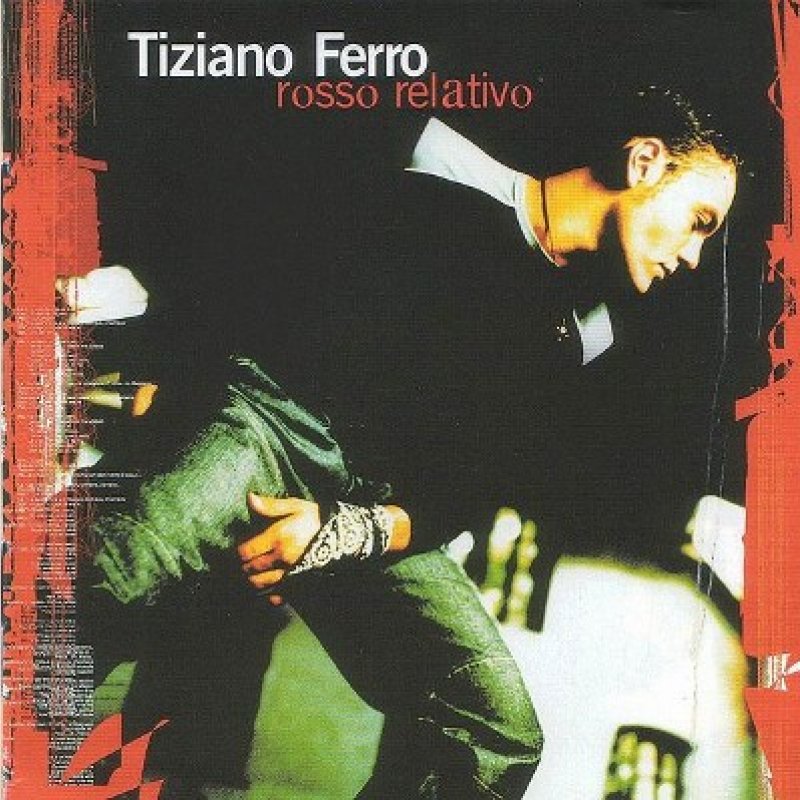
Xdono
Tiziano Ferro · 2001
The start of the generation following Pausini and Ramazzotti. R&B, Italian pop and a voice of intensity that Italian pop had not had since the big names of the eighties.
Luce (Tramonti a Nord Est)
Elisa · 2001
The singer from Trieste winning Sanremo with a song that didn't sound like anything else. A voice that could inhabit all genres with equal conviction.
Casa Mia
Ghali · 2024
The Milanese trap from Tunisian origin singing to Italy from the perspective of someone who came from outside. One of the most politically direct moments in the recent history of Sanremo.
I Tuoi Particolari
Ultimo · 2019
Lost in Sanremo but won in the real world. The twenty-two-year-old songwriter chosen by the public over the institutional vote. The tradition of Battisti renewed without nostalgia.
Sere Nere
Tiziano Ferro · 2003
The darkest and most honest song by Ferro. Emotional vulnerability as the raw material of Italian pop of the 21st century.
Beggin'
Måneskin · 2017/2021
The Four Seasons cover that resurfaced on TikTok and made it to the Billboard Hot 100. The perfect paradox: an Italian band conquered America with an American sixties song.
Paracetamolo
Calcutta · 2015
The songwriting of the 21st century in its most direct form. A love song written with the apparent simplicity of the greats and an emotional complexity that resonated throughout an entire generation of Italians.
End of the Italy Series
With this chapter, the Italy Musical Series by Doresol comes to a close: eight chapters that span four hundred years of music, from the earliest medieval Napolitan sounds to the Roman rock of Måneskin and the Milanese trap of Ghali.
Italy is the country that invented opera, that exported the Neapolitan song around the world through its emigrants, that formalized popular song with Sanremo, that produced Morricone and Rota to soundtrack the world's cinema, that gave author music its most literary forms with De André and Guccini, and that in 2021 once again topped the global charts with four Romans who started playing music on the streets.
A country of sixty million people with four hundred years of practice in making melody come before words. That's not something you learn: it's inherited.
End of Series · Italy
With this chapter we close the 8-part series on Italy. Thanks for reading.
The full series
Italy
Opera, Neapolitan song, singer-songwriters and the new scene. Ten centuries of song.
-
CAP 01
🇮🇹 Ch 01
La Canzone Napoletana: The Sound Naples Gifted to the World (13th Century–1950)
Before Italy existed as a nation — before Garibaldi unified the
-
CAP 02
🇮🇹 Ch 02
Opera: The Musical Theater That Italy Invented and the World Adopted (1600–present)
In 1597, in Florence, a group of intellectuals and musicians who called themselves the Camerata Fiorentina premiered a composition called Dafne — the first work that combined drama
-
CAP 03
🇮🇹 Ch 03
The Sanremo Festival: The Machine That Turned Italian Song into a Mass Phenomenon (1951–present)
The city of Sanremo is in Liguria, on the Italian Riviera, twenty-five kilometers from the border with France. It is a small city, of about fifty thousand inhabitants, known for it
-
CAP 04
🇮🇹 Ch 04
The Golden Decade of Pop: Celentano, Mina and the Sound that Italy Exported to the World (1958–1980)
Between 1958 and 1963, Italy experienced the fastest period of economic growth in its history: the miracolo economico — the economic miracle — which transformed in less than a gene
-
CAP 05
🇮🇹 Ch 05
The Cantautori: When Italian Song Became Literature (1960–present)
In France there was the *chanson* — Brassens, Brel, Piaf — and in America there was the folk of Bob Dylan and Joan Baez. Italy looked at both traditions, absorbed them and produced
-
CAP 06
🇮🇹 Ch 06
The Soundtracks: The Sound Italy Put to the World Cinema (1950–2020)
There is a question that film music enthusiasts sometimes ask and which does not have an easy answer: Why did Italy produce the two most important film composers of the 20th centur
-
🇮🇹 Ch 07
The International Pop: Bocelli, Pausini, Ramazzotti and the Italy that Conquered the World (1984–present)
There were three moments in the 20th century history when Italian music conquered massive global audiences. The first was the Neapolitan song carried by emigrants and Caruso to Ame
-
🇮🇹 Ch 08
The 21st Century: Roman Rock, Neapolitan Trap and the Italian Music That Keeps Inventing
The 21st century found Italy in a position it had not occupied for decades: being simultaneously guardian of a five-hundred-year-old musical tradition and laboratory of genres that
You might also like
3 articles picked by editorial similarity


