


🇮🇹 IT · Italy · Chapter 5 of 8
The Cantautori: When Italian Song Became Literature (1960–present)
In France there was the *chanson* — Brassens, Brel, Piaf — and in America there was the folk of Bob Dylan and Joan Baez. Italy looked at both traditions, absorbed them and produced something different: the **cantautore** — the singer-songwriter — who from the 1960s onwards became the most respected and most influential figure in Italian musical culture.

A cantautore is not simply a singer who writes their own songs. They are an artist whose main instrument is the word: who considers song lyrics as literary text, who quotes poets and philosophers on their records, who uses melody as a vehicle for ideas and not as an end in itself. The difference between the cantautore and the pop singer is the difference between a writer and someone who fills out forms: both use words, but they do not do the same thing with them.
The generation of cantautori that emerged in Italy in the sixties and seventies — De André, Guccini, Dalla, De Gregori, Venditti, Fossati — is the greatest in the history of the Italian canzone d'autore and one of the greatest of any popular song tradition in any language. Their records are studied in universities. Their lyrics are quoted as poetry. Their songs continue to shape generations of Italian musicians who were not alive when they were recorded.
The Genoese School: the port as the origin of the world
It is no coincidence that the most important Italian singer-songwriter movement of the 1960s was born in Genoa — a port city, dark, labyrinthine, with a tradition of sailors and merchants who had seen the world and brought it back in the form of stories. Genoa is neither Rome nor Milan: it lacks the grandeur of the former and the capitalist efficiency of the latter. It has its alleyways and the sea and the dampness and a tradition of seeing itself as distinct from the rest of Italy.
The Scuola Genovese — the name critics gave to the group of singer-songwriters born in the city — included Gino Paoli, Luigi Tenco, Bruno Lauzi, Umberto Bindi and, the greatest of them all, Fabrizio De André. All of them had grown up listening to Jacques Brel and Georges Brassens — the French singer-songwriters who had turned the chanson into an art form capable of speaking about everything with the same seriousness as literature — and had decided to do the same in Italian, with a Genoese sensibility, with the Mediterranean Sea as a permanent backdrop.
Fabrizio De André: The Poet of the Marginalized
Fabrizio De André was born on February 18, 1940, in Genoa — in the Pegli neighborhood, the son of an antifascist businessman who during the war fled with his family to the countryside, to the cascina of Revignano d'Asti, where young Fabrizio learned to know rural life and to talk with people who had nothing. That childhood experience of poverty seen up close, through the eyes of a child from a well-off family who realizes that the world has many layers and that the bottom layers are the most honest, marked his entire body of work.
In Genoa, as a teenager, he played guitar in the Modern Jazz Group alongside Luigi Tenco — Tenco on saxophone, De André on guitar — and the two built a friendship and a shared vision of what Italian song could be: a serious, literary art, committed to those whom society preferred not to see.
His first songs — "La Canzone di Marinella" (1964), "La Guerra di Piero" (1964), "Via del Campo" (1967), "Bocca di Rosa" (1967) — immediately established who his protagonists were: prostitutes, soldiers dying in wars they do not understand, the outcasts of Genoa's alleyways, those who live outside the law and outside bourgeois morality. And his perspective on them was always the same: a compassion without judgment, a love for imperfect humanity that neither condemns nor idealizes but simply looks and describes with the honesty of someone who knows that "dai diamanti non nasce niente, dal letame nascono i fior" — "from diamonds nothing is born, from manure flowers grow."
"Non al Denaro Non all'Amore Né al Cielo" (1971) was his most ambitious work of that early period: a concept album based on the Spoon River Anthology by Edgar Lee Masters — the American poet who had written the imaginary epitaphs of the inhabitants of a fictional Midwestern town — translated and adapted into Italian in collaboration with Fernanda Pivano, the translator who had introduced Italy to Hemingway, Kerouac, and Ginsberg. The result was a series of portraits of marginal characters — the doctor, the chemist, the gambler, the musician Jones — sung with the sobriety of someone who narrates without becoming involved and the compassion of someone who loves without approving.
"La Buona Novella" (1970) was his rereading of the Apocryphal Gospels: the story of Jesus and Mary told from the perspective of those who experienced it from below, with an understanding of the Christian message as a message of freedom and liberation of the oppressed that the official Church would hardly have endorsed.
In 1979, De André and his partner Dori Ghezzi were kidnapped at their villa in Tempio Pausania, Sardinia, by the criminal gang known as "la Anonima Sarda." The kidnapping lasted four months — from August to December — during which they were held in the mountains of the island's interior, under extremely harsh conditions. When he was released, De André spoke about his captors with an understanding that baffled Italian public opinion: he had come to understand who they were, where they came from, why they had chosen that path. The Sardinia of the kidnapping became the beloved Sardinia — the land that had imprisoned him had also revealed him. His best later albums — Crêuza de mä (1984), in Genoese dialect, and Anime Salve (1996), with Ivano Fossati — are works of an artistic maturity that few figures in European pop have ever reached.
He died on January 11, 1999, in Milan, of lung cancer. He was fifty-eight years old. In Genoa, the city that had shaped him, his songs began to play through the speakers along Via Garibaldi — the UNESCO World Heritage street — as if the city knew that the only way to honor him was to do what he had always asked: that music reach everyone, not just those who could afford a ticket.
Francesco Guccini: The Professor from Pavana
Francesco Guccini was born in 1940 in Modena — the Emilian city of engines and balsamic vinegar — but his soul belongs to Pavana, the small Apennine village between Emilia and Tuscany where his family had roots and where he would return whenever the city overwhelmed him. Professor of Italian at the DAMS in Bologna, crime novelist, osteria man who preferred wine and conversation to stages: Guccini was the most literary cantautore of his generation, the one who most consciously built his songs as texts that could be read on the page with the same satisfaction as hearing them sung.
His songs "La Locomotiva" (1972), an epic ballad about an anarchist engine driver who hijacks his locomotive and hurls it at full speed toward a train full of capitalists, "L'Avvelenata" (1976), a furious and self-ironic response to his own critics, "Cirano" (1977), a defense of those who are worth more than they appear, "Dio è Morto" (1967), the song that was banned by RAI for blasphemy and thereby became the anthem of a generation — carry the verbal density of narrative poetry and the accessibility of the finest popular song. Guccini does not need you to listen to him: he can be read.
Lucio Dalla: From Bologna to the World
Lucio Dalla was born on March 4, 1943 in Bologna — the same March 4 that gave its title to his most famous song — into a lower-middle-class family. He was short, with thick glasses, with a beard that made him look more like an osteria intellectual than a pop star. And yet he was, alongside De André, the most beloved Italian cantautore of the twentieth century.
He started as a jazz musician — he played the clarinet with a skill recognized by professionals — and it took him time to find his own voice as a singer-songwriter. When he found it, it was with a song that censorship forced him to mutilate: "4 Marzo 1943" (1971) — the story of an unwed mother, son of an allied soldier killed in the war, who grew up in the port with no father's name — originally contained the verse "e anche adesso che bestemmio e bevo vino, per ladri e puttane sono Gesù Bambino" ("and even now that I blaspheme and drink wine, for thieves and whores I am the Christ Child"). Censorship changed it to "per la gente del porto mi chiamo Gesù Bambino". The song came third at Sanremo 1971 with the censored version and became a classic of Italian music. Chico Buarque and Maria Bethânia covered it in Portuguese.
Dalla's greatest work came later: "Caruso" (1986) — written in the very room at the Hotel Vittoria in Sorrento where Enrico Caruso had slept during his last nights alive, after a tour guide told him the story of the great tenor's final love — is probably the most extraordinary song in the history of Italian pop: a ballad about love and death sung by a man who feels his voice fading, with a melody that combines the tradition of the canzone napoletana with contemporary pop in a way that seems impossible and yet works with the inevitability of perfect things.
In collaboration with Francesco De Gregori — the other great Roman cantautore of his generation, the one behind "Viva l'Italia" and "La Donna Cannone" — he undertook in 1979 the Banana Republic tour, which was the most important moment in the history of Italian cantautorato as mass spectacle: two poets in stadiums, drawing the same audience as a rock concert.
Dalla died on March 1, 2012 in Montreux, Switzerland, of a heart attack. He was sixty-eight years old. Three days before his birthday — March 4.
Francesco De Gregori and the Seventies
Francesco De Gregori — Roman, born in 1951, a student of Lettere at La Sapienza — was the cantautore of the poetic image: his songs do not tell linear stories but instead accumulate images and metaphors that operate on multiple levels simultaneously. "Viva l'Italia" (1979) — "Viva l'Italia, l'Italia che lavora / l'Italia che si dispera, l'Italia che non muore" — is the most honest and most painful portrait of the country he has: not a celebration but an inventory of contradictions. "La Donna Cannone" (1983) is the story of an enormous woman who becomes a circus performer and whose enormity contains the freedom that others do not have.
His generation — which also includes Antonello Venditti, Ivano Fossati, Roberto Vecchioni and Paolo Conte — completed the panorama of Italian cantautorato and established that the singer-songwriter genre was in Italy a mature, serious form, capable of competing in cultural relevance with literature and cinema.
The living legacy
The cantautori are not history: they are the present. In twenty-first-century Italy, artists such as Fabrizio Moro, Ermal Meta, Niccolò Fabi, Samuele Bersani and the most recent generation of neo-cantautorato continue to build on the same tradition. The songs of De André and Guccini are studied in Italian high schools. Lucio Dalla's records fill the playlists of young people who discover that Italian music has a layer that Sanremo pop does not always reveal.
The cantautore tradition is the most direct proof that Italy, when music is truly good, does not need it to be simple in order for it to be popular. And that complexity, when it is well constructed, is also the most accessible thing in the world.
Editorial note: Fabrizio De André took years to accept performing live. He was shy — that specific shyness of artists who believe their work matters more than their person. When he finally began touring, in 1975, audiences discovered that the voice doing the singing was exactly the voice of the songs: without artifice, without staging, without distance between the man and the artist. "Dal letame nascono i fior" — from manure flowers are born. De André sang it all his life. And he lived it.
10 · 2 en DoReSol
Top 10 Italian Singer-Songwriters
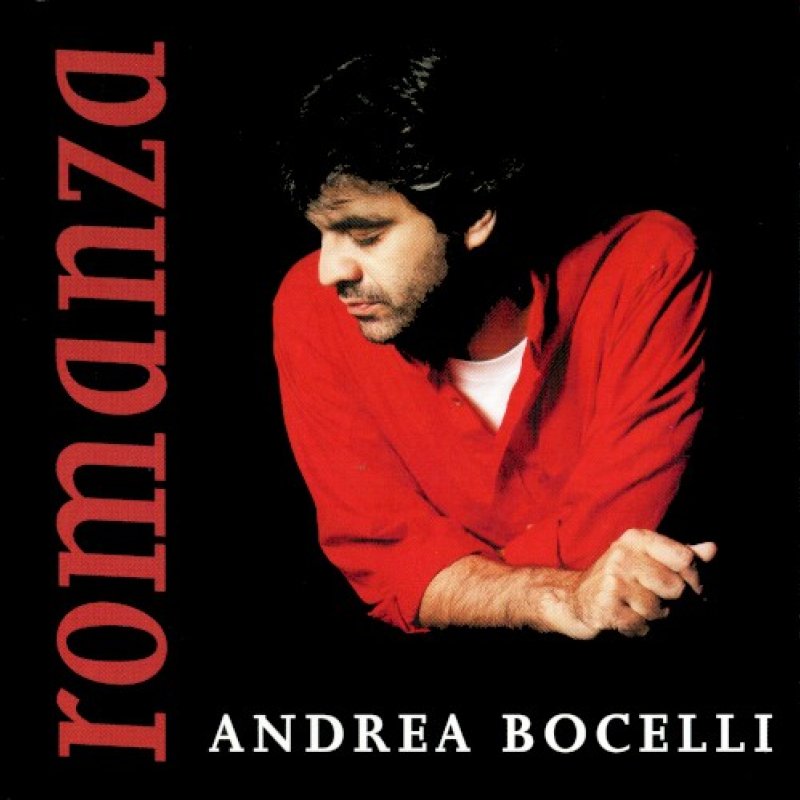
Caruso
Andrea Bocelli · 1996
1986
La Guerra di Piero
Fabrizio De André
1964
La Locomotiva
Francesco Guccini
1972
Non al Denaro Non all'Amore Né al Cielo
Fabrizio De André
1971
Bocca di Rosa
Fabrizio De André
1967
4 Marzo 1943
Lucio Dalla
1971
Viva l'Italia
Francesco De Gregori
1979
Via del Campo
Fabrizio De André
1967
Dio è Morto
Francesco Guccini
1967
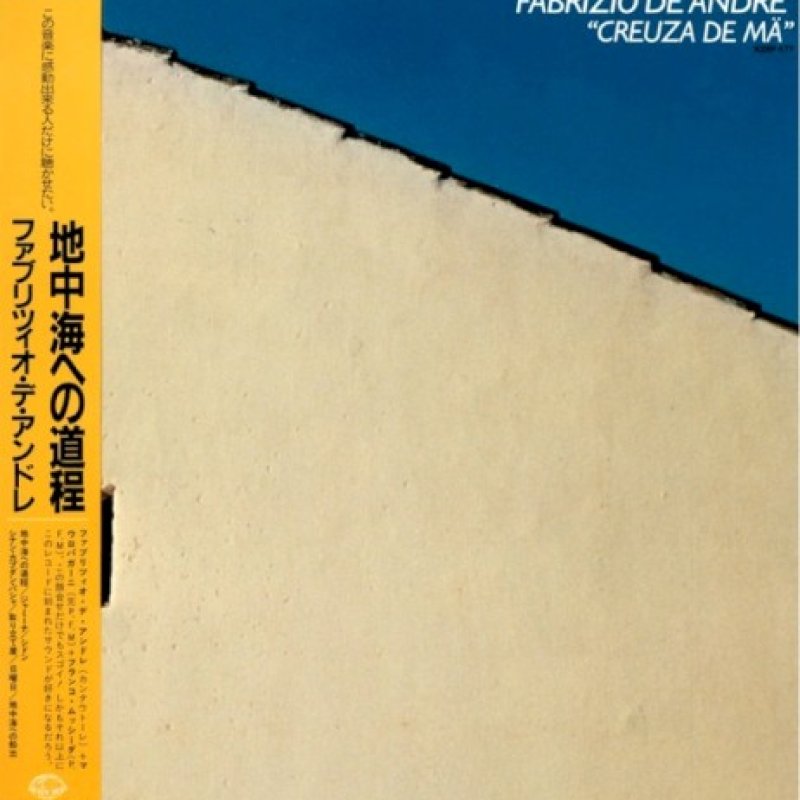
Crêuza de mä
Fabrizio De André · 1984
1984
The full series
Italy
Opera, Neapolitan song, singer-songwriters and the new scene. Ten centuries of song.
-
CAP 01
🇮🇹 Ch 01
La Canzone Napoletana: The Sound Naples Gifted to the World (13th Century–1950)
Before Italy existed as a nation — before Garibaldi unified the
-
CAP 02
🇮🇹 Ch 02
Opera: The Musical Theater That Italy Invented and the World Adopted (1600–present)
In 1597, in Florence, a group of intellectuals and musicians who called themselves the Camerata Fiorentina premiered a composition called Dafne — the first work that combined drama
-
CAP 03
🇮🇹 Ch 03
The Sanremo Festival: The Machine That Turned Italian Song into a Mass Phenomenon (1951–present)
The city of Sanremo is in Liguria, on the Italian Riviera, twenty-five kilometers from the border with France. It is a small city, of about fifty thousand inhabitants, known for it
-
CAP 04
🇮🇹 Ch 04
The Golden Decade of Pop: Celentano, Mina and the Sound that Italy Exported to the World (1958–1980)
Between 1958 and 1963, Italy experienced the fastest period of economic growth in its history: the miracolo economico — the economic miracle — which transformed in less than a gene
-
CAP 05 you are here
🇮🇹 Ch 05
The Cantautori: When Italian Song Became Literature (1960–present)
In France there was the *chanson* — Brassens, Brel, Piaf — and in America there was the folk of Bob Dylan and Joan Baez. Italy looked at both traditions, absorbed them and produced
-
CAP 06
🇮🇹 Ch 06
The Soundtracks: The Sound Italy Put to the World Cinema (1950–2020)
There is a question that film music enthusiasts sometimes ask and which does not have an easy answer: Why did Italy produce the two most important film composers of the 20th centur
-
🇮🇹 Ch 07
The International Pop: Bocelli, Pausini, Ramazzotti and the Italy that Conquered the World (1984–present)
There were three moments in the 20th century history when Italian music conquered massive global audiences. The first was the Neapolitan song carried by emigrants and Caruso to Ame
-
🇮🇹 Ch 08
The 21st Century: Roman Rock, Neapolitan Trap and the Italian Music That Keeps Inventing
The 21st century found Italy in a position it had not occupied for decades: being simultaneously guardian of a five-hundred-year-old musical tradition and laboratory of genres that
You might also like
3 articles picked by editorial similarity

The 21st Century: Roman Rock, Neapolitan Trap and the Italian Music That Keeps Inventing

The International Pop: Bocelli, Pausini, Ramazzotti and the Italy that Conquered the World (1984–present)
