


🇮🇹 IT · Italy · Chapter 3 of 8
The Sanremo Festival: The Machine That Turned Italian Song into a Mass Phenomenon (1951–present)
The city of Sanremo is in Liguria, on the Italian Riviera, twenty-five kilometers from the border with France. It is a small city, of about fifty thousand inhabitants, known for its flowers — it is the Italian capital of floriculture — and for an elegant casino that in winter, when the summer tourists are no longer there, needed something to attract people.

On January 29, 1951, the Casino di Sanremo hosted the first edition of the Festival della Canzone Italiana with four singers, an orchestra, and a host — Nunzio Filogamo — who had to fill an evening with a new song competition. Nilla Pizzi won with "Grazie dei Fiori." The hall was not full.
Seventy-five years later, the Sanremo Festival is Italy's most-watched television event, the barometer of the country's popular culture, the machine that has launched the most important artists in the history of Italian music — and the stage of the darkest and most mysterious moment in that history.
Television and the Economic Miracle
The Sanremo Festival grew alongside Italy. In the fifties, television arrived in Italian homes at the same pace that money from the economic boom — the postwar economic miracle that transformed Italy from an agricultural country into an industrial power in a single generation — was filling the pockets of a new middle class hungry for entertainment.
RAI — Italy's public broadcasting service — began airing Sanremo on television, and the festival became the country's first great television spectacle. Italians who had just bought their first television set turned it on to watch Sanremo. Artists who won at Sanremo became national stars within a week. The festival was the entire Italian music industry concentrated into three February nights.
What Sanremo achieved that no other mechanism could have done was to create a shared repertoire: a catalogue of songs that all Italians from every region, every dialect, every social class knew and could sing. In a country where in 1951 Italian was not yet a truly common language for the majority of the population — people spoke dialects at home and learned standard Italian at school — Sanremo was the musical school that united the country through melody.
"Volare": the moment Italy took flight
Sanremo's founding moment — the instant that transformed it from a local contest into a global phenomenon — was its eighth edition, in 1958.
Domenico Modugno — a singer and songwriter born in Polignano a Mare, Puglia, who had spent years writing songs that no one wanted to publish — arrived at Sanremo with an unusual song: "Nel blu dipinto di blu", popularly known as "Volare". The song opened with the narrator dreaming that he painted his hands and face blue to fly through the sky weightless, free of worry, with nothing but the wind and open space. It bore no resemblance to the sentimental, nostalgia-laden songs that dominated the Sanremo repertoire.
The selection jury nearly rejected it. In the end, it was admitted. On the stage of the Casino di Sanremo, Modugno did something no Italian singer had done before: he spread his arms wide as if about to take flight while singing the chorus. The gesture was so unexpected, so free, so physically different from the rigid, formal posture of singers of that era, that the audience did not quite know how to react — and then erupted in applause.
"Volare" won Sanremo 1958. Modugno became the first artist in the festival's history to win performing his own composition — until that point, singers had performed songs written by others. The song was taken to Eurovision, where it placed third. It then went on to conquer the world: it sold more than twenty-two million copies, spent thirteen weeks at number one on the Billboard Hot 100 in the United States, and Domenico Modugno became the first artist to win the Grammy for Record of the Year and Album of the Year simultaneously — at the very first Grammy Awards ceremony, in 1959.
No one in Italy — not even Modugno himself — had imagined that a song in Italian about dreaming of flying through a blue sky could travel so far.
The golden years: the urlatori and Italian beat
In the nineteen sixties, Sanremo became the stage where the Italy of the economic miracle processed its cultural contradictions. On one hand, the tradition of the canzone italiana — melodic, sentimental, oriented toward the lyrical voice. On the other, the rock and roll arriving from the United States and England that young Italians wanted to make their own.
The urlatori — literally "those who shout", the ironic name that conservative critics gave to the Italian rock singers of the era — shook Sanremo with an energy the institution had never seen before. Adriano Celentano, Mina, Bobby Solo: artists who sang with their bodies, who moved on stage, who made visible that music was also physical and not only melodic.
Mina — Anna Maria Mazzini, born in Cremona in 1940 — was the most extraordinary voice in Italian music of the twentieth century. A pop soprano capable of moving from whispered intimacy to operatic power within the same phrase, with a control and expressiveness that left the orchestra conductors who worked with her speechless. She won Sanremo. She filled stadiums. And in 1978 she retired from the stage forever — at thirty-eight years old, at the peak of her career — and since then she records albums at home and does not appear in public. She is still considered the greatest singer in the history of Italian popular music. Her fans call her simply "La Tigre di Cremona."
Gianni Morandi — the boy from Emilia-Romagna who as a child helped his communist father sell the party newspaper and who as a teenager shined shoes in the only cinema in town — became the youth idol of the nineteen sixties with songs such as "In Ginocchio da Te" and "Non Son Degno di Te." He sold millions of records, won Sanremo, made films, and still today, at eighty years old, remains one of the most beloved figures in Italian television and music.
The darkest night: Luigi Tenco, January 1967
On January 26, 1967, singer-songwriter Luigi Tenco performed at the seventeenth edition of Sanremo with the song "Ciao Amore, Ciao" — a song about emigration from south to north, about those who leave their homeland out of necessity and wonder if anything of what they left behind still exists when they look back. It was a song of raw honesty, without the commercial sweetness that Sanremo expected.
The song did not make it to the final. Tenco, who had told presenter Mike Bongiorno before taking the stage "this is the last song I will sing," was found dead in his room at the Hotel Savoy in Sanremo in the early hours of January 27, with a gunshot wound to the head. The official version was suicide. Fifty years later, the investigation still has contradictions that no one has been able to fully explain: no one heard the shot, the gun was not recorded in the initial inventory of the room, and no gunpowder residue was found on the singer's hand. The mystery remains unsolved.
The festival continued that same night. The artistic director announced Tenco's death to the audience present and the competition went on. The winning song was "Non Pensare a Me" by Iva Zanicchi and Claudio Villa.
The death of Luigi Tenco is the wound that Sanremo never fully closed. It represented the clash between two Italies: the commercial Italy that wanted easy, marketable songs, and the Italy of the cantautori that wanted songs to say something true even if that came at the cost of success. Tenco chose the side of truth — and Sanremo chose the side of the market.
Sanremo as a mirror of Italy
During the following decades, the festival continued to function as Italy's most precise cultural thermometer. Each edition reflected the state of the country better than any survey:
The seventies, with the labor movement and political tensions, saw the emergence of songs with social content that the festival did not always know how to handle. The eighties, with the yuppie culture and consumerism of the Craxi era, produced an explosion of Italian pop at its brightest and most superficial. Al Bano and Romina Power, Toto Cutugno, Fausto Leali: Sanremo as a family television show at its peak audience.
Vasco Rossi participated in Sanremo 1983 with "Vita Spericolata" — a song about living without rules, about rock and roll as an attitude toward life — and finished last in his category. The song became the anthem of several Italian generations and is today considered one of the greatest songs in the history of Italian rock. Zucchero participated in 1985 with "Donne" and did not win either. Both cases are always cited when people want to demonstrate the gap between the taste of Sanremo's juries and the actual taste of the public.
The 21st Century and Måneskin: the Circle Closes
In 2021, in an edition held without an audience at the Teatro Ariston due to pandemic restrictions, a Roman rock group called Måneskin — made up of four twenty-somethings who had risen to fame through the X Factor programme in 2017 — won Sanremo with "Zitti e Buoni": hard glam-rock, lyrics in Italian with no concessions to commercial pop, a performance of a stage energy not seen at the Teatro Ariston since the urlatori of the nineteen-sixties.
"Zitti e Buoni" — "quiet and good", a perfect irony for a song that does exactly the opposite — also won the Eurovision Song Contest that same year, with 524 points. It was the first Italian-language song to enter the UK Singles Chart Top 20 in thirty years. Måneskin became the first Italian group to reach massive global audiences in the streaming era.
The arc was perfect: in 1958, Domenico Modugno had taken an Italian song to number one in America with "Volare". In 2021, Måneskin took a song in Italian — hard rock, unfiltered, untranslated — to number one in Europe.
Sanremo, which had been born in a casino to fill empty winter nights, had once again become the launchpad for Italian music into the world.
Editorial note: The first edition of Sanremo, in 1951, had four singers. The 2023 edition had twenty-five artists, an entire week of prime-time broadcast, and was the most-watched television event in Italy that year, with peak audiences of twelve million simultaneous viewers in a country of sixty million inhabitants. In seventy-two years, the festival went from being a salon competition to being the measure of what Italy is and what it wants to be. There is no other music festival in the world with that specific cultural function — not the Grammys, not Eurovision, not Coachella. Sanremo is the only festival that is at once a market, a mirror, and a sacrament.
10 · 1 en DoReSol
Top 10 Essential Sanremo Songs
Nel blu dipinto di blu (Volare)
Domenico Modugno
1958
Zitti e Buoni
Måneskin
2021
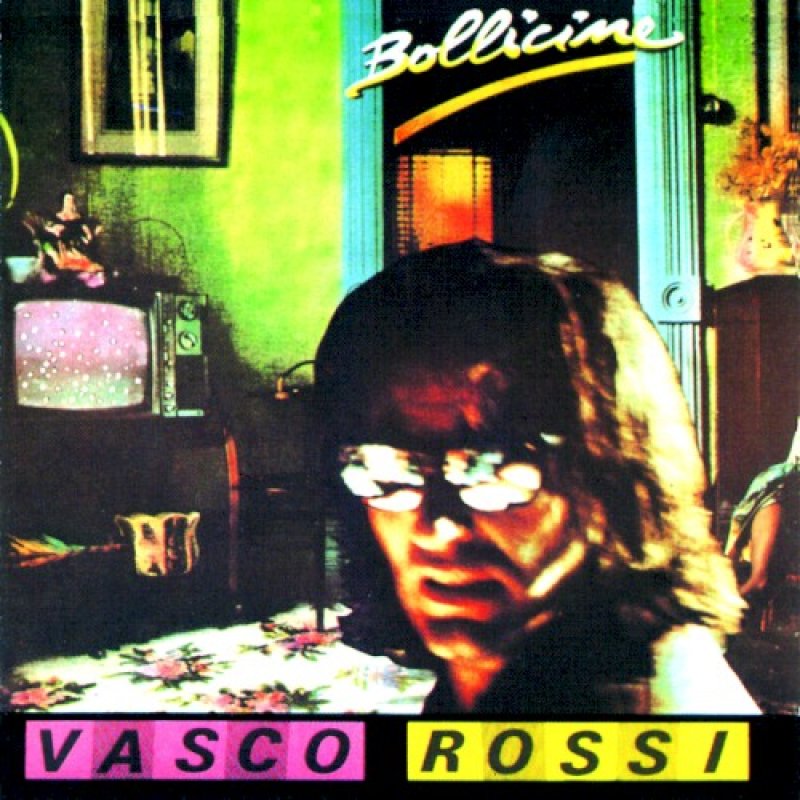
Vita spericolata
Vasco Rossi · 1983
1983
Ciao Amore Ciao
Luigi Tenco
1967
Grande, Grande, Grande
Mina
1972
L'Italiano
Toto Cutugno
1983
Si può dare di più
Morandi / Ruggeri / Tozzi
1987
Grazie dei Fiori
Nilla Pizzi
1951
Perdere l'amore
Massimo Ranieri
1988
Donne
Zucchero
1985
The full series
Italy
Opera, Neapolitan song, singer-songwriters and the new scene. Ten centuries of song.
-
CAP 01
🇮🇹 Ch 01
La Canzone Napoletana: The Sound Naples Gifted to the World (13th Century–1950)
Before Italy existed as a nation — before Garibaldi unified the
-
CAP 02
🇮🇹 Ch 02
Opera: The Musical Theater That Italy Invented and the World Adopted (1600–present)
In 1597, in Florence, a group of intellectuals and musicians who called themselves the Camerata Fiorentina premiered a composition called Dafne — the first work that combined drama
-
CAP 03 you are here
🇮🇹 Ch 03
The Sanremo Festival: The Machine That Turned Italian Song into a Mass Phenomenon (1951–present)
The city of Sanremo is in Liguria, on the Italian Riviera, twenty-five kilometers from the border with France. It is a small city, of about fifty thousand inhabitants, known for it
-
CAP 04
🇮🇹 Ch 04
The Golden Decade of Pop: Celentano, Mina and the Sound that Italy Exported to the World (1958–1980)
Between 1958 and 1963, Italy experienced the fastest period of economic growth in its history: the miracolo economico — the economic miracle — which transformed in less than a gene
-
CAP 05
🇮🇹 Ch 05
The Cantautori: When Italian Song Became Literature (1960–present)
In France there was the *chanson* — Brassens, Brel, Piaf — and in America there was the folk of Bob Dylan and Joan Baez. Italy looked at both traditions, absorbed them and produced
-
CAP 06
🇮🇹 Ch 06
The Soundtracks: The Sound Italy Put to the World Cinema (1950–2020)
There is a question that film music enthusiasts sometimes ask and which does not have an easy answer: Why did Italy produce the two most important film composers of the 20th centur
-
🇮🇹 Ch 07
The International Pop: Bocelli, Pausini, Ramazzotti and the Italy that Conquered the World (1984–present)
There were three moments in the 20th century history when Italian music conquered massive global audiences. The first was the Neapolitan song carried by emigrants and Caruso to Ame
-
🇮🇹 Ch 08
The 21st Century: Roman Rock, Neapolitan Trap and the Italian Music That Keeps Inventing
The 21st century found Italy in a position it had not occupied for decades: being simultaneously guardian of a five-hundred-year-old musical tradition and laboratory of genres that
You might also like
3 articles picked by editorial similarity

The 21st Century: Roman Rock, Neapolitan Trap and the Italian Music That Keeps Inventing

The International Pop: Bocelli, Pausini, Ramazzotti and the Italy that Conquered the World (1984–present)
