


🇮🇹 IT · Italy · Chapter 7 of 8
The International Pop: Bocelli, Pausini, Ramazzotti and the Italy that Conquered the World (1984–present)
There were three moments in the 20th century history when Italian music conquered massive global audiences. The first was the Neapolitan song carried by emigrants and Caruso to America between 1880 and 1930. The second was the light music of Sanremo — Modugno, Mina, Celentano — that reached all Europe and Latin America in the sixties and seventies. The third was the generation of artists who took Italian melodic tradition to global pop markets in the nineties with an effectiveness no previous generation had achieved.

Esa tercera ola tiene tres nombres principales: Eros Ramazzotti, Laura Pausini y Andrea Bocelli. Tres artistas nacidos en los años sesenta y setenta que llegaron a la cima en los noventa y que construyeron carreras de tres décadas en las que Italia volvió a ser un nombre en las listas de popularidad de todo el mundo.
Lo que los une no es un sonido compartido — los tres son muy distintos entre sí — sino una estrategia común: grabar en múltiples idiomas, llegar a múltiples mercados simultáneamente, y llevar la melodía italiana — esa manera específica de construir una frase musical que sube y baja con la gracia de quien habla una lengua cantada — a contextos que el rock angloamericano no suele habitar.
Eros Ramazzotti: The Nasal Voice that Filled Stadiums
Eros Ramazzotti was born on October 28, 1963, in Rome, in the Cinecittà neighborhood. He was the Italian pop artist of the 1980s who didn't seem like an Italian pop artist of the 1980s: without the calculated smoothness of the current idols, with a nasal and rough voice that his detractors found imperfect and that his fans found exactly irresistible for that reason.
In 1984 he won the Sanremo Festival in the new artists category with "Terra Promessa" — the promise of land as a metaphor for the sought-after love — and from that impulse he didn't stop. "Una Storia Importante" (1985), "Adesso Tu" (1986), "Musica È" (1988): a succession of hits that filled Italian radios and began to circulate throughout Europe with the consistency of someone who has something to say and knows how to say it.
What set him apart from the Italian pop of his generation was the decision to record in Spanish. "Tutte Storie" (1993)"Todo Historias" in the Spanish version — was his first album recorded simultaneously in two languages, and the response from the Spanish-speaking public was immediate: Spain, Mexico, Argentina, Colombia, Venezuela — in all those countries the voice of Ramazzotti began to sound on the radios with the same intensity as in Italy.
Duos with Tina Turner ("Cose della Vita / Can't Stop Thinking of You", 1997), with Cher, with Luciano Pavarotti, with Andrea Bocelli: Ramazzotti built his career also through alliances, through the strategy of making Anglo-Saxon mainstream and Italian pop touch in the same space.
More than sixty-five million records sold in thirty-five years of career made him the most sold Italian male artist in the history of his country. A man with a nasal voice that someone in the eighties perhaps rejected in an audition.
Laura Pausini: From Faenza to the World
On February 27, 1993, an eighteen-year-old girl from Faenza — a town in Emilia-Romagna — took to the stage of the Sanremo Festival in the new artists category and sang "La Solitudine": a ballad about a boy named Marco who leaves far away, separated from his girlfriend by his family, and the feeling of loneliness she feels in his absence.
It was her first professional performance on a big stage. The song won the festival. And the career of Laura Pausini — daughter of a singer and musician who had taught her to sing since childhood in piano bars — began with that momentum and never stopped.
What distinguished Pausini from other Italian pop artists of her generation was the decision — or more precisely the openness of her record label, which she enthusiastically embraced — to record her entire discography simultaneously in Italian and Spanish. The Spanish version of her first album became the best-selling album of 1994 in Spain. "Se Fue" — the version of "Non c'è" — became one of the most played ballads throughout all of Latin America that year.
Thirty years later, Pausini remains the Italian artist with the most profound and enduring relationship with the Spanish-speaking audience: not as an Italian artist singing in Spanish, but as an artist who is genuinely of both worlds, belonging to Faenza and to Mexico City and to Buenos Aires with the same authenticity.
More than seventy million records sold. A Grammy (Best Latin Pop Album, 2005). Multiple Latin Grammys. A Golden Globe for the song "Io Sì (Seen)" — composed with Diane Warren for the movie La Vita Davanti a Sé by Edoardo Ponti, with Sophia Loren — which was also nominated for an Oscar for Best Original Song in 2021. 226 platinum records worldwide.
"La Solitudine" — the song that speaks about Marco, the boy who went away — is now thirty-two years old and still remains the most played Italian standard of that decade's pop history.
Andrea Bocelli: The Blind Tenor of Lajatico
Andrea Bocelli was born on September 22, 1958, in Lajatico, a town in Tuscany with less than five hundred inhabitants. As a child, he had vision problems — a congenital glaucoma — and at twelve years old, during a football accident, he lost his sight completely.
He studied piano, flute and guitar. Later he studied law and worked as a lawyer. He continued singing in piano bars at night, as Laura Pausini had done with her father. In 1992, the rock musician Zucchero was looking for a tenor to record a demo of "Miserere" — a song that had been written with the intention of collaborating with Luciano Pavarotti. Bocelli recorded the demo. When Pavarotti heard it, he told Zucchero to use that unknown tenor. "He has something," Pavarotti told him. That demo never got released but Bocelli's voice started to circulate.
In 1994, Bocelli won the new artists category at Sanremo with "Il Mare Calmo della Sera". The following year he sang "Con Te Partirò" at another Italian television festival — a song written by Francesco Sartori with lyrics by Lucio Quarantotto that was lyrical, ambitious, with that melody that goes up towards the sky in the chorus with the power of an opera aria.
In November 1996, the English soprano Sarah Brightman heard the song while having dinner in a restaurant and looked it up. She proposed to Bocelli that they sing it together as a duet, with some added lines in English — "Time to Say Goodbye" — for the farewell fight of the German boxer Henry Maske. They recorded the orchestral version with the London Symphony Orchestra.
"Time to Say Goodbye" spent fourteen weeks at number one in Germany and sold almost three million copies in that country alone — becoming the best-selling single in Germany's music history up to that point. In total it sold over twelve million copies worldwide. Bocelli went from being a singer of Italian festivals to becoming the most famous voice of crossover classical music in the world within the space of a year.
His album Romanza (1996) was his international debut. Sacred Arias (1999) became the best-selling album in the history of classical music by a solo artist. At one moment in 1999, Bocelli had simultaneously the number 1, 2 and 3 album positions on the classical album charts in the United States — a record that is listed in the Guinness Book of Records.
Has sold more than eighty million records in total — the highest figure of any classical music artist in history. During the 2020 pandemic, he sang alone in the Milan Cathedral on Easter Day in front of an audience of thirty-five million people streaming simultaneously — a concert organized over four days and that became the most-watched classical music event in internet history.
Zucchero: The Blues That Italy Didn't Know It Had
No international Italian pop history of the 1990s is complete without Adelmo Fornaciari — Zucchero, the sugar — the singer and songwriter from Reggio Emilia who built an entire career on the paradox of being the most successful blues musician in Italy.
Zucchero took the soul and rhythm & blues of Ray Charles and Otis Redding and passed them through the filter of Italian rock and Mediterranean melody, producing something that wasn't exactly either but had the energy of the first and the emotion of the second. "Senza una Donna" — which he recorded in a duet with Paul Young and reached top 10 throughout Europe"Diavolo in Me", "Baila (Sexy Thing)": songs that played in stadiums with the same power as a rock concert.
Pavarotti considered him a friend and an equal — they recorded together, shared stages. That alliance between Italian blues rock and opera was exactly the kind of contradiction Zucchero inhabited naturally and that made him unique.
The tradition that follows
What Ramazzotti, Pausini, Bocelli and Zucchero demonstrated — each in their own way — is that the Italian melody has a capacity for communication that transcends language. A well-constructed Italian song can reach someone who doesn't understand a single word because of the way that melody rises and falls, the way open vowels in Italian fill the sonic space, the way emotion is built note by note — all of that speaks before the words.
That is the legacy of four centuries of opera, of a hundred twenty years of canzone napoletana, of seventy years of Sanremo: a tradition of building melodies with the precision of someone who knows that melody is the most important thing, that if the melody doesn't reach, there's no production or collaboration that can save it.
The third wave of Italian pop was the proof that that tradition had not been exhausted. It was only waiting for the right generation to once again demonstrate its reach.
Editor's note: When Sarah Brightman first heard "Con te Partirò" she was having dinner in an Italian restaurant. The music was playing in the background — as is common in Italian restaurants — and she stopped eating and asked who was singing. She was told the name of an unknown blind Tuscan tenor who had won a minor festival. She looked him up, proposed the duet, they recorded together with the London Symphony Orchestra and the result sold twelve million copies. The story of popular music is full of that moment: someone eating in a restaurant, a melody that stops them, everything that comes after. Italy has been producing melodies capable of stopping people in a restaurant for four centuries.
10 · 5 en DoReSol
Top 10 of International Italian Pop
Time to Say Goodbye (Con te Partirò)
Andrea Bocelli & Sarah Brightman
1996
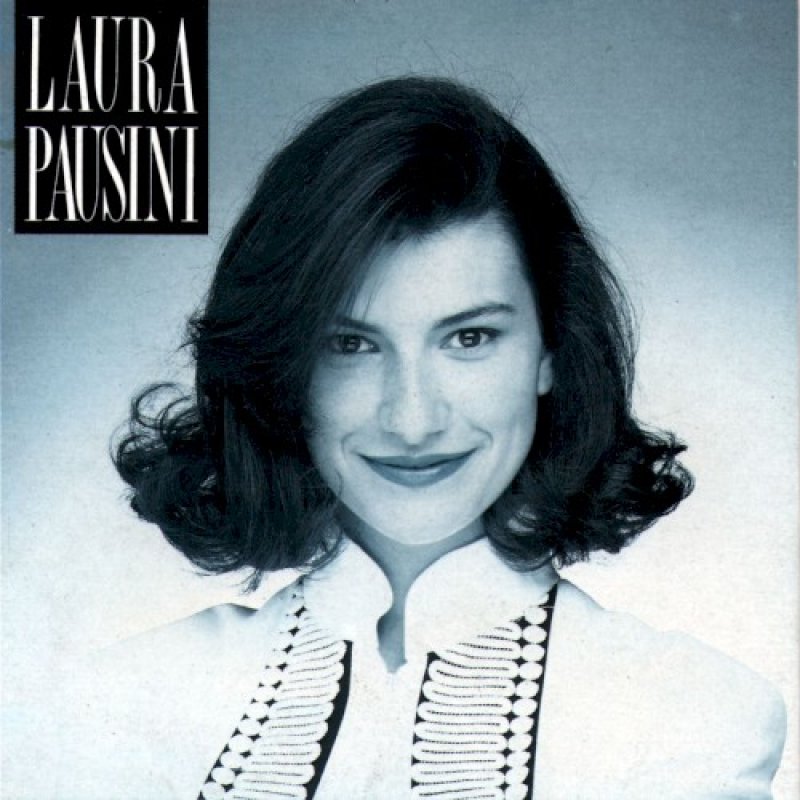
La solitudine
Laura Pausini · 1993
1993
Musica è
Eros Ramazzotti · 1997
1988
Sacred Arias
Andrea Bocelli
1999
Se Fue
Laura Pausini
1994
Cose della Vita
Eros Ramazzotti & Tina Turner
1997
Senza una donna
Zucchero · 1987
1991
Io Sì (Seen)
Laura Pausini
2020
Adesso tu
Eros Ramazzotti · 1997
1986
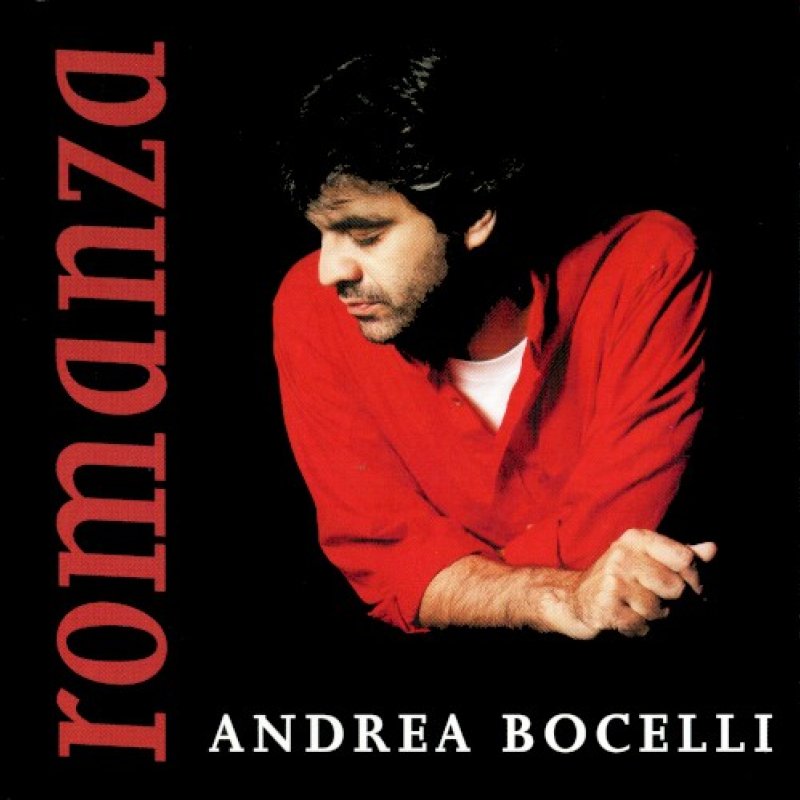
Il Mare Calmo Della Sera
Andrea Bocelli · 1996
1994
Next and final chapter — Series Italy: The 21st Century — Måneskin, the neo-cantautorato, Tiziano Ferro, the current Italian scene and the Roman rock that conquered the world.
The full series
Italy
Opera, Neapolitan song, singer-songwriters and the new scene. Ten centuries of song.
-
CAP 01
🇮🇹 Ch 01
La Canzone Napoletana: The Sound Naples Gifted to the World (13th Century–1950)
Before Italy existed as a nation — before Garibaldi unified the
-
CAP 02
🇮🇹 Ch 02
Opera: The Musical Theater That Italy Invented and the World Adopted (1600–present)
In 1597, in Florence, a group of intellectuals and musicians who called themselves the Camerata Fiorentina premiered a composition called Dafne — the first work that combined drama
-
CAP 03
🇮🇹 Ch 03
The Sanremo Festival: The Machine That Turned Italian Song into a Mass Phenomenon (1951–present)
The city of Sanremo is in Liguria, on the Italian Riviera, twenty-five kilometers from the border with France. It is a small city, of about fifty thousand inhabitants, known for it
-
CAP 04
🇮🇹 Ch 04
The Golden Decade of Pop: Celentano, Mina and the Sound that Italy Exported to the World (1958–1980)
Between 1958 and 1963, Italy experienced the fastest period of economic growth in its history: the miracolo economico — the economic miracle — which transformed in less than a gene
-
CAP 05
🇮🇹 Ch 05
The Cantautori: When Italian Song Became Literature (1960–present)
In France there was the *chanson* — Brassens, Brel, Piaf — and in America there was the folk of Bob Dylan and Joan Baez. Italy looked at both traditions, absorbed them and produced
-
CAP 06
🇮🇹 Ch 06
The Soundtracks: The Sound Italy Put to the World Cinema (1950–2020)
There is a question that film music enthusiasts sometimes ask and which does not have an easy answer: Why did Italy produce the two most important film composers of the 20th centur
-
🇮🇹 Ch 07
The International Pop: Bocelli, Pausini, Ramazzotti and the Italy that Conquered the World (1984–present)
There were three moments in the 20th century history when Italian music conquered massive global audiences. The first was the Neapolitan song carried by emigrants and Caruso to Ame
-
🇮🇹 Ch 08
The 21st Century: Roman Rock, Neapolitan Trap and the Italian Music That Keeps Inventing
The 21st century found Italy in a position it had not occupied for decades: being simultaneously guardian of a five-hundred-year-old musical tradition and laboratory of genres that
You might also like
3 articles picked by editorial similarity


