


🇮🇹 IT · Italy · Chapter 4 of 8
The Golden Decade of Pop: Celentano, Mina and the Sound that Italy Exported to the World (1958–1980)
Between 1958 and 1963, Italy experienced the fastest period of economic growth in its history: the miracolo economico — the economic miracle — which transformed in less than a generation a war-ravaged agricultural country into the fourth largest industrial economy in the Western world. The factories of Milan and Turin absorbed millions of workers arriving from the south. Refrigerators, washing machines and televisions entered Italian homes for the first time. The Vespa and the Fiat 500 set millions of Italians in motion.

With the money came also the need for entertainment, for a music that would express the energy and optimism of a country that was reinventing itself. And that music appeared: not from the tradition of the canzone napoletana nor from the solemnity of opera, but from a generation of young artists who had listened to North American rock and roll, rhythm & blues, English beat, and who wanted to do all of that — but in Italian, with the Italian melody, with the colors of the Mediterranean.
The result was the musica leggera — light music — Italian style of the sixties and seventies: the most fertile, most creative and most influential period of Italian popular song in the twentieth century. The songs written in those twenty years are the repertoire that everyone associates with Italy when thinking of modern Italian music: "Azzurro", "Il ragazzo della via Gluck", "La canzone del sole", "Grande grande grande."
Adriano Celentano: Il Molleggiato from Via Gluck
Adriano Celentano was born on January 6, 1938, at number 14 Via Gluck in Milan — a street in the industrial outskirts of the city, into a family that had emigrated from southern Italy. His parents had left Puglia in search of work in the factories of the north. He grew up in that Milan of working-class neighborhoods that in the 1950s was beginning to be demolished to make way for the new buildings of the economic miracle.
He began his career imitating Jerry Lewis and Elvis Presley in the cabarets of central Milan — hence his nickname, Il Molleggiato (the elastic one, the spring), for the way he moved on stage with a physical energy that no one in Italian pop had ever displayed before. In 1958, at nineteen years old, he was the only Italian to take part in the first major rock and roll festival organized in Milan, where he competed — and won — against American artists.
In 1961 he founded his own label, Clan Celentano, anticipating by decades the trend of artists taking control of their own production. From that label he released throughout the 1960s a succession of hits that made him the most versatile and most unpredictable artist in Italian music: "24.000 Baci" (1961), which sold a million copies, "Pregherò" — his Italian version of "Stand by Me" — and above all the two classics that define his persona forever.
"Il Ragazzo della Via Gluck" (1966) is the most autobiographical song of his career: the boy from Via Gluck who returns to his childhood neighborhood and finds it demolished, turned into buildings and concrete, with none of the trees and meadows that were there when he was young. The song captured the feeling of an entire generation of Italians whom the economic miracle had uprooted from their rural origins and transplanted to the industrial cities of the north — and who suddenly found themselves looking back and seeing that what they had left behind no longer existed.
"Azzurro" (1968) — written by the composer and singer-songwriter Paolo Conte, whom Celentano signed to his Clan label — is something else entirely: a summer song, of luminous nostalgia, of that blue which in Italian has the exact name for the sensation produced by the August sky over the Mediterranean. "Azzurro, il pomeriggio è troppo azzurro e lungo per me" — "Blue, the afternoon is too blue and too long for me." The song became the quintessential anthem of the Italian summer and one of the most recognizable songs in the history of Italian popular music.
Celentano was never just a singer: he was also an actor in dozens of films — including an appearance in Fellini's La Dolce Vita — a film director, television host, and social commentator who used his RAI programs to criticize Italian politics and corruption with a frankness that few artists of his stature had allowed themselves. He had a specific talent for productive scandal: his provocations generated debate and his songs endured.
Mina: The Tiger of Cremona Who Made Herself Invisible
Anna Maria Mazzini was born on March 25, 1940, in Busto Arsizio — although she grew up in Cremona, the city that gave her the nickname La Tigre di Cremona — and inherited her passion for singing from her grandmother Amelia, who was an opera singer. In the summer of 1958, while on vacation, she spontaneously took the stage at La Bussola, the most elegant club on the Versilia coast, and sang. Those present were left speechless. The venue's owner hired her on the spot.
In the years that followed, Mina became the most extraordinary Italian singer of the twentieth century with an ease that left the musicians working with her bewildered: a voice capable of moving without visible effort from the most intimate whisper to the power of an opera soprano, with a musicality and interpretive intelligence that turned any song — good or bad, her own or someone else's — into something entirely hers.
Federico Fellini offered her the lead role in Satyricon and Il Viaggio di G. Mastorna. She turned down both. Francis Ford Coppola wanted her as the female lead in The Godfather, in the role that would eventually go to Diane Keaton. She turned that down too. Mina never explained her rejections of film in much detail — music was enough.
Her collaboration with the songwriting duo Mogol and Lucio Battisti produced some of the finest songs in Italian pop of the nineteen-seventies. And in 1972, on the television program Teatro 10, she starred alongside actor Alberto Lupo in the duet "Parole Parole" — a four-minute scene in which he declares his love with grandiose phrases and she responds with a "parole, parole, parole" that blends tedium with tenderness — which many Italian critics describe as "the eight minutes that changed Italian music."
In 1978, at the peak of her career, Mina retired from the stage forever. She gave no interviews. She explained her decision with no more detail than was strictly necessary. Since then she has lived in Switzerland, recording albums in her private studio with the same regularity as always — her post-retirement discography is longer than that of most active artists — and does not appear in public.
Her fans call her La Tigre. Italian musicians treat her as the definitive benchmark for what a singer can do with a voice. And Time magazine included her on a list of the greatest singers of all time. She is eighty-five years old and still recording. Nobody knows exactly where.
Lucio Battisti and Mogol: the duo that defined an era
If Celentano was the energy and Mina was the voice, Lucio Battisti was the luminous melancholy: the composer and singer who, together with his lyricist Mogol — Giulio Rapetti, who always signed with that pseudonym — created between 1969 and 1980 the most beloved catalogue of pop songs in Italian history.
Battisti was born in 1943 in Poggio Bustone, a small town in the Umbria region. He did not have a conventionally beautiful voice — critics of the time accused him of being "a non-singer" — but he had something more valuable: a way of interpreting his own songs that made every note sound as if it came directly from personal experience, without filters, without the distance that technique sometimes places between the singer and the song.
The Mogol-Battisti duo — Mogol providing the lyrics, Battisti providing the music — worked together for ten years with a productivity and consistency that has no parallel in the history of Italian pop. Mogol's lyrics had an apparent simplicity that concealed a very precise emotional complexity: they spoke of love with the honesty of someone living it in that very moment, without metaphors or literary ornaments, in the same language that people used on the street.
"Acqua Azzurra, Acqua Chiara" (1969), "Mi Ritorni in Mente" (1969), "Emozioni" (1970), "Fiori Rosa, Fiori di Pesco" (1970), "La Canzone del Sole" (1971), "I Giardini di Marzo" (1972), "Il Mio Canto Libero" (1972): songs that in Italy hold the same cultural status as the great hits of Anglo-American rock hold in the rest of the world — not as nostalgia but as a living reference, as songs that continue to play on the radio and on the phones of young Italians who had not yet been born when they were recorded.
Mina dedicated an entire album to his songs: Minacantalucio (1975) — "Mina sings Lucio" — is one of the most extraordinary encounters between a voice and a catalogue in the history of Italian pop.
Battisti broke with Mogol in 1980 and continued his career with a new lyricist, Pasquale Panella, in a radically experimental direction that baffled his fans and is today recognized as one of the most daring experiments in European pop of the eighties and nineties. He died on September 9, 1998, of lymphoma, in Milan. He was fifty-five years old. He had not given any interviews in sixteen years — the same decision of invisibility that Mina had made twenty years earlier. There is something about the greatest Italian pop artists of that generation — a resistance to media spectacle that made them more mysterious and more beloved at the same time.
Al Bano and Romina Power, Gianni Morandi, Rita Pavone
The golden decade of Italian pop was not just Celentano, Mina and Battisti. It was also an entire generation of artists who filled the sixties and seventies with songs that reached all of Latin America through radio waves and the records that Italian immigrants bought in Buenos Aires, in São Paulo, in Caracas.
Al Bano — Albano Carrisi, born in Cellino San Marco, Puglia, in 1943 — arrived in Milan at sixteen with no money, determined to make it in music. He succeeded. His duo with Romina Power — the American actress and daughter of actor Tyrone Power, whom he married in 1970 — was one of the most notable commercial phenomena in international Italian pop: "Felicità" (1982), "Ci sarà" (1984), songs that in Argentina and Brazil during those years played on every radio station with the same frequency as the biggest local hits.
Gianni Morandi — the boy from Emilia-Romagna who as a child sold his father's communist party newspaper and shined shoes at the only cinema in town — became the most enduring youth idol in Italian pop: active from the sixties to the present day, with decades of hits, films, television programs and a public presence that has made him the most beloved and most timeless figure in Italian popular culture.
Rita Pavone — born in Turin in 1945 — was the first female youth idol of Italian pop: a powerful voice in a small body, a stage energy that rivaled that of the best rockers of the era, songs such as "Il Ballo del Mattone" and "Cuore" that defined the sound of the early Italian sixties.
The sound that traveled to Latin America
No other country in Europe exported its popular music to Latin America with the intensity that Italy did in the nineteen sixties and seventies. The reason is geographical and human at the same time: the millions of Italian emigrants in Argentina, Brazil, Uruguay and Venezuela had created natural audiences for the music of their homeland, and those audiences bought records, requested songs on the radio and brought Italian music to their children and neighbors.
Thus, "Azzurro" by Celentano, "Felicità" by Al Bano and Romina, the songs of Battisti and Mogol, the great hits of Sanremo, became as familiar in Buenos Aires or Montevideo as in Milan or Rome. Italian song of the nineteen sixties and seventies is part of the musical heritage of Latin America just as much as it is of Italy's — and in Argentina in particular, where the Italian heritage runs so deep that tango and national rock bear its traces, that presence is almost constitutive.
Editorial note: Mina turned down Fellini, turned down Coppola, turned down cinema, turned down interviews, turned down stages. And yet she is the greatest Italian singer of the twentieth century, the one with the longest discography, the one most often cited by other musicians as a definitive reference. There is something in that choice — deciding that the music matters and the spectacle does not, that the voice matters and the image does not — that is at once an artistic statement and a personal statement. Most artists need to be seen in order to exist. Mina decided she existed even if no one saw her. And she was right.
10 · 5 en DoReSol
Top 10 Songs of the Golden Age of Italian Pop
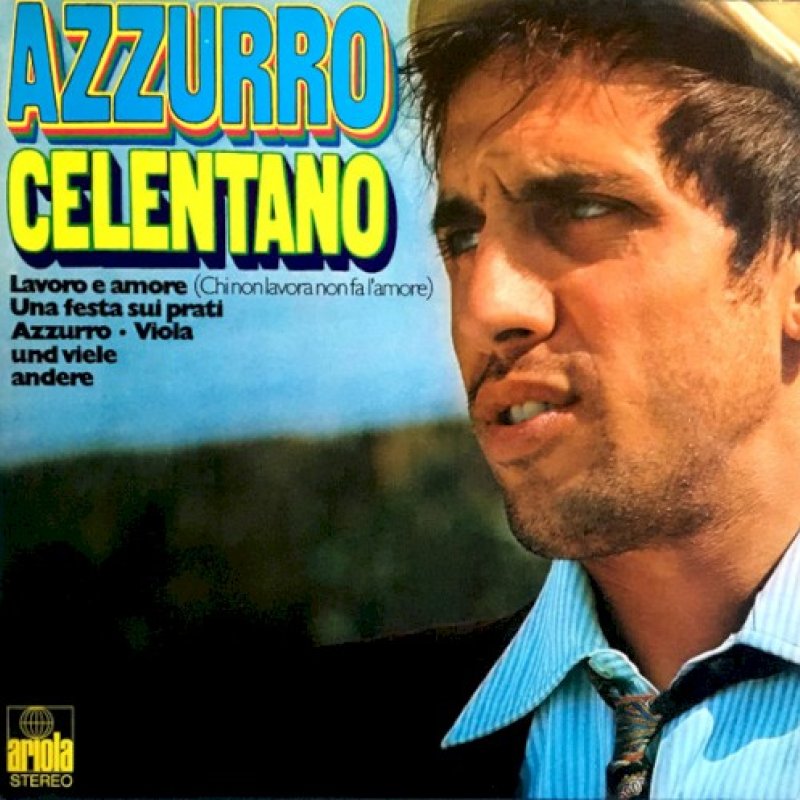
Azzurro
Adriano Celentano · 1971
1968
La Canzone del Sole
Lucio Battisti
1971
Il ragazzo della via Gluck
Adriano Celentano · 1971
1966
Grande, Grande, Grande
Mina
1972
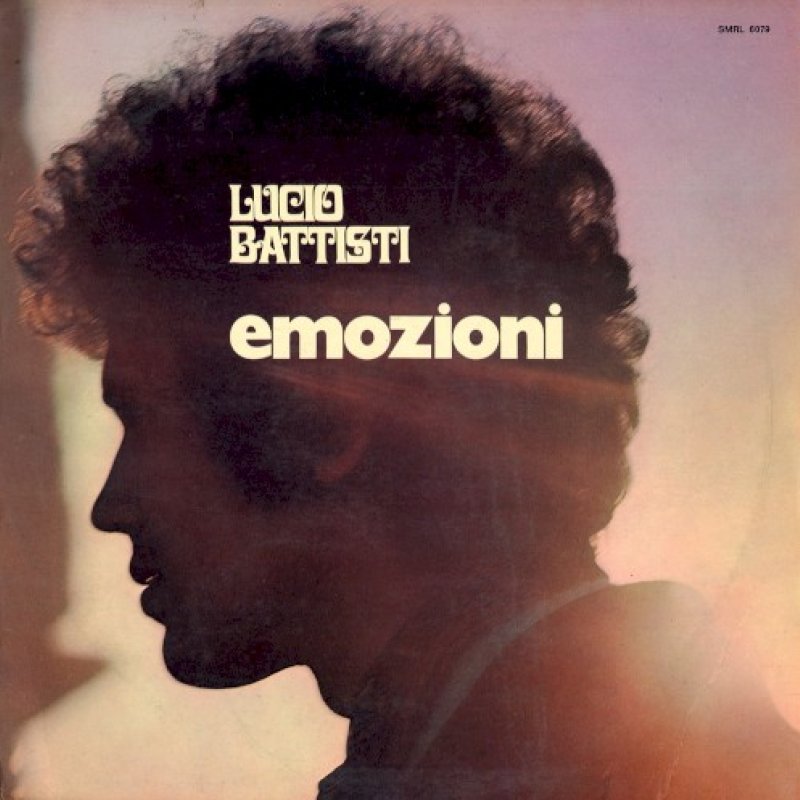
Emozioni
Lucio Battisti · 1970
1970
Mi ritorni in mente
Lucio Battisti · 1970
1969
Parole Parole
Mina and Alberto Lupo
1972
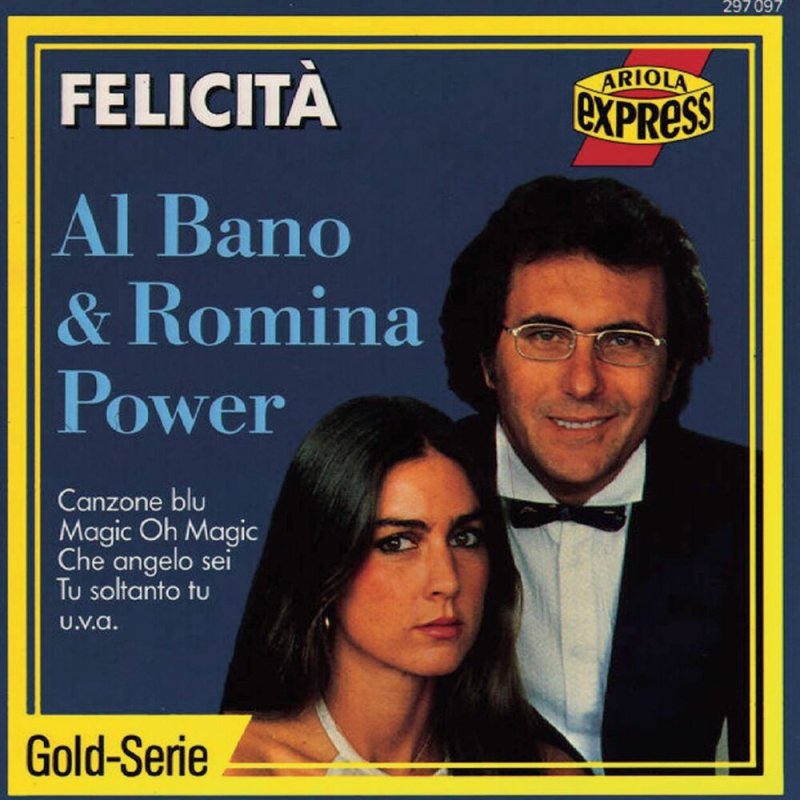
Felicità
Al Bano & Romina Power · 1988
1982
I Giardini di Marzo
Lucio Battisti
1972
Il Cielo in una Stanza
Mina
1960
The full series
Italy
Opera, Neapolitan song, singer-songwriters and the new scene. Ten centuries of song.
-
CAP 01
🇮🇹 Ch 01
La Canzone Napoletana: The Sound Naples Gifted to the World (13th Century–1950)
Before Italy existed as a nation — before Garibaldi unified the
-
CAP 02
🇮🇹 Ch 02
Opera: The Musical Theater That Italy Invented and the World Adopted (1600–present)
In 1597, in Florence, a group of intellectuals and musicians who called themselves the Camerata Fiorentina premiered a composition called Dafne — the first work that combined drama
-
CAP 03
🇮🇹 Ch 03
The Sanremo Festival: The Machine That Turned Italian Song into a Mass Phenomenon (1951–present)
The city of Sanremo is in Liguria, on the Italian Riviera, twenty-five kilometers from the border with France. It is a small city, of about fifty thousand inhabitants, known for it
-
CAP 04 you are here
🇮🇹 Ch 04
The Golden Decade of Pop: Celentano, Mina and the Sound that Italy Exported to the World (1958–1980)
Between 1958 and 1963, Italy experienced the fastest period of economic growth in its history: the miracolo economico — the economic miracle — which transformed in less than a gene
-
CAP 05
🇮🇹 Ch 05
The Cantautori: When Italian Song Became Literature (1960–present)
In France there was the *chanson* — Brassens, Brel, Piaf — and in America there was the folk of Bob Dylan and Joan Baez. Italy looked at both traditions, absorbed them and produced
-
CAP 06
🇮🇹 Ch 06
The Soundtracks: The Sound Italy Put to the World Cinema (1950–2020)
There is a question that film music enthusiasts sometimes ask and which does not have an easy answer: Why did Italy produce the two most important film composers of the 20th centur
-
🇮🇹 Ch 07
The International Pop: Bocelli, Pausini, Ramazzotti and the Italy that Conquered the World (1984–present)
There were three moments in the 20th century history when Italian music conquered massive global audiences. The first was the Neapolitan song carried by emigrants and Caruso to Ame
-
🇮🇹 Ch 08
The 21st Century: Roman Rock, Neapolitan Trap and the Italian Music That Keeps Inventing
The 21st century found Italy in a position it had not occupied for decades: being simultaneously guardian of a five-hundred-year-old musical tradition and laboratory of genres that
You might also like
3 articles picked by editorial similarity

The 21st Century: Roman Rock, Neapolitan Trap and the Italian Music That Keeps Inventing

The International Pop: Bocelli, Pausini, Ramazzotti and the Italy that Conquered the World (1984–present)
