The story behind
I Dig Love, according to DoReSol
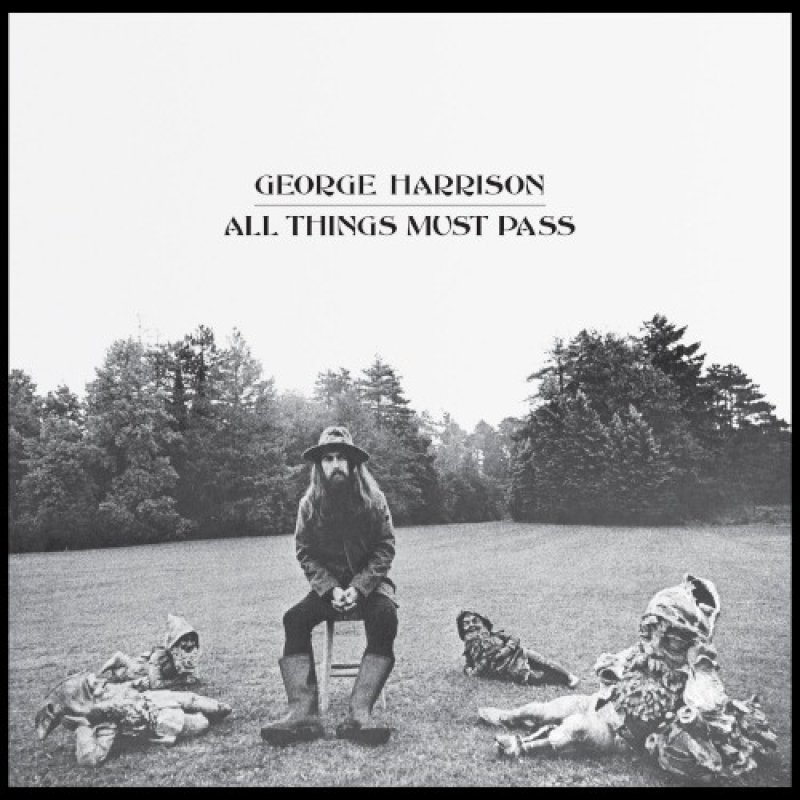
When you dive into *I Dig Love*, you encounter a facet of George Harrison that moves away from the spiritual depths that dominate much of his triple album *All Things Must Pass*. This song is a celebration of freedom in love, and its sound is nourished by Harrison's early explorations with the slide guitar. It was a technique he became closely acquainted with in late 1969, while touring with Delaney & Bonnie and Friends. The recording of *I Dig Love* is a good example of the generosity of musicians that characterized *All Things Must Pass*, bringing together three guitarists, two drummers, and three keyboardists. Among them were Eric Clapton, Bobby Whitlock, and Dave Mason, who had shared the stage with Delaney & Bonnie, as well as Billy Preston and Ringo Starr. The production, handled by George Harrison and Phil Spector, took place in London.
George Harrison's introduction to the slide guitar, played in an open E tuning, occurred in December 1969. At that time, he joined Eric Clapton as a guest on a European tour by Delaney & Bonnie. As Harrison recalls in his autobiography, Delaney Bramlett handed him a slide to try playing a line that Dave Mason had performed on the track *Coming Home*, as Mason had withdrawn from the tour. This experience on the road, away from his wife Pattie Boyd, showed a side of Harrison that contrasted with his public image more associated with Eastern religions and spirituality. Although Harrison had strong ties to the Hare Krishna movement, which promoted abstinence, Bramlett remembered that he "let his hair down" on the tour, evoking the years before the Beatles' fame in Hamburg.
Musically, *I Dig Love* is built on a riff, played mainly on piano, that descends and then repeats its course back to its starting point. A music critic of the time compared this sequence to Henry Mancini's theme *The Pink Panther Theme*. The lyrics, with their repeated declaration of "I dig love every morning / I dig love every evening", reflect an openness to social conventions about sex and sexuality, a central theme of the 60s counterculture. While some authors see it as a departure from the predominantly spiritual themes of *All Things Must Pass*, others interpret it as an endorsement of the free love philosophy of that era. George Harrison's composition, which also includes wordplay and what some call "schoolboy jokes", deviates from his deeper reflections, and the fact that he himself does not discuss it in his autobiography nor include it in collections of his songs, might suggest his own view on it.
From album

All Things Must Pass
George Harrison · 1970 · Track 15
Details
Credits
Lyrics George Harrison
Music George Harrison