The story behind
Astronomy Domine, according to DoReSol
When Syd Barrett, the original songwriter for Pink Floyd, returned from an experience he described as an encounter with the immensity of the universe, he sought to translate that vision into his music. It is said that he carried an astronomical atlas with him and, combining that information with references to science fiction comic book characters like Dan Dare, Pilot Of The Future, he wove the lyrics that would shape Astronomy Domine. This song, which opens the band's debut album, The Piper at the Gates of Dawn (1967), became one of the group's first explorations into what would be called "space rock". The lead vocals on the studio version are shared by Barrett and keyboardist Richard Wright. The title, Astronomy Domine, refers to the Latin word "Domine" used in Gregorian chants, and the opening theme includes the voice of one of their managers, Peter Jenner, reading names of planets and stars through a megaphone, with a barely audible mention of 1930, the year of Pluto's discovery. The instrumentation is characterized by Barrett's Fender Esquire guitar, which blends with Wright's Farfisa organ and Roger Waters' bass line, all enveloped in psychedelic echo effects from a Binson machine.
The composition of Astronomy Domine features a particular harmonic structure. The verses use a major chord progression (E, E♭, G, A), while the chorus descends chromatically. In the introduction, Barrett creates a distinctive sound by layering an open E major chord with notes from an E♭ major chord. This piece was fundamental in Pink Floyd's concerts. A live version, included on the album Ummagumma (1969), shows the band's evolution after Barrett's departure, with David Gilmour on guitar and a performance closer to progressive rock. In this version, the lead vocals are by Gilmour and Wright, who sings the higher harmonies. Interestingly, this live version from Ummagumma replaced the original studio version on the US edition of the compilation album A Nice Pair (1973). Later, in 1994, Gilmour began performing a version more faithful to the original, which he later took into his solo career.
From album

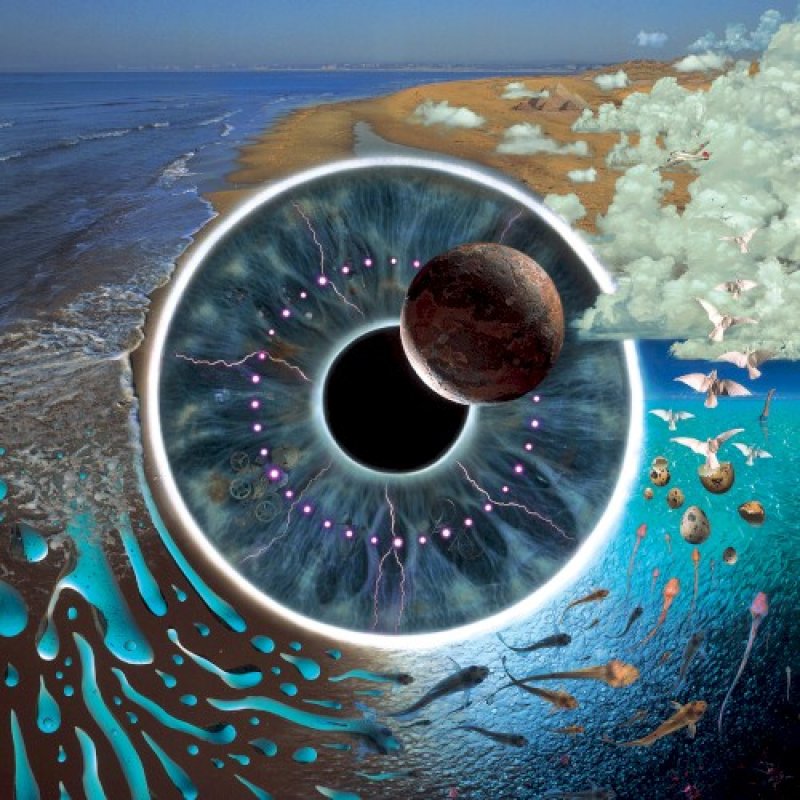
p·u·l·s·e
Pink Floyd · 1995 · Track 2
Details
Credits
Lyrics Syd Barrett
Music Syd Barrett