The story behind
No se va a llamar mi amor, according to DoReSol
The song No se va a llamar mi amor begins with a sharp hit: the acoustic guitar sounds saturated, almost as if it were about to break, and repeats a chord sequence —D, C, B, A— twice before Charly García lets out a scream that cuts through the air. It’s not a clean or polished sound, but one that seems to come from a rehearsal where someone turned the volume up too high. The chorus arrives afterward, with that ironic phrase repeating "Estás prohibida, pasenló en la radio", as if the song were an inside joke between the musician and the bureaucracy of Sadaic. But the real twist comes in the bridge: "Es un rock, es un blues, es una mesa de luz, es un mambo de Xuxú, un manual de Kapelusz". There, Charly mixes absurd references —the radio technician Xuxú and the publisher Kapelusz— with a rhythm that oscillates between chaos and calculation, as if the song refused to take its own title seriously.
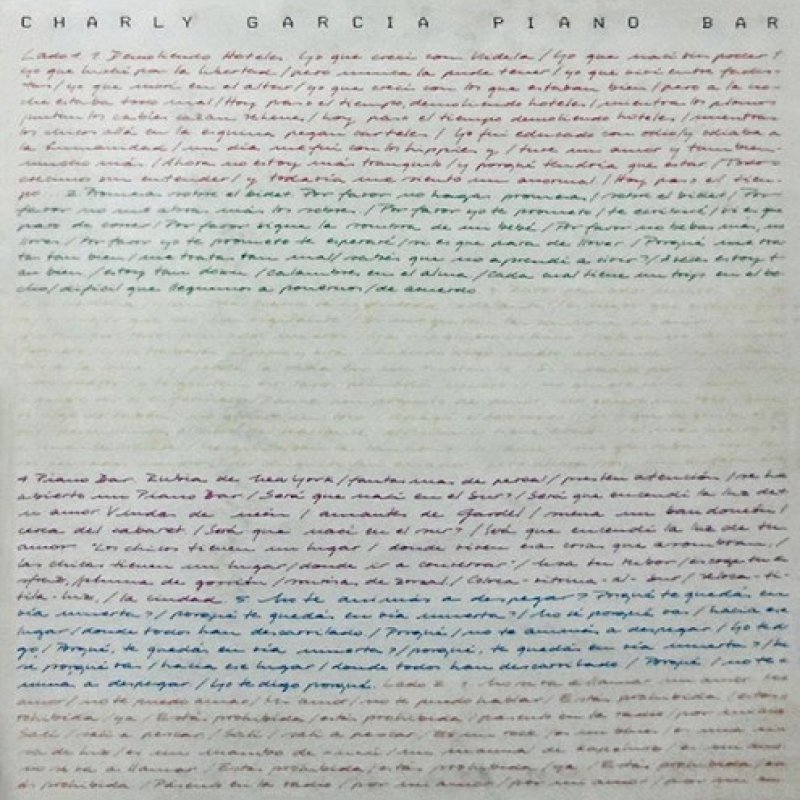
Recorded at Estudios ION in Buenos Aires in 1984, the song is part of Piano bar, an album that was put together live, with minimal overdubs and a deliberately raw sound. The team later mixed the material at Electric Lady Studios in New York, but the result retained the garage energy Charly was aiming for. The song itself lasts just two minutes and twelve seconds, yet within that time it packs a scream, a musical joke, and a statement of principles: no matter what name you give it, the song exists. And not only that: in 2009, Charly received the Grammy for Musical Excellence in Las Vegas, and in 2010 he was declared an illustrious citizen of Buenos Aires, but those accolades came years after No se va a llamar mi amor had already left its mark on Argentine rock.
From album

Piano bar
Charly García · 1984 · Track 6
Details
Credits
Lyrics Charly García
Music Charly García