Chords in progress
We have not analyzed this song audio yet. Once it is ready, you will see the chord player synced with the video.
The story behind
La yugular, according to DoReSol
La yugular doesn’t sound like the rest of LUX. It carries an air that escapes from flamenco, from the urban, even from what we usually associate with Rosalía. It’s not just because of that chorus that dissolves into Arabic, nor because of the Patti Smith sample that sneaks in at the end like a whisper. It’s something deeper: the song breathes from the first second, literally. Rosalía’s voice doesn’t sing *over* the lyrics; the lyrics *emerge* from her throat, as if each word were a heartbeat. And that heartbeat beats in Arabic, in a language that isn’t hers, yet she makes it her own with a surrender that hurts.
The idea behind La yugular was born from a personal search. Rosalía has said it plainly: she wanted to speak of that blurred line where the intimate becomes universal, where love for God—in this case, inspired by the Sufi mystic Rabia al Adawiyya—isn’t submission, but ecstasy. Rituals that spin, that breathe, that seek the void to find the infinite. She translated it into music: the air before the voice, the throat as an instrument, Arabic as a bridge. She recorded the verses in that language despite not mastering it, forcing her body to find the right space, as if the sound itself were a prayer. And the result isn’t perfect—she admits it herself—but it’s honest. The mix, signed by Ramiro Fernández-Seoane, Francesco di Giovanni, and Manny Marroquin, gives it that hypnotic weight, as if the track floated between the earthly and the divine. It lasted four minutes and eighteen seconds, but in that time, centuries of devotion and struggle to find a voice that doesn’t sound like a copy, but like truth, fit.
From album

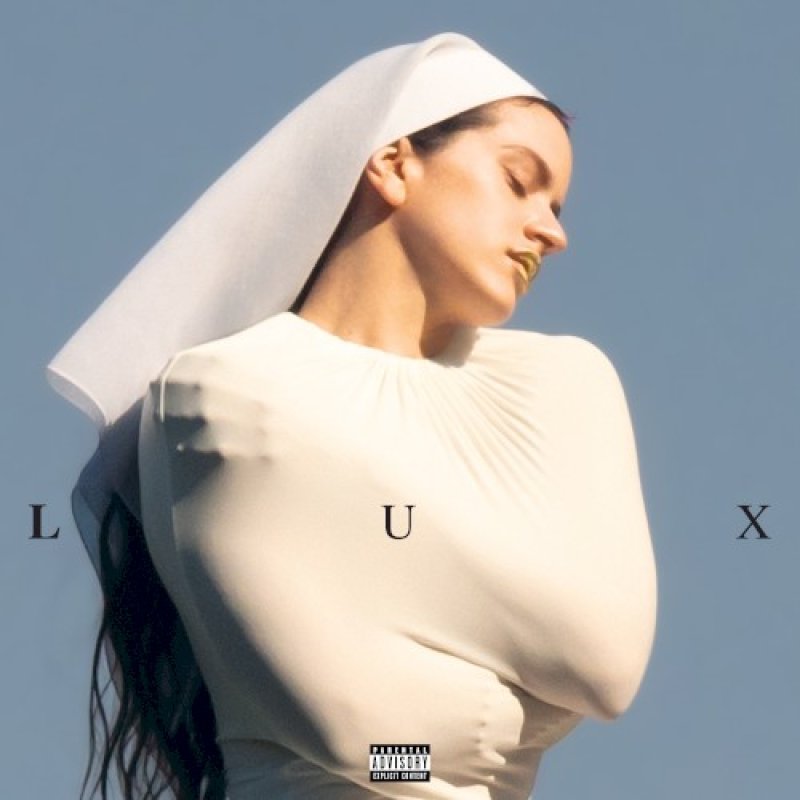
LUX
ROSALÍA · 2025 · Track 11
Details
Credits
Lyrics ROSALÍA
Music Tobias Jesso Jr., ROSALÍA, Noah Goldstein, Elliott Kozel