Chords in progress
We have not analyzed this song audio yet. Once it is ready, you will see the chord player synced with the video.
The story behind
La bengala perdida, according to DoReSol
The violence in Argentina has not always been a matter of political speeches or street marches: sometimes it seeped into the stadiums, where football, that ritual of collective passion, became a stage for tragedies that left deeper scars than the pitches. The lost flare stems from one of those wounds. The lyrics do not mention names, but they tell a story that shook the country: on August 3, 1983, Roberto Basile, a 25-year-old Racing fan, died in Boca Juniors’ stadium after being hit by a nautical flare launched from the rival stands. The impact pierced his carotid artery, and although the match continued as if nothing had happened, his death exposed the irrational violence already rotting away the country’s most popular sport. Spinetta, who always had football in his life —he was a River fan—, turned that pain into a song that not only remembers but also challenges. The track does not linger on the anecdotal: it uses metaphors like the Exocet, the missile that echoed in the Falklands War, to speak of an attack that comes from where least expected, something meant to illuminate but instead burns until it kills. The lyrics also include a phrase Spinetta received from a Rosario Central fan in Córdoba: we’re not that bad, a dialogue he himself incorporated almost verbatim. Those verses, which could be a reproach, become a lament when one understands that violence does not choose flags, but nests in those who wield it as a weapon.
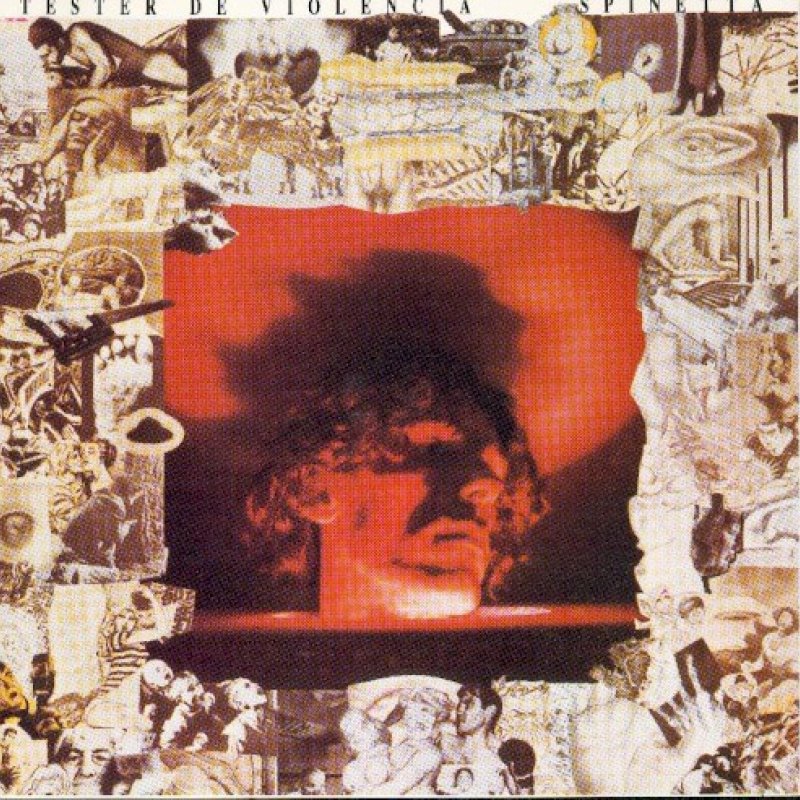
The song was not a mere record of what happened: it is the centerpiece of Téster de violencia, the 1988 album where Spinetta explored violence as something that transcends the moral and takes root in bodies. The record, recorded at a time when Argentina was trying to move past the dictatorship but saw how impunity laws and the carapintada military uprisings tainted that future, is a raw exercise in introspection. Spinetta divided the songs into two groups: the falls to the body —where La bengala perdida fits— and the evaporations. Here, the music does not accompany: it pushes. Mono Fontana, responsible for the keyboard arrangements, gave the track an oppressive, almost ritualistic atmosphere, where the synthesizers sound like echoes of a tragedy that has yet to be fully processed. Spinetta played guitar, sang, and even programmed some details, but it was in the combination of his cracked voice and the dense keyboards that the song found its strength. It is no coincidence that, years later, in the 2009 Spinetta y las Bandas Eternas concert, he chose it to close alongside Al ver verás, as if both were the backbone of that conceptual album. The song’s length —6:07— is no accident: it is the time it takes to recount an announced death, but also the time Spinetta needed for that story not to fade into oblivion.
From album

Tester de violencia
Luis Alberto Spinetta · 1988 · Track 9
Details
Credits
Lyrics Luis Alberto Spinetta
Music Luis Alberto Spinetta