The story behind
I Am the Walrus, according to DoReSol
When John Lennon set out to write I Am the Walrus, he wasn't looking to create an easy-to-understand anthem. On the contrary, his intention was to disorient those who sought deep meanings in every word of The Beatles. Inspiration came to him from several sources: two LSD experiences and Lewis Carroll's 1871 poem, "The Walrus and the Carpenter." Lennon combined fragments of three musical ideas he had in mind. One of them arose from hearing a police siren near his home in Weybridge, to which he added lyrics imitating its rhythm. Another idea was a short rhyme about himself in his garden, and the third, a nonsensical phrase about sitting on a cornflake. To this, he added references to his own song Lucy in the Sky with Diamonds. Producer George Martin contributed orchestral arrangements with violins, cellos, French horns, and clarinet, while the choir of sixteen professional singers, the Mike Sammes Singers, added nonsensical lines and high-pitched sounds.
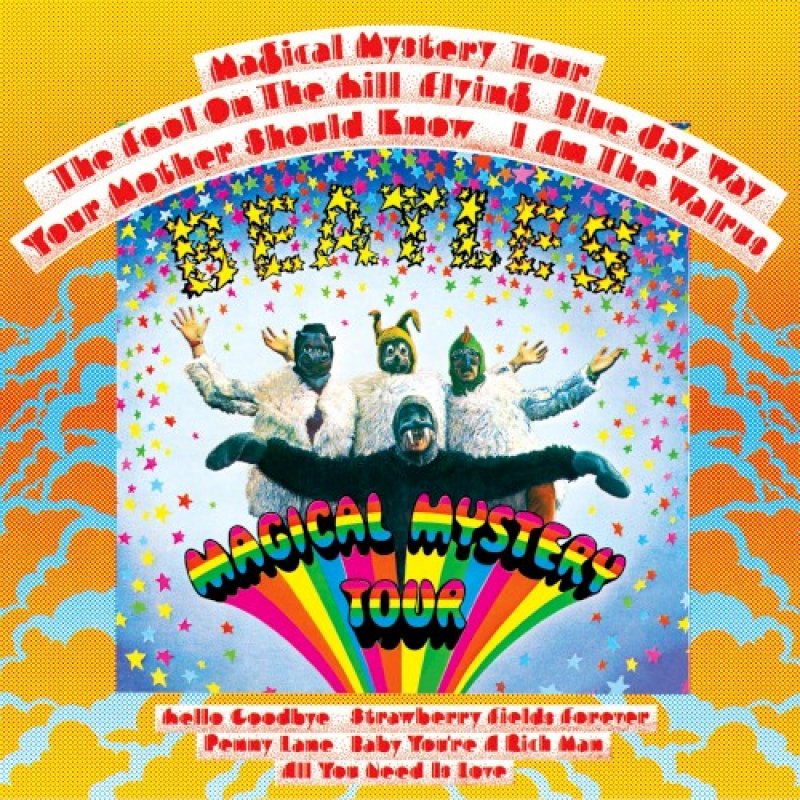
The recording of I Am the Walrus took place at EMI, London, between September 5, 6, 27, and 29, 1967. The song was released as the B-side of the single Hello, Goodbye, and also formed part of the EP and album Magical Mystery Tour, released in the United States on November 27, 1967, by Capitol Records and in the United Kingdom as a double EP on December 8, 1967, by Parlophone. In 1976, Parlophone would release the US LP in the UK. The single Hello, Goodbye and the EP Magical Mystery Tour reached the top two positions on the British charts in December, meaning I Am the Walrus reached number one and two simultaneously. The song was banned by the BBC due to the line "Boy, you've been a naughty girl, you let your knickers down." Critic Ian MacDonald suggested that the song may have been influenced by Procol Harum's A Whiter Shade of Pale, a mid-1967 hit that was Lennon's favorite at the time. The Animals frontman, Eric Burdon, claimed to have inspired the line "I am the eggman" by telling Lennon about an intimate experience with a raw egg. Later, in 1968, in the song Glass Onion, Lennon would say that the walrus referred to Paul McCartney. It has also been noted that the words "semolina pilchard" could be a reference to Sergeant Pilcher of the London Drug Squad, who pursued figures in the British rock scene in the late 1960s.
From album

Magical Mystery Tour
The Beatles · 1967 · Track 6
Details
Credits
Music Paul McCartney, John Lennon