The story behind
Debaser, according to DoReSol
The first time you listen to Debaser, Dave Lovering’s drum hit drags you in before Joey Santiago’s guitar unleashes that sharp riff, like a knife cutting through the air. It’s not a song that introduces itself: it bursts in. The lyrics come later, with Black Francis’s raspy voice singing about "open eyes" while Kim Deal’s bass weaves a line that seems to float above the chaos. The detail that stands out most is the direct reference to Un chien andalou, that 1929 surrealist short where an eye is sliced open with a razor—but here there’s no explanation: just raw imagery and the phrase "slicin’ up eyeballs," repeated like a mantra that doesn’t ask for interpretation. The title itself is a wordplay: Debaser isn’t just an insult, but an attempt to coin a term that, according to the songwriter, no one adopted afterward. The song works like a collage: the Pixies’ dirty sound, lyrics that feel like they’re pulled from a fever dream, and that air of calculated provocation.
Recorded at Downtown Recorders in Boston during the Doolittle sessions in 1989, Debaser was born from a personal obsession. Black Francis had seen Buñuel’s film twice and decided he needed to turn that sense of absurdity into music. The first version even included a nod to Purple Rain—"Shed, Apollonia!"—which he later replaced with the mispronounced Spanish title ("un chien andalusia"), aiming for that balance between pretentiousness and catchiness. The track became the opener for Doolittle, an album that blended polished production with lyrics about biblical torture and death, but Debaser stood out for being the only track carrying that explicit visual weight. Years later, in 1997, the studio version was re-released as a single to promote the compilation Death to the Pixies, and in 2004 a live version recorded in New York was included in the album Hey. It even ended up in a video game, mashed up with The Prodigy’s "Invaders Must Die" for DJ Hero 2, as if Buñuel’s surrealism and electronic chaos could coexist in the same loop.
From album

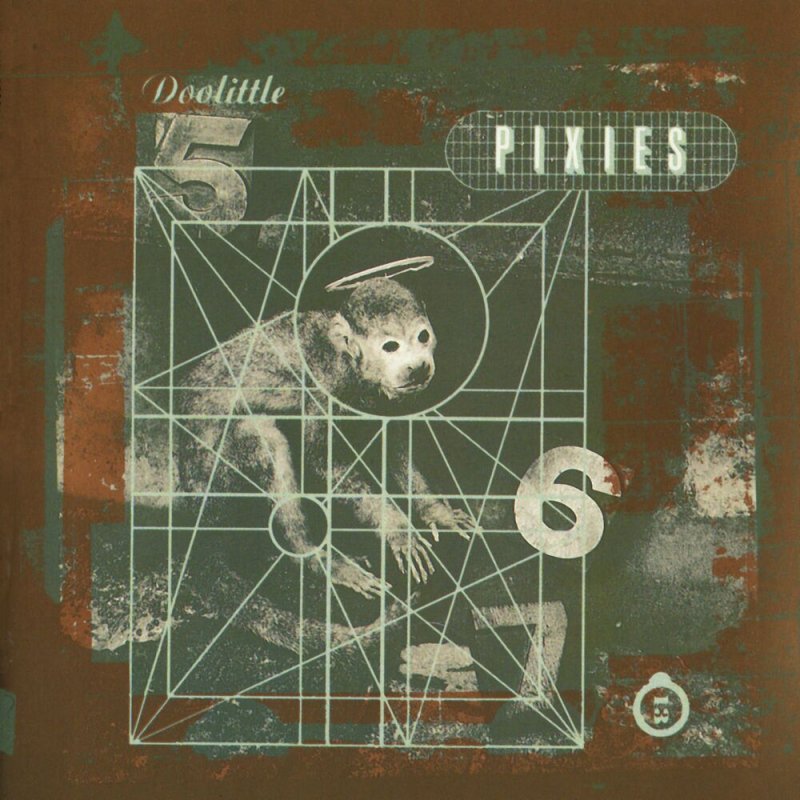
Doolittle
Pixies · 1989 · Track 1
Details
Credits
Lyrics Black Francis
Music Black Francis