


🇫🇷 FR · France · Chapter 1 of 7
La Chanson Française: The Art of Singing What Cannot Be Said in Any Other Way (19th century–present)
In French, there is a word — chanson — which simply means "song".

The chanson française is not a genre in the technical sense — it does not have a specific rhythm or a fixed structure. What it has is an attitude towards words: the conviction that what is said in a song matters as much as how it is said, that the lyrics are as much an artistic responsibility as the melody, that a song can talk about everything that matters — love, death, politics, friendship, the city, injustice — with the same seriousness as a poem by Baudelaire or a novel by Flaubert.
This tradition has medieval roots — the troubadours of southern France who in the 12th century invented European romantic lyricism — and goes through the cabarets of Montmartre at the end of the 19th century where artists like Aristide Bruant sang about the life of the poor neighborhoods of Paris to audiences who were also characters in their own songs. But its most defining moment, the period when the chanson française became what the world recognizes today, was the 20th century — and in that century, there were three names that defined it all.
Édith Piaf: The Sparrow of Paris
Édith Giovanna Gassion was born on December 19, 1915, in Ménilmontant, one of the poorest neighborhoods in Paris. Her mother was a café-concert singer who abandoned her at birth. Her father was a circus acrobat. She was raised first by her maternal grandmother — who ran a brothel in Normandy — and then by her paternal grandmother. At the age of three she developed blindness as a complication of meningitis. She recovered her sight at seven, according to family legend, thanks to a pilgrimage to the tomb of Saint Thérèse of Lisieux.
By the age of fourteen she was already singing in the streets with her father. At nineteen, a cabaret impresario discovered her on a street corner in the Pigalle neighborhood — the story goes that she was wearing an oversized coat and that her voice arrived before she did — and offered her a contract. He suggested she change her name. He proposed Piaf: Parisian slang for sparrow, an apparent reference to her small stature and to the fragility that concealed an immense strength.
What Piaf had was not just a voice — although the voice was extraordinary: deep, rough at the edges, capable of moving from the most intimate whisper to the most shattering cry without losing pitch or emotion. What she had was the ability to make every song sound as if she were living it at that precise moment. Her biographers describe her as an actress before a singer — but that distinction does not work with her, because acting and singing were in Piaf the same thing: the same total presence, the same surrender without a safety net.
During the German occupation of France (1940–1944) she continued to perform — a complex chapter of her biography that her defenders explain as veiled resistance and her critics as collaboration. What is undeniable is that during those years she became the most beloved singer in France, and that by the end of the war her status as a national symbol was already irreversible.
"La Vie en Rose" — written by her in 1945, published in 1947 — was the moment Piaf became a world legend: three minutes of love seen through the rosy color of happiness, with a melody that rises and falls like the breathing of someone who has just realized they are in love. Her own colleagues thought it was too simple to be a great hit. The Académie Française catalogued it as part of France's cultural heritage.
"Hymne à l'Amour" (1949) — written for her great love, boxer Marcel Cerdan, who died in a plane crash while flying from Paris to New York to see her — is perhaps the most absolute declaration of love in the history of French popular song: "If the sky were to fall on me / if the earth were to sink / I would care very little / if you loved me." Piaf sang it that night, after learning the news, at Madison Square Garden in New York. She did not cancel the concert.
"Non, je ne regrette rien" (1960) — composed by Michel Vaucaire and Charles Dumont, initially rejected by Piaf before becoming the song with which she closed all her concerts — was her artistic testament: a declaration that she regretted nothing, neither the good nor the bad she had done. She sang it for the last time at forty-seven, aged decades beyond her real age by illness, pain, morphine, and the life she had lived without holding anything back.
She died on October 10, 1963, in Plascassier, on the French Riviera, of liver cancer. She was forty-seven years old. The Catholic Church denied her a funeral Mass — she had lived outside official morality too conspicuously. One hundred thousand people accompanied her cortège to the Père-Lachaise cemetery. No other death in the history of French popular culture produced a comparable outpouring of grief.
Jacques Brel: The Belgian Who Was More French Than the French
Jacques Romain Georges Brel was born on April 8, 1929, in Schaerbeek, a municipality of Brussels. He was Belgian — a detail the French forgot in time to adopt him completely — the son of a cardboard manufacturer who wanted his son to succeed him in the business. Brel left the factory, left his wife, left his daughters, and went to Paris at twenty-two with a guitar and the certainty that he had something to say.
What he had to say, he did not say softly. Brel on stage was a physical phenomenon: arms extended like wires, his entire body in motion, sweat visible from the back row, eyes of an intensity that those who saw him live described as difficult to sustain. Each song was a complete theatrical performance in which he played all the characters at the same time.
"Ne me quitte pas" (1959) is the most covered song in the history of the chanson française and one of the most covered in any language: the plea of the abandoned lover who offers everything he can imagine — to be the shadow of the shadow, the sun of her suns, the pearl of the rain — with a desperation that builds verse by verse until it becomes unbearable. Piaf heard it and said: "A man should not sing such things!" It was the greatest possible compliment.
"Amsterdam" — never recorded in a studio but only live, with the 1964 Olympia recording as the definitive version — is perhaps his masterpiece: the sailors of Amsterdam drinking and loving and dying with the brutality of those who have nothing to lose, sung with an energy that seems impossible to sustain for three minutes but which Brel sustained throughout his entire career.
In 1966, at the peak of his fame, he announced that he was retiring from performing. He was thirty-seven years old. He did not adequately explain why. He went on to make films, to learn to fly light aircraft, to live in the Marquesas Islands of French Polynesia, where he died of lung cancer in October 1978. He was buried there, a few meters from Gauguin's grave. He was forty-nine years old.
Georges Brassens: The Anarchist from Sète
If Piaf was the heart of the chanson française and Brel was its theater, Georges Brassens was its brain — the poet who took the simplest form of the genre (the voice, the acoustic guitar, the double bass) and used it to build some of the most intellectually complex and ethically honest lyrics in twentieth-century French popular song.
Brassens was born on October 22, 1921, in Sète, a port in Mediterranean Languedoc where his songs would always ask to be buried — and where he was indeed buried when he died in 1981. He came from humble origins, from a working-class family, and educated himself methodically at the Bibliothèque Nationale in Paris, rising at five in the morning to read: Villon, Baudelaire, Verlaine, Hugo, the great poets of the French tradition. That reading would be the foundation of everything he wrote.
He was an anarchist — not as an ideological pose but as a lived ethical position: he distrusted the State, detested war, loved individual freedom above any collective, and those convictions appeared in his songs with a consistency that left no room for doubt about their authenticity. "La Mauvaise Réputation" (1952) — "the bad reputation" — was his calling card: the one who does not do what everyone else does, the one who refuses to march, the one who stays while the others go, and who for that independence is singled out and judged.
He set to music the poems of Villon, Aragon, Victor Hugo, Verlaine — turning the great texts of French poetry into songs that anyone could sing. He received the Grand Prix de Poésie from the Académie Française in 1967 — official recognition that his lyrics were literature, not merely songs. Fabrizio de André translated him into Italian. Joan Manuel Serrat sang him in Catalan. Paco Ibáñez in Spanish. Brassens crossed languages because good poetry always does.
Charles Aznavour: The Armenian of Montmartre
No history of the chanson française is complete without Charles Aznavour — born Shahnour Vaghinak Aznavourian in Paris in 1924, son of Armenian immigrants who had fled the genocide — the singer-songwriter who built the longest and most commercially successful career in all of twentieth-century chanson: more than eighty albums over seventy years of activity, songs translated into eighty languages, more than one hundred million records sold.
Aznavour was the opposite of Brel in image and temperament: where Brel was pure intensity and physical exhaustion, Aznavour was contained elegance and artisanal precision. His songs — "La Bohème" (1966), "She" (1974), "Emmenez-moi" (1967), "Hier encore" (1964) — are jewels of construction: every word in its exact place, every melody designed to last. He sang until the age of ninety-four, performed on stages until the year of his death — 2018 — and was the last living survivor of the classical generation of chanson.
His Armenian heritage was always visible: he founded humanitarian aid funds for Armenia, was appointed ambassador of Armenia to several countries, and turned his love for his roots into part of his public identity while never ceasing to be a thoroughly Parisian artist.
The Living Tradition
The chanson française did not end with Piaf, Brel, Brassens and Aznavour. The following generations — Barbara, Léo Ferré, Anne Sylvestre, Juliette Gréco, Georges Moustaki — continued the tradition with the same artistic seriousness and the same exacting relationship with words. And in the twenty-first century, artists such as Stromae, Camille and Christine and the Queens prove that the impulse to make French song matter — to make what is said matter — remains alive, even though the instruments and rhythms have changed completely.
The thread that connects them all is not style but attitude: the conviction that a song can contain an entire world if the person who writes it knows how to build one.
Editorial note: Piaf did not cancel the Madison Square Garden concert the night she learned that Marcel Cerdan had died in the plane crash. She sang. The following day she recorded "Hymne à l'Amour", the song she had written for him. There are two ways to read that act: as cruelty toward herself, or as the only way Piaf knew how to process pain — by turning it into music, which is the one thing pain cannot destroy. Perhaps both readings are correct at the same time. Perhaps that is exactly what the chanson does when it works.
10 · 4 en DoReSol
Top 10 of the Chanson Française
Non, je ne regrette rien
Édith Piaf · 1960
The most powerful artistic testament of the chanson. A forty-seven-year-old singer who has lived through everything declaring she regrets nothing. The song Hans Zimmer used to open Inception — because it lasts exactly as long as time slows down in a dream.
Ne me quitte pas
Maysa · 1961
The plea of impossible love in its most bare and most unbearable form. The most covered song in the history of the chanson. What Piaf said a man should not sing.
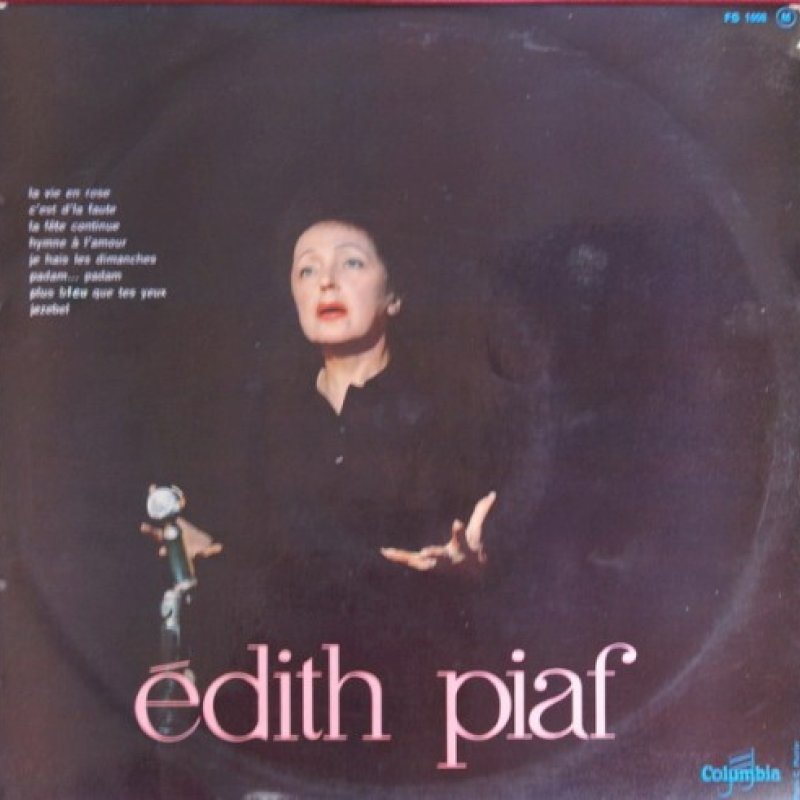
La Vie en rose
Édith Piaf · 1952
The musical symbol of France in the world. Three minutes of love seen through rose-colored glasses, classified by the Académie Française as cultural heritage. The song that opens any conversation about French music in any country in the world.

Amsterdam
Coldplay · 2002
The song Brel never recorded in the studio because the Olympia recording was already perfect. The sailors of Amsterdam as a metaphor for all those who live without a safety net.
La Mauvaise Réputation
Georges Brassens · 1952
The anthem of those who refuse to follow the herd. Brassens's first great song and the most direct expression of his ethical anarchism turned into music.
La Bohème
Charles Aznavour · 1966
The nostalgia for the years of poverty and artistic freedom in Montmartre. Aznavour remembering what he was before becoming famous, with the precision of someone who knows exactly what he lost by winning.
Hymne à l'Amour
Édith Piaf · 1949
Written for Marcel Cerdan, who died in a plane crash. The most absolute declaration of love in the chanson: if the sky fell down and the earth sank, I would care little as long as you loved me.
Les Copains d'Abord
Georges Brassens · 1964
France's most beloved hymn to friendship. The boat trip as a metaphor for life shared with friends. Brassens in his most luminous and most popular version.
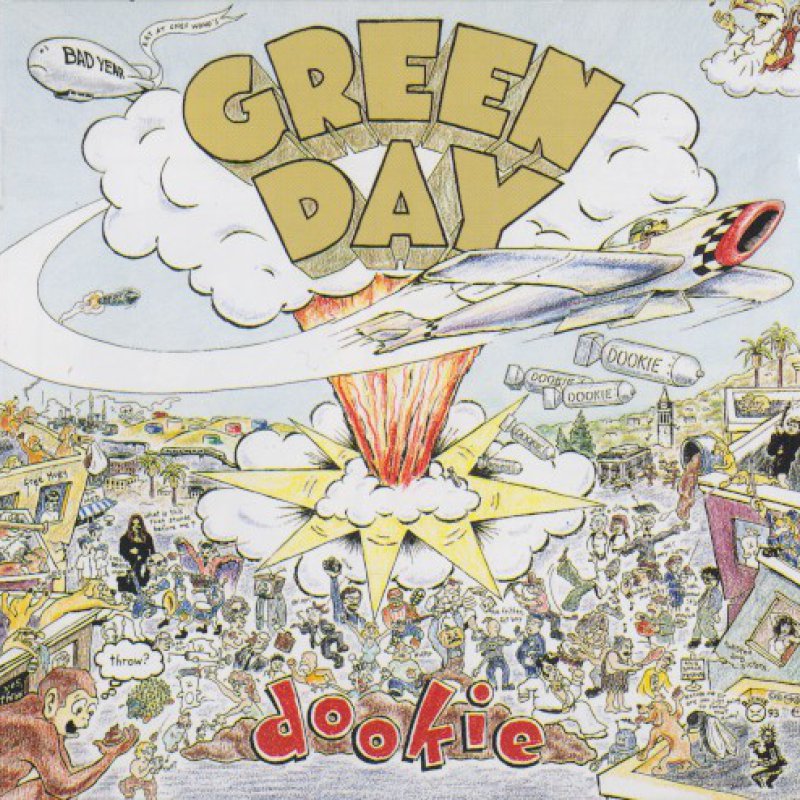
She
Green Day · 1994
The pop gem of the chanson that reached English-speaking markets with the same elegance with which it had reached French-speaking ones. Aznavour proving that the craft of songwriting has no language.
Les Vieux
Jacques Brel · 1963
The elderly who die little by little with no one watching. Brel's compassion for those society would rather not see, in its most restrained and most devastating version.
The full series
France
Chanson, yé-yé, French rap. A tradition of lyrics before melody.
-
CAP 01 you are here
🇫🇷 Ch 01
La Chanson Française: The Art of Singing What Cannot Be Said in Any Other Way (19th century–present)
In French, there is a word — chanson — which simply means "song".
-
CAP 02
🇫🇷 Ch 02
The Cabaret and the Music Hall: The Paris the Whole World Wanted to Be (1880–1960)
At the end of the 19th century, Paris was the freest city in the Western world in a very specific sense: the freedom to show the body, to laugh at power, to mix social classes in t
-
CAP 03
🇫🇷 Ch 03
The Yé-yé and French Pop: The Generation that Reinvented the Song with Ears Turned to America (1960–1980)
On June 22, 1963, a crowd of two hundred thousand people gathered at the Place de la Nation in Paris for an open-air concert organized by the radio station **Europe 1** — the same
-
CAP 04
🇫🇷 Ch 04
French Classical Music: Debussy, Ravel, Satie and the Sound that Changed the World (19th–20th centuries)
When the young **Claude Debussy** was studying at the Paris Conservatory in the 1880s, the professors repeatedly asked him what rule he followed when composing his unconventional h
-
CAP 05
🇫🇷 Ch 05
Jazz in France: Why Paris Was the World Capital of Jazz (1920–1960)
In the late nineteen twenties, a Black musician from New Orleans named **Sidney Bechet** arrived in Paris and encountered something he had never experienced in his home country: th
-
CAP 06
🇫🇷 Ch 06
French Electronic Music: The French Touch that Redefined Club Music (1993–2021)
On February 22, 2021, a short video appeared on Daft Punk's social media. There were no words, no press release. Just the image of two robots — the gold and silver helmets that for
-
🇫🇷 Ch 07
French Hip-Hop and the 21st Century: The Voice of Those the Republic Preferred Not to Hear (1982–Present)
In the summer of 1982, promoter **Bernard Zekri** organized in Paris the first major hip-hop concert held outside the United States. It was called the **New York City Rap Tour** an
You might also like
3 articles picked by editorial similarity


