


🇫🇷 FR · France · Chapter 6 of 7
French Electronic Music: The French Touch that Redefined Club Music (1993–2021)
On February 22, 2021, a short video appeared on Daft Punk's social media. There were no words, no press release. Just the image of two robots — the gold and silver helmets that for twenty-eight years had been the only public faces of the duo — and a scene from the music video for their song "Touch" in which one of the robots disconnects. The other watches. Everything ends.

It was the quietest and most elegant ending possible for the most influential career in European electronic music. And it was, in a certain way, completely coherent with how they had started: in 1993, two high school students from Paris — Thomas Bangalter and Guy-Manuel de Homem-Christo — decided to make electronic music and simultaneously decided that no one would know who they were. The helmets, the robot identity, the absolute mystery: it was all a design from the beginning, a way to make the music matter more than the people making it.
What they built over twenty-eight years was the most consistent and most influential career in the electronic music of their era. And they did it from Paris, in the context of a movement — the French Touch — that proved Europe could export dance music to the English-speaking world with the same conviction with which the English-speaking world exported everything else.
The French Touch: When Paris Reinvented House
House music was born in Chicago in the early eighties — in the South Side clubs where Frankie Knuckles blended seventies disco with eighties synthesizers to create something that had never existed before. Techno was born in Detroit almost simultaneously. By the nineties, both genres had crossed the Atlantic and reached Europe, where the scenes in Manchester, Berlin, and Amsterdam developed them with the specific intensity of their local contexts.
Paris came to the genre from a different angle. What the French producers and DJs who emerged in the mid-nineties — Daft Punk, Cassius, Air, Étienne de Crécy, Motorbass — added to Anglo-Saxon house was a layer of funky warmth and melodic elegance that came directly from the French musical tradition: more color, more groove, more humor, less darkness than German techno and less rawness than Chicago house.
The term French Touch was coined by the British music press to describe that specific sound: house made by French people that inevitably sounded French, even though no one could define exactly what made something sound French. It was the same question critics had asked about Debussy and Piaf: there is something in French musical culture that produces sounds identifiable as its own.
Daft Punk: The Robots Who Made History
Thomas Bangalter and Guy-Manuel de Homem-Christo met at the lycée Carnot in Paris in the early nineties. They first formed a rock band — Darlin' — which received a review in the British music press describing them as "daft punky trash." They took the insult, shortened it, and adopted it as the name of their new electronic project: Daft Punk.
Their first single, "The New Wave" (1994), came out through the Scottish label Soma Quality Recordings. "Da Funk" (1995) began playing in clubs across Europe. And in January 1997 they released Homework — their debut album, recorded in their Parisian apartment they called "Daft House" — which redefined what dance music could be: house blended with seventies funk, disco, techno, and a production that sounded simultaneously classic and completely new.
"Around the World" (1997) — seven minutes of a single repeated bass riff with synthesizer variations, whose video by Michel Gondry featured different characters dancing in concentric circles — reached number one on the dance charts in the United States, Canada, Spain, and the United Kingdom. It was the first time a French electronic music duo had broken into the Anglo-Saxon charts with an identifiably French sound.
Discovery (2001) — their second album — was the definitive leap into the global mainstream: "One More Time," "Digital Love," "Harder, Better, Faster, Stronger" — songs that used samples of seventies funk and disco, vocoders and synthesizers to create something that sounded simultaneously old and futuristic. Kanye West would sample "Harder, Better, Faster, Stronger" for "Stronger" (2007) — the link between French Touch and the most influential American hip-hop of the decade.
In 2006 they performed at Coachella from inside a neon pyramid that became one of the most memorable live performances in the festival's history. They did not show their faces. The helmets were enough.
Random Access Memories (2013) was their masterpiece and most ambitious artistic farewell: an album recorded with live musicians instead of digital samples, featuring Nile Rodgers (guitarist of Chic) on guitar, Pharrell Williams and Julian Casablancas on vocals, and legendary disco producer Giorgio Moroder narrating his own story on one of the tracks. The result was an album that sounded as if the golden age of seventies funk and disco had found the future it deserved.
"Get Lucky" — the single featuring Pharrell and Nile Rodgers — reached number 2 on the Billboard Hot 100 and was the most ubiquitous hit of 2013 in virtually every market in the world. At the 2014 Grammy Awards ceremony, Random Access Memories won Album of the Year — the first time an electronic music artist had won that award — as well as Record of the Year, Best Dance/Electronic Album and Best Pop Duo/Group Performance. Four Grammys in one night.
They split in February 2021. They gave no explanation. The video for "Touch" was their farewell.
Air: The Most Atmospheric French Touch
While Daft Punk was building the central edifice of French Touch, Air — Nicolas Godin and Jean-Benoît Dunckel — built its most contemplative wing. Their debut album, Moon Safari (1998), is one of the most beautiful recordings in nineties electronic music: a downtempo and ambient pop album that combined analogue synthesizers from the seventies with whispered vocal melodies and a lucid-dream atmosphere that sounded like no other record of its time.
"Sexy Boy", "All I Need", "Kelly Watch the Stars": songs that could be played in a club or in an apartment at three in the morning with the same effect. Sophia Coppola chose them for the soundtrack of The Virgin Suicides (1999) — the first collaboration between Air and cinema, which established their aesthetic as the quintessential film music.
Justice and the Second Generation
Gaspard Augé and Xavier de Rosnay — Justice — arrived a decade late but with a completely their own sound: rock and metal filtered through electronic music, with distortion and aggression that the original French Touch had never explored. Their debut album † (Cross, 2007) was one of the most influential electronic records of the second half of the 2000s: "D.A.N.C.E." — with its choir of children's voices and its irresistible groove — was the European summer hit of that year. "DVNO" with its distorted bassline anticipated what electronic music would do in the years that followed.
Justice was also the first act on the label Ed Banger Records — the record label founded by Pedro Winter ("Busy P"), Daft Punk's manager — which became the new center of French Touch for the next generation.
The Legacy
French Touch did not only produce music: it produced a way of understanding electronic music that influenced everything that came after. The idea that electronic music could be warm, melodic, funky — that it did not have to be cold and minimalist like German techno or aggressive like British rave — changed what producers around the world thought was possible to do with synthesizers and computers.
Kanye West would sample Daft Punk. Pharrell Williams would collaborate with them. The Weeknd would record with them. The influence of French Touch on mainstream pop in the 2000s and 2010s is so extensive that it is impossible to measure: it lives in the texture of the sound, in the way that funk and disco from the seventies became a reference point for a generation that had never lived through them.
And at the center of it all, two French robots who never showed their faces.
Editorial note: Thomas Bangalter once explained why Daft Punk refused to be nominated for the Victoires de la musique française — the musical establishment awards of their own country — while accepting American Grammys. The answer was about mystery: "The moment you define who you are and where you come from, the mystery disappears." They wanted to be robots, not French. They wanted to be music, not biography. In that, they were more faithful to the tradition of Debussy — who rejected being called an Impressionist — and of Ravel — who rejected the Légion d'honneur — than to any trend in contemporary pop. French artists have a long history of rejecting the labels others place on them. Daft Punk simply did it wearing robot helmets.
10 · 4 en DoReSol
Top 10 of French Electronic Music
One More Time
Daft Punk · 2000
The most euphoric house of the millennium turn. The vocoder singing "one more time / we're gonna celebrate" as if it were a prayer. The song that brought French Touch to the global mainstream in a definitive way.
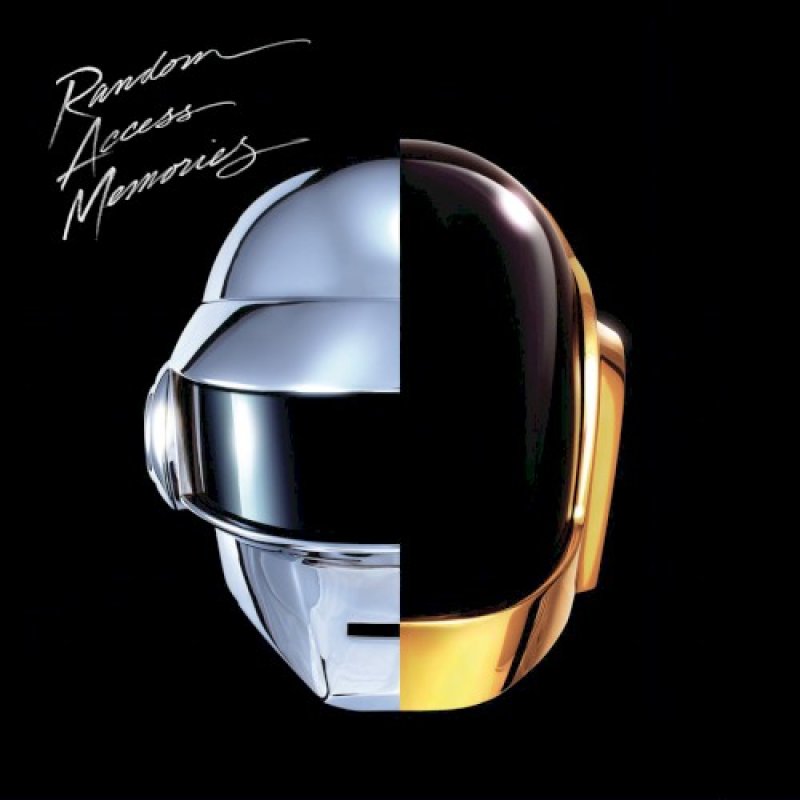
Get Lucky
Daft Punk · 2013
The most ubiquitous hit of 2013. Grammy for Record of the Year. Nile Rodgers playing the funk guitar that redefined the seventies, Pharrell singing about being lucky, the robots producing the bridge between eras.
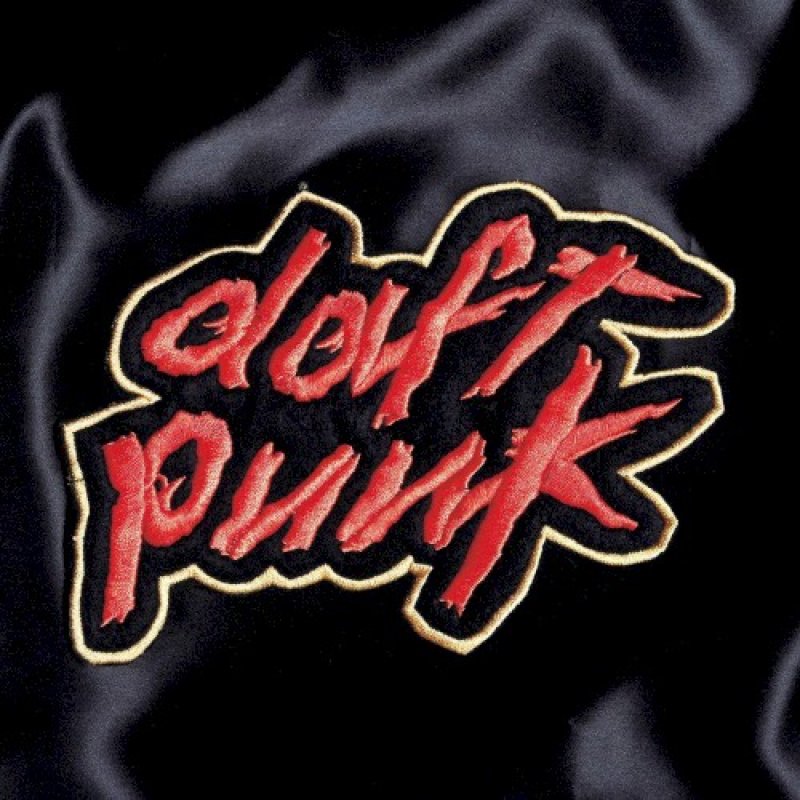
Around the World
Daft Punk · 1997
The number one in four countries that announced to the world that something new was happening in Paris. Seven minutes of a single repeated riff that proves that repetition, well crafted, is art.
Sexy Boy
Air · 1998
French downtempo in its most hypnotic form. The French Touch in its most contemplative and cinematic dimension. The song Sofia Coppola chose for her films.
Harder, Better, Faster, Stronger
Daft Punk · 2001
The robotic manifesto of electronic pop. Sampled by Kanye West in "Stronger" (2007) — the link between the French Touch and American hip-hop.
D.A.N.C.E.
Justice · 2007
The children's choir and the distorted groove of the French Touch's second generation. Justice pushing the Parisian sound toward rock with the conviction of those who know that genre boundaries are mere conventions.
Da Funk
Daft Punk · 1997
Daft Punk's first major hit and the announcement of the French Touch as a musical phenomenon. American funk from the seventies passed through the Parisian filter of the nineties.
All I Need
Air · 1998
The most delicate electronic ballad of French Touch. Beth Hirsch's voice over Air's analog synthesizers: human warmth inside the machine.
Music Sounds Better With You
Stardust · 1998
Thomas Bangalter's ephemeral project with Alan Braxe and Benjamin Diamond. A single, perfect song that defines better than any other what French Touch wanted to be: the pure joy of dancing turned into music.
Digital Love
Daft Punk · 2001
Love in the digital age in its most pop and most direct form. Chic's guitar solo sampled within an electronic production: the history of popular music condensed into four minutes.
Next and final chapter — France Series: French Hip-Hop and the 21st Century — NTM, IAM, MC Solaar, Stromae and the contemporary French scene that speaks of identity, immigration and Europe.
The full series
France
Chanson, yé-yé, French rap. A tradition of lyrics before melody.
-
CAP 01
🇫🇷 Ch 01
La Chanson Française: The Art of Singing What Cannot Be Said in Any Other Way (19th century–present)
In French, there is a word — chanson — which simply means "song".
-
CAP 02
🇫🇷 Ch 02
The Cabaret and the Music Hall: The Paris the Whole World Wanted to Be (1880–1960)
At the end of the 19th century, Paris was the freest city in the Western world in a very specific sense: the freedom to show the body, to laugh at power, to mix social classes in t
-
CAP 03
🇫🇷 Ch 03
The Yé-yé and French Pop: The Generation that Reinvented the Song with Ears Turned to America (1960–1980)
On June 22, 1963, a crowd of two hundred thousand people gathered at the Place de la Nation in Paris for an open-air concert organized by the radio station **Europe 1** — the same
-
CAP 04
🇫🇷 Ch 04
French Classical Music: Debussy, Ravel, Satie and the Sound that Changed the World (19th–20th centuries)
When the young **Claude Debussy** was studying at the Paris Conservatory in the 1880s, the professors repeatedly asked him what rule he followed when composing his unconventional h
-
CAP 05
🇫🇷 Ch 05
Jazz in France: Why Paris Was the World Capital of Jazz (1920–1960)
In the late nineteen twenties, a Black musician from New Orleans named **Sidney Bechet** arrived in Paris and encountered something he had never experienced in his home country: th
-
CAP 06 you are here
🇫🇷 Ch 06
French Electronic Music: The French Touch that Redefined Club Music (1993–2021)
On February 22, 2021, a short video appeared on Daft Punk's social media. There were no words, no press release. Just the image of two robots — the gold and silver helmets that for
-
🇫🇷 Ch 07
French Hip-Hop and the 21st Century: The Voice of Those the Republic Preferred Not to Hear (1982–Present)
In the summer of 1982, promoter **Bernard Zekri** organized in Paris the first major hip-hop concert held outside the United States. It was called the **New York City Rap Tour** an
You might also like
3 articles picked by editorial similarity

French Hip-Hop and the 21st Century: The Voice of Those the Republic Preferred Not to Hear (1982–Present)

Jazz in France: Why Paris Was the World Capital of Jazz (1920–1960)
