


🇫🇷 FR · France · Chapter 4 of 7
French Classical Music: Debussy, Ravel, Satie and the Sound that Changed the World (19th–20th centuries)
When the young **Claude Debussy** was studying at the Paris Conservatory in the 1880s, the professors repeatedly asked him what rule he followed when composing his unconventional harmonies. His answer — "mon plaisir" ("my pleasure") — was an academic scandal and a declaration of artistic independence that heralded everything that was to come.

European classical music at the end of the 19th century was dominated by the German tradition: Wagner with his chromatic grandeur, Brahms with his formal rigor, Beethoven as the absolute reference for structure and development. French conservatories taught that tradition with the reverence of someone studying a dead language. And the younger French composers — Debussy, Ravel, Satie — rebelled against it not with political manifestos but with something more effective: a completely different music that sounded like France, the Mediterranean, the specific light of summer mornings, and the specific weight of silence between the notes.
What they produced in the period from 1888 to 1937 was the deepest transformation that Western music had known since Bach — not as a violent rupture but as a gradual dissolution of the boundaries between what music "should" do and what music could do if it were allowed to follow its own pleasure.
Claude Debussy: The Founder of Musical Impressionism
Achille-Claude Debussy was born on August 22, 1862, in Saint-Germain-en-Laye, on the outskirts of Paris. He was the eldest of five children in a humble family that had no systematic musical training — which meant that Debussy would approach the piano without the biases of someone trained to play in a specific way. By the age of nine, it was evident that he had exceptional talent, and in 1873 he entered the Paris Conservatory.
There he spent eleven years learning the rules of classical tonal harmony — and simultaneously learning to question them with a systematic approach that his teachers found irritating. When asked why he used chords that did not "resolve" in the expected way, he replied that music did not need to resolve: it could suspend in ambiguity, float in color, exist without the urgency of reaching any specific harmonic destination.
He won the Prix de Rome in 1884 — the highest academic honor in French composition — and spent two years in Italy, where he was exposed to the music of the polyphonic Renaissance and non-European music that was beginning to arrive in Paris through world exhibitions. In 1889, at the Paris Universal Exposition, he heard the Javanese gamelan — the percussion and metallophone ensemble from Java — and the experience was revelatory: a music that followed none of the laws of the European tonal system and yet was completely coherent and completely beautiful.
"Prélude à l'après-midi d'un faune" (1894) — Prelude to the Afternoon of a Faun — was his first recognized masterpiece: ten minutes of orchestral music based on Stéphane Mallarmé's poem about a drowsy faun who, in the heat of the afternoon, does not know if the nymphs he remembers were real or a dream. The flute that opens the work — a sinuous melody, without regular pulse, without a clear tonal reference point — is the moment when Western classical music entered the 20th century. The composer Pierre Boulez wrote that modern music began there.
"Clair de lune" — included in the Suite bergamasque (1890–1905) — is Debussy's most famous piano piece and one of the most recognizable in the history of classical music: a melody that rises and falls like moonlight on water, with harmonies that suggest more than they affirm, creating atmosphere rather than narrating events.
"La Mer" (1905) — three symphonic sketches for orchestra — was his most ambitious orchestral work: not a description of the sea but the sound of the sea captured in music, with the changing textures of water under different light conditions. Critics of the time received it with confusion and hostility. Musicians of the 20th century received it as a revelation of what the orchestra could do when freed from the obligation to tell a linear story.
Debussy died on March 25, 1918, in Paris, while the city was being bombarded by German artillery in the final months of World War I. He was fifty-five years old. He had been suffering from rectal cancer since 1909, and the last years of his life were filled with constant pain. He was buried without a public ceremony because the city was at war. The full recognition of his importance came posthumously.
Maurice Ravel: The Watchmaker of the Orchestra
Maurice Ravel was born on March 7, 1875, in Ciboure, in the French Basque Country, the son of a Basque mother and a Swiss-Savoyard mechanical engineer father. This mix of heritages — the Basque Mediterranean sensuality and the Central European technical precision — explains better than any musical analysis why his work has the specific quality it does: a watchmaker's precision within a dreamlike atmosphere.
His father was a friend of Erik Satie, and took young Maurice to see him play in the cabarets of Montmartre — the composer's first exposure to the Parisian avant-garde, before he knew it was avant-garde. At the Paris Conservatory, he studied with Gabriel Fauré — the teacher who most influenced his training — and from his twenties, he built a catalog of works that defined the style of French impressionism in its most architectural and ironic version.
The difference between Debussy and Ravel was the difference between water and crystal: both capture light but in different ways. Debussy dissolved contours, created atmospheres of ambiguity; Ravel defined them with the clarity of someone who knows exactly where they want to place each note. Stravinsky compared them by saying that Debussy was impressionist and Ravel was classical — although both terms are insufficient for either.
His most well-known works illustrate this internal contrast: "Pavane pour une infante défunte" (1899) — written for a hypothetical princess of Velázquez's court — is melancholy contained with almost mathematical precision. "Daphnis et Chloé" (1912) — a ballet commissioned by Sergei Diaghilev for the Ballets Russes, considered by Stravinsky "one of the most beautiful products of all French music" — is Ravel's most sumptuous orchestration: ancient Greece evoked with an instrumental color richness that no French orchestra had achieved before.
"La Valse" (1920) — written in memory of Debussy, who died two years earlier — is the Viennese waltz taken to the limit of its own logic until self-destruction: a dance that starts elegantly and ends frantically, which Ravel himself described as the world's vertigo before the war.
And then there's the Boléro (1928) — which began as a private joke, a technical demonstration that he could write sixteen minutes of music with a single theme and a single rhythm, gradually increasing the orchestral density to the climax. The Russian dancer Ida Rubinstein commissioned a ballet, and he delivered this. The audience adored it. Ravel found it inferior to the rest of his work. "It's a piece without music," he once said. It is the most performed work in France — in the nineties, five of the ten most exported French works were by Ravel, and the Boléro remained in the Top 3.
In his later years, Ravel developed a degenerative neurological disease that prevented him from writing, although he continued to hear music in his head. Before he died, he said: "I have so many things to say. I still have so many things to say." He died in 1937 after a failed brain surgery. He was sixty-two years old.
Erik Satie: The Eccentric Who Anticipated the 21st Century
Erik Alfred Leslie Satie was born on May 17, 1866, in Honfleur, Normandy, to a French father and a Scottish mother. His personal life was as unique as his music: he lived for twenty-seven years in the same small apartment in Arcueil, a suburb of Paris, never letting anyone in. When he died in 1925, his friends entered for the first time and found peeling walls, furniture covered in dust and cobwebs, a collection of a hundred umbrellas, the green velvet suits he had worn for the last ten years, scores that no one had seen.
His teachers at the Paris Conservatory described him as "lazy" and "incompetent." Satie left the institution, settled in the cabarets of Montmartre, and began composing in ways no one had tried before.
**The Gymnopédies (1888) — three piano pieces of radical simplicity — were his first complete artistic statement: same accompaniment structure in all three, same slowness, modal harmonies that do not resolve to any established tonic, melodies that float without seeking a destination. His contemporaries found them strange. Debussy loved them and orchestrated them. In the 20th century, they became the precursor of minimalism and ambient musicJohn Cage said Satie was the most important composer of the 20th century. Philip Glass, Arvo Pärt, Brian Eno**: all owe a direct debt to him.
Satie invented the concept of "musique d'ameublement" — "furniture music" or background music: compositions designed not to be listened to attentively but to accompany life without interrupting it. What is now called ambient music — the kind that plays in airports, spas, elevators — has in Satie its conscious founder, although he conceived it as an artistic provocation and not as a consumer product.
His annotations on scores rejected conventional technical vocabulary (allegro, fortissimo, andante) to replace it with instructions like "light as an egg" or "open like a rose" or "do not eat during the interval." It was humor, but it was also a philosophical statement: music does not need the apparatus of academic seriousness to be serious.
The Group of Six and the Legacy
The generation that followed Debussy, Ravel, and Satie — the Groupe des Six, formed in 1920 around Arthur Honegger, Darius Milhaud, Francis Poulenc, Germaine Tailleferre, Louis Durey, and Georges Auric — built on those foundations a French classical pop that combined the avant-garde with cabaret music, jazz, and chanson. Poulenc — the most brilliant of the group — composed songs for voice and piano that are the perfect synthesis between the tradition of the French mélodie (the French equivalent of the German Lied) and the harmonic modernity of the 20th century.
And behind all of them, as a foundational figure that influenced that entire generation, was the organist and composer César Franck — the Belgian who taught at the Paris Conservatory for decades and trained a whole generation of French composers in the synthesis between Bachian counterpoint and Wagnerian chromatic harmony — and Camille Saint-Saëns — the most prolific and technically gifted composer of 19th-century France, whose Danse Macabre and Carnival of the Animals are pieces that define what French orchestral music can do when technique and imagination meet without obstacles.
Editorial Note: Ravel rejected the Legion of Honor in 1920 — the highest honor of the French State — because he believed that artists should not accept state honors. Erik Satie joked: "Ravel rejects the Legion of Honor, but all his music accepts it." It was the fairest possible criticism: Ravel was a master of perfect finish, of the most cared-for surface, of the most meticulous craftsmanship — all that the Legion of Honor rewards in other fields. The paradox of rejecting the honor while building the most honorable work of his generation is exactly the paradox that makes Ravel interesting.
10 · 1 en DoReSol
Top 10 of French Classical Music
Prélude à l'après-midi d'un faune
Debussy · 1894
The starting point of modern music. Ten minutes of flute and orchestra that Pierre Boulez pointed out as the beginning of the 20th century in music. Western classical music entering its own modernity.
Boléro
Ravel · 1928
The technical demonstration that became the greatest popular success of French classical music. One theme, one rhythm, sixteen minutes. Ravel hated it. The world adores it. The most performed work in France decades after his death.
Gymnopédies
Satie · 1888
The precursor of minimalism and ambient music. Three piano pieces of radical simplicity that anticipated by decades what Philip Glass, Arvo Pärt, and Brian Eno would do in the 20th century.
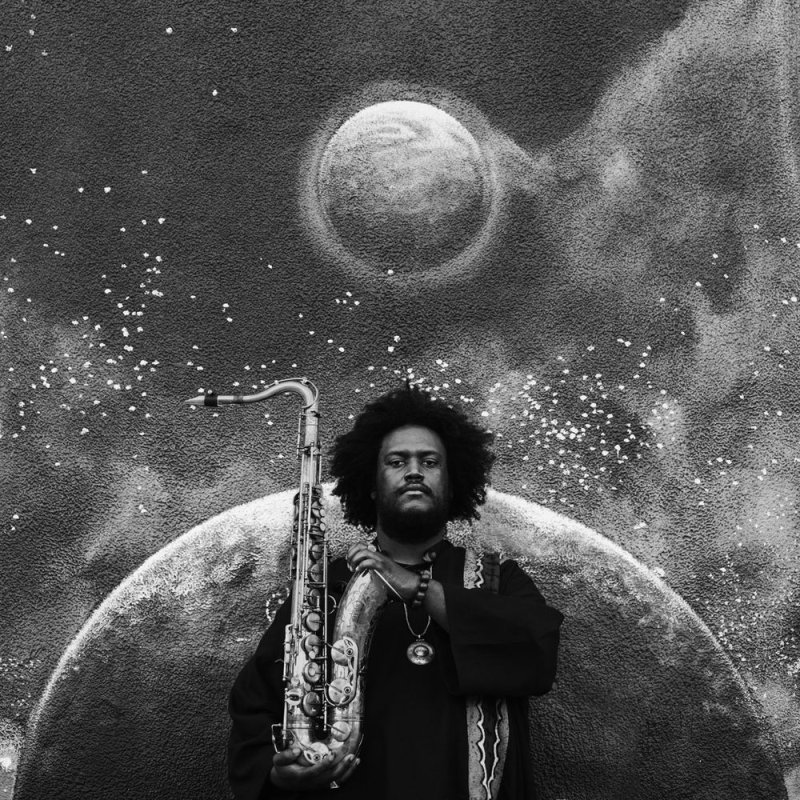
Clair de Lune
Kamasi Washington · 2015
The most recognized French piano piece in the world. Moonlight turned into sound with harmonies that suggest without affirming. The most accessible and perfect Debussy at the same time.
La Mer
Debussy · 1905
Three symphonic sketches of the sea that taught the orchestra to capture textures instead of narrating stories. Nature turned into music with a precision that impressionist painters had attempted with light and color.
Daphnis et Chloé
Ravel · 1912
Ancient Greece evoked with the most sumptuous orchestration of French music. Stravinsky: "one of the most beautiful products of all French music." The Ballets Russes of Diaghilev in their splendor.
La Valse
Ravel · 1920
The Viennese waltz taken to self-destruction. Written in memory of Debussy. Elegance that turns into vertigo, order that turns into chaos: the perfect metaphor for the world after World War I.
Pelléas et Mélisande
Debussy · 1902
Debussy's only complete opera and one of the milestones of 20th-century opera. Drama without explicit dramatism, emotion without emphasis, love and death whispered instead of shouted.
Pavane pour une infante défunte
Ravel · 1899
The most elegant melancholy of French music. A court dance for an imaginary princess by Velázquez, written with the watchmaker's precision that defines all of Ravel.
Gnossiennes
Satie · 1890
The pieces that followed the Gymnopédies and were even more radical: no time signatures, no bar lines, with impossible instructions instead of technical terms. The future of avant-garde music in 1890.
The full series
France
Chanson, yé-yé, French rap. A tradition of lyrics before melody.
-
CAP 01
🇫🇷 Ch 01
La Chanson Française: The Art of Singing What Cannot Be Said in Any Other Way (19th century–present)
In French, there is a word — chanson — which simply means "song".
-
CAP 02
🇫🇷 Ch 02
The Cabaret and the Music Hall: The Paris the Whole World Wanted to Be (1880–1960)
At the end of the 19th century, Paris was the freest city in the Western world in a very specific sense: the freedom to show the body, to laugh at power, to mix social classes in t
-
CAP 03
🇫🇷 Ch 03
The Yé-yé and French Pop: The Generation that Reinvented the Song with Ears Turned to America (1960–1980)
On June 22, 1963, a crowd of two hundred thousand people gathered at the Place de la Nation in Paris for an open-air concert organized by the radio station **Europe 1** — the same
-
CAP 04 you are here
🇫🇷 Ch 04
French Classical Music: Debussy, Ravel, Satie and the Sound that Changed the World (19th–20th centuries)
When the young **Claude Debussy** was studying at the Paris Conservatory in the 1880s, the professors repeatedly asked him what rule he followed when composing his unconventional h
-
CAP 05
🇫🇷 Ch 05
Jazz in France: Why Paris Was the World Capital of Jazz (1920–1960)
In the late nineteen twenties, a Black musician from New Orleans named **Sidney Bechet** arrived in Paris and encountered something he had never experienced in his home country: th
-
CAP 06
🇫🇷 Ch 06
French Electronic Music: The French Touch that Redefined Club Music (1993–2021)
On February 22, 2021, a short video appeared on Daft Punk's social media. There were no words, no press release. Just the image of two robots — the gold and silver helmets that for
-
🇫🇷 Ch 07
French Hip-Hop and the 21st Century: The Voice of Those the Republic Preferred Not to Hear (1982–Present)
In the summer of 1982, promoter **Bernard Zekri** organized in Paris the first major hip-hop concert held outside the United States. It was called the **New York City Rap Tour** an
You might also like
3 articles picked by editorial similarity


