


🇺🇸 US · United States · Chapter 2 of 8
The Jazz: The Music that Invented Freedom as a Technique (1900–1970)
New Orleans at the end of the 19th century was the most musically complex city in North America: an international port where French, Spanish, African, Caribbean and Anglo-Saxon communities coexisted; a city with a unique street and funeral music tradition on the continent; the only place in the slave South where slaves had a regular legal space to meet, play and dance — **Congo Square**, the square where every Sunday African slaves would reproduce the rhythms and dances of their ancestral traditions.

From that extraordinary confluence was born jazz: a fusion of different musical styles such as blues, ragtime and African music, whose music was characterized by improvisation and creativity.
But jazz was not just a mixture of pre-existing ingredients. It was the invention of a completely new principle in Western music: improvisation as major art. Before jazz, European classical music considered improvisation a secondary exercise — something performers did in practice, not in the concert. Jazz reversed that hierarchy: the score was the starting point, not the destination. What mattered was what the musician decided to do with the material at the moment he played it, in front of the audience, without a safety net.
That reversal — from faithful interpretation to real-time creation — was one of the most radical transformations in the history of Western music, and it came from the black musicians of New Orleans who had never had access to the European conservatories where one learned not to improvise.
The Origins: Buddy Bolden and the First Jazz
The oldest name associated with jazz as an identifiable genre is that of the cornetist Buddy Bolden — born in New Orleans in 1877, active in the early years of the 20th century, institutionalized in a psychiatric hospital in 1907 where he died in 1931 without ever recording a single disc. Bolden is the origin of jazz in the sense that Robert Johnson is the origin of the blues: a seminal figure known only through the testimonies of those who heard him and through the music of those who learned from him.
What the witnesses described was a way of playing that blended the rhythms of New Orleans parade bands with the harmonies of the blues and the freedom of improvisation. The sound of Bolden, according to those who heard him, came from several neighborhoods away — his cornet was so powerful that it could be heard throughout the entire city.
Jelly Roll Morton — pianist, composer and the first to explicitly claim to have "invented" jazz, with the characteristic modesty that accompanied him all his life — was the first great jazz composer: someone who took the improvisational vocabulary of the genre and applied it to structured pieces with the sophistication of someone who had studied music formally. His recordings of the 1920s are the first complete documents of New Orleans jazz.
Louis Armstrong: The Man Who Invented Modern Jazz
Louis Armstrong was born on August 4, 1901, in the Storyville neighborhood of New Orleans — the city's entertainment district, a mix of clubs, brothels, and music halls where early jazz found its natural audience. His childhood was poor and his early teenage years included an arrest for firing a gun into the air on New Year's Eve, which led him to the New Orleans Colored Boys' Home, where he discovered music.
That accidental education in the home for minors shaped him. He left as a trumpeter, joined the jazz bands of the neighborhood, and by the early 1920s he arrived in Chicago where his mentor King Oliver had called him to join his Creole Jazz Band.
What Armstrong did in the years that followed was to redefine the possibilities of the trumpet — and of American popular music in general. His Hot Fives and Hot Sevens — recordings from 1925 to 1928 with small groups in Chicago — mark the moment when jazz stopped being New Orleans collective music and became solo music: the moment when the individual performer, with his unique voice and improvisational ability, became the protagonist of music.
Armstrong didn't just play: he sang. And his way of singing — with that rough and warm voice that made words sound like instruments — invented the scat: vocal improvisation with meaningless syllables that turns the human voice into the most flexible instrument of jazz. The legend says he started improvising in scat during a recording session when he accidentally dropped the lyric sheet.
Duke Ellington: The Composer Who Never Stopped
Edward Kennedy "Duke" Ellington was the other foundational figure of classic jazz — but from a completely different perspective than Armstrong. Where Armstrong was the supreme improviser, the soloist who created in the moment, Ellington was the composer and director who created for his orchestra with the vision of a musical architect.
Ellington arrived in New York in the 1920s and built at the Cotton Club of Harlem — the legendary club of the swing era where he performed for white audiences who went to Harlem to hear black jazz — the laboratory where his orchestra became the most sophisticated instrument of jazz.
His output was immeasurable: more than a thousand compositions in six decades of career, from the popular songs of the 1930s to the concert suites of the 1960s. "Mood Indigo", "It Don't Mean a Thing (If It Ain't Got That Swing)", "Sophisticated Lady": songs that define the sound of classic jazz with an elegance that no other composer of the genre matched.
The Swing and the Big Band Era
The 1930s and 1940s were the era of swing — the moment when jazz became mass popular music in the United States. The big bands of Benny Goodman, Count Basie, Glenn Miller and Tommy Dorsey filled dance halls across the country. In the 1930s, jazz crossed the underground barrier and began to be recognized as a musical genre within the upper classes of the United States.
Ella Fitzgerald and Billie Holiday were the two voices that defined vocal jazz of the era: Fitzgerald with her technical perfection and overflowing joy — capable of singing with the speed and precision of any instrumentalist of her generation — and Holiday with her endless vulnerability, her ability to turn any song into a personal confession that made the listener feel as if they were hearing something private and irreplaceable.
"Strange Fruit" (1939) by Billie Holiday — the song about the lynchings in the American south, with the bodies hanging from the trees like "strange fruit" — is one of the most devastating documents that American popular music has produced: a racial protest song that asks for nothing, that demands nothing, that simply describes what happens with a coldness that makes the horror completely unbearable.
Bebop: The Revolution
Towards the end of the 1940s, a generation of young jazz musicians decided that swing was too commercial, too accessible, too oriented toward entertainment. What they wanted was music that challenged the listener, that couldn't be easily danced to, that demanded total attention.
The bebop emerged in Harlem clubs — especially in the Minton's Playhouse — in the early morning jam sessions where Charlie "Bird" Parker, Dizzy Gillespie and Thelonious Monk developed a completely new vocabulary: fast tempos, advanced harmonic progressions, complex improvisation that took jazz away from mass entertainment and turned it into a more introspective art.
Charlie Parker — "Bird" — was the central genius of bebop: a saxophonist who could improvise with a speed and harmonic complexity that his contemporaries found literally unmatchable. His life was also a document of the contradictions of American jazz: an artist of exceptional genius destroyed by heroin at the age of thirty-four, in a country that admired his music while denying him the basic rights that the Jim Crow laws continued to restrict.
Miles Davis: The Man Who Re-invented Jazz Seven Times
Miles Davis was the most important artist in the history of jazz after Armstrong — not because one period of his work was superior to his contemporaries, but because he completely reinvented himself at least seven times over fifty years of his career, taking jazz to territories that had never been explored before in each new phase.
He started in bebop, as a sideman with Charlie Parker. He then led the sessions that produced Birth of the Cool (1957) — the manifesto of cool jazz, more spacious, more melancholic, with fewer notes and more silence than the frenetic bebop. Davis introduces a new sense of space to this framework. He reduces the number of notes, seeks sounds in mid and lower registers. And he turns the score into a map: there are no constraints, only outlines, directions and images.
Kind of Blue (1959) is the best-selling jazz album of all time and the most influential: the introduction of modal jazz — where improvisation is organized around scales rather than chord progressions — that opened jazz to a new freedom without falling into the chaos of free jazz.
In 1970, with Bitches Brew, Davis crossed jazz with electric rock and funk to create fusion jazz — his last of great inventions, received with scandal by purists and with fascination by everyone else.
John Coltrane: Spirituality as Technique
John Coltrane was the saxophonist who took jazz toward spirituality and toward the limits of what improvisation can contain. His album A Love Supreme (1965) — a four-part suite dedicated to his spiritual faith — is the most complete document of what jazz can be when technique and vision work without restrictions: thirty-three minutes of music that simultaneously sounds like prayer, like protest, and like exploration of the unknown.
His "sheets of sound" — the "sound sheets" that critic Ira Gitler described to name Coltrane's technique of chaining cascades of notes with the speed of someone who needs to say more than time allows — are the most extreme point to which jazz reached before free jazz completely dissolved structures.
Editor's note: Miles Davis recorded Kind of Blue in two sessions, in February and April of 1959. He gave the musicians rough sketches of scales that morning — not full scores, not complete arrangements, just directional indications — and recorded them improvising over them. Most of the tracks were recorded in one take. The best-selling jazz album of all time, with over five million copies sold, was basically recorded in one afternoon. That's what happens when you bring together the best musicians in the world, give them exact space to move, and trust that they know what they're doing. The lesson isn't about jazz. It's about how creativity works when it's not hindered.
10 · 3 en DoReSol
Top 10 of American Jazz
Kind of Blue (album)
Miles Davis · 1959
The best-selling jazz album in history. The introduction of modal jazz in two recording sessions. The map that all jazz musicians still use as a reference sixty years later.
A Love Supreme (album)
John Coltrane · 1965
Spirituality turned into technique. Thirty-three minutes of prayer, protest and unlimited exploration. The peak point to which jazz reached as a total experience.
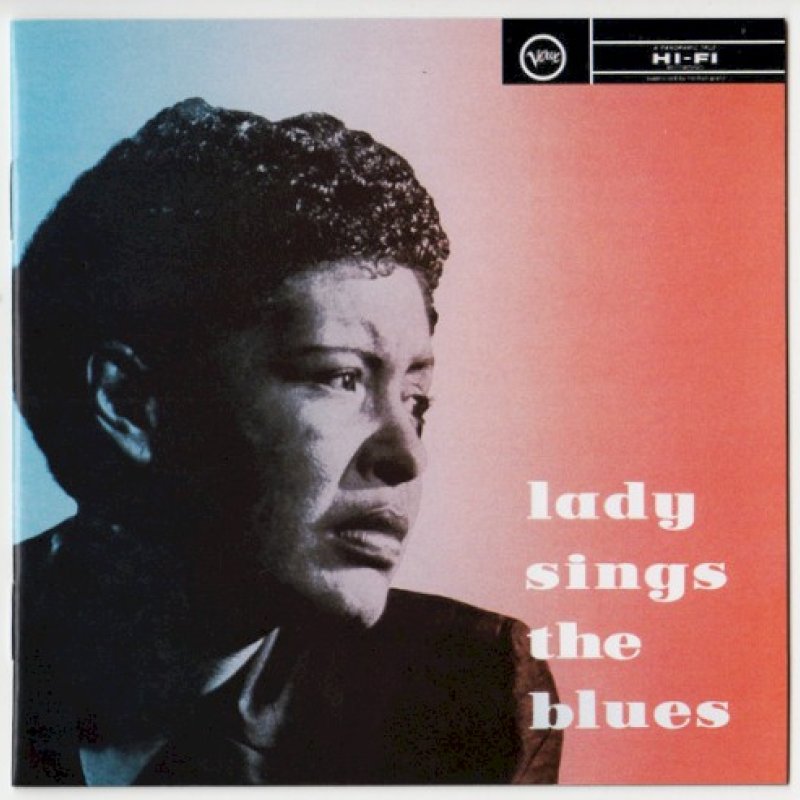
Strange Fruit
Billie Holiday · 1939
The most devastating document of American racial violence in the form of a song. Holiday describing the lynchings of the South with a coldness that makes the horror completely unbearable.
West End Blues
Louis Armstrong · 1928
The recording that proved Armstrong was the most extraordinary musician of his generation. The introductory trumpet cadence that no musician of the time could play. Modern jazz being born in real time.
Ko-Ko
Charlie Parker · 1945
The bebop at its most radical. Parker improvising at speeds that his contemporaries found unmatchable. The jazz declaring its independence from mass entertainment.
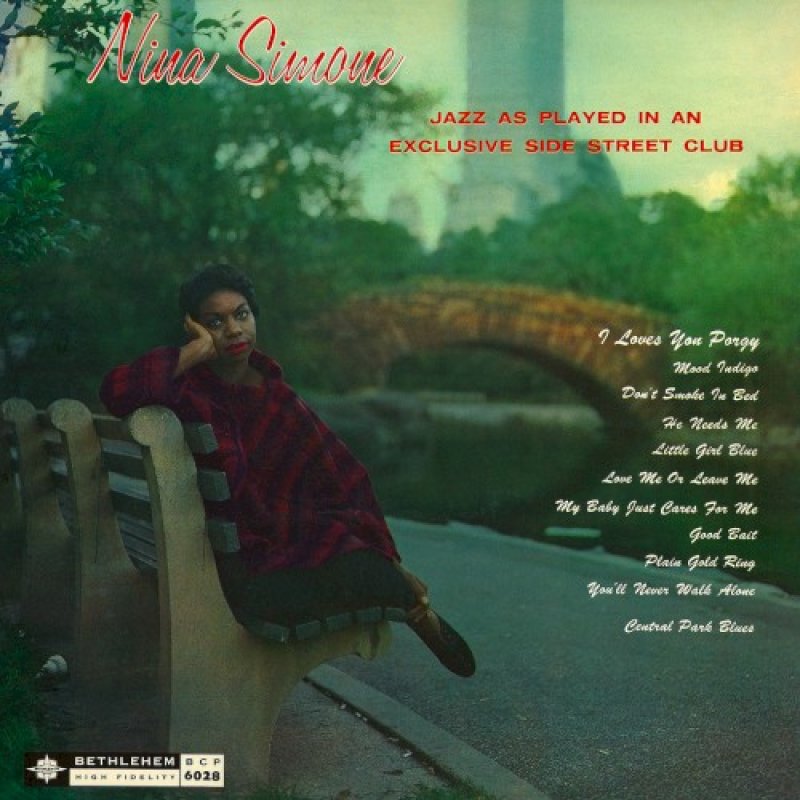
Mood Indigo
Nina Simone · 1958
The elegance of orchestral jazz in its most perfect form. Ellington building with his orchestra what Armstrong built with his trumpet: something completely unique and entirely his own.
Bitches Brew (album)
Miles Davis · 1970
The seventh reinvention of Davis: jazz fused with electric rock and funk. The scandal that became a classic. The opening of jazz towards electronics that all subsequent music would use.
What a Wonderful World
Louis Armstrong · 1967
The late Armstrong in his most accessible and universally loved version. The raspy and warm voice of the man who invented modern jazz, singing the beauty of the world with the conviction of someone who has lived long enough to have the right to say so.
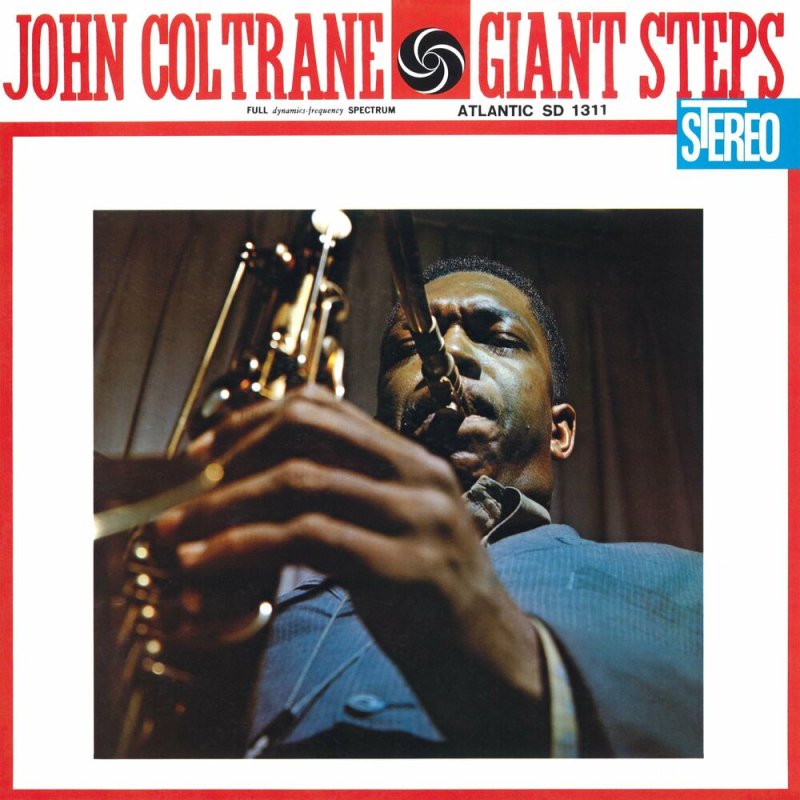
Giant Steps
John Coltrane · 1960
The harmonic revolution of jazz. The chord progressions that Coltrane invented — the "Coltrane changes" — redefined what was possible in improvisation and remain the most technically demanding challenge of standard jazz.
Straight, No Chaser
Thelonious Monk · 1951
The most eccentric pianist of bebop in his most characteristic composition. Monk building melodies with impossible spaces, with notes that are not where they should be, with an internal logic that sounds like an error until you realize it's the truth.
The full series
United States
Blues, jazz, country, soul, rock, hip-hop. The genre factory of the 20th century.
-
CAP 01
🇺🇸 Ch 01
The Blues: The Music That Made Everything Else Possible (1865–1960)
In 1865, the Thirteenth Amendment to the United States Constitution abolished
-
CAP 02 you are here
🇺🇸 Ch 02
The Jazz: The Music that Invented Freedom as a Technique (1900–1970)
New Orleans at the end of the 19th century was the most musically complex city in North America: an international port where French, Spanish, African, Caribbean and Anglo-Saxon com
-
CAP 03 Coming soon
🇺🇸 Ch 03
El Country y el Folk: La Voz de la América que Nashville Prefiere Olvidar (1920–1970)
Antes de que existiera Nashville, antes de que existieran las botas de cuero con punta y los sombreros de vaquero como imagen comercial, antes de que el country fuera una industria
-
CAP 04 Coming soon
🇺🇸 Ch 04
El Rock and Roll: La Noche en que América Cambió de Ritmo (1951–1960)
En el verano de 1954, un joven de diecinueve años de Tupelo, Mississippi entró al estudio Sun Records en Memphis para grabar una canción de cumpleaños para su madre. El productor *
-
CAP 05 Coming soon
🇺🇸 Ch 05
El Soul y el R&B: La Música que le Dio Nombre a la Dignidad (1954–1975)
El gospel dice: "Dios me salvará." El soul dice: "Alguien me amará." La diferencia parece pequeña. En el contexto de la América negra de los años cincuenta y sesenta — donde la seg
-
CAP 06 Coming soon
🇺🇸 Ch 06
El Rock Clásico y el Punk: De las Arenas al Garaje (1966–1994)
El rock and roll de Chuck Berry y Elvis era música de tres minutos, grabada con cuatro músicos en un estudio pequeño, diseñada para sonar en las radios de los coches y en las jukeb
-
🇺🇸 Ch 07
El Hip-Hop: La Música que Nació en una Fiesta y Cambió el Mundo (1973–hoy)
El Bronx de 1973 era una de las zonas más devastadas de América: bloques de apartamentos en llamas — los propietarios los quemaban para cobrar el seguro —, pandillas que controlaba
-
🇺🇸 Ch 08
El Pop y el Siglo XXI: La Fábrica de Iconos y la Era del Streaming (1982–hoy)
En 1983, la cadena de televisión MTV tenía dos años de existencia y todavía debatía si debía programar videos de artistas negros — una política tácitamente discriminatoria que CBS
You might also like
3 articles picked by editorial similarity


