


🇵🇾 PY · Paraguay · Chapter 6 of 6
The Paraguayan Contemporary Music: The Generation that Mixes Everything (2000–present)
There is a before and an after in the history of contemporary Paraguayan popular music, and that turning point is not a record or an artist: it's the internet.

Before streaming platforms and social media, the Paraguayan music scene existed to a large extent on its own: playing in local circuits, distributing cassettes and CDs hand to hand, relying on the few radios that gave them space, and looking to Argentina or Brazil to find out what others were doing. The question that Paraguayan musicians asked themselves since the 1980s was always the same: How to reach an audience that doesn't even know you exist?
The answer came with Spotify, YouTube and social media. Suddenly, a band from Asunción could accumulate plays in Mexico, Spain and Ireland without ever setting foot in those countries. It could build a Latin American audience from the red earth of the Cordillera Department or from the neighborhoods of a city that the rest of the continent still had difficulty locating on the map.
The generation of Paraguayan artists that flourished in the 2010s and 2020s was the first to have equal access to the global market. And what they did with it was extraordinary.
Kchiporros: the band that put Paraguay on the map of Latin American pop
Kchiporros was born in 2006 in a neighborhood of Asunción. From the beginning it was hard to classify: their first EP mixed ska, cumbia, reggae, pop and rock with a naturalness that confused those who expected to find a clear identity and found something that didn't fit into any established category.
They described themselves without hesitation: "we are a weird creature." In Paraguay of 2006, that was still a warning. In the Latin American scene of the teens, it became their advantage.
His first album Guaraní Cool (2007) — produced by Martín "La Moska" Lorenzo and Mariano Franceschelli, members of the Argentine band Los Auténticos Decadentes, who had known them at festivals and embraced them enthusiastically — immediately put them on the regional radar. The name of the album wasn't a metaphor: it was an identity statement. The word guaraní — the language, the tradition, the red earth of deep Paraguay — could be cool. It could be the title of a ska pop album and no one had to apologize for that.
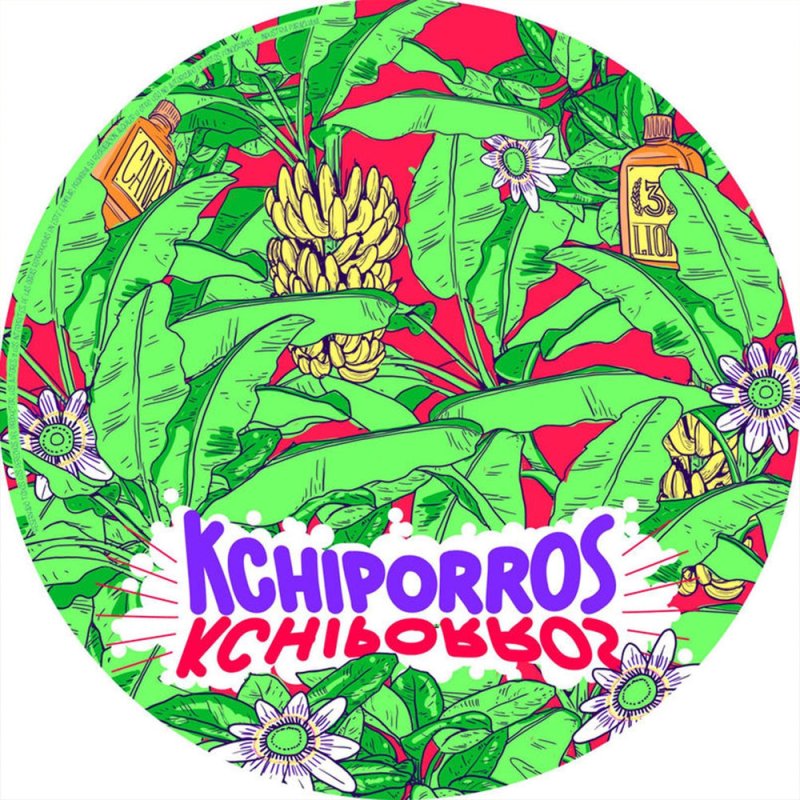
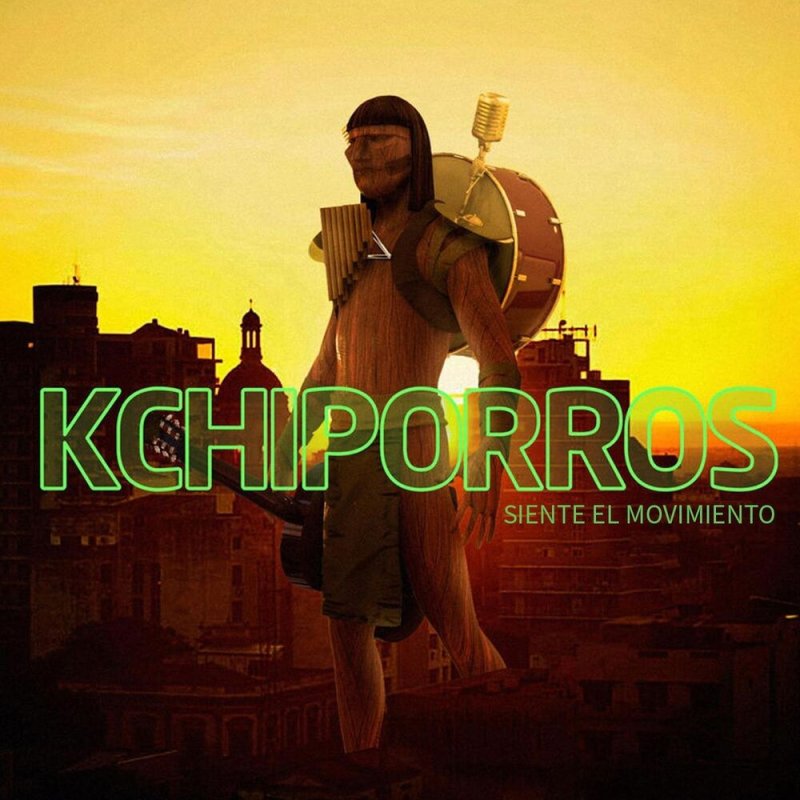
In 2008 they toured Spain — Bilbao, Barcelona, Madrid — representing Paraguay at the Festival Latino Música de las Américas, where they won the Revelation Group award. In 2010 they released Kchiporros 3D. In 2012, Sr. Pombero — the pombero is the spirit of the Guarani folklore, the being of the forest that takes care of the animals and scares disobedient children — and the album made them a massive phenomenon within Paraguay. In 2014, Siente el Movimiento established them as the most popular band in the country at that time.
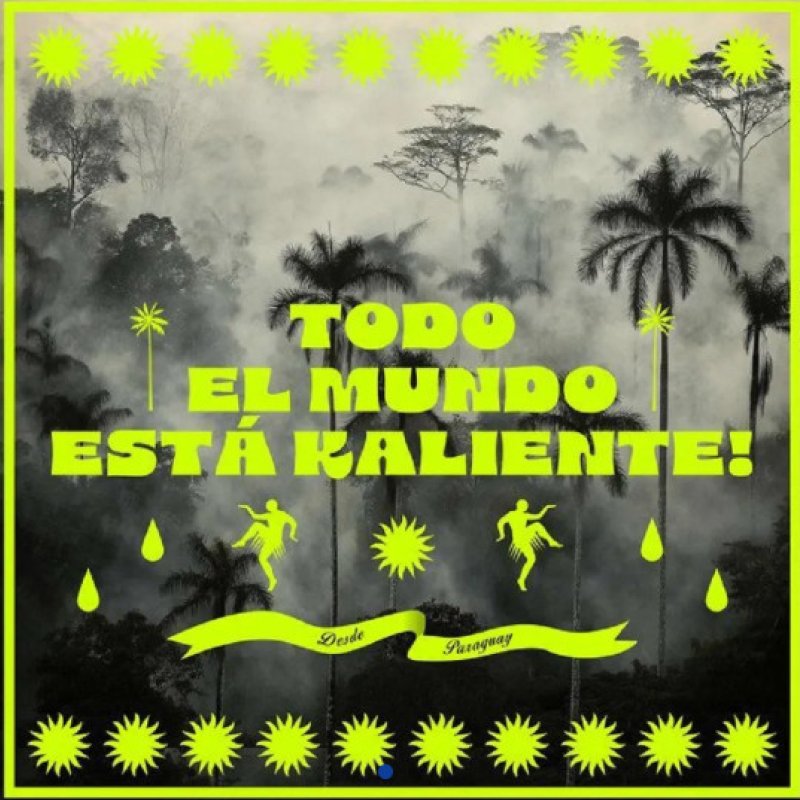
The seventh albumTodo el Mundo Está Kaliente! (2025) — was produced by Toy Selectah, the Mexican DJ and producer who worked with Calle 13 and J Balvin, and mixed bolero, glitch and Latin pop into a proposal that remained unmistakably Paraguayan although it sounded like anything but what the world expected from Paraguay.
In twenty years of career, Kchiporros toured Latin America and Europe, recorded in Buenos Aires with Los Auténticos Decadentes and in Mexico with top regional producers, and proved that a band from a neighborhood in Asunción could build an international career without stopping being exactly what it had always been: a weirdo that didn't ask anyone's permission to mix everything.
Salamandra: the rock that was born in an abandoned train station
In August 2000, in the old railway station of Ypacaraí — the same lake of the guaranias, thirty kilometers from Asunción — a group of young people started rehearsing in the abandoned building. The salamanders that lived among the ruins gave them their name.
Salamandra built from that unlikely place a career of more than twenty-five years that made them one of the most solid rock bands in Paraguay. Their music blends modern rock with elements of Paraguayan folk — the rhythm of the polka, the lyricism of the guarania, the melancholy that the Guarani call ñe'ã — with lyrics that speak of love, loss and introspection with the directness that Paraguayan popular music has always had.
His first demo, Cianuro (2004), accidentally became the first pirate rock classic of Paraguayan music: someone included it in an MP3 compilation that circulated throughout the scene with the five songs of Salamandra repeated twice by mistake — making the band appear with ten songs when they only had five. This accidental circulation made them known before they could plan it.
The first official album, Todo en tu Cabeza (2010), formally established them. El Inconsciente Roba Discos (2017) — produced by Tito Fargo, who had worked with No Te Va Gustar, Divididos and Héroes del Silencio, with mixing by Walter Chacón of Los Fabulosos Cadillacs — took them to the regional level. They have been support acts for Guns N' Roses, Garbage and Charly García. They have performed at the Festival del Lago Ypacaraí — the lake that inspired the most internationally known guarana — closing a geographical and symbolic circle that no other Paraguayan musical act could trace.
Ypacaraí is today rightly called the City of Rock Pynandí — rock barefoot, in Guarani: the rock that walks on the earth without shoes.
Urban music in Guarani: the most unlikely jump
The most surprising story of contemporary Paraguayan music is not in rock nor in pop. It is in what happened when Guarani found trap and hip-hop.
Guarani is a language of exceptional musicality: its words are long, sonorous, full of vowels that chain together in a way that makes them naturally rhythmic. Paraguayan rap artists and trap singers who started working in Guarani from 2010 discovered that the language adapted to hip-hop with a ease that Spanish — more angular, more fast — did not always have.
Tekovete — whose name in guaraní means "the one who lives truly" — is the most representative figure of this movement: an artist who raps in guaraní over trap and cumbia beats, blending the two languages of the country in the same verse with the naturalness of someone who grew up bilingual without having chosen to be so. His album Cumbia Abducida is the most complete document of what happens when the oldest language of Paraguay meets the newest genres of the planet.
Guerrillasoul and Koa Ha'e ("themselves" in guaraní) represent another branch of the same movement: rap in guaraní with contemporary production, lyrics that speak of identity, of what it means to be Paraguayan in the 21st century, of the tension between modernity and tradition in a country that has one foot in each of those worlds.
Los Propya Awards: the industry built from within
In 2021, the first formal recognition system for contemporary national music was born in Paraguay: the Propya Awards — a name that combines propya, from Guarani and informal Paraguayan Spanish, meaning "own" — organized by the Paraguayan Phonographic Producers Management Society (SGP), the only entity in the country accredited by the International Federation of the Phonographic Industry (IFPI) to issue streaming certifications.
The awards — called Arasunu, which in Guarani means "the sound of thunder" — have recognized since 2021 the best albums, songs, music videos and artists of national music in all its categories: rock, pop, guarania, hip-hop, reggaetón, balada, electronic. The 2025 ceremony had three simultaneous stages, polkas and guaranias alongside reggaetón and trap, a DJ mixing an electronic version of "Mis Noches sin Ti" by Demetrio Ortiz along with the country's youngest urban artists.
In 2024 the band Los Verduleros became the first Paraguayan artists to achieve the Platinum certification from IFPI for streaming reproductions. The data seems technical but is historic: it means that the Paraguayan music industry already has sufficient size to produce artists with metrics comparable to international standards.
The new generation: the mix as a statement
What defines Paraguayan contemporary music of the year 2020 is not a genre but an attitude: the freedom to mix without excuses.
Guarania coexists with trap. Polca coexists with electronic pop. Guarani coexists with Spanish and sometimes with English in the same verse. Luigi Manzoni — winner of the Arasunu for Album of the Year at the Propya Awards 2025 — mixes pop, folk and ballad with Guarani references that his twenty-year-old fans listen to as something completely natural. Jazmín del Paraguay builds pop with folk roots that circulates as comfortably on Spotify as on radios in the interior. Próceres de Mayo — with guitarist and composer Omar Ocampos — bring progressive pop rock to stages in Miami and New York.
None of them feel that they have to choose between being Paraguayan and being contemporary. That tension — which defined previous generations, which forced sixties musicians to imitate Anglo-rock to be taken seriously and seventies musicians to hide under the dictatorship — disappeared.
The full arc of the series
This series began with the harp that arrived in the suitcases of the Jesuits and ended with a rapper singing in Guarani over trap beats recorded in Asunción and listened to in Madrid and Mexico City. It's five hundred years of musical history and the same language — Guarani — running through the entire journey, from the purahéi asy of rural communities to the urban freestyle of the capital's neighborhoods.
Paraguay is the most silent country in Latin America on the continent's cultural maps. And yet it produced the greatest classical guitarist in the history of the hemisphere, the most melancholic and beautiful musical genre that the region has invented in the twentieth century, the first two Latin Grammy awards that the country has won, and today produces a new generation that mixes all of that with the most contemporary sounds from around the world without the mixture seeming contradictory.
The silence on the map was an omission. Music has always been there.
Editor's note: Guarani has a word for the sound that thunder makes: arasunu. It is the same word the Propya Awards chose to name their prizes. In Guarani, thunder is not just noise: it is the sky speaking, the warning that something important is about to happen. That contemporary Paraguayan music carries that name in its awards says something about how that people understands its own art: not as minor entertainment but as the sound of something coming.
10 · 4 en DoReSol
Top 10 Artists and Albums of Contemporary Paraguayan Music
Guarani Cool
Kchiporros · Kchiporros
2007
Todo el Mundo Está Kaliente!
Kchiporros · 2025
2025
El Inconsciente Roba Discos
Salamandra
2017
Todo en tu Cabeza
Salamandra
2010
Cumbia Abducida
Tekovete
2020s
Sr. Pombero
Kchiporros · 2012
2012
Siente El Movimiento
Kchiporros · 2014
2014
Soldado de Papel
Próceres de Mayo
2025
Parte de Crecer
Kchiporros
2020
Propya Awards, Ceremonia 2025
Varios
2025
End of the Paraguay Series
With this chapter, the Paraguay Musical Series by Doresol comes to an end: six chapters that cover five hundred years of music, from the Jesuit Reductions to the Propya Awards of 2025.
Paraguay is the most extraordinary case of Latin American music: the country that took the longest to be heard and, when it finally opened its windows, showed that inside there were five hundred years of things to say. The Paraguayan harp, guarania declared Intangible Heritage of Humanity, Barrios Mangoré as the best classical guitar composer of all time, Berta Rojas with the first Latin Grammy awards of the country, Kchiporros in the festivals of Mexico and Spain, Tekovete rapping in Guarani over trap beats.
All of that is Paraguay. The continent took too long to listen. It no longer has an excuse.
Next series: Mexico.
End of Series · Paraguay
With this chapter we close the 6-part series on Paraguay. Thanks for reading.
The full series
Paraguay
Paraguayan polka, guarania and the Indian harp. Mestizo music in Guaraní and Spanish.
-
CAP 01
🇵🇾 Ch 01
Traditional Music: Three Cultures, One Instrument (17th Century–present)
Paraguay is a cultural paradox. It is the only country in Latin America with two languages
-
CAP 02
🇵🇾 Ch 02
Agustín Pío Barrios Mangoré: The Paganini of the Jungles (1885–1944)
There are musicians who are great within their tradition. There are musicians who are great within their instrument. And there are musicians who are great in a way that needs no ad
-
CAP 03
🇵🇾 Ch 03
Berta Rojas: The Talking Guitar in Guarani (1966–present)
When Agustín Pío Barrios Mangoré died in San Salvador in 1944, he left no formal school, no institution, and no published method that could transmit his way of playing. He left sca
-
CAP 04
🇵🇾 Ch 04
The Guarani and its Great Voices: The Genre that Spoke for a Nation (1925–present)
The Guarania was born out of an uncomfortable question. In 1925, José Asunción Flores — the young man from Chacarita who had arrived at the Police Band of Asunción by a mistake in
-
CAP 05 Coming soon
🇵🇾 Ch 05
El Rock y el Pop Paraguayo: Crecer Bajo la Tormenta (1960–presente)
Hacer rock en el Paraguay de los años sesenta, setenta y ochenta era un ejercicio de obstinación pura. No había infraestructura: los instrumentos había que comprarlos en el exterio
-
CAP 06 you are here
🇵🇾 Ch 06
The Paraguayan Contemporary Music: The Generation that Mixes Everything (2000–present)
There is a before and an after in the history of contemporary Paraguayan popular music, and that turning point is not a record or an artist: it's the internet.
You might also like
3 articles picked by editorial similarity


