


🇨🇱 CL · Chile · Chapter 2 of 6
Violeta Parra: The Founder (1917–1967)
There is a comfortable and mistaken way to remember Violeta Parra: as the lady who sang Chilean folklore and wrote "Gracias a la Vida". It is a reduction that turns her into an object of national consensus — something she never was in life. Violeta Parra was an uncomfortable, eccentric, difficult figure who lived in poverty for decades while doing work that very few people understood or valued, who was rejected by the Chilean cultural establishment she challenged, and who died alone in a tent when the audience that should have supported her did not appear.

Recognition came posthumously, as almost always happens with artists who arrive too soon. But what she left behind — more than 300 songs, dozens of embroidered arpilleras, paintings, sculptures, a body of folk research without equivalent in Chile, and the project of a "University of Folklore" that no one funded — is the foundation upon which everything Chilean music did afterward was built: the Nueva Canción, Víctor Jara, the entire scene of the sixties and seventies.
Pablo Neruda — who admired her deeply — called her "the greatest of Chile". He was right, although Chile took decades to agree.
The Childhood of Poverty and Music
Violeta del Carmen Parra Sandoval was born on October 4, 1917, in San Fabián de Alico, a small rural town in the Biobío region. She was the second of nine children of a rural music teacher — Nicanor Parra father — and a peasant woman who embroidered and sang traditional songs. The family always lived on the brink of poverty, moving between different towns in southern Chile according to the father's work assignments.
Music in that family was a necessity before it was an art: they sang to entertain themselves, to forget hunger, to accompany work. Violeta absorbed from her mother the traditional songs of the Chilean countryside — the tonadas, the cuecas, the carols — with the naturalness of someone who learns the language of their home. By the age of nine, she was already playing the guitar. At twelve, she sang in taverns and lower-class venues to help the family economy.
She arrived in Santiago as a teenager with her older brother Nicanor — the poet who would become one of the most important in Chile of the 20th century — and continued singing in bars and circuses, doing whatever was necessary to survive. She had no formal musical training. Nor would she need it.
The Folkloric Rescue Project
The moment that changed the direction of her life was her encounter with the rural farming communities of Chile in the 1950s. With a borrowed recorder — when recorders were luxury items — she began traveling through the fields and towns of central and southern Chile, interviewing elders who knew songs that no one else did: 16th-century ballads brought by the conquerors, tunes that described a rural life that was disappearing, décimas that narrated the country's history from below.
What she did was exactly the same as what Margot Loyola had started in the 1930s — the systematic rescue of Chilean musical oral tradition — but with a different method: Loyola was a trained musicologist, with all the academic seriousness of the Conservatory; Violeta was a popular singer who sat with the old folks in their kitchens and learned the songs as songs had always been learned: by word of mouth, by memory, out of love.
She recorded a series of programs for the BBC in London about Chilean popular music that made her a known figure in Europe before she was one in Chile. She traveled to Paris in 1955 and returned in 1961 — two stays that exposed her to the European cultural avant-garde and to an audience that took her work as a researcher and artist seriously when Chile still did not fully do so.
The Total Artist: Music, Embroidery, and Painting
In 1959, while recovering from hepatitis that kept her bedridden for months, Violeta began sewing arpilleras — embroideries on burlap, the cheapest material available — with images of Chilean peasant life, traditional dances, and the struggles of rural workers. What began as therapy during her illness became one of the most surprising dimensions of her work: her arpilleras displayed vivid colors and bucolic motifs of birds, trees, and flowers, and depicted symbolic scenes celebrating Chilean traditions, such as cueca dances or a peasant strike.
In 1964, some of her works were exhibited at the Museum of Decorative Arts, in a wing of the Louvre. It was the first solo exhibition dedicated to a Latin American artist, according to the museum. The European cultural establishment that recognized her was the same one that the Chilean cultural establishment ignored.
That paradox — the Chilean artist recognized at the Louvre before in Santiago — is one of the most revealing facts about Chile's relationship with its own popular culture: for decades, what came from the rural popular tradition was considered second class compared to European cultural imports. Violeta Parra was the figure who did the most to demolish that prejudice, although she paid the price of not seeing it completely demolished in her lifetime.
The Songs: From the Tune to the Anthem
What distinguishes Violeta Parra from all the folklorists of her generation is that she did not limit herself to collecting other people's songs: she created her own with the same depth with which she understood traditional ones. Her compositions took the metric forms and melodic structures of the Chilean tonada and cueca and filled them with personal, political, and philosophical content that those forms had never contained before.
"La Jardinera" (1952) — her first major composition — was a metaphor of love expressed in the language of garden plants with the precision of a poet who had read a lot and pretended not to have done so. "La Carta" (1957) was a direct political song: a letter to her brother Lautaro imprisoned for union reasons, turned into a denunciation of repression with the simplicity of someone who does not need embellishments to tell the truth.
"El Gavilán" (1960) — a song of love and rage that lasts more than eight minutes and that musicologists place at the forefront of composition of its time — had a harmonic complexity and emotional intensity that completely exceeded the expectations of popular folklore. It was concert music disguised as a popular song, or a popular song that had reached the complexity of concert music — the distinction does not matter.
"Run Run Se Fue Pa'l Norte" (1966) — written for Gilbert Favre, the Swiss flutist who was her great love of the last years and who left her to go to Bolivia with another woman — is perhaps her most heartbreakingly personal song: the wait of someone who knows that the one who left is not coming back, sung with an economy of means that makes the pain more unbearable, not less.
The Last Compositions: The Testament
In the last two years of her life, Violeta recorded the album that would be her artistic testament: The Last Compositions (1966) — an album that contains the two songs the world knows best, recorded when she already knew she was near the end.
"Volver a los 17" is one of the most extraordinary love songs written in Spanish in the 20th century: the description of late love — the love that arrives when it is no longer expected, that returns youth to those who believed they had lost it forever — with a simple melody over a lone guitar and a voice that does not aim to be beautiful but is completely true. Her melodies were simple but moving: without solos, with minimal instrumentation, often just a simple guitar.
"Gracias a la Vida" is the song. The anthem that Mercedes Sosa sang in stadiums, that Joan Baez covered in English, that Shakira recorded, that Arcade Fire included in their repertoire, that has been translated into more than twenty languages and is sung at funerals and weddings, in protests and celebrations, because it speaks of the simplest and most indispensable things of existence: the eyes that see, the feet that walk, the mouth that sings, the heart that beats.
What makes the song extraordinary is not the melody — which is beautiful but not exceptional — but the attitude: a woman who in the worst months of her life, abandoned by love and rejected by the audience to whom she had dedicated everything, writes a song of gratitude for being alive. It is not resignation. It is not denial of pain. It is something more difficult: the conviction that life, with all its weight, deserves to be thanked.
The Tent of La Reina and Death
In 1965, back in Santiago after her years in Europe, Violeta set up a large circus tent in the commune of La Reina with the most ambitious project of her life: to turn it into a permanent center of folk culture, a space where popular artists could perform, where Chilean musical tradition would be taught and researched, where the Chilean people could find their own roots without the need for official institutions.
She set up a large tent in the commune of La Reina, with the plan to turn it into an important center of folk culture, but the response was not very encouraging, and the public did not support it. The tent was far from the center of Santiago, transportation was difficult, and the cultural bourgeoisie that went to the theaters in the center did not reach La Reina. The artists performed but the audience did not fill the tent.
The misunderstanding of the project, the loneliness, the depression that accompanied her for years, and the definitive end of her relationship with Gilbert Favre — whom she found married when she went to look for him in Bolivia — left her in a state from which she could not escape. On February 5, 1967, after several failed attempts, Violeta Parra committed suicide in the tent of La Reina, leaving a legacy of effort and sacrifice to Chile and the world. She was forty-nine years old.
Pablo Neruda wrote in her honor: "From singing to the human and the divine, willfully you made your silence, with no other illness than sadness."
Two years later, Víctor Jara, Quilapayún, and Inti-Illimani founded the Nueva Canción Chilena — the movement she had made possible without having been able to see it.
Editorial note: "Gracias a la Vida" was written in the months when Violeta Parra was closer to taking her life than she had ever been. It is the song of a woman who is grateful to be able to see, walk, listen, love — written from the edge of the decision to stop doing all that. There are two ways to read it: as a contradiction, or as the most honest truth that Latin American popular song has produced. That it is possible to feel absolute gratitude for life and the desire to leave it at the same time — that these two things can coexist in the same person at the same moment — is what makes "Gracias a la Vida" more than just a beautiful song. It is a document of the complexity of being alive that no analysis can reduce without impoverishing it.
10 · 3 en DoReSol
Top 10 of Violeta Parra
Gracias a la Vida
Mercedes Sosa · 1971
The most universal anthem of Latin American music. Twenty languages, dozens of versions, funerals and weddings around the world. Written from the brink of suicide: the most honest and most terrible gratitude of the continent's popular song.
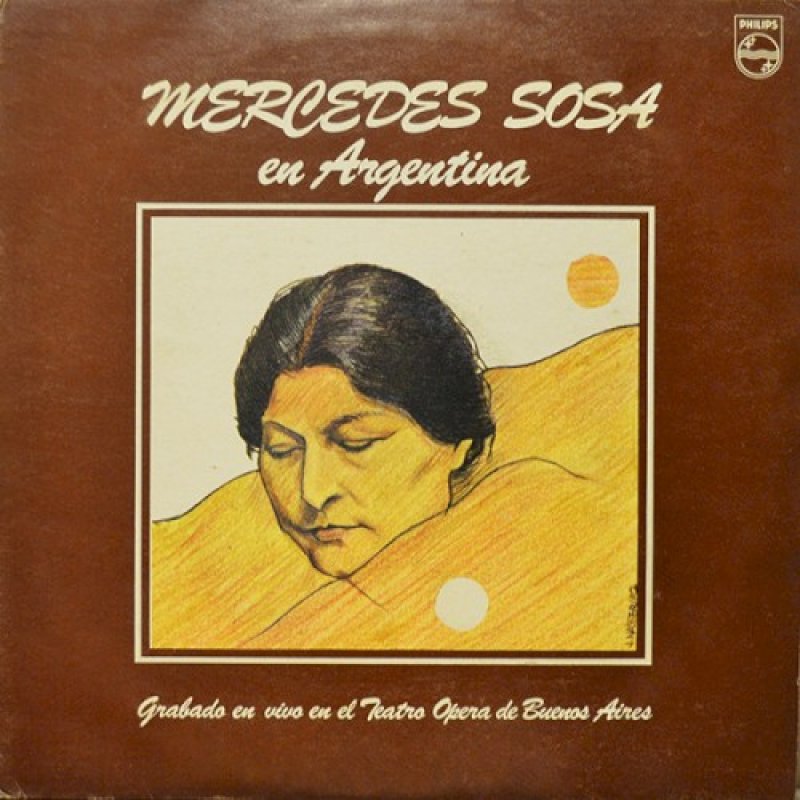
Volver a los 17
Mercedes Sosa · 1982
The meditation on late love in the simplest form possible: solo guitar, unadorned voice, truth without excuses. One of the most extraordinary love songs written in Spanish in the 20th century.
Run Run Se Fue Pa'l Norte
1966
The song of waiting and abandonment. Gilbert Favre leaving for Bolivia and Violeta waiting in an empty tent. Personal pain turned into art with the economy of someone who knows that embellishments only distract.
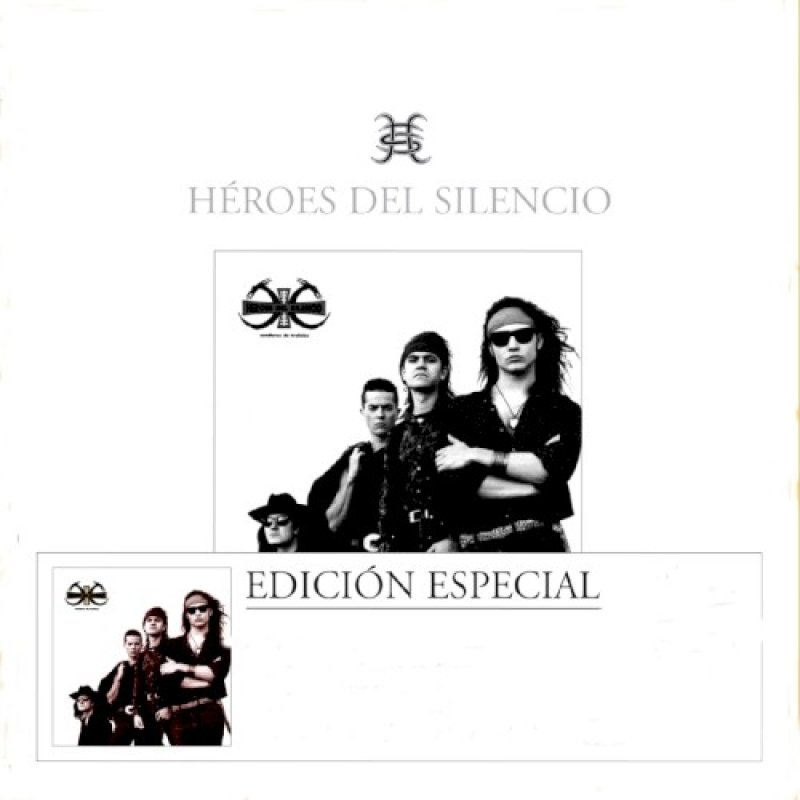
La carta
Héroes del Silencio · 1990
Violeta's most direct political song: the letter to her imprisoned brother turned into a denunciation of repression. Folklore as a tool of resistance, six years before the Nueva Canción.
El Gavilán
1960
Violeta's most avant-garde composition: eight minutes of love and rage with a harmonic complexity that completely exceeds the expectations of popular folklore. Concert music disguised as a popular song.
La Jardinera
1952
Her first important composition. The metaphor of the garden as the language of love: the poet who had read a lot and pretended not to have done so.
Rin del Angelito
1962
The elegy for a dead child that presents death as a return to nature. Violeta's "raw and untrained" voice in its most solemnly beautiful version.
Maldigo del Alto Cielo
1966
The rage against the love that destroys. Violeta without filters, without the equanimity of "Gracias a la Vida": the same woman, the same period, the dark side of the same mirror.
The Arpilleras (visual work)
1959–1966
Violeta's most surprising work outside of music: embroidery on burlap that reached the Louvre before her songs reached the Chilean national consensus. Popular art as major art.
Folkloric Research (complete archive)
1953–1965
The documentation work that no one asked for and that Chile needed: more than three thousand songs and traditions recorded in rural communities before they disappeared. The invisible foundation on which the Nueva Canción Chilena was built.
The full series
Chile
Nueva canción, Chilean rock, cueca, Violeta Parra and her legacy. A country reinventing itself by singing.
-
CAP 01
🇨🇱 Ch 01
Traditional Music and Folklore: The Three Roots of a Long Country (16th–20th Centuries)
Chile is the longest country in the world: 4,300 kilometers from north to south, from the Atacama Desert — the driest on the planet — to the Patagonian channels and Tierra del Fueg
-
CAP 02 you are here
🇨🇱 Ch 02
Violeta Parra: The Founder (1917–1967)
There is a comfortable and mistaken way to remember Violeta Parra: as the lady who sang Chilean folklore and wrote "Gracias a la Vida". It is a reduction that turns her into an obj
-
CAP 03
🇨🇱 Ch 03
The New Chilean Song: The Movement the World Heard After the Coup (1965–1973)
In 1970, something happened that had never happened before in the history of Latin America: a socialist government came to power through democratic elections. **Salvador Allende**
-
CAP 04
🇨🇱 Ch 04
The Exile and the Resistance: Chilean Music Outside Chile (1973–1990)
On September 11, 1973, when the Chilean Air Force planes bombed the La Moneda Palace and General Augusto Pinochet took power, Chilean popular music split in two: the one that remai
-
CAP 05
🇨🇱 Ch 05
Chilean Rock and Pop: The Generation that Spoke from Within (1965–2000)
Chilean music under the dictatorship had two faces: the one that sang from exile and the one that sang from within. The New Song was the most visible face of the internal resistanc
-
CAP 06
🇨🇱 Ch 06
The 21st Century: Chilean Music that Speaks to the World (2000–today)
On October 18, 2019, high school students in Santiago began to massively jump the metro turnstiles to protest against a thirty-peso fare increase. What started as student evasion t
You might also like
3 articles picked by editorial similarity


