


🇦🇺 AU · Australia · Chapter 3 of 7
The Australian Rock First Era: The Thunder from the South (1973–1980)
In the seventies, Australia had a unique nighttime entertainment system in the English-speaking world: the **pubs** — Australian bars licensed to present live music — were legally required to close at ten o'clock at night in most states. This absurd restriction produced an unforeseen consequence: to attract customers before closing, pubs fiercely competed to have the best live band in the neighborhood.

The result was a live music circuit of a density unmatched in any other country: hundreds of bands playing in hundreds of pubs every night, to audiences who hadn't specifically gone to listen to music but found music as part of the atmosphere. To survive in that circuit, you had to be good from the first note — there was no time to warm up, no patience for an audience that could leave at any moment.
That brutal and democratic environment — Australian pub rock — was the school that formed the most important artists of Australian rock in the seventies. AC/DC learned to play in those pubs. Cold Chisel learned in those pubs. Rose Tattoo, The Angels, Lobby Lloyd: all went through the same system of trial and error before audiences who paid for their beer and owed nothing to anyone.
The Easybeats: The Origin of It All
Before AC/DC, before pub rock, Australian rock music had its foundational moment with The Easybeats — the group formed in Sydney in 1964 by immigrants newly arrived in Australia: Dutch, Scottish, English who met in the Villawood migrant hostels and formed a band with the instruments they could get.
Their single "Friday on My Mind" (1966) was the first major Australian rock hit on international charts — it reached the Top 10 in the United Kingdom and was the first Australian song to be massively played on radios throughout the English-speaking world.
Among the members of The Easybeats was George Young — the older brother of Malcolm and Angus Young, who years after the band dissolved would work as a producer of AC/DC's early albums alongside his partner Harry Vanda. The family circle connecting The Easybeats with AC/DC is one of the most important in the history of Australian rock.
AC/DC: The Thunder from Sydney
The story of AC/DC began in the smoky nightclubs of Sydney in 1973, when the two brothers Angus and Malcolm Young decided to launch a band.
The name came almost by chance, taken from a sewing machine (alternating current/direct current), and the aesthetic — with Angus's school uniform — was born as a domestic joke that would end up becoming a trademark.
Malcolm Young (1953-2017) and Angus Young (born in 1955) were the sons of Scottish immigrants in Sydney. Malcolm was the rhythm guitarist — the invisible engine of the band, whose rhythm work was the foundation upon which everything else was built. Angus was the lead guitarist: the child in a school uniform running across the stage playing solos with an energy that made the audiences of Australian pubs temporarily forget their beers.
The lineup stabilized with Bon ScottRonald Belford Scott — as the vocalist. Scott was a musician from Perth who had been through several bands without getting anywhere, and who found in AC/DC the exact space for what he had to offer: a voice that was not technically perfect but had a personality and presence that no technical perfection could have replaced. Hoarse, urgent, with humor and rage at the same time.
In 1975 they recorded their debut album High Voltage, with Malcolm and Angus as guitarists, Bon Scott as singer, Mark Evans on bass, and Phil Rudd on drums. The album was released only in Australia.
The international conquest came gradually: tours in the United Kingdom in 1976 where the audiences of London clubs responded with the same energy as the Australians, followed by American tours where hard rock found its natural audience.
The assault on worldwide success was consummated in 1979 with the release of Highway to Hell, one of the most emblematic albums in rock history, which catapulted them to fame in the United States and solidified their status as international superstars. The title track would become a rock anthem of the late seventies.
Bon Scott: The Night of February 19
At the peak of their success — with "Highway to Hell" playing on radios around the world and an American tour that had elevated them to the level of the biggest rock bands — tragedy struck without warning.
On February 19, 1980, vocalist Bon Scott died of alcohol poisoning. He was 33 years old.
The band was on the verge of disbanding. Malcolm and Angus spent weeks not knowing if it made sense to continue. What they decided — to find a new vocalist and record an album in honor of Bon Scott — was one of the bravest and most productive decisions in rock history.
Brian Johnson — former vocalist of the English group Geordie — was chosen. And the album they recorded with him —
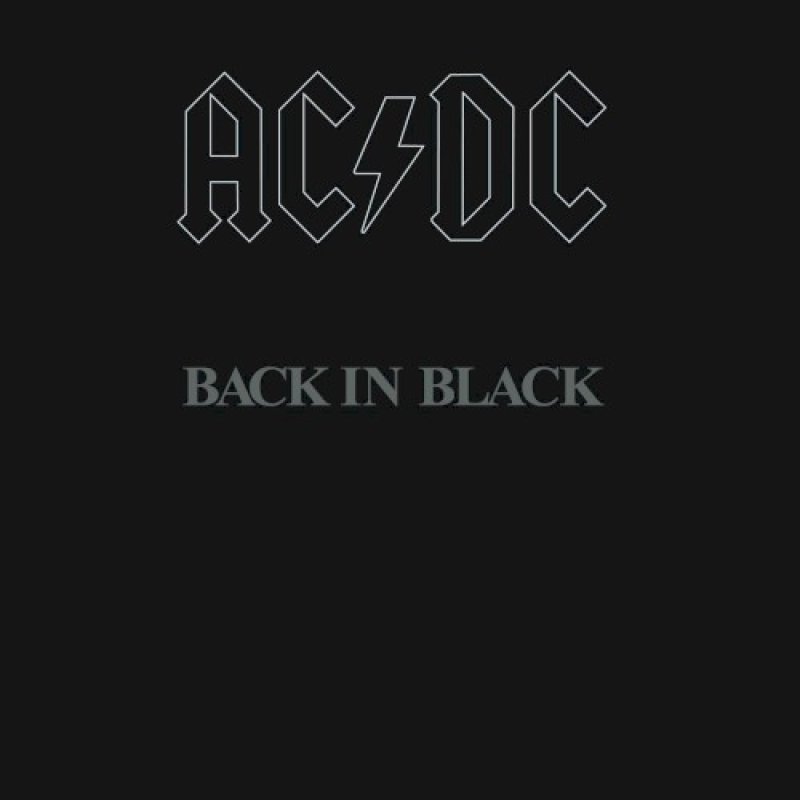
Back in Black (1980) — became the third best-selling album in music history, with over 50 million units sold worldwide.
The completely black cover — like mourning for Bon Scott — and the twelve songs that followed demonstrated that AC/DC could not only survive without their original vocalist but could produce their masterpiece in the pain of their loss. "Hells Bells", "You Shook Me All Night Long", "Back in Black": songs that define hard rock in its purest and most efficient form.
Cold Chisel: The Voice of Real Australia
While AC/DC was building its international career, another Australian band was building the most completely local rock career in the country: Cold Chisel, formed in Adelaide in 1973, with pianist and songwriter Don Walker and vocalist Jimmy Barnes.
Jimmy Barnes — born James Dixon Swan in Glasgow, Scotland, immigrated to Australia as a child — had a voice that was to Australian rock what Bon Scott was to international hard rock: technically imperfect, emotionally devastating, completely irresistible.
Cold Chisel was the most beloved group of white working-class Australia — the Australian equivalent of Bruce Springsteen for his American fans: songs about the real life of real people in real cities, played with the energy of pub rock and written with the precision of someone who knows exactly what they're talking about.
They never had the international success of AC/DC — their lyrics were too specifically Australian, too full of local references, to travel well — but in Australia, they were the most important band in the country for a decade.
Rose Tattoo: The Hardest Pub Rock
Rose Tattoo — formed in Sydney in 1976 — represented the rawest and darkest side of Australian pub rock: hard rock pushed to the limits of what a pub audience could endure, with Angry Anderson as the vocalist — small, tattooed, with a stage energy that made the stage seem too small to contain him.
Their songs — "Rock 'n' Roll Outlaw", "Bad Boy for Love" — are documents of pub rock in its purest state: no concessions to the market, no production to smooth the edges, no intention of reaching beyond the audience that already loves you.
Editorial note: Angus Young has ninety-one Grammys and has played in the biggest stadiums in the world. In 1973, he played in Sydney pubs to audiences who paid one Australian dollar to enter and owed nothing to anyone. The school uniform — the blue jacket, shorts, white socks — he wore for the first time because it was the only clean thing he had to play in. He continued to wear it for fifty years because it worked: no one forgot the man in the school uniform running across the stage playing the most powerful riff in hard rock. The most recognizable brand of Australian rock was born from not having clean clothes. That too is Australia.
10 · 2 en DoReSol
Top 10 of Australian Rock First Era
Back in Black (album)
AC/DC · 1980
The third best-selling album in history. The tribute to Bon Scott that proved AC/DC could survive its own tragedy. Fifty million copies sold. Australian hard rock conquering the world from pain.

Highway to Hell
AC/DC · 1979
The rock anthem of the late seventies. Bon Scott's last recording before his death. The moment when AC/DC went from local phenomenon to global phenomenon.
You Shook Me All Night Long
AC/DC · 1980
The most listened single from Back in Black in the band's history. Brian Johnson proving from the first song that he could fill the place Bon Scott had left.
Friday on My Mind
The Easybeats · 1966
The first major Australian rock hit on international charts. George Young — the older brother who would pave the way for AC/DC — at his brightest moment.
Flame Trees
Cold Chisel · 1984
Cold Chisel's most beloved song. The nostalgia of the Australian provincial town in the language of rock — specifically Australian, universally thrilling.
Khe Sanh
Cold Chisel · 1978
The song about Australian soldiers in Vietnam that became an anthem for the Australian working class. Don Walker writing with the precision of a novelist about the experience of those returning from war unable to fully return.
Rock 'n' Roll Outlaw
Rose Tattoo · 1978
Pub rock in its rawest form. Angry Anderson and Rose Tattoo being everything seventies rock promised to be without the production to soften it.
Let There Be Rock
AC/DC · 1977
The manifesto of Australian hard rock. AC/DC declaring the religion of rock with the seriousness of those who truly believe it. The song that Angus Young cited in his Rock and Roll Hall of Fame induction speech.
T.N.T.
AC/DC · 1975
The first great classic of AC/DC. The energy of Sydney's pub rock distilled into three minutes of hard rock that defines the band's sound from the start.
Working Class Man
Jimmy Barnes · 1985
The anthem of the Australian working class. Jimmy Barnes — the Scottish immigrant who became the most recognizable voice of Australian rock — singing about the people Cold Chisel had described for a decade.
The full series
Australia
Pub rock, didgeridoo, Melbourne indie and Aboriginal sound. A musical continent of its own.
-
CAP 01
🇦🇺 Ch 01
Aboriginal Music: The World's Oldest Musical Tradition (65,000 years–today)
When scientists speak of the oldest human culture that has survived
-
CAP 02
🇦🇺 Ch 02
The Colonial Roots and Folk: The Song that Built a Nation (1788–1960)
On January 26, 1788, eleven ships anchored in Sydney Cove with 1,487 people on board: sailors, soldiers, officials, and 775 convicts deported from Great Britain. It was the First F
-
CAP 03 you are here
🇦🇺 Ch 03
The Australian Rock First Era: The Thunder from the South (1973–1980)
In the seventies, Australia had a unique nighttime entertainment system in the English-speaking world: the **pubs** — Australian bars licensed to present live music — were legally
-
CAP 04
🇦🇺 Ch 04
The Australian Rock Second Era: The Generation that Conquered the World (1980–1995)
In 1988, two Australian bands were at the center of international rock at the same time — and they represented two completely opposing philosophies on how to be Australian in the w
-
CAP 05
🇦🇺 Ch 05
Australian Pop: The Icon Factory of the South Pacific (1970–2000)
Australia has a specific tradition in international pop that no other country in the English-speaking world has replicated with such consistency: the female artist who begins as a
-
CAP 06
🇦🇺 Ch 06
The Contemporary Scene: The Australian Indie that Conquered the World (2000–today)
In the early 2000s, Australia had something that no other English-speaking country had to the same extent: an independent public radio that acted as an arbiter of alternative music
-
CAP 07
🇦🇺 Ch 07
The Modern Indigenous Voices: The Song that Did Not Fall Silent (1964–today)
During the first one hundred and fifty years of European colonization, Australian Aboriginal music was systematically suppressed: ceremonies were banned, children were taken from t
You might also like
3 articles picked by editorial similarity


