


🇦🇺 AU · Australia · Chapter 4 of 7
The Australian Rock Second Era: The Generation that Conquered the World (1980–1995)
In 1988, two Australian bands were at the center of international rock at the same time — and they represented two completely opposing philosophies on how to be Australian in the world.

INXS wanted to transcend their origin: "I think of us as a band first and Australians second," said Michael Hutchence to the Los Angeles Times. "There is no real star system in Australia, so why become one? It's pointless."
Midnight Oil wanted exactly the opposite: to bring the headlines of their land to the world, to use the global stage to say what Australia preferred not to hear.
In 1988, just as the fierce Australian political rockers Midnight Oil were getting regular programming on American MTV with their single about Aboriginal land rights "Beds Are Burning," their compatriots INXS were taking a very different approach.
Both bands achieved international success at the same time. Both were genuinely Australian. And the tension between the two philosophies — the universality of INXS and the political localism of Midnight Oil — perfectly defines the dilemma of any artist from a peripheral country facing the global market.
INXS: Total Charisma
Michael Hutchence was born on January 22, 1960, in Sydney. He partly grew up in Hong Kong and returned to Australia in 1972. In 1979, with the Farriss brothers and other schoolmates, he formed the band that would be called INXS.
Initially known for their new wave and pop style, the band later developed a harder pub rock style that included elements of funk and dance.
What made INXS different from all other Australian rock bands of their generation was Hutchence: a frontman with a physical and sexual charisma that was unprecedented in Australian rock. He didn't have Bon Scott's roughness or Jimmy Barnes' powerful voice — he had something harder to define and more impossible to imitate: a presence that made the camera and the audience converge on him instinctively, as if there was a specific gravitational field around his body.
Kick (1987) was their definitive album: its first four singles were all monsters, starting with the hits "Need You Tonight," "New Sensation," and "Devil Inside," culminating in the heartbreaking ballad "Never Tear Us Apart."
"Need You Tonight" reached number one on the American Billboard Hot 100, being INXS's only number one in the United States.
For a brief moment, INXS had landed at the intersection between U2's anthem rock and Prince's sex appeal, to Bono's envy.
"Never Tear Us Apart" was written by Hutchence for his then-girlfriend, film producer Michele Bennett. Bennett was the last person Hutchence called on the morning of his death on November 22, 1997. Hutchence died in his room at the Ritz-Carlton hotel in Sydney at the age of thirty-seven. His death was one of the most shocking moments in the history of Australian rock.
Midnight Oil: Rock as a Political Act
Peter Garrett — the bald, six-foot-six vocalist, lawyer, and political activist — and Midnight Oil represented the most committed alternative of Australian rock in the eighties: a band that used the international stage to talk about Australia in ways that Australian politicians would prefer to avoid.
"Beds Are Burning" (1987) — about the land claims of the desert Aboriginal peoples — was the most political and internationally successful single of Australian rock in the eighties: the demand for justice for indigenous peoples turned into stadium rock without losing an ounce of its urgency.
"The beds are burning / It belongs to them / Let's give it back" — a direct political demand in the language of mass rock. American radios played it without fully understanding what it was about. It didn't matter. The music was powerful enough to break through without needing explanations.
Peter Garrett was later elected as a member of the Australian Parliament and Minister for the Environment in Kevin Rudd's government — the rocker who became a legislator, bringing the same political conviction from the stage to Parliament.
Crowded House: The Perfect Melancholy
Neil Finn — a New Zealander based in Australia — founded Crowded House in Melbourne in 1985 and built with it the most melodically perfect pop rock catalog of the South Pacific: songs with the structure of classic Beatles pop and an emotional depth that distinguished them from consumer pop.
"Don't Dream It's Over" (1986) was their international debut: a song about the persistence of optimism in the face of adversity that reached number two on the American Billboard and became one of the pop anthems of the eighties. "Something So Strong", "Weather With You", "Four Seasons in One Day": songs that time has treated with the generosity reserved for genuine classics.
Crowded House demonstrated that the South Pacific region could produce world-class pop without needing pub rock or hard rock as a vehicle.
Men at Work: The Other Australia
Men at Work — formed in Melbourne in 1978 — had one of the most extraordinary moments in the history of Australian rock: in 1983, their album Business as Usual was simultaneously number one in Australia, the United States, and the United Kingdom — the first time an Australian album achieved that triple number one.
"Down Under" — with its pan flute, its lyrics about traveling through Australia, and its irresistible chorus — was the single that made it possible: a song about Australian identity so festive and so specific that the whole world adopted it as an image of the country. "Can't you hear the thunder? / You better run, you better take cover" — Australia described from the inside for the world outside.
The achievement was overshadowed decades later when a court ruled that the flute line in "Down Under" had been taken without credit from the Australian folk song "Kookaburra Sits in the Old Gum Tree" — a perfect irony: the anthem of Australian identity accused of stealing from its own Australian tradition.
The Church: The Rock of Atmospheres
The Church — formed in Canberra in 1980 — were the Australian band that took alternative rock the furthest into the territory of texture and atmosphere: reverberated guitars, cryptic lyrics, a sound that preferred beauty over power.
"Under the Milky Way" (1988) — with its guitar arpeggio and the voice of Steve Kilbey — is one of the most beautiful songs in Australian alternative rock: four minutes of perfect melancholy that reached the American Top 40 and the Australian Top 20 without trying to resemble anything that existed at that time.
Editorial note: In 1988, INXS played at Wembley Stadium in London before ninety-six thousand people — the largest concert in the history of an Australian band up to that moment. Michael Hutchence walked onto the stage and the stadium went wild before he played a single note. There is a video of that moment: the camera captures his face when he hears the roar of ninety-six thousand people shouting his name, and on that face, there is something that is simultaneously pleasure and fear — the face of someone who has gotten exactly what they wanted and who at that moment understands that having it comes with a price they still cannot calculate. Nine years later, he died in a hotel room in Sydney. Wembley Stadium bears his name in that concert. The hotel room bears no one's name.
10 · 1 en DoReSol
Top 10 of Australian Rock Second Era
Never Tear Us Apart
INXS · 1988
The most beloved song by INXS. Written for Hutchence's first great love. Selected as one of the most important songs in Australian history. The melancholy of rock pop in its most perfect form.
Beds Are Burning
Midnight Oil · 1987
The most important political anthem of Australian rock. The demand for the return of land to Aboriginal peoples in stadium rock rhythm. Peter Garrett bringing political awareness to the largest stage possible.
Need You Tonight
INXS · 1987
The only number one by INXS on the American Billboard. Hutchence at his most seductive and direct. The sex appeal of Australian rock reaching the center of global pop.
Don't Dream It's Over
Crowded House · 1986
Neil Finn building the most melodically perfect pop of the South Pacific. Number two on the Billboard with a song about optimism in the face of adversity that time has treated as a classic.
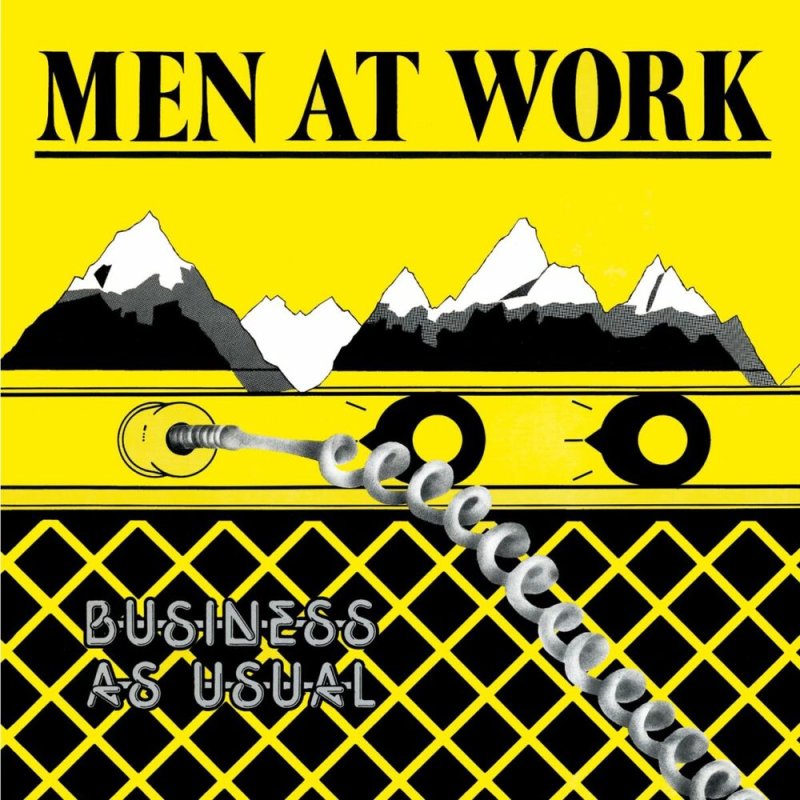
Down Under
Men at Work · 1981
Simultaneous number one in Australia, the United States, and the United Kingdom. The song that the world adopted as the image of Australia — with the subsequent irony of having taken without credit from the folk tradition it intended to celebrate.
Kick (album)
INXS · 1987
The most internationally successful Australian album of the eighties. Four singles in the American Top 5. INXS at the peak of their career and Hutchence at the peak of his charisma.
Under the Milky Way
The Church · 1988
The most beautiful song of Australian alternative rock. Steve Kilbey and the arpeggio that defines the melancholy of the South Pacific.
Power and the Passion
Midnight Oil · 1982
Midnight Oil before "Beds Are Burning": Australian political rock in its formative stage, with the same urgency and half the audience.
Four Seasons in One Day
Crowded House · 1992
The most specifically climatological song of Australian pop — written about Melbourne's weather, which can have four seasons in one day. Universality in the most specific local detail possible.
Suicide Blonde
INXS · 1990
INXS post-Kick, demonstrating that success had not exhausted their energy. The continuation of the formula with the conviction of a band that still has something to say.
The full series
Australia
Pub rock, didgeridoo, Melbourne indie and Aboriginal sound. A musical continent of its own.
-
CAP 01
🇦🇺 Ch 01
Aboriginal Music: The World's Oldest Musical Tradition (65,000 years–today)
When scientists speak of the oldest human culture that has survived
-
CAP 02
🇦🇺 Ch 02
The Colonial Roots and Folk: The Song that Built a Nation (1788–1960)
On January 26, 1788, eleven ships anchored in Sydney Cove with 1,487 people on board: sailors, soldiers, officials, and 775 convicts deported from Great Britain. It was the First F
-
CAP 03
🇦🇺 Ch 03
The Australian Rock First Era: The Thunder from the South (1973–1980)
In the seventies, Australia had a unique nighttime entertainment system in the English-speaking world: the **pubs** — Australian bars licensed to present live music — were legally
-
CAP 04 you are here
🇦🇺 Ch 04
The Australian Rock Second Era: The Generation that Conquered the World (1980–1995)
In 1988, two Australian bands were at the center of international rock at the same time — and they represented two completely opposing philosophies on how to be Australian in the w
-
CAP 05
🇦🇺 Ch 05
Australian Pop: The Icon Factory of the South Pacific (1970–2000)
Australia has a specific tradition in international pop that no other country in the English-speaking world has replicated with such consistency: the female artist who begins as a
-
CAP 06
🇦🇺 Ch 06
The Contemporary Scene: The Australian Indie that Conquered the World (2000–today)
In the early 2000s, Australia had something that no other English-speaking country had to the same extent: an independent public radio that acted as an arbiter of alternative music
-
CAP 07
🇦🇺 Ch 07
The Modern Indigenous Voices: The Song that Did Not Fall Silent (1964–today)
During the first one hundred and fifty years of European colonization, Australian Aboriginal music was systematically suppressed: ceremonies were banned, children were taken from t
You might also like
3 articles picked by editorial similarity


