The story behind
On the Run, according to DoReSol
The piece On the Run by Pink Floyd is a sonic journey that captures the tension and vertigo of travel, especially air travel, a theme that Richard Wright associated with the fear of one's own finitude. The germinal idea came from David Gilmour, but it was Roger Waters who gave it a distinct melodic structure, resulting in both as co-authors. What is fascinating about this composition is its purely electronic conception. It was built from an eight-note sequence introduced on an EMS Synthi AKS synthesizer. To achieve that characteristic sound, the sequence was sped up and white noise was added, along with sequencer pulses that, when mixed, generated the hi-hat-like percussion. Guitar effects reproduced in reverse were added to this, obtained by dragging a microphone stand along the fretboard and then inverting the tape, with panning from left to right. Other VCS3 synthesizer elements recreated the Doppler effect, simulating the passage of a vehicle. The main sequence plays at a dizzying 165 BPM, with the filter's frequency and resonance constantly modulated. Towards the end, a final guitar chord is heard, fading just before giving way to the bells of Time, the next song on the album.
The gestation of On the Run was a process of experimentation and adjustment. A first instrumental base was recorded on May 31, 1972, but was discarded to make way for a new version on June 13. Work continued throughout the rest of the year, culminating with the final sound layers added on February 9, 1973. The studio logs from this period were curiously labeled "More Weird Noises." What is remarkable is that, as it is told, everything heard on the track, except for the sound effects, was recorded live. There was no possibility of synchronizing two takes, so the performance was entirely live. Even on tour, the note sequence had to be entered manually, very slowly, to then speed it up during playback to achieve that fast sequential effect we hear. Before the album was released, during live performances in 1972, this piece was known as The Travel Sequence and consisted of a simpler improvisation, centered on an interaction between guitar and electric piano, without the electronic complexity that would later define the final version. The band decided that the power of the Synthi AKS synthesizer was the right direction, replacing the initial improvisation. In concerts, the climax of the song was accompanied by a model airplane that flew across the stage to simulate a spectacular crash, an effect that would be replicated on later tours with variations.
From album

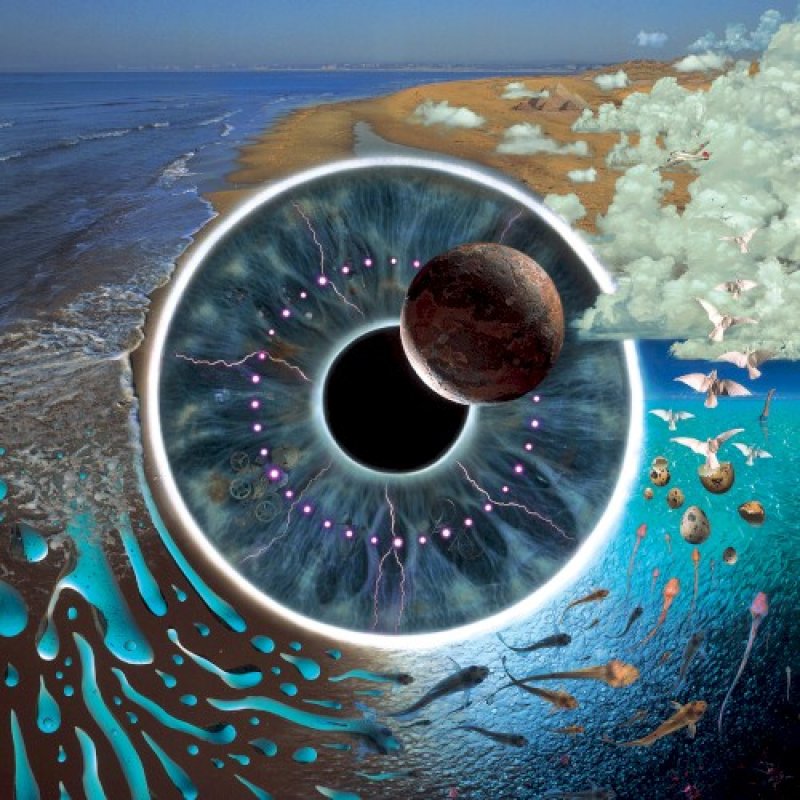
p·u·l·s·e
Pink Floyd · 1995 · Track 3
Details
Credits
Music Roger Waters, David Gilmour