The story behind
Lo que sangra (La cúpula), according to DoReSol
When you dive into *Lo que sangra (La cúpula)*, you encounter a rhythmic foundation that immediately captivates you. The bass, played almost percussively, intertwines with a guitar riff that leads you down a very defined path. It's a sound that has a lot of funk in it, and it's no coincidence. Both Gustavo Cerati and Zeta Bosio came from previous experiences in disco and soul bands in the late '70s and early '80s, and that imprint is clearly noticeable here, bringing a very particular energy to the song. The entry of Carlos Alomar on lead guitar adds another layer, with a solo that truly stands out and an ending that leaves a mark. Cerati's voice, moreover, has a treatment that gives it an echo-like quality, adding to the overall atmosphere.
There are several possible interpretations for the lyrics of *Lo que sangra (La cúpula)*. One of the most widespread interpretations suggests it speaks of the world of fame, that "dome" accessed through an intricate path, but where love is the true engine. Details like the "dark windows of a limousine" are mentioned, evoking the distance and opacity of stardom. Another theory, very strong among its followers, relates it to first love and innocence, interpreting "la cúpula" as a play on words with "copular." This view aligns with other lyrics by Soda Stereo that explore intimacy and taboos.
But there is another theory, which emerged in 1988, connecting the song to a tragic event that occurred a year earlier. On May 2, 1987, during a Soda Stereo concert in San Nicolás de los Arroyos, there was a collapse at the "Highland Road" disco that caused casualties. It is said that Gustavo Cerati channeled the sadness and anger over that tragedy into these lyrics. The details in the song seem to reflect the disco and the atmosphere of the time: the reference to "that place where stars explode" could allude to the fashion of dressing like Hollywood figures to go dancing, the "spiral staircase" existed in the place, and the "dark windows" would resemble the mirrored ones of the disco. The lyrics also speak of "fraud all around us," perhaps referring to economic irregularities in dance halls, and of "it is love that bleeds" for the young people who died. The mention of an "emergency exit that will save us" is interpreted as ironic, given that the place lacked an adequate exit, and it is said that security personnel allowed too many people to enter for the building's capacity. The song, which lasts 4:37, was released as part of the 1988 album *Doble vida*.
From album

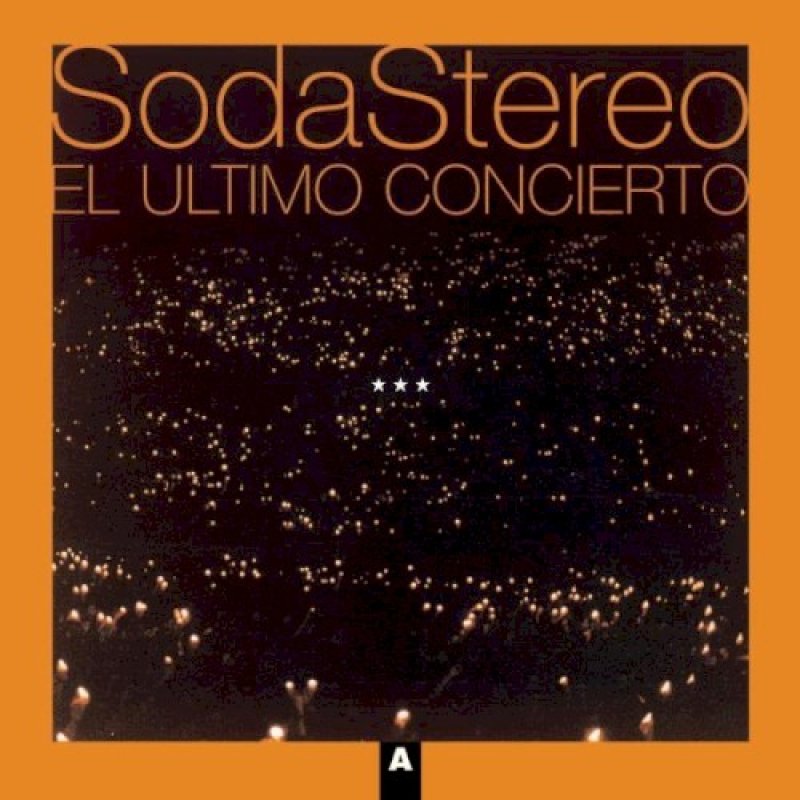
El último concierto A
Soda Stereo · 1997 · Track 8
Details
Credits
Music Gustavo Cerati