The story behind
Little Queenie, according to DoReSol
Little Queenie is not just another Chuck Berry song: it's one of those tracks that, when it plays, forces you to move your feet without thinking. The guitar kicks in with a short, catchy riff, almost like a greeting, and Fred Below's drums set the rhythm with a precision that makes Willie Dixon's bass sound wider than it is. Berry sings with that mix of confidence and mischief that defined him, as if he were speaking directly to someone in the middle of a dance. What's curious is that the melody isn't new: a year earlier, Berry had already used almost the same for Run Rudolph Run, that Christmas song many know. But here, without the context of reindeer or trees, the song becomes something different: an anthem of rock and roll where fun and boldness go hand in hand.
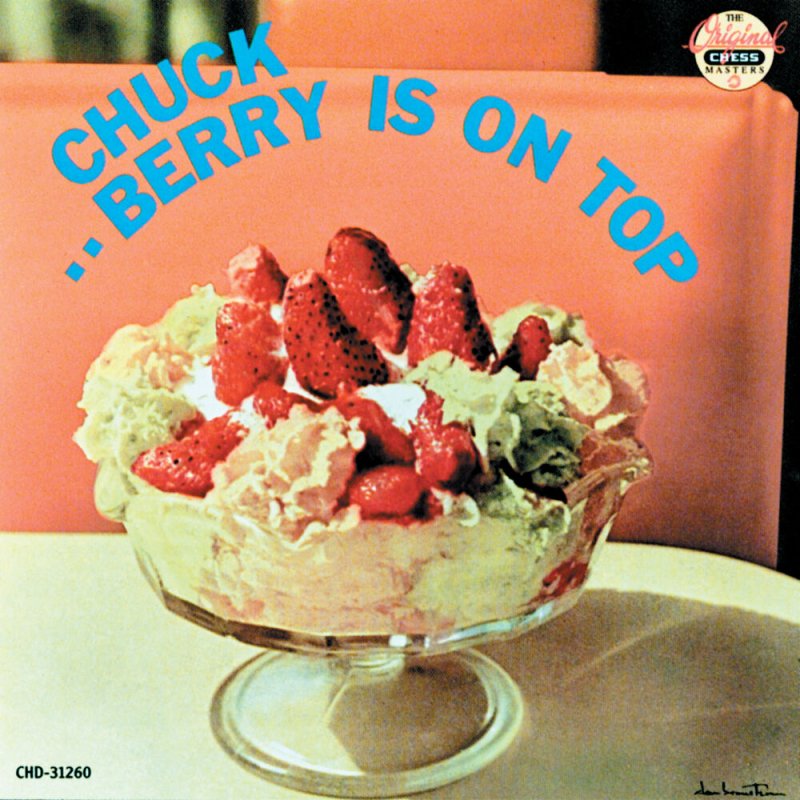
It was recorded in a single day, on November 19, 1958, at Chess Records studios in Chicago. Berry handled the vocals and guitar, and the piano was played by either Johnnie Johnson or Lafayette Leake, while the bass and drums completed the sound. The result was released as a single in March 1959, paired with Almost Grown, and later included in Berry Is on Top, his first compilation album. It wasn't a massive hit —it only reached number 80 on the Billboard Hot 100— but over time it became a song that many guitarists learn first, not because of its difficulty, but because it captures the essence of 1950s rock and roll: direct, unadorned, and with a hook. Berry even took it to the screen, appearing in Go, Johnny Go! and the documentary Hail! Hail! Rock 'n' Roll years later. It lasted just two minutes and forty-two seconds, but in that time it made it clear that sometimes, simplicity is what works best.
From album

Chuck Berry Is on Top
Chuck Berry · 1959 · Track 7
Details
Credits
Lyrics Chuck Berry
Music Chuck Berry