The story behind
Let It Down, according to DoReSol
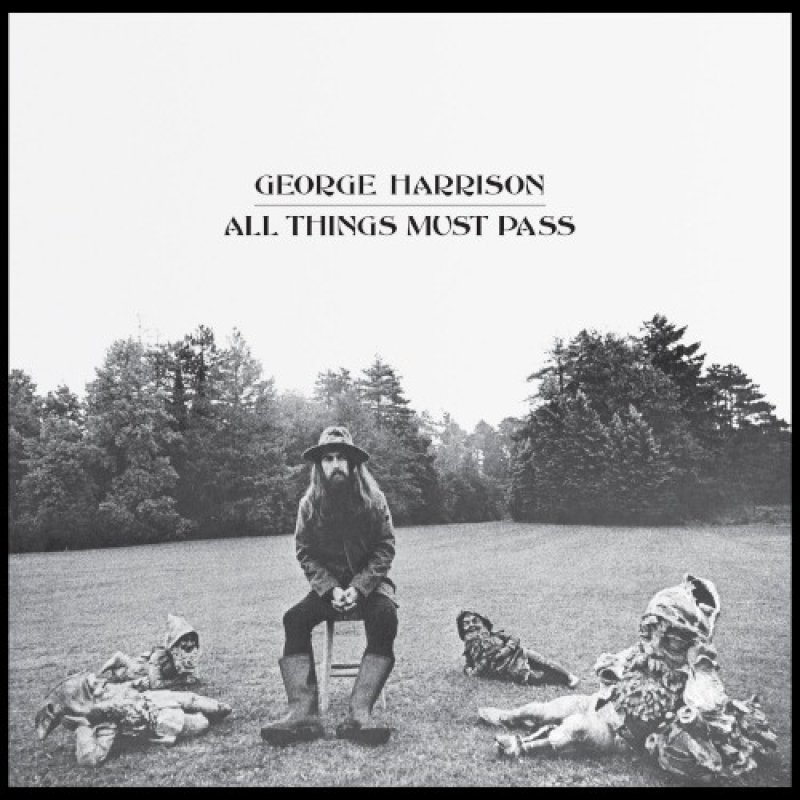
When you dive into *Let It Down*, you encounter a piece that plays with well-defined sonic contrasts. On one hand, you have verses that evoke an ethereal, almost floating sensation, and on the other, choruses that burst in with overwhelming power. This "soft/loud" dynamic is one of the characteristics many point to as distinctive of the song. The recording, released in 1970 as part of the triple album *All Things Must Pass*, stands out for the production technique known as "Wall of Sound," applied with great detail.
The genesis of *Let It Down* dates back to 1968, when George Harrison composed it. In fact, he offered it to The Beatles in January 1969, thinking of including it in what would eventually be the album *Let It Be*. However, the band did not select it, and the song found its place and recognition in Harrison's first solo work after the group's dissolution. Those who have studied his work in depth interpret it as a love song with erotic undertones, possibly dedicated to someone other than his wife at the time. The conception and recording of this track are intertwined with a period of romantic interest involving Harrison, his wife, and his friend Eric Clapton. Author Ian Inglis describes it as an intense and passionate representation of lust and desire.
For the recording in London, Harrison gathered a large group of musicians. Among them was Clapton's full band, Derek and the Dominos, as well as Gary Brooker, Gary Wright, Bobby Keys, and the group Badfinger. The dense mix of wind instruments, orchestral strings, and a powerful rock foundation leads many to identify *Let It Down* as a clear example of Phil Spector's influence on *All Things Must Pass*, an influence that also generated some tension during the album's creation. There is also an acoustic version recorded in 1970, to which overdubs were added in 2000, and which was included as a bonus track on the 30th-anniversary edition of *All Things Must Pass*.
George Harrison and Pattie Boyd married in January 1966, after meeting two years earlier on the set of a Beatles film. By 1968, however, Harrison's deep dedication to meditation and Eastern mysticism was beginning to create distance in the couple. *Let It Down* was written in late 1968 and features major seventh chords that caught the attention of Bob Dylan that same year, when the two musicians collaborated on *I'd Have You Anytime* in New York. With no direct mentions of the song in his 1980 autobiography, analysts have interpreted *Let It Down* as a sensual love piece. Harrison's musical biographer, Simon Leng, describes the lyrics as his author's "most tactile," full of "sexual passion" and "images of sight and touch," suggesting that the verses revel in a sensory luxury that a devotee of Krishna should reject. Leng also points out the "clear climactic connotations" in the choruses, where Harrison invites his beloved to let down her hair around him and amaze him with her love. Musically, the composition alternates between the ethereal and ballad-like quality of the verses and the more intense energy of the choruses.
Ian Inglis, for his part, calls *Let It Down* a "shamelessly erotic" song that likely describes "an act, or acts, of infidelity." Inglis suggests that the two lovers hide behind a facade of indifference, but both are fully aware of each other's intentions, referencing lines like "As you look so sweet and divine, I can feel you here / I see your eyes busy kissing mine...". The recurring lines in the verses such as "I do, I do" and "If somebody's watching me" have led to various interpretations. Leng suggests that in the first phrase, Harrison might be reaffirming his marriage vows, and that the second line is an early example of how the singer sees his life "as a battle against an unseen enemy waiting to strike." For Inglis, the characters in *Let It Down* are immersed in an adulterous relationship, with the "constant threat" of being discovered, leading to the conclusion of the first verse: "Hiding it all behind whatever I see / If somebody's watching me."
From album

All Things Must Pass
George Harrison · 1970 · Track 8
Details
Credits
Lyrics George Harrison
Music George Harrison