The story behind
L'ora del boogie, according to DoReSol
The Hour of Boogie is one of those songs that sounds like a canned party: the bass bounces like a spring, the drums hit with almost mechanical precision, and Adriano Celentano’s voice — that Molleggiato who danced as if he had springs in his feet — wraps around the rhythm like a child on a swing. In just two minutes and thirteen seconds, the track never lets up: it kicks off with a piano riff that seems straight out of a 1950s American roadside bar, but with that Italian swing that Celentano made his own. The most curious thing is how the song holds together in a time signature that never quite fits, as if time itself refused to stand still. It’s not a recording error: it’s the signature of the sound, that boogie Celentano imported from the United States and turned inside out until it was entirely his.
The song was born at a time when rock and roll was just beginning to cross the Atlantic, but Celentano didn’t just bring it to Italy — he fused it with the swing of the 1930s and the humor of a man who knew music could also be a game. Recorded in Milan — where the artist grew up amid the bustle of markets and dance halls — the track is part of a period when Celentano wasn’t just singing; he was inventing characters, choreographies, and even films. His wife, Claudia Mori, recalled that sometimes he let others take credit for his lyrics or melodies, but in songs like this one, his hand is unmistakable: the boogie isn’t just a rhythm, it’s a statement of intent. With 150 million records sold in his career, Celentano proved that Italy could make music that sounded like freedom, even if the world didn’t know it yet.
From album

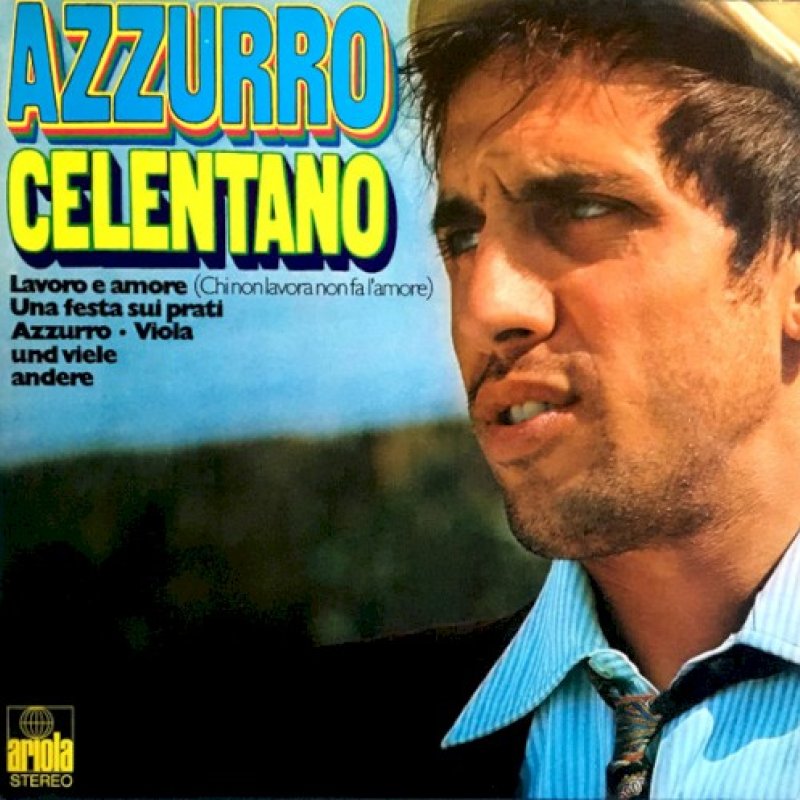
Azzurro
Adriano Celentano · 1971 · Track 9
Details