The story behind
Insensatez, according to DoReSol
The first time I heard Insensatez, I was captivated by that initial arpeggio that weaves itself like a whisper. Jobim built it on a foundation that seems plucked from a Chopin prelude in E minor, yet with a Brazilian twist that makes it unmistakable. The melody unfolds with that bossa nova cadence that Jobim mastered like no other, where each note carries both complicity and disillusionment at once. It’s not just a song: it’s a dialogue between sorrow and elegance, where Vinícius de Moraes’ lyrics—in Portuguese, speaking of insensatez as the blindness that leads us to repeat mistakes—merge with the harmony so seamlessly that we can’t quite tell where one begins and the other ends.
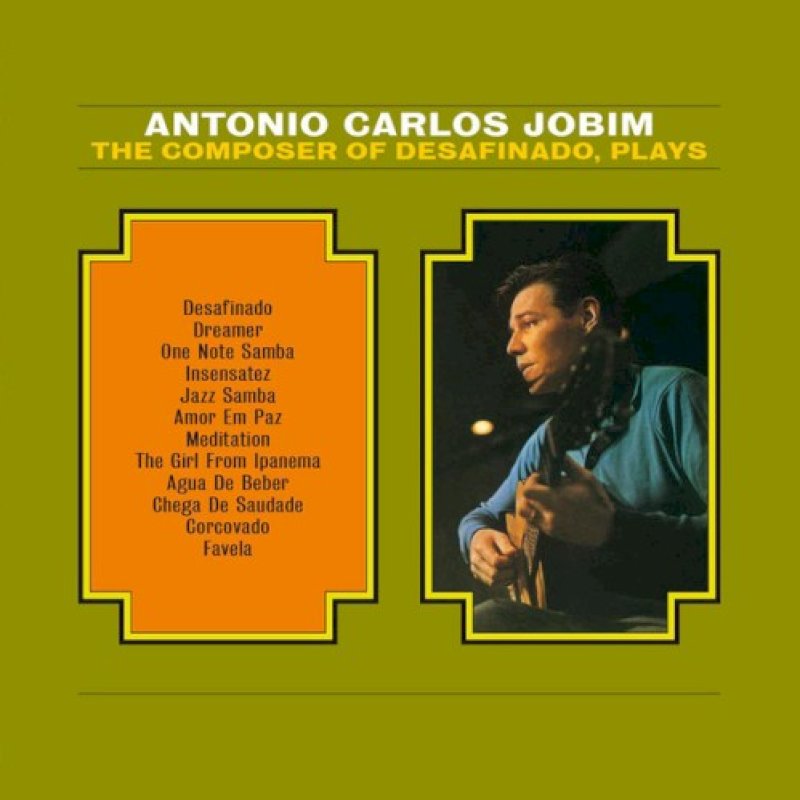
It was recorded in 1963 for the album The Composer of Desafinado, Plays, under the Verve label and with Creed Taylor at the helm of production. It lasted just under three minutes, but those seconds were enough to cement its status as a standard in jazz and bossa nova. Jobim later re-recorded it with Sting in 1994 for his final album, Antônio Brasileiro, yet the original version remains the one that best preserves that air of restrained sophistication. Norman Gimbel penned the English lyrics—How Insensitive—and thus the song crossed borders without losing its essence: a melody that sounds like coffee in Copacabana and nights in New York, where cool jazz musicians adopted it as their own. It was covered by Andy Williams, Frank Sinatra, Vikki Carr, and even Sting, yet always with the same sense that, in the end, insensatez is not just the title but the driving force of the song.
From album

The Composer of Desafinado, Plays
Antonio Carlos Jobim · 1963 · Track 6
Details