Chords in progress
We have not analyzed this song audio yet. Once it is ready, you will see the chord player synced with the video.
The story behind
The Girl From Ipanema, according to DoReSol
The first time you listen to The Girl From Ipanema, it’s not the lyrics that grab you, but that rhythm that gets stuck in your head like a sea breeze. It’s a song that seems to move to the rhythm of the waves, yet with a sophisticated air that distances it from the simple. The piece doesn’t speak of grand deeds or epic dramas: it’s an everyday scene turned into music, where the protagonist is a girl passing by a trendy bar in Ipanema as she walks toward the beach. What’s curious is that this concrete image transforms into a universal sound that crossed borders without losing its essence. The melody flows with deceptive naturalness, as if it had always existed, and that’s its greatest trick: making the complex sound simple.
The original lyrics in Portuguese were written by Vinicius de Moraes and Antonio Carlos Jobim in 1962, inspired by a teenager named Heloísa Eneida Menezes Paes Pinto —now known as Helô Pinheiro— who used to pass by the Veloso bar on Montenegro Street, in the Ipanema neighborhood. Jobim and Moraes saw her every day, and that repeated image ended up as the seed of the song. Later, Norman Gimbel added the English version, which ultimately catapulted it to the world. They recorded it in 1964 in New York as part of the album Getz/Gilberto, where Stan Getz’s saxophone and João Gilberto’s voice gave it that fresh air that made it unique. In 1965, the English version won the Grammy for Record of the Year, a detail that, while not defining its value, does mark its impact on the international scene. What’s interesting isn’t just that it became a hit, but that it achieved something rarer: making millions of people across different continents feel, upon hearing it, that they were living that same sunset on the beach.
From album

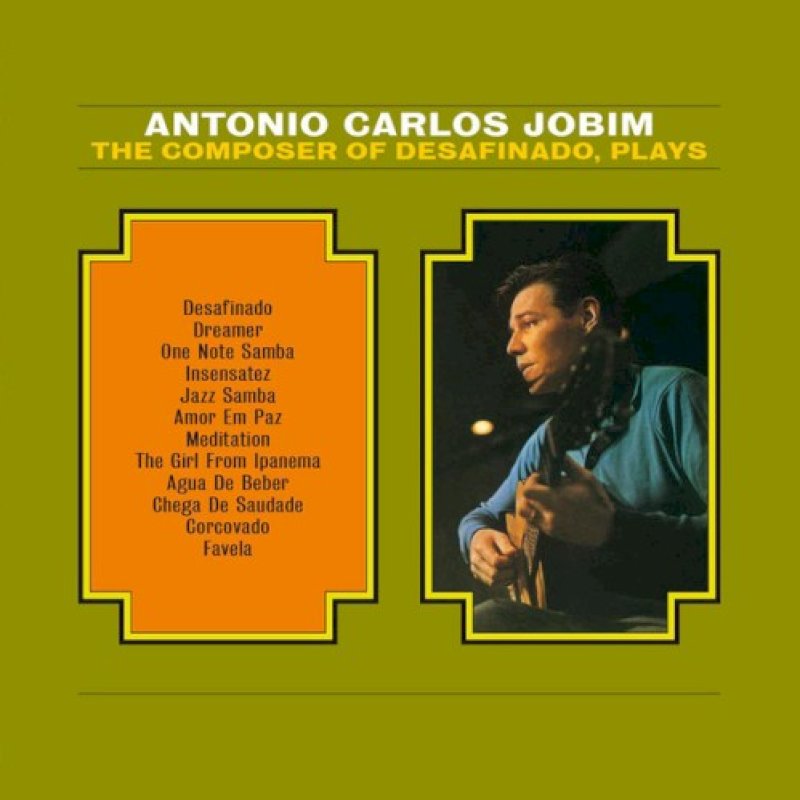
The Composer of Desafinado, Plays
Antonio Carlos Jobim · 1963 · Track 1
Details