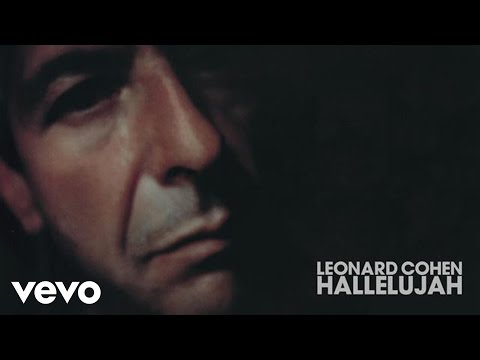
Intro
C G
Verse
C
Now I've heard there was a
Am
Secret chord
C
That David played
Am
And it pleased the Lord
F G
But you don't really care for music
C G
Do you?
Pré-Refrão
C F G
It goes like this, the fourth, the fifth
Am F
The minor fall, the major lift
G E Am
The baffled king composing Hallelujah
Chorus
F Am
Hallelujah, Hallelujah
F C G C G
Hallelujah, Hallelu____jah
Verse
C
Your faith was strong
Am
But you needed proof
C
You saw her bathing
Am
On the roof
F G
Her beauty and the moonlight
C G
Overthrew you
Pré-Refrão
C F G
She tied you to a kitchen chair
Am F
She broke your throne and she cut your hair
G E Am
And from your lips she drew the Hallelujah
Chorus
F Am
Hallelujah, Hallelujah
F C G C G
Hallelujah, Hallelu____jah
Verse
C Am
You say I took the name in vain
C Am
I don't even know the name
F G
But if I did, well, really
C G
What's it to ya?
Pré-Refrão
C F G
There's a blaze of light in every word
Am F
It doesn't matter which you heard
G E Am
The holy or the broken Hallelujah
Chorus
F Am
Hallelujah, Hallelujah
F C G C G
Hallelujah, Hallelu____jah
Quarta Parte
C Am
I did my best, it wasn't much
C Am
I couldn't feel, so I tried to touch
F
I've told the truth
G
I didn't come to fool ya
Pré-Refrão
C F G
And even though it all went wrong
Am F
I'll stand before the lord of song
G E Am
With nothing on my tongue but hallelujah
Refrão Final
F Am
Hallelujah, Hallelujah
F C G
Hallelujah, Hallelu_jah
F Am
Hallelujah, Hallelujah
F C G
Hallelujah, Hallelu_jah
F Am
Hallelujah, Hallelujah
F C G C G
Hallelujah, Hallelu____jah
Now I've heard there was a secret chord
That David played, and it pleased the Lord
But you don't really care for music, do you?
It goes like this, the fourth, the fifth
The minor falls, the major lifts
The baffled king composing Hallelujah
Hallelujah, Hallelujah
Hallelujah, Hallelujah
Your faith was strong but you needed proof
You saw her bathing on the roof
Her beauty and the moonlight overthrew you
She tied you to a kitchen chair
She broke your throne, and she cut your hair
And from your lips she drew the Hallelujah
Hallelujah, Hallelujah
Hallelujah, Hallelujah
You say I took the name in vain
I don't even know the name
But if I did, well, really, what's it to you?
There's a blaze of light in every word
It doesn't matter which you heard
The holy or the broken Hallelujah
Hallelujah, Hallelujah
Hallelujah, Hallelujah
I did my best, it wasn't much
I couldn't feel, so I tried to touch
I've told the truth, I didn't come to fool you
And even though it all went wrong
I'll stand before the Lord of Song
With nothing on my tongue but Hallelujah
Hallelujah, Hallelujah
Hallelujah, Hallelujah
Hallelujah, Hallelujah
Hallelujah, Hallelujah
Hallelujah, Hallelujah
Hallelujah, Hallelujah
Hallelujah, Hallelujah
Hallelujah, Hallelujah
Traducción literaria al español — fiel al sentimiento del autor, no es cantable.
Ahora he oído que había un
Acorde secreto
Que David tocó
Y complació al Señor
Pero a ti realmente no te importa la música
¿Verdad?
Va así, la cuarta, la quinta
La caída menor, el levantamiento mayor
El rey desconcertado componiendo Aleluya
Aleluya, Aleluya
Aleluya, Alelu____ya
Tu fe era fuerte
Pero necesitabas pruebas
La viste bañándose
En el techo
Su belleza y la luz de la luna
Te vencieron
Te ató a una silla de cocina
Rompió tu trono y cortó tu cabello
Y de tus labios sacó el Aleluya
Aleluya, Aleluya
Aleluya, Alelu____ya
Dices que tomé el nombre en vano
Ni siquiera conozco el nombre
Pero si lo hiciera, bueno, realmente
¿Qué te importa? [*]
Hay un destello de luz en cada palabra
No importa cuál escuchaste
El santo o el roto Aleluya
Aleluya, Aleluya
Aleluya, Alelu____ya
Hice lo mejor que pude, no fue mucho
No podía sentir, así que intenté tocar
He dicho la verdad
No vine a engañarte
Y aunque todo salió mal
Me presentaré ante el señor de la canción
Con nada en mi lengua más que aleluya
Aleluya, Aleluya
Aleluya, Alelu_ya
Aleluya, Aleluya
Aleluya, Alelu_ya
Aleluya, Aleluya
Aleluya, Alelu____ya
Traducción literaria al italiano — fiel al sentimiento del autor, no es cantable.
Ho sentito che esisteva un
accordo segreto
che Davide suonava
e che piaceva al Signore
Ma a te la musica non importa davvero,
vero?
Va così, il quarto, il quinto
la caduta in minore, il salto in maggiore
il re confuso che compone Hallelujah
Hallelujah, Hallelujah
Hallelujah, Hallelu____jah
La tua fede era forte
ma avevi bisogno di una prova
la vedesti fare il bagno
sul tetto
la sua bellezza e il chiaro di luna
ti travolsero
Lei ti legò a una sedia di cucina
spezzò il tuo trono e ti tagliò i capelli
e dalle tue labbra strappò l'Hallelujah
Hallelujah, Hallelujah
Hallelujah, Hallelu____jah
Dici che ho usato il nome invano
io non conosco nemmeno il nome
ma anche se lo conoscessi, beh,
cosa cambierebbe per te?
C'è una luce che brucia in ogni parola
non importa quale hai sentito
l'Hallelujah sacro o quello spezzato
Hallelujah, Hallelujah
Hallelujah, Hallelu____jah
Ho fatto del mio meglio, non è bastato
non riuscivo a sentire, allora ho provato a toccare
ho detto la verità
non sono venuto a ingannarti
E anche se è andato tutto storto
mi presenterò davanti al signore del canto
con nient'altro sulle labbra che hallelujah
Hallelujah, Hallelujah
Hallelujah, Hallelu_jah
Hallelujah, Hallelujah
Hallelujah, Hallelu_jah
Hallelujah, Hallelujah
Hallelujah, Hallelu____jah
Traducción literaria al portugués — fiel al sentimiento del autor, no es cantable.
Eu ouvi que existia um
Acorde secreto
Que Davi tocava
E agradava ao Senhor
Mas você não liga muito pra música
Não é?
É assim, a quarta, a quinta
A queda menor, a elevação maior
O rei confuso compondo Aleluia
Aleluia, Aleluia
Aleluia, Alelu____ia
Sua fé era forte
Mas você precisava de prova
Você a viu se banhando
No terraço
A beleza dela e o luar
Te derrubaram
Ela te amarrou numa cadeira de cozinha
Ela destruiu seu trono e cortou seu cabelo
E dos seus lábios ela arrancou o Aleluia
Aleluia, Aleluia
Aleluia, Alelu____ia
Você diz que eu usei o nome em vão
Eu nem sei qual é o nome
Mas se eu soubesse, bem
O que isso tem a ver com você?
Há uma chama de luz em cada palavra
Não importa qual você ouviu
O Aleluia sagrado ou o partido
Aleluia, Aleluia
Aleluia, Alelu____ia
Eu fiz o que pude, não foi muito
Eu não conseguia sentir, então tentei tocar
Eu disse a verdade
Não vim pra te enganar
E mesmo que tudo tenha dado errado
Vou me apresentar diante do senhor da canção
Com nada nos lábios além de aleluia
Aleluia, Aleluia
Aleluia, Alelu_ia
Aleluia, Aleluia
Aleluia, Alelu_ia
Aleluia, Aleluia
Aleluia, Alelu____ia
Piano — próximamente
We are preparing the chords
From the album

Various Positions
Leonard Cohen · 1984 · Track 5
The story behind
Hallelujah is a song composed by Leonard Cohen, included in his album Various Positions when it was released in 1984. In its early years, the piece went virtually unnoticed. It was not until 1991 that Welsh musician John Cale released his own version, which did receive a warm reception from the public. Three years later, in 1994, American singer-songwriter Jeff Buckley recorded the rendition that would ultimately consecrate the song, paving the way for more than eighty different versions by various artists, both in concert and in studio recordings. From a content standpoint, the song functions as a poem that draws on biblical stories, ancient tales, faith, beliefs, and existential insecurities. Through Jewish symbolism, Cohen articulates at once the glory and the pain that love entails. The first chorus references a heavenly chord that King David composed for God—the Hallelujah—and immediately addresses someone who, with a certain irony, seems uninterested in music. In response, the narrator explains the chord while playing it: "It goes like this: the fourth, the fifth, the minor fall, the major lift." In the second verse, two biblical episodes appear: the moment when David watches Bathsheba bathing in the garden from his rooftop, marveling at her beauty, and the betrayal of Delilah cutting Samson's hair, used as a metaphor for the woman with whom a man falls passionately in love. Over time, the song has been covered by numerous performers. In many cases, the melody consolidated through the versions of John Cale and Jeff Buckley is retained, but the lyrics are modified almost entirely to give it a character of religious praise, especially when transposed into other languages. In such adaptations, the only element of the original text that generally remains is the "Hallelujah" of the chorus. John Cale, the Welsh singer and former member of The Velvet Underground, recorded his version in 1991, which became one of the most recognized renditions of the song. That recording was included in the Leonard Cohen tribute album titled I'm Your Fan, and also appeared on his live album Fragments of a Rainy Season, where Cale performed works by various artists. From that version, subsequent performances emerged, among them those from his own world tour held between 1993 and 1995. It was also the version used in the film Shrek (2001), as credited, although Rufus Wainwright's version is the one featured on the official soundtrack compiled by Geffen Records, due to licensing issues. Additionally, the song appeared on the first soundtrack album of the television series Scrubs. Jeff Buckley recorded the version considered the most musically acclaimed and possibly the most significant rendition of Hallelujah. He took John Cale's interpretation as his starting point, though he introduced an almost complete reworking of it. It was included on Grace (1994), the only studio album Buckley ever published. It is a version of a very melancholic and at the same time restrained character, in which the musician's voice is accompanied solely by his electric guitar with a semi-acoustic sound. In 1997, Rolling Stone magazine included it on its list "The 500 Greatest Songs of All Time According to Rolling Stone" at number 259, ranking above even the original version by Leonard Cohen himself.