Chords in progress
We have not analyzed this song audio yet. Once it is ready, you will see the chord player synced with the video.
The story behind
Estallando desde el océano, according to DoReSol
Sumo plays with two worlds in Estallando desde el océano: one poetic, the other streetwise, and blends them without warning. The first verse in English —*"Beyond the hills, beyond the meadows, / down in the pampa, up in the tundra"*— sounds like an impossible map where the Argentine pampa coexists with the tundra and Paris in spring. But the punch comes when Luca Prodan jumps to *"I'm bursting from the ocean"*, a phrase he didn't invent: he takes it from *"Kubla Khan"* (1797), that poem written under the effects of opium where Coleridge imagines a submarine palace in Xanadú. The song doesn't just quote; it dismantles the original verse and fills it with local references, as if Coleridge's dream had landed in Buenos Aires.What's curious isn't just the literary borrowing, but how Prodan uses it to talk about something else.
Between verses that seem plucked from a Buenos Aires bar —*"Give me this, give me that / I can't stand your efforts / (...) I can't stand your scandalous and cheesy hat"*— a clue appears: these lines are a direct echo of David Bowie's *"Queen Bitch"*, where the Brit describes a character with *"a frock coat and that scandalous hat."* Prodan borrows Bowie's mocking tone but fills it with Argentine slang and that mix of English and lunfardo that was already Sumo's trademark. The result is a song that sounds like a collage: on one side, the erudition of an 18th-century poem; on the other, the cheek of a guy complaining about a hat in a borrowed language.
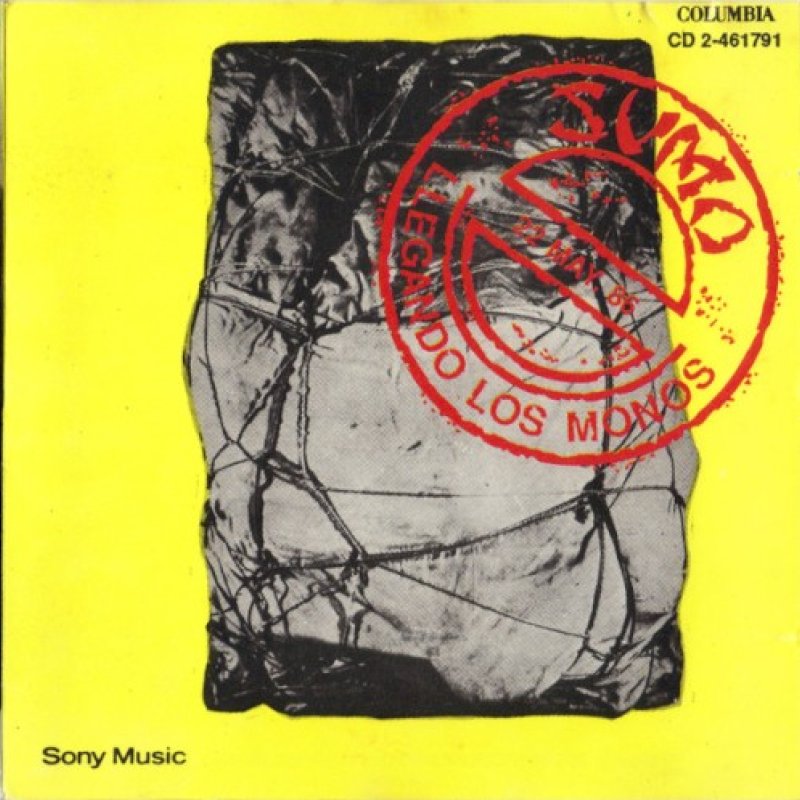
The 1989 video reinforces that duality: a couple in a hotel, her packing her things while he wakes up late, rides off on a motorcycle, and goes after her. There's no explanation, just images that could be an ending or a new beginning.The track is on Llegando los monos, Sumo's second album released in May 1986 by CBS (now Sony Music). They recorded it with Mario Breuer behind the console and Walter Fresco as art director, but without grand studio ambitions: the album was self-produced, as if the band preferred risk over polish. It lasted 3:36, just enough time for Prodan to pack in his wordplay, literary references, and that rock vibe that sounded like something new in mid-80s Buenos Aires.
It wasn't the album's commercial hit —that was *"Los viejos vinagres"*, composed, according to Prodan, with calculated intent— but it was a song that stuck in the ear for its oddity. The video, released that same year, sealed it in collective memory: a minimal story, told without dialogue, where the poetic and the everyday clash like waves against the shore.
From album

Llegando los monos
Sumo · 1986 · Track 3
Details