Chords in progress
We have not analyzed this song audio yet. Once it is ready, you will see the chord player synced with the video.
The story behind
Desafinado, according to DoReSol
It was born as a joke that ended up becoming an anthem. In the 1950s, when Bossa Nova still smelled of novelty and Brazilian purists eyed it with suspicion, Antonio Carlos Jobim and Newton Mendonça shaped Desafinado as a response to those who claimed the new Brazilian music sounded as if its performers were singing off-key. The lyrics, with their wordplay between desafinado (out of tune) and Bossa Nova —the term first appearing here—, not only defended the style but also christened it. The song, recorded in 1959 on João Gilberto's album Chega de Saudade, became the first major act of melodic rebellion for a movement that would later cross oceans.
But the unexpected twist came when Stan Getz and Charlie Byrd revived it in 1962 for their album Jazz Samba. What in Brazil was a gesture of local pride became a massive phenomenon in the United States: the instrumental version climbed to position 15 on the Billboard pop chart and to 4 on the easy listening chart, while in the United Kingdom it reached 11. Official recognition arrived the following year, when Getz won a Grammy for Best Jazz Performance - Small Group Instrumental. Later, in 1965, the inclusion of an instrumental version on Getz/Gilberto —the album that brought Bossa Nova to the masses— made it the first jazz album to win the Grammy for Album of the Year. Decades later, Rolling Stone Brazil ranked it among the country’s 14 best songs. Meanwhile, in the English-speaking world, two adaptations with English lyrics —one by Jon Hendricks and Jesse Cavanagh, and another by Gene Lees— ended up being covered by legends like Perry Como and Frank Sinatra, though none fully captured the playful spirit of the original.
From album

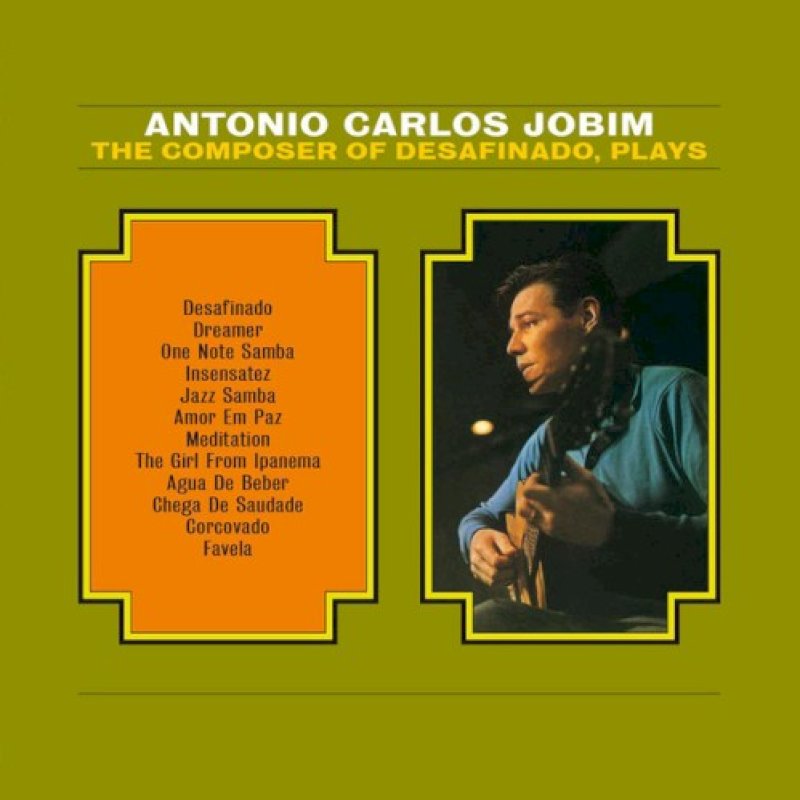
The Composer of Desafinado, Plays
Antonio Carlos Jobim · 1963 · Track 12
Details