The story behind
Bo Diddley, according to DoReSol
This song was born from a rhythm that no one had ever heard before. The Bo Diddley Beat wasn’t pure blues or traditional R&B; it was a guitar rhythm that mimicked the “hambone,” that physical game where you slap your thighs and chest to keep time. Diddley brought it to the electric guitar with a tremolo sound that sounded like the future—as if the future were already here. The lyrics, for their part, were nothing more than a recycled version of “Hush Little Baby,” but with an energy that made it something new. It lasted just over two minutes, but in that time it contained everything: the sharp snap of Jerome Green’s maraca, Frank Kirkland’s driving drumming, and that African accent that, for the first time, found its way into rock.
They recorded it in Chicago on March 2, 1955, at Leonard Chess’s studio, using equipment that was neither state-of-the-art nor particularly expensive. The result was a record that spent two weeks at number one on the Billboard R&B chart and ended up as the tenth best-selling record of the year on that chart. Checker Records released it in April with “I’m a Man” on the B-side, but the real gem was in the rhythm: a five-beat pattern that repeats like an obsessive heartbeat. Later, Buddy Holly covered it in 1956, though the version wasn’t released until 1963, when it reached number 4 in the United Kingdom. By then, it had already left its mark on rock: in 1998 it received a Grammy Hall of Fame Award; in 2011 it was added to the Library of Congress’s National Recording Registry; and in 2017 it was inducted into the Blues Hall of Fame. In 2021, *Rolling Stone* ranked it No. 277 on its list of the 500 greatest songs, although in 2004 it had been No. 62. In the end, time only added to its significance.
From album

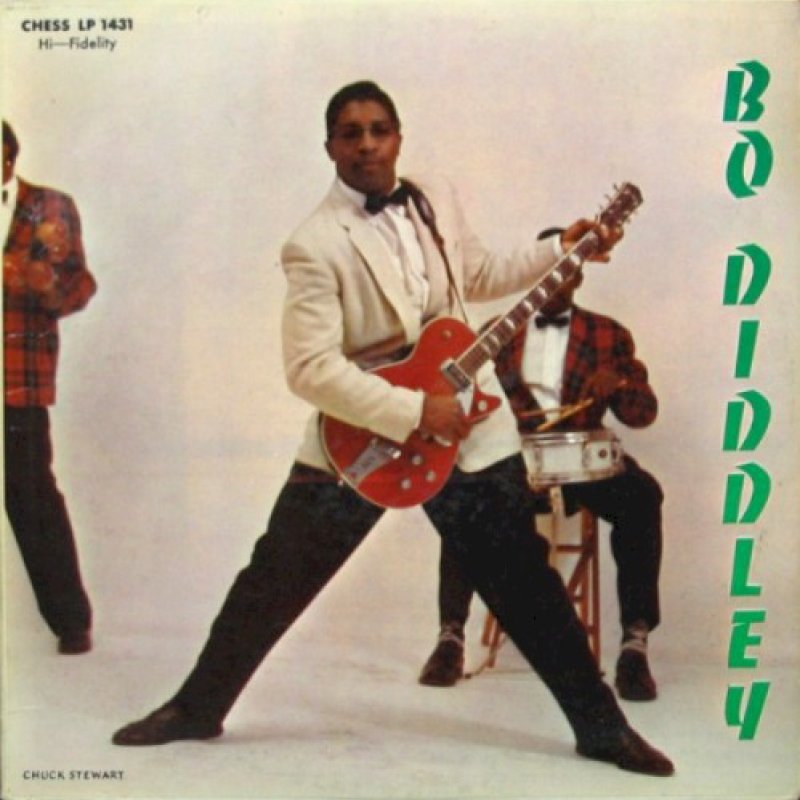
Bo Diddley
Bo Diddley · 1958
Details
Credits
Lyrics Bo Diddley
Music Bo Diddley