Chords in progress
We have not analyzed this song audio yet. Once it is ready, you will see the chord player synced with the video.
The story behind
Black Dog, according to DoReSol
This song, Black Dog, starts with a sonic idea that grabs you from the first second. Instead of starting directly with the music, you hear a kind of collage of guitars being tuned, as if the recording tape were coming to life. It's a way of introducing you to the track that Jimmy Page, who also experimented with unexpected intros in Immigrant Song and Friends, was aiming for to surprise the listener. Then, Robert Plant's voice bursts in a cappella, marking a call-and-response pattern that is maintained throughout the piece, a structure that Page conceived inspired by Fleetwood Mac's 1969 song Oh Well. The title, by the way, refers to a black Labrador dog that roamed the studios of Headley Grange during the recording, a curious detail that gives an earthy touch to the music's power.
The rhythmic foundation of Black Dog, that main riff that stays with you, was the idea of bassist John Paul Jones. He himself mentioned that he was inspired by Muddy Waters' 1968 album Electric Mud, although he later clarified that the main influence came more from Howlin' Wolf's record, particularly from a repetitive pattern in Smokestack Lightning, which he and Page sped up. Jones added complex rhythmic changes, described as an intelligent pattern that twists on itself and plays with time metrics. The band had challenges fitting the transitions, but John Bonham, the drummer, found the solution by playing them continuously, without pauses. You can even notice small desynchronizations between guitars and drums at times, details that, far from being errors, are considered part of the song's unique and "cool" character. For his guitar parts, Jimmy Page used a Gibson Les Paul, creating sound layers with multiple overdubs that resulted in such a marked distortion that he himself compared it to an analog synthesizer. The recording took place between December 1970 and February 1971, using both the mobile studios of the Rolling Stones at Headley Grange, Hampshire, and the Island Studios at Basing Street, London, with Andy Johns as recording and mixing engineer, and Jimmy Page and Peter Grant in production.
From album
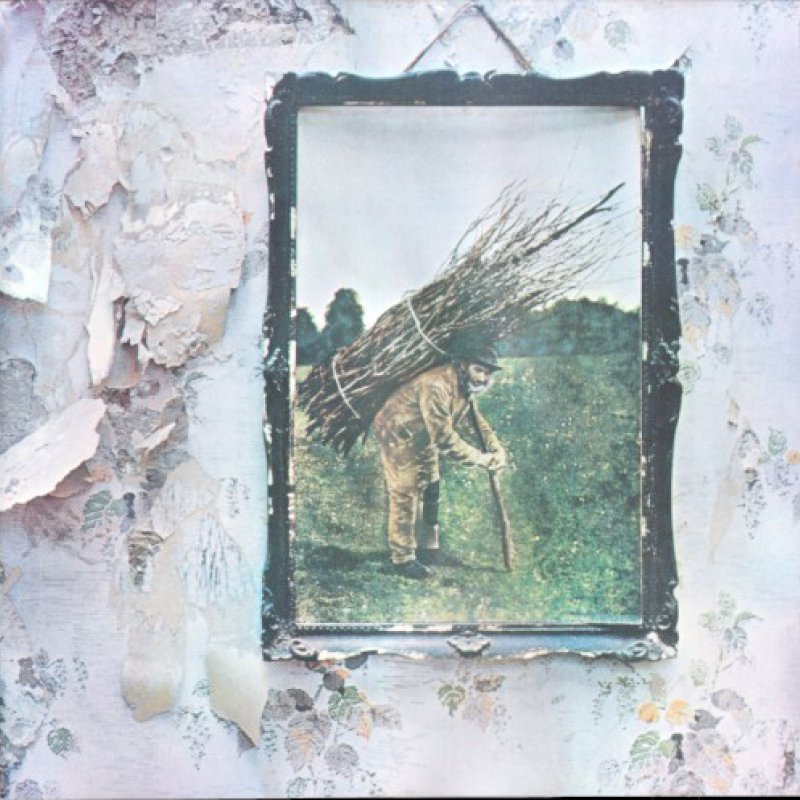
![[Led Zeppelin IV]](https://doresol.com/assets/img/albums/led-zeppelin-iv-led-zeppelin.jpg?v=1779906541)
[Led Zeppelin IV]
Led Zeppelin
Details
Credits
Music Jimmy Page, Robert Plant, John Paul Jones