The story behind
 duménega, according to DoReSol
Fabrizio De André recorded  duménega in Creuza de mä with a gesture that seems simple but changed the course of his music: he decided to sing in Genoese, the language he had heard since childhood on the streets of Genoa, but not as empty folklore, rather as someone taking a brush and mixing all the colors found in the ports of his youth. Genoese here is not just a vehicle for words, but another character in the song, a language De André shapes with the same freedom a sailor ties his boat to a Medieval dock. Words intertwine, borrow sounds from Greek, Arabic, Spanish, as if time itself had left traces in every syllable. It is no coincidence that this song, at three minutes and forty-one seconds, sounds like a journey that does not end at the shore, but stretches to the horizon where languages and centuries blend.
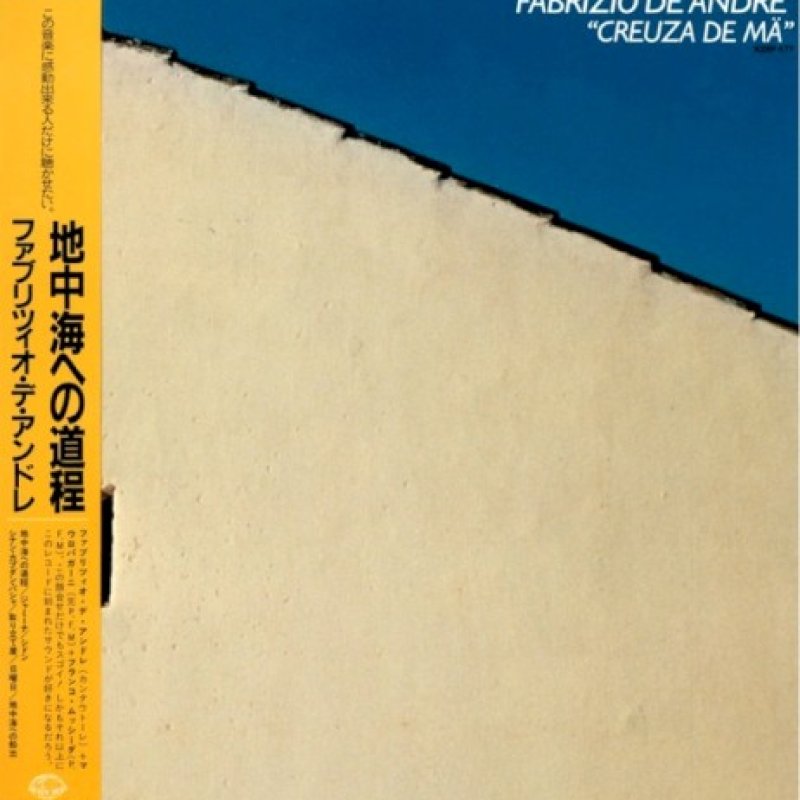
The album Creuza de mä —a title that already evokes the salty breeze of the Mediterranean— was put together in Milan in 1984, yet it was no conventional studio work. De André and Mauro Pagani sought something different: they wanted the record to breathe the air of ships, the murmur of waves, and the echo of markets where Genoese enriched itself with every exchange. To achieve this, they turned to the Dischi Ricordi team, but the magic lay not in the instruments, but in how they were used. The song  duménega does not sound like a polished recording, but like a conversation between friends passing a bottle of wine as the night stretches on. There are no forced corrections, only the urgency to capture that mix of melancholy and vitality that exists only when music arises from an authentic place. And amid it all, De André’s voice —which many knew as Faber, the nickname given by his friend Paolo Villaggio for his love of colored pencils— becomes the thread that binds every word, every pause, every whisper that seems to drift up from the depths of a Genoese alleyway.
From album

Crêuza de mä
Fabrizio De André · 1984 · Track 6
Details
Credits
Lyrics Fabrizio De André, Mauro Pagani
Music Fabrizio De André, Mauro Pagani