


🇵🇷 PR · Puerto Rico · Chapter 4 of 5
The Pop Global: The Island That Conquered the World (1977–2000)
At the end of the 1970s, Puerto Rico already had decades of extraordinary musical history: bomba, plena, Rafael Hernández's bolero, Lavoe and Colón's salsa. However, all that music circulated mainly within Latino American communities. The next step was to take Puerto Rican music to the center of global Anglo-Saxon pop — required something different: artists who could move with equal fluidity between Spanish and English, between Caribbean culture and American culture, between traditional Boricua culture and the global entertainment industry.

Puerto Rico los produjo. Y lo hizo de una manera que ningún otro país hispanohablante había logrado antes: convirtió a artistas formados en la isla en fenómenos globales que llenaban estadios en Tokio y Londres con la misma naturalidad con que los llenaban en San Juan.
Menudo: The First Global Boyband of Latin America
In 1977, the producer Edgardo Díaz — who had observed the success of the Spanish youth group La Pandilla — founded Menudo in Puerto Rico with a simple and revolutionary idea for the Latin American market: a boyband of young boys who would sing danceable pop, with an inviolable rule: when the members grew too old — once they turned sixteen or seventeen, or grew their mustache — they were replaced by new members.
This system of rotation was at the same time the formula for success and the source of the controversies surrounding the group decades later: Menudo was always young, always fresh, always had the image of perpetual adolescence that the youth pop market needed.
The group was born at the end of the seventies and over the years its members changed. The Puerto Rican boyband, which reached the peak of success with songs like "Súbete a mi moto", "Claridad" and "Sabes a chocolate", was compared by its frenzy and popularity only with the Beatles.
In the 1980s Menudo was unquestionably the most popular group in Latin America: they filled stadiums in Mexico, Venezuela, Colombia, Argentina; caused collective hysteria at airports; had fan clubs in all Spanish-speaking countries and in Latin communities in the United States, Spain and Japan.
Among its most remembered members was a boy from San Juan named Enrique Martín Morales — who the world would come to know as Ricky Martin — who joined Menudo at the age of twelve and helped expand the group's international popularity with albums such as Evolución (1984) and Sons of Rock (1988).
Ricky Martin: El Rey del Latin Pop
Ricky Martin was born on December 24, 1971 in San Juan. He started appearing in television commercials at nine years old and began his music career at twelve, as a member of Menudo.
After leaving the group in 1989, he finished high school in Puerto Rico and began his solo career with Sony Music México. His first albums Ricky Martin (1991), Me amarás (1993) — gave him recognition in Latin America. A Medio Vivir (1995) took him to Europe with the single "María" — a mix of Latin rhythms and pop production that was his first real international success.
But the moment that changed everything came on February 24, 1999. His upbeat performance of "La Copa de la Vida" at the Grammy ceremony catapulted Martin to fame in the United States.
The Anglo-Saxon world saw a Latin artist performing with an energy and physical charisma that American pop stars rarely showed: the percussion, the hip movement, the intensity of the Caribbean showman on the most viewed stage in the American music industry. The next day, Ricky Martin was the most searched person on the internet.
"Livin' La Vida Loca" — released that same year in English and Spanish — was the best-selling single of 1999 in the United States, the first of a Latin artist to reach number one on the Billboard Hot 100 since Santana achieved it decades earlier. It opened the door to the Latin Boom — the movement that in 1999 and 2000 brought Jennifer Lopez, Marc Anthony, Shakira and Enrique Iglesias to the center of the global Anglo-Saxon pop scene.
By the late 1990s, Ricky Martin would become the spearhead of the movement called "crossover," that is, the entry of Latin artists into the Anglophone music scene.
Marc Anthony: The Biggest Voice of Latin Pop
Marco Antonio MuñizMarc Anthony — was born on September 16, 1968 in New York to Puerto Rican parents, in Spanish Harlem. His voice was exceptional from adolescence: a tenor with an extraordinary range, a capacity for projection and emotion that made hairs stand on end in concert halls.
He started singing freestyle and rhythm and blues, then moved to salsa, and in 1999 made the definitive crossover to American pop with his English album Marc Anthony which produced the single "I Need to Know" — number three on the Billboard Hot 100, an unprecedented feat for a salsa singer.
But his most important album was Contra la Corriente (1997) — winner of the Grammy Latino for Best Tropical Album, with the title track as its biggest hit in Spanish. Marc Anthony proved that one could be simultaneously a star of American pop and the most important salsa singer of his generation — without having to choose between the two identities.
Chayanne: The Boricua Who Conquered the World in Silence
Elmer Figueroa ArceChayanne — was born on June 28, 1968 in Río Piedras, Puerto Rico. He started his career with Los Chicos — the Puerto Rican youth group that was the local equivalent of Menudo — and launched his solo career in the 1980s with a discretion that contrasted with the media frenzy of Ricky Martin.
What Chayanne had — besides a physical attraction that made him the cover of magazines throughout all of Latin America — was a warm baritone voice and a repertoire that blended romantic ballads with danceable pop with an artisanal consistency that no media scandal interrupted. "Tiempo de Vals", "Completamente Enamorado", "Salomé": songs that reached every corner of the Hispanic world without needing scandal or controversy.
Luis Fonsi: El Puente al Siglo XXI
Luis Alfonso Rodríguez López-CeperoLuis Fonsi — was born on April 15, 1978 in San Juan. He represented the next generation of Puerto Rican pop: the romantic Spanish ballad with contemporary production, without the theatrics of Ricky Martin nor the urgency of Marc Anthony.
His first albums Amor Secreto (1998), Nuestro Amor Eterno (2000) — established him as one of the most beloved voices in Latin pop. But his moment of greatest global impact would come decades later, when in 2017 he released with Daddy Yankee the song that would become the biggest digital phenomenon in the history of Spanish pop.
Ednita Nazario and the Woman in Boricua Pop
No history of Puerto Rican pop is complete without Ednita Nazario — born in Ponce in 1955 — the female artist who built the longest and most consistent pop career on the island: more than forty years of activity, sold-out stadiums in Puerto Rico and all of Latin America, a repertoire that ranges from rock ballads to tropical pop with the versatility of someone who doesn't need labels.
Ednita is the "La Novia de Puerto Rico" — the nickname the public gave her and that she carries with the dignity of someone who knows that this title is earned through decades of work, not with a single season of success.
Editor's note: On the night of February 24, 1999, when Ricky Martin performed "La Copa de la Vida" at the Grammys, the host Rosie O'Donnell said after the performance: "It was the most exciting performance I've seen in twenty years of television." It wasn't exaggeration. What Martin did that night — bringing the energy of the Caribbean, the Puerto Rican percussion, the hip movement that in Puerto Rico no one needs to learn because it's learned automatically — to a stage designed for static American pop, was a powerful act of cultural affirmation as any political manifesto. He didn't say "I'm Puerto Rican and I deserve to be here." He showed it with his body. The world understood it perfectly.
10 · 1 en DoReSol
Top 10 of Global Puerto Rican Pop
Livin' La Vida Loca
Ricky Martin · 1999
The number one Billboard hit that opened the door to the Latin Boom. The Grammy performance that changed what American pop thought Latin music was. The moment when Puerto Rico reached the center of global entertainment.
La Copa de la Vida
Ricky Martin · 1998
The most memorable performance of the 1990s at the Grammy Awards. Caribbean percussion on the stage of American pop. The moment when Ricky Martin transitioned from a Latin star to a global phenomenon.
I Need to Know
Marc Anthony · 1999
A salsa tenor in the Top 5 of Billboard Hot 100. Marc Anthony showing that the biggest voice of Latin pop could also conquer the Anglo-Saxon market.
Contra la Corriente
Marc Anthony · 1997
The Latin Grammy. Romantic salsa in its most sophisticated version. The song that established Marc Anthony as the most important salsa singer of his generation.
Súbete a mi moto
Menudo · 1981
The first big hit of Menudo. The Latin American boyband finding its voice and image. The beginning of the phenomenon that would cause hysteria throughout all of Latin America for a decade.
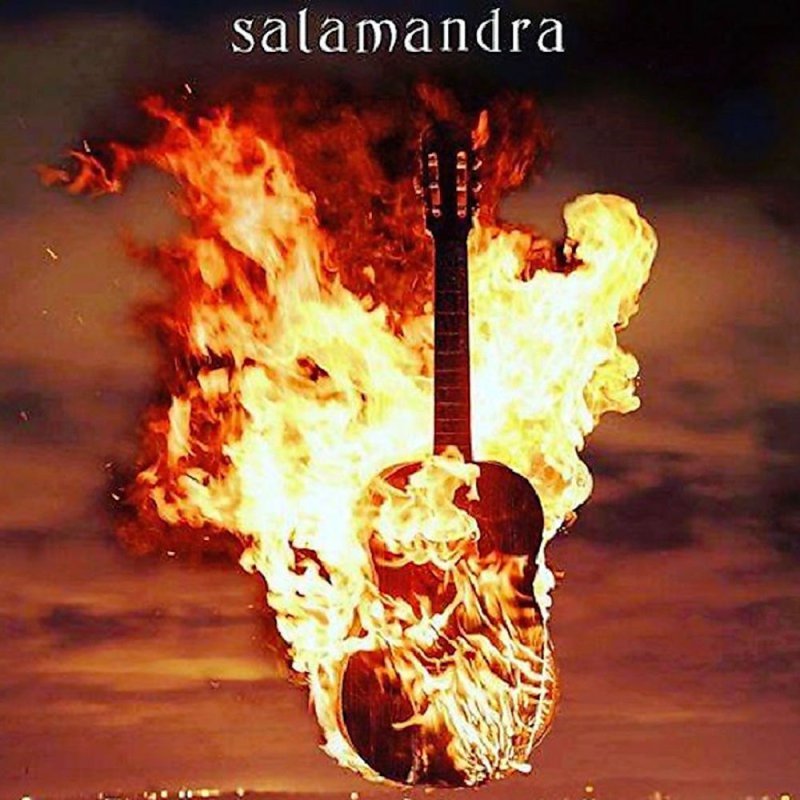
Maria
Salamandra · 2015
Ricky Martin's first international success. The mix of Latin rhythms and European production that opened the markets of Spain and Europe before the Latin Boom.
Tiempo de Vals
Chayanne · 1990
The most elegant version of Boricua pop. Chayanne building a decades-long career with the discipline of someone who knows that talent without consistency doesn't last.
Amor Secreto
Luis Fonsi · 1998
Fonsi's first big hit. The Puerto Rican ballad of the 21st century finding its voice — before that voice found reggaetón and conquered seven billion streams.
Completely Enamored
Chayanne · 1996
Chayanne's most universal hit. The Puerto Rican romantic ballad reaching all the Spanish-speaking radios around the world without needing scandals or marketing strategies.
Con Todo el Mundo
Ednita Nazario · 1995
The Bride of Puerto Rico at the peak of her commercial success. Forty years of career that show that longevity is also a form of greatness.
Next and final chapter — Series Puerto Rico: Reggaetón and the 21st Century — Daddy Yankee, Bad Bunny and the definitive conquest of the world.
The full series
Puerto Rico
Boricua salsa, plena, bomba, reggaeton. The small island with the biggest footprint.
-
CAP 01
🇵🇷 Ch 01
The Roots: The Island Where Africa, Spain and the Caribbean Met (16th–20th Centuries)
Puerto Rico has an area of 9,104 square kilometers — less than the
-
CAP 02
🇵🇷 Ch 02
The Bolero and the Great Composers: The Song that Spoke for Latin America (1920–1960)
At the beginning of the 20th century, Puerto Rico had a simultaneous problem and solution. The problem was poverty: the island had passed from the Spanish colony to the American co
-
CAP 03
🇵🇷 Ch 03
The Salsa Boricua: The Sound Born in the Neighborhood and Conquered the World (1965–1990)
In the 1960s, Spanish Harlem and South Bronx in New York were the most densely Puerto Rican neighborhoods outside the island: apartment blocks overcrowded with people, streets with
-
CAP 04 you are here
🇵🇷 Ch 04
The Pop Global: The Island That Conquered the World (1977–2000)
At the end of the 1970s, Puerto Rico already had decades of extraordinary musical history: bomba, plena, Rafael Hernández's bolero, Lavoe and Colón's salsa. However, all that music
-
CAP 05
🇵🇷 Ch 05
The Reggaeton and the 21st Century: The Neighborhood that Conquered the World (1990–present)
At the beginning of the nineties, in the villages and neighborhoods of San Juan — Loíza, Villa del Rey, Santurce — circulated handmade cassettes that radios wouldn't play, parents
You might also like
3 articles picked by editorial similarity

The Reggaeton and the 21st Century: The Neighborhood that Conquered the World (1990–present)

The Salsa Boricua: The Sound Born in the Neighborhood and Conquered the World (1965–1990)
